Brief Report - (2025) Volume 9, Issue 3
Received: 01-May-2025, Manuscript No. hps-26-184452;
Editor assigned: 05-May-2025, Pre QC No. P-184452;
Reviewed: 19-May-2025, QC No. Q-184452;
Revised: 22-May-2025, Manuscript No. R-184452;
Published:
29-May-2025
, DOI: 10.37421/2573-4563.2025.9.342
Citation: Mehta, Anika R.. ”Targeting Liver Fibrosis Pathways for Therapeutic Intervention.” J Hepatol Pancreat Sci 09 (2025):342.
Copyright: © 2025 Mehta R. Anika This is an open-access article distributed under the terms of the Creative Commons Attribution License, which permits unrestricted use, distribution and reproduction in any medium, provided the original author and source are credited.
Liver fibrosis, a pathological process characterized by excessive scarring, originates from chronic liver injury predominantly driven by the activation of hepatic stellate cells (HSCs) [1].
This activation transforms quiescent HSCs into myofibroblast-like cells, leading to the excessive deposition of extracellular matrix (ECM) [1].
Understanding the intricate molecular pathways governing HSC activation, including signaling cascades like TGF-β, PDGF, and inflammatory cytokines, is crucial for developing effective therapies [1].
Recent research highlights novel therapeutic targets within these pathways, such as modulating microRNAs, targeting receptor tyrosine kinases, and exploring immune-based interventions, offering promising avenues to halt or even reverse liver fibrosis [1].
The transforming growth factor-beta (TGF-β) signaling pathway plays a central role in hepatic stellate cell (HSC) activation and the subsequent fibrotic response [2].
This pathway's dysregulation in chronic liver disease promotes HSC proliferation, contractility, and extracellular matrix (ECM) synthesis [2].
Inhibiting key components of the TGF-β pathway, such as TGF-β receptor kinases or downstream SMAD proteins, represents a significant therapeutic strategy for liver fibrosis [2].
Platelet-derived growth factor (PDGF) is another potent mitogen that significantly contributes to the activation and proliferation of hepatic stellate cells (HSCs) during liver fibrosis [3].
Interactions between PDGF and its receptors (PDGFR-α and PDGFR-β) on HSCs initiate pro-fibrotic signaling cascades [3].
Targeting PDGF signaling, either by blocking PDGF ligands or inhibiting PDGFRs, has emerged as a promising approach to attenuate HSC activation and liver fibrosis [3].
Inflammatory cytokines, particularly tumor necrosis factor-alpha (TNF-α) and interleukin-6 (IL-6), play a critical role in driving hepatic stellate cell (HSC) activation and promoting liver fibrosis [4].
These cytokines can directly activate HSCs or amplify pro-fibrotic signals initiated by other growth factors [4].
Strategies aimed at suppressing these inflammatory mediators, such as using TNF-α inhibitors or targeting IL-6 signaling, hold therapeutic potential for liver fibrosis [4].
MicroRNAs (miRNAs) are small non-coding RNAs that regulate gene expression post-transcriptionally [5].
Aberrant miRNA profiles are observed in liver fibrosis, with specific miRNAs acting as either pro-fibrotic or anti-fibrotic regulators by targeting key molecules involved in hepatic stellate cell (HSC) activation [5].
Therapeutic approaches involving miRNA mimics or inhibitors to restore normal miRNA levels show promise in treating liver fibrosis [5].
Extracellular matrix (ECM) deposition is the hallmark of liver fibrosis, characterized by excessive accumulation of collagen and other matrix proteins [6].
Hepatic stellate cells (HSCs) are the primary source of ECM production [6].
Modulating the synthesis, degradation, and cross-linking of ECM components, particularly through inhibiting lysyl oxidase (LOX) family enzymes, presents a novel therapeutic strategy to reduce fibrosis [6].
Epithelial-mesenchymal transition (EMT) is a process that shares molecular similarities with hepatic stellate cell (HSC) activation and fibrosis [7].
While classical EMT is primarily associated with cancer, a similar cellular reprogramming contributes to fibrogenesis [7].
Targeting the signaling pathways that drive EMT-like transitions in HSCs offers a potential avenue for fibrosis treatment [7].
The gut-liver axis plays an increasingly recognized role in the pathogenesis of liver fibrosis [8].
Dysbiosis and increased intestinal permeability can lead to the translocation of microbial products, triggering inflammation and activating hepatic stellate cells (HSCs) [8].
Modulating the gut microbiota through probiotics, prebiotics, or fecal microbiota transplantation is being explored as a therapeutic strategy [8].
Immune cells, particularly Kupffer cells and infiltrating macrophages, are crucial regulators of liver fibrosis [9].
These cells can adopt pro-inflammatory or pro-resolving phenotypes, influencing hepatic stellate cell (HSC) activation and extracellular matrix (ECM) turnover [9].
Immunomodulatory therapies aimed at repolarizing macrophages towards an anti-fibrotic phenotype are a promising therapeutic direction [9].
The development of novel therapeutic agents targeting specific molecular pathways involved in hepatic stellate cell (HSC) activation and extracellular matrix (ECM) production is essential for effective liver fibrosis treatment [10].
This includes exploring small molecule inhibitors, antibodies, and gene-based therapies that can halt or reverse the fibrotic process, ultimately aiming for liver regeneration [10].
Liver fibrosis is a detrimental scarring process arising from chronic liver injury, primarily driven by the activation of hepatic stellate cells (HSCs) [1].
This activation converts quiescent HSCs into myofibroblast-like cells, leading to excessive extracellular matrix (ECM) deposition [1].
Understanding the complex molecular pathways governing HSC activation, including signaling cascades such as TGF-β, PDGF, and inflammatory cytokines, is paramount for developing effective therapeutic interventions [1].
Contemporary research is identifying novel therapeutic targets within these pathways, encompassing modulation of microRNAs, targeting receptor tyrosine kinases, and exploring immune-based strategies, all of which present promising avenues for halting or even reversing liver fibrosis [1].
The transforming growth factor-beta (TGF-β) signaling pathway is recognized as a central mediator in hepatic stellate cell (HSC) activation and the subsequent fibrotic response [2].
Dysregulation of this pathway in chronic liver diseases exacerbates HSC proliferation, contractility, and extracellular matrix (ECM) synthesis [2].
Consequently, inhibiting critical components of the TGF-β pathway, including TGF-β receptor kinases or downstream SMAD proteins, constitutes a significant therapeutic strategy for managing liver fibrosis [2].
Platelet-derived growth factor (PDGF) serves as another potent mitogen that significantly contributes to the activation and proliferation of hepatic stellate cells (HSCs) during the development of liver fibrosis [3].
The interactions between PDGF and its receptors (PDGFR-α and PDGFR-β) on HSCs initiate pro-fibrotic signaling cascades [3].
Therefore, targeting PDGF signaling, either by inhibiting PDGF ligands or blocking PDGFRs, has emerged as a promising approach to attenuate HSC activation and mitigate liver fibrosis [3].
Inflammatory cytokines, particularly tumor necrosis factor-alpha (TNF-α) and interleukin-6 (IL-6), play a critical role in orchestrating hepatic stellate cell (HSC) activation and advancing liver fibrosis [4].
These cytokines can either directly activate HSCs or potentiate pro-fibrotic signals initiated by other growth factors [4].
Therapeutic strategies focused on suppressing these inflammatory mediators, such as employing TNF-α inhibitors or targeting IL-6 signaling, exhibit therapeutic potential for treating liver fibrosis [4].
MicroRNAs (miRNAs), which are small non-coding RNAs, regulate gene expression at the post-transcriptional level [5].
Aberrant miRNA expression profiles are frequently observed in liver fibrosis, with specific miRNAs acting as either pro-fibrotic or anti-fibrotic regulators by targeting key molecules involved in hepatic stellate cell (HSC) activation [5].
Therapeutic interventions involving miRNA mimics or inhibitors to restore normal miRNA levels are showing promise in the treatment of liver fibrosis [5].
The excessive accumulation of collagen and other matrix proteins, known as extracellular matrix (ECM) deposition, is a defining characteristic of liver fibrosis [6].
Hepatic stellate cells (HSCs) are the principal cellular source responsible for ECM production [6].
Strategies that modulate the synthesis, degradation, and cross-linking of ECM components, particularly by inhibiting lysyl oxidase (LOX) family enzymes, represent a novel therapeutic avenue for reducing fibrosis [6].
Epithelial-mesenchymal transition (EMT), a process sharing molecular similarities with hepatic stellate cell (HSC) activation and fibrosis, is also implicated [7].
Although classical EMT is primarily linked to cancer, a comparable cellular reprogramming contributes to fibrogenesis [7].
Targeting the signaling pathways that drive EMT-like transitions in HSCs presents a potential strategy for fibrosis treatment [7].
The gut-liver axis is increasingly recognized for its role in the pathogenesis of liver fibrosis [8].
Conditions such as dysbiosis and heightened intestinal permeability can lead to the translocation of microbial products, thereby triggering inflammation and activating hepatic stellate cells (HSCs) [8].
Consequently, interventions aimed at modulating the gut microbiota, including the use of probiotics, prebiotics, or fecal microbiota transplantation, are under investigation as therapeutic strategies [8].
Immune cells, notably Kupffer cells and infiltrating macrophages, function as critical regulators of liver fibrosis [9].
These cells possess the ability to adopt either pro-inflammatory or pro-resolving phenotypes, which subsequently influence hepatic stellate cell (HSC) activation and extracellular matrix (ECM) turnover [9].
Therefore, immunomodulatory therapies designed to repolarize macrophages towards an anti-fibrotic phenotype are considered a promising therapeutic direction [9].
The development of innovative therapeutic agents that specifically target the molecular pathways involved in hepatic stellate cell (HSC) activation and extracellular matrix (ECM) production is essential for achieving effective treatment outcomes in liver fibrosis [10].
This pursuit includes the exploration of small molecule inhibitors, antibodies, and gene-based therapies with the aim of halting or reversing the fibrotic process and ultimately promoting liver regeneration [10].
Liver fibrosis, a scarring of the liver, stems from chronic injury and the activation of hepatic stellate cells (HSCs). This activation leads to excessive extracellular matrix (ECM) deposition. Key signaling pathways like TGF-β, PDGF, and inflammatory cytokines are implicated, and targeting these, along with microRNAs, receptor tyrosine kinases, and immune responses, offers therapeutic potential. The TGF-β pathway is central to HSC activation and ECM synthesis, making its inhibition a therapeutic strategy. PDGF also drives HSC activation and proliferation, and its targeting is promising. Inflammatory cytokines like TNF-α and IL-6 further promote HSC activation and fibrosis, suggesting that suppressing them could be beneficial. MicroRNAs regulate gene expression and their aberrant levels in fibrosis present therapeutic opportunities. ECM deposition, a hallmark of fibrosis, can be targeted by modulating its synthesis and degradation, for instance, by inhibiting lysyl oxidase enzymes. EMT-like processes in HSCs and the gut-liver axis, influenced by gut microbiota, are also recognized factors in fibrosis. Immune cells, particularly macrophages, play crucial regulatory roles, and their modulation towards an anti-fibrotic phenotype is a promising avenue. Ultimately, developing novel agents targeting these pathways is key for halting or reversing fibrosis and promoting liver regeneration.
None
None
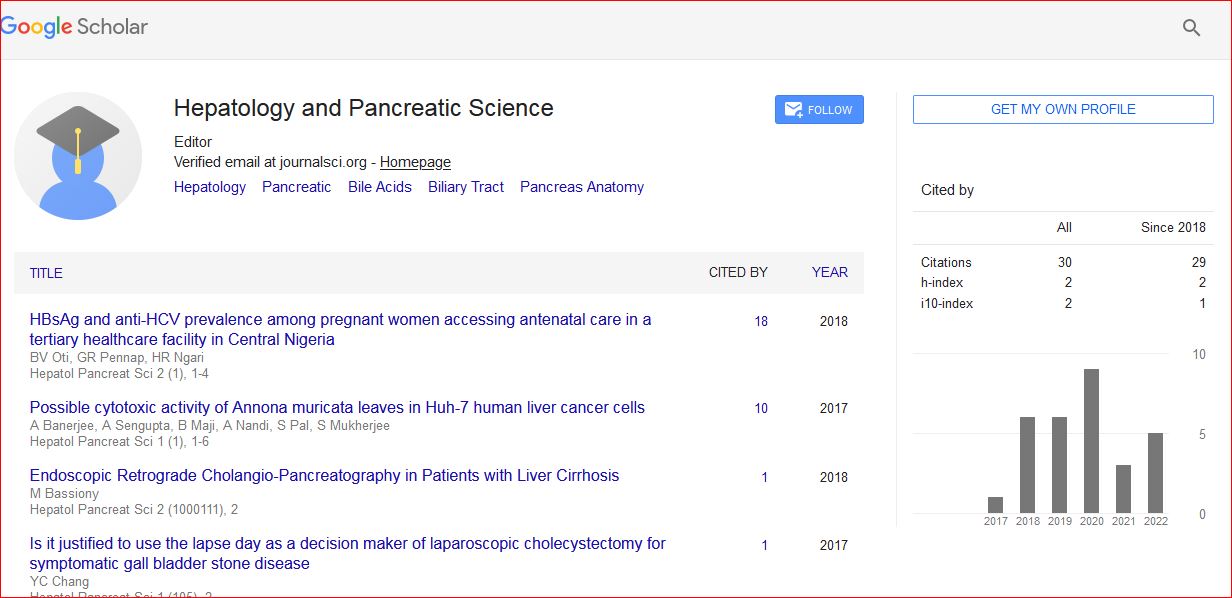
Hepatology and Pancreatic Science received 34 citations as per Google Scholar report