Opinion - (2025) Volume 19, Issue 3
Received: 01-Jun-2025, Manuscript No. jmgm-26-185648;
Editor assigned: 03-Jun-2025, Pre QC No. P-185648;
Reviewed: 17-Jun-2025, QC No. Q-185648;
Revised: 23-Jun-2025, Manuscript No. R-185648;
Published:
30-Jun-2025
, DOI: 10.37421/1747-0862.2025.19.730
Citation: Gomez, María Teresa. ”Stem Cells: Revolutionizing Genetic Medicine For Inherited Disorders.” J Mol Genet Med 19 (2025):730.
Copyright: © 2025 Gomez T. María This is an open-access article distributed under the terms of the Creative Commons Attribution License, which permits unrestricted use, distribution and reproduction in any medium, provided the original author and source are credited.
Stem cell therapy is emerging as a transformative force in genetic medicine, offering novel strategies for addressing inherited disorders by leveraging the inherent regenerative capacities of stem cells. This groundbreaking technology holds the potential to correct underlying genetic defects or replace damaged tissues that are compromised by genetic conditions, presenting a beacon of hope for diseases that were previously deemed untreatable and incurable. Current research and clinical applications are primarily focused on specific monogenic disorders, which are caused by a defect in a single gene, demonstrating the precision and targeted nature of these therapeutic approaches. However, the future potential of stem cell therapy extends significantly beyond these initial applications, with promising avenues for tackling more complex genetic conditions that involve multiple genes and intricate biological pathways. [1] The advent of induced pluripotent stem cells (iPSCs) derived directly from patients represents a pivotal advancement in both the modeling and therapeutic intervention for a wide spectrum of genetic diseases. These remarkable cells possess the unique ability to be genetically corrected in a laboratory setting, precisely addressing the underlying mutations responsible for the disease. Following genetic correction, iPSCs can be differentiated into the specific cell types that are affected by the patient's genetic disorder, thereby offering a highly personalized and tailored therapeutic strategy that directly targets the root cause of the illness. [2] Mesenchymal stem cells (MSCs) are also demonstrating considerable therapeutic potential for genetic disorders, owing to a multifaceted combination of properties including potent immunomodulatory and trophic functions, in addition to their inherent differentiation capabilities. Beyond their ability to differentiate into various cell types, MSCs can actively create a supportive microenvironment conducive to tissue repair and regeneration, while simultaneously mitigating the harmful inflammation that often exacerbates genetic conditions. [3] The integration of sophisticated gene editing technologies, such as the revolutionary CRISPR-Cas9 system, with established stem cell therapy protocols is paving the way for a powerful and precise approach to correcting disease-causing mutations. This synergistic combination offers the unprecedented potential for the permanent correction of genetic defects directly within the patient's own cells, minimizing the risk of immune rejection and ensuring long-term therapeutic benefits. [4] Hematopoietic stem cell transplantation (HSCT) has long been recognized as a cornerstone therapy for a significant number of genetic blood disorders, including well-known conditions such as sickle cell disease and thalassemia, where it offers a cure by replacing the defective bone marrow. Recent advancements in ex vivo gene therapy, which involves modifying cells outside the body before transplantation, when combined with HSCT, are actively expanding the scope and applicability of this established treatment modality to a broader range of genetic conditions. [5] The exploration of stem cell therapy for neurodegenerative genetic disorders, encompassing conditions like Huntington's disease and specific forms of muscular dystrophy, constitutes a highly active and dynamic area of ongoing research. The primary therapeutic strategies under investigation involve the transplantation of stem cells to replace damaged neurons or muscle cells, thereby restoring lost function, or to provide crucial neurotrophic support that promotes the survival and health of existing neural and muscle tissues. [6] Crucially, the ethical considerations and the establishment of robust regulatory frameworks are paramount for the successful advancement and clinical translation of stem cell therapies within the realm of genetic medicine. Ensuring the absolute safety of patients and promoting equitable access to these potentially life-changing treatments are foundational principles that must guide every step of research, development, and clinical implementation. [7] The burgeoning field of stem cell-derived organoids presents a rapidly growing and highly promising avenue for studying genetic diseases within a more complex and biologically relevant three-dimensional context. These sophisticated in vitro models closely mimic the structure and function of native tissues and organs, allowing for a deeper and more nuanced investigation of disease mechanisms and facilitating efficient drug screening and development. [8] Stem cell-based approaches are actively being investigated and developed for the treatment of cystic fibrosis lung disease, with the ultimate goal of restoring functional chloride channel activity in the affected lung epithelial cells. These innovative strategies typically involve the delivery of genetically modified stem cells engineered to express functional channels or the administration of factors that stimulate endogenous lung repair mechanisms. [9] Furthermore, the ongoing development of novel biomaterials and advanced delivery systems is absolutely critical for substantially enhancing both the efficacy and the safety profile of stem cell therapies intended for genetic medicine applications. These sophisticated materials are designed to provide essential scaffolding for cell growth, precisely control cell differentiation pathways, and effectively shield transplanted cells from the patient's immune system, thereby preventing rejection. [10]
Stem cell therapy is at the forefront of revolutionizing genetic medicine, presenting innovative approaches to combat inherited disorders through the utilization of stem cells' regenerative power to correct genetic flaws or replace compromised tissues. This technology offers a promising path forward for diseases previously considered intractable, with current efforts concentrating on specific monogenic conditions while future endeavors aim to address more complex genetic ailments. [1] A significant stride in genetic disease research and treatment involves the use of induced pluripotent stem cells (iPSCs) derived from patients themselves. These iPSCs can be genetically corrected in vitro to rectify the underlying mutations and subsequently differentiated into the specific cell types affected by the disease, offering a highly personalized therapeutic strategy. [2] Mesenchymal stem cells (MSCs) exhibit therapeutic promise for genetic disorders due to their multifaceted capabilities, including immunomodulation, trophic support, and differentiation potential. They contribute to tissue repair by fostering a supportive microenvironment and reducing inflammation associated with these conditions. [3] The combination of gene editing technologies, such as CRISPR-Cas9, with stem cell therapy provides a powerful method for precisely correcting disease-causing mutations. This integrated approach aims for permanent correction of genetic defects within a patient's own cells, enhancing therapeutic efficacy. [4] Hematopoietic stem cell transplantation (HSCT) remains a critical treatment for various genetic blood disorders, including sickle cell disease and thalassemia, by replacing the diseased bone marrow with healthy stem cells. Advancements in ex vivo gene therapy, when integrated with HSCT, are broadening its therapeutic reach for a wider array of genetic conditions. [5] The application of stem cell therapy in genetic neurological disorders, such as Huntington's disease and certain muscular dystrophies, is an active research frontier. Strategies focus on replacing damaged neurons or muscle cells and providing essential neurotrophic support to mitigate disease progression. [6] Ethical considerations and robust regulatory frameworks are indispensable for the successful clinical translation of stem cell therapies in genetic medicine. Prioritizing patient safety and ensuring equitable access to these advanced treatments are paramount objectives that must guide all developmental stages. [7] Stem cell-derived organoids are increasingly utilized to study genetic diseases in a more physiologically relevant three-dimensional context. These advanced models facilitate a deeper understanding of disease mechanisms and serve as valuable platforms for drug screening and therapeutic development. [8] For cystic fibrosis lung disease, stem cell-based therapies are being developed to restore normal chloride channel function in lung epithelial cells. These approaches involve delivering genetically modified stem cells or factors that promote lung tissue regeneration and repair. [9] Novel biomaterials and delivery systems are crucial for optimizing the efficacy and safety of stem cell therapies in genetic medicine. These advancements aim to provide structural support, regulate cell behavior, and protect transplanted cells from immune rejection, thereby improving therapeutic outcomes. [10]
Stem cell therapy is revolutionizing genetic medicine by offering innovative treatments for inherited disorders through the regenerative power of stem cells. Technologies like induced pluripotent stem cells (iPSCs) allow for personalized therapies and disease modeling. Mesenchymal stem cells (MSCs) provide immunomodulatory and trophic support, while gene editing techniques like CRISPR-Cas9 are being integrated for precise genetic correction. Hematopoietic stem cell transplantation (HSCT) remains vital for blood disorders, and research is exploring stem cell applications for neurological conditions and cystic fibrosis. The development of stem cell-derived organoids enhances disease study, and advancements in biomaterials and delivery systems are crucial for improving therapeutic efficacy and safety. Ethical considerations and regulatory frameworks are essential for clinical translation.
None
None
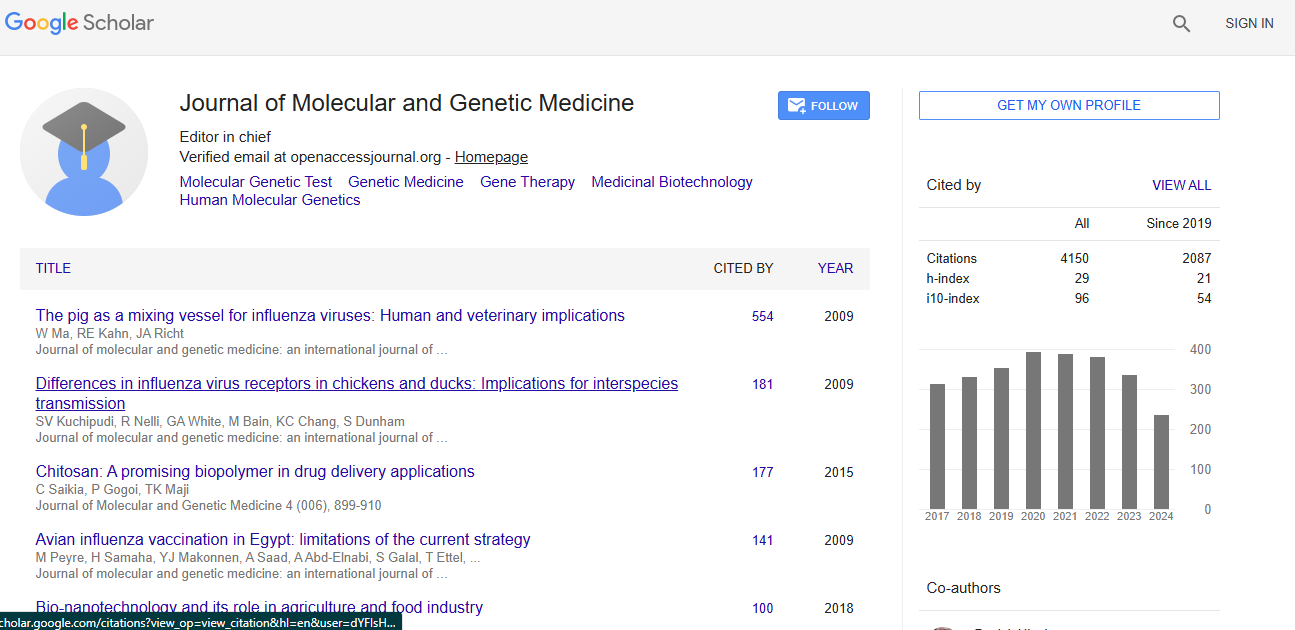
Molecular and Genetic Medicine received 3919 citations as per Google Scholar report