Opinion - (2025) Volume 9, Issue 6
Received: 02-Nov-2025, Manuscript No. hps-26-184499;
Editor assigned: 04-Nov-2025, Pre QC No. P-184499;
Reviewed: 18-Nov-2025, QC No. Q-184499;
Revised: 24-Nov-2025, Manuscript No. R-184499;
Published:
29-Nov-2025
, DOI: 10.37421/2573-4563.2025.9.378
Citation: Nowicka, Marta L.. ”Stem Cells For Liver And Pancreas Repair.” J Hepatol Pancreat Sci 09 (2025):378.
Copyright: © 2025 Nowicka L. Marta This is an open-access article distributed under the terms of the Creative Commons Attribution License, which permits unrestricted use, distribution and reproduction in any medium, provided the original author and source are credited.
Recent advancements in stem cell and regenerative therapies are showing significant promise for treating hepatic and pancreatic failure. These approaches aim to restore damaged tissue function by replacing or regenerating lost cells. For liver failure, strategies include using induced pluripotent stem cells (iPSCs) and mesenchymal stem cells (MSCs) to differentiate into functional hepatocytes, potentially offering an alternative to liver transplantation [1].
Similarly, for pancreatic failure, particularly in diabetes, stem cell-based therapies focus on generating insulin-producing beta cells, either through direct differentiation of stem cells or by modulating endogenous regenerative pathways. Challenges remain in achieving long-term engraftment, functional integration, and immune tolerance, but ongoing research is paving the way for clinical applications. The regenerative capacity of the pancreas, especially for beta cell replacement, is a key area of focus. Researchers are exploring various stem cell sources, including embryonic stem cells (ESCs), iPSCs, and adult stem cells, to generate functional beta cells that can secrete insulin in response to glucose. This holds immense potential for treating type 1 diabetes and other forms of pancreatic insufficiency. Overcoming immune rejection and ensuring the long-term survival and function of transplanted cells are critical hurdles being addressed through immunomodulatory strategies and biomaterial engineering [2].
Mesenchymal stem cells (MSCs) are a prominent cell type in regenerative medicine due to their immunomodulatory and anti-inflammatory properties, in addition to their differentiation potential. In the context of hepatic failure, MSCs can secrete growth factors that promote liver regeneration and reduce fibrosis. For pancreatic diseases, MSCs may offer therapeutic benefits by protecting existing beta cells, modulating immune responses, and potentially differentiating into endocrine cells under specific conditions. Their ease of isolation and expansion further enhance their clinical relevance [3].
Induced pluripotent stem cells (iPSCs) represent a powerful tool for generating patient-specific cells for regenerative therapies. This technology bypasses ethical concerns associated with embryonic stem cells and allows for the creation of disease-in-a-dish models for studying hepatic and pancreatic pathologies. Differentiated iPSCs can be used to replace damaged liver cells or generate functional pancreatic beta cells. However, ensuring genetic stability, preventing teratoma formation, and achieving efficient differentiation protocols are ongoing challenges that require meticulous attention [4].
The development of bioengineered tissues and organoids is crucial for overcoming the limitations of cell transplantation. Liver and pancreatic organoids derived from stem cells can mimic the complex microarchitecture and function of native organs. These organoids can be used for drug screening, disease modeling, and potentially as therapeutic grafts. Strategies involve using sophisticated biomaterials and bioreactors to provide the necessary cues for tissue development and vascularization, which are essential for graft survival and integration [5].
Cellular therapy for hepatic failure is moving towards clinical applications, with various stem cell types being investigated in preclinical and early-stage clinical trials. These therapies aim to improve liver function, reduce the need for transplantation, and enhance patient survival. Focus areas include using stem cells to promote hepatocyte proliferation, reduce inflammation, and modulate fibrogenesis. The choice of stem cell source and delivery method significantly impacts therapeutic outcomes [6].
Pancreatic islet transplantation is a well-established therapy for type 1 diabetes, but its limitations, such as donor scarcity and immune rejection, drive the search for alternative stem cell-based strategies. Generating functional beta cells from iPSCs offers a renewable and potentially personalized source of insulin-producing cells. Research is focused on improving differentiation efficiency, controlling maturation, and developing encapsulation techniques to protect transplanted cells from immune attack [7].
The use of extracellular vesicles (EVs) derived from stem cells is emerging as a cell-free therapeutic approach for regenerative medicine. EVs can carry various bioactive molecules, including proteins, lipids, and nucleic acids, that can influence recipient cell function and promote tissue repair. For hepatic and pancreatic diseases, stem cell-derived EVs have shown potential in reducing inflammation, promoting regeneration, and improving metabolic function, offering an alternative to direct cell transplantation with reduced risks of immune rejection and tumor formation [8].
Hepatocyte transplantation is a viable treatment for acute liver failure, but donor organ shortage remains a critical limitation. Stem cell-based strategies, particularly those involving iPSCs differentiated into hepatocytes, offer a promising avenue to generate a renewable source of functional liver cells. Advances in gene editing and differentiation protocols are crucial for creating safe and effective therapeutic cells. Furthermore, strategies to improve the survival and integration of transplanted cells within the liver parenchyma are actively being explored [9].
The endocrine pancreas plays a vital role in glucose homeostasis, and its failure leads to diabetes. Stem cell therapy aims to restore insulin-producing beta cell mass. Recent progress has been made in directing differentiation of pluripotent stem cells into functional beta cells that exhibit glucose-responsive insulin secretion in vitro and in vivo. However, achieving sustained glycemic control in diabetic subjects requires overcoming challenges related to immune surveillance, vascularization, and long-term cell survival. Encapsulation technologies and immunomodulatory therapies are key areas of development [10].
Recent advancements in stem cell and regenerative therapies are showing significant promise for treating hepatic and pancreatic failure, aiming to restore damaged tissue function by replacing or regenerating lost cells. For liver failure, strategies include using induced pluripotent stem cells (iPSCs) and mesenchymal stem cells (MSCs) to differentiate into functional hepatocytes, potentially offering an alternative to liver transplantation. Similarly, for pancreatic failure, particularly in diabetes, stem cell-based therapies focus on generating insulin-producing beta cells, either through direct differentiation of stem cells or by modulating endogenous regenerative pathways. Challenges remain in achieving long-term engraftment, functional integration, and immune tolerance, but ongoing research is paving the way for clinical applications [1].
The regenerative capacity of the pancreas, especially for beta cell replacement, is a key area of focus. Researchers are exploring various stem cell sources, including embryonic stem cells (ESCs), iPSCs, and adult stem cells, to generate functional beta cells that can secrete insulin in response to glucose. This holds immense potential for treating type 1 diabetes and other forms of pancreatic insufficiency. Overcoming immune rejection and ensuring the long-term survival and function of transplanted cells are critical hurdles being addressed through immunomodulatory strategies and biomaterial engineering [2].
Mesenchymal stem cells (MSCs) are a prominent cell type in regenerative medicine due to their immunomodulatory and anti-inflammatory properties, in addition to their differentiation potential. In the context of hepatic failure, MSCs can secrete growth factors that promote liver regeneration and reduce fibrosis. For pancreatic diseases, MSCs may offer therapeutic benefits by protecting existing beta cells, modulating immune responses, and potentially differentiating into endocrine cells under specific conditions. Their ease of isolation and expansion further enhance their clinical relevance [3].
Induced pluripotent stem cells (iPSCs) represent a powerful tool for generating patient-specific cells for regenerative therapies. This technology bypasses ethical concerns associated with embryonic stem cells and allows for the creation of disease-in-a-dish models for studying hepatic and pancreatic pathologies. Differentiated iPSCs can be used to replace damaged liver cells or generate functional pancreatic beta cells. However, ensuring genetic stability, preventing teratoma formation, and achieving efficient differentiation protocols are ongoing challenges that require meticulous attention [4].
The development of bioengineered tissues and organoids is crucial for overcoming the limitations of cell transplantation. Liver and pancreatic organoids derived from stem cells can mimic the complex microarchitecture and function of native organs. These organoids can be used for drug screening, disease modeling, and potentially as therapeutic grafts. Strategies involve using sophisticated biomaterials and bioreactors to provide the necessary cues for tissue development and vascularization, which are essential for graft survival and integration [5].
Cellular therapy for hepatic failure is moving towards clinical applications, with various stem cell types being investigated in preclinical and early-stage clinical trials. These therapies aim to improve liver function, reduce the need for transplantation, and enhance patient survival. Focus areas include using stem cells to promote hepatocyte proliferation, reduce inflammation, and modulate fibrogenesis. The choice of stem cell source and delivery method significantly impacts therapeutic outcomes [6].
Pancreatic islet transplantation is a well-established therapy for type 1 diabetes, but its limitations, such as donor scarcity and immune rejection, drive the search for alternative stem cell-based strategies. Generating functional beta cells from iPSCs offers a renewable and potentially personalized source of insulin-producing cells. Research is focused on improving differentiation efficiency, controlling maturation, and developing encapsulation techniques to protect transplanted cells from immune attack [7].
The use of extracellular vesicles (EVs) derived from stem cells is emerging as a cell-free therapeutic approach for regenerative medicine. EVs can carry various bioactive molecules, including proteins, lipids, and nucleic acids, that can influence recipient cell function and promote tissue repair. For hepatic and pancreatic diseases, stem cell-derived EVs have shown potential in reducing inflammation, promoting regeneration, and improving metabolic function, offering an alternative to direct cell transplantation with reduced risks of immune rejection and tumor formation [8].
Hepatocyte transplantation is a viable treatment for acute liver failure, but donor organ shortage remains a critical limitation. Stem cell-based strategies, particularly those involving iPSCs differentiated into hepatocytes, offer a promising avenue to generate a renewable source of functional liver cells. Advances in gene editing and differentiation protocols are crucial for creating safe and effective therapeutic cells. Furthermore, strategies to improve the survival and integration of transplanted cells within the liver parenchyma are actively being explored [9].
The endocrine pancreas plays a vital role in glucose homeostasis, and its failure leads to diabetes. Stem cell therapy aims to restore insulin-producing beta cell mass. Recent progress has been made in directing differentiation of pluripotent stem cells into functional beta cells that exhibit glucose-responsive insulin secretion in vitro and in vivo. However, achieving sustained glycemic control in diabetic subjects requires overcoming challenges related to immune surveillance, vascularization, and long-term cell survival. Encapsulation technologies and immunomodulatory therapies are key areas of development [10].
Stem cell and regenerative therapies are showing significant promise for treating hepatic and pancreatic failure. Strategies involve using induced pluripotent stem cells (iPSCs) and mesenchymal stem cells (MSCs) to replace or regenerate damaged cells, offering alternatives to organ transplantation for liver failure and insulin-producing beta cells for diabetes. Key challenges include achieving long-term engraftment, functional integration, and immune tolerance. Bioengineered tissues and organoids are being developed to mimic native organ function for therapeutic grafts and disease modeling. Extracellular vesicles from stem cells are also emerging as a cell-free therapeutic approach, reducing risks associated with direct cell transplantation. Ongoing research focuses on improving differentiation efficiency, preventing immune rejection, and ensuring long-term cell survival for successful clinical applications.
None
None
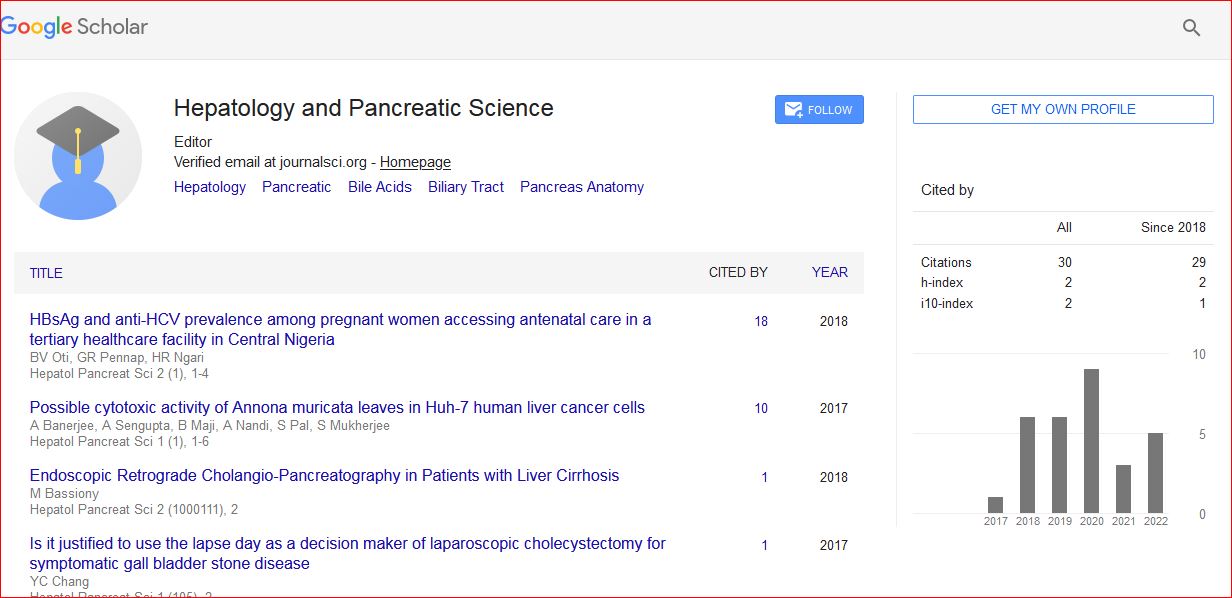
Hepatology and Pancreatic Science received 34 citations as per Google Scholar report