Opinion - (2025) Volume 14, Issue 4
Received: 03-Aug-2025, Manuscript No. jsp-26-182264;
Editor assigned: 05-Aug-2025, Pre QC No. P-182264;
Reviewed: 19-Aug-2025, QC No. Q-182264;
Revised: 21-Aug-2025, Manuscript No. R-182264;
Published:
30-Aug-2025
, DOI: 10.37421/2165-7939.2025.14.733
Citation: Morgan, Christopher L.. ”Spinal Tumors: Multidisciplinary Diagnosis and Treatment.” J Spine 14 (2025):733.
Copyright: © 2025 Morgan L. Christopher This is an open-access article distributed under the terms of the Creative Commons Attribution License, which permits unrestricted use, distribution and reproduction in any medium, provided the original author and source are credited.
Spinal tumors, encompassing both primary and metastatic lesions, present a formidable diagnostic and therapeutic challenge within the field of oncology and neurosurgery. Their clinical manifestations exhibit significant variability, largely dependent on the specific tumor type, its anatomical location within the vertebral column or spinal canal, its overall size, and its rate of cellular proliferation and growth. Commonly observed symptoms often include persistent localized pain that may intensify over time, a spectrum of neurological deficits such as progressive muscle weakness, sensory disturbances like numbness or paresthesia, and impairments in bowel or bladder control, alongside constitutional symptoms like unexplained weight loss and fatigue [1].
Metastatic spinal tumors constitute the most prevalent form of spinal malignancy encountered in clinical practice, originating from primary cancers that have disseminated from other sites within the body to the spine. Early recognition of the characteristic symptoms associated with these lesions and prompt initiation of appropriate imaging studies are absolutely crucial for achieving a timely diagnosis and enabling effective intervention. A systematic and comprehensive approach to the evaluation of suspected metastatic spinal disease, typically involving magnetic resonance imaging (MRI) and frequently complemented by computed tomography (CT) or positron emission tomography (PET) scans, plays a pivotal role in guiding treatment planning and optimizing patient management strategies. Multimodal treatment, meticulously tailored to the specific characteristics of the tumor, the overall condition of the patient, and their anticipated prognosis, represents the current standard of care. Surgical decompression and stabilization procedures are paramount for preserving neurological function, alleviating pain, and improving patient mobility and quality of life [2].
Primary spinal tumors, while statistically less common than metastatic lesions, originate directly from the tissues of the spinal cord, meninges, or vertebral elements themselves. These neoplasms encompass a remarkably diverse range of histological subtypes, including but not limited to meningiomas, schwannomas, ependymomas, and various sarcomas. Accurate histopathological diagnosis is of paramount importance, serving as the cornerstone for guiding subsequent treatment decisions and predicting patient outcomes. Surgical techniques, which increasingly incorporate minimally invasive approaches, are being progressively employed to achieve maximal safe resection of these tumors. Radiation therapy and chemotherapy continue to play significant and often indispensable roles, particularly for tumors that exhibit radiosensitivity or possess systemic metastatic potential [3].
Neurological deficits arising from the presence of spinal tumors necessitate an urgent and thorough evaluation, coupled with prompt and decisive intervention. Direct compression of the spinal cord or the nerve roots by the tumor mass can lead to progressive and potentially irreversible neurological damage if not addressed with appropriate urgency. A meticulous clinical assessment of motor strength, sensory perception, and reflex responses, in conjunction with advanced neuroimaging techniques, is essential for guiding the determination of the urgency and the selection of the optimal surgical approach for decompression. The primary focus of surgical techniques is to effectively relieve pressure on neural structures while simultaneously preserving existing neurological function, often followed by the administration of adjuvant therapies to enhance treatment efficacy [4].
Pain is frequently identified as a predominant and often debilitating symptom experienced by a significant majority of patients diagnosed with spinal tumors, exerting a profound negative impact on their overall quality of life and functional independence. Pain management strategies should be integrated into the overall treatment plan at the earliest possible stage of patient care. This comprehensive approach typically involves a multimodal strategy that encompasses the judicious use of pharmacological agents such as analgesics and adjuvant medications, the application of interventional pain procedures, and the administration of radiation therapy. Furthermore, addressing the underlying cause of pain through surgical debulking of the tumor or stabilization of the affected spinal segment is also a critical component of effective pain management [5].
Radiotherapy plays a critically important and often central role in the management of a wide array of spinal tumors. It is particularly crucial for treating unresectable lesions, serving as an adjuvant therapy in the postoperative period to eradicate residual microscopic disease, or for the palliation of debilitating symptoms such as intractable pain and progressive neurological compression. Advanced radiotherapy techniques, including external beam radiation therapy (EBRT) and stereotactic radiosurgery (SRS), offer the capability for precise tumor targeting, thereby maximizing the potential for oncological control while simultaneously minimizing the risk of toxicity to adjacent healthy tissues and vital structures [6].
Chemotherapy and targeted therapies represent essential and integral components of the treatment armamentarium for a substantial proportion of systemic and aggressive spinal tumors, especially those for which specific molecular targets have been identified or that exhibit high proliferative rates. The precise selection of chemotherapeutic agents or targeted therapies is meticulously determined based on the primary histology of the tumor and its specific genetic profiling. Continuous advancements in the field of molecular biology are consistently driving the development of novel and increasingly effective targeted therapeutic agents, offering new hope for patients with challenging spinal malignancies [7].
Surgical outcomes following spinal tumor resection are significantly influenced by a complex interplay of several critical factors. These include, but are not limited to, the specific histological type of the tumor, the extent to which it can be safely resected, the patient's neurological status prior to surgery, and the presence of significant comorbidities. Substantial advancements in surgical instrumentation and the refinement of surgical techniques, such as the integration of navigation systems and the utilization of intraoperative monitoring, have demonstrably improved both the safety and the overall efficacy of surgical interventions. The overarching goal of surgical management remains the achievement of maximal safe resection to enhance oncological control and optimize functional outcomes for the patient [8].
Spinal instability represents a common and often serious complication associated with the presence of spinal tumors, arising either directly from the tumor's destructive effect on the vertebral bone or as a consequence of aggressive surgical resection performed to remove the tumor. Stabilization procedures, frequently employing specialized instrumentation such as pedicle screws and rods, are often necessitated to prevent further neurological compromise, to maintain spinal column integrity, and to facilitate patient mobilization and subsequent recovery. The precise timing and the appropriate extent of spinal stabilization are critical considerations that must be carefully evaluated and integrated into the overall management strategy for each individual patient [9].
The effective management of spinal tumors unequivocally requires a collaborative and highly integrated multidisciplinary approach. This approach necessitates the seamless cooperation of a diverse team of medical specialists, including neurosurgeons, orthopedic spine surgeons, radiation oncologists, medical oncologists, pathologists, and radiologists. This unified and integrated strategy is designed to ensure comprehensive and holistic patient care, with the ultimate objective of optimizing both oncological outcomes and the patient's quality of life through the development and implementation of highly personalized treatment plans [10].
Spinal tumors, encompassing both primary and metastatic lesions, present a complex diagnostic and therapeutic challenge. Their clinical manifestations are highly variable, often depending on tumor type, location, size, and rate of growth. Common symptoms include localized pain, neurological deficits (such as weakness, numbness, or bowel/bladder dysfunction), and constitutional symptoms like weight loss. Management strategies are multidisciplinary, involving a combination of surgical resection, radiation therapy, chemotherapy, and targeted therapies. The primary goals of treatment are to relieve pain, decompress neural elements, stabilize the spine, and achieve oncological control, ultimately aiming to improve or maintain quality of life [1].
Metastatic spinal tumors represent the most common type of spinal malignancy, originating from primary cancers elsewhere in the body. Early recognition of symptoms and prompt imaging are crucial for timely diagnosis and intervention. A systematic approach to evaluation, including MRI and often CT or PET scans, guides treatment planning. Multimodal treatment, tailored to the specific tumor, patient condition, and expected prognosis, is standard. Surgical decompression and stabilization are key for neurological preservation and pain relief [2].
Primary spinal tumors, though less common than metastases, originate from spinal cord or vertebral elements. These include a diverse range of neoplasms like meningiomas, schwannomas, ependymomas, and sarcomas. Histopathological diagnosis is paramount for guiding treatment. Surgical techniques, including minimally invasive approaches, are increasingly employed to achieve maximal safe resection. Radiation and chemotherapy play significant roles, especially for radiosensitive or systemic malignancies [3].
Neurological deficits arising from spinal tumors necessitate urgent evaluation and intervention. Compression of the spinal cord or nerve roots can lead to progressive and irreversible damage if not addressed promptly. Clinical assessment of motor strength, sensation, and reflexes, coupled with advanced imaging, guides the urgency and approach to decompression. Surgical techniques focus on relieving pressure while preserving neurological function, often followed by adjuvant therapies [4].
Pain is a predominant symptom in a majority of patients with spinal tumors, significantly impacting their quality of life. Pain management strategies should be integrated early into the treatment plan. This often involves a multimodal approach including pharmacological agents (analgesics, adjuvant medications), interventional procedures, and radiation therapy. Addressing the underlying cause of pain through tumor debulking or stabilization is also critical [5].
Radiotherapy plays a crucial role in the management of many spinal tumors, particularly for unresectable lesions, as an adjuvant therapy after surgery, or for palliation of symptoms like pain and neurological compression. Techniques such as external beam radiation therapy (EBRT) and stereotactic radiosurgery (SRS) offer precise targeting to maximize tumor control while minimizing toxicity to adjacent healthy tissues [6].
Chemotherapy and targeted therapies are essential components of treatment for many systemic and aggressive spinal tumors, particularly those with known molecular targets or high proliferative rates. The selection of agents depends on the primary histology and genetic profiling of the tumor. Advances in molecular biology are continuously leading to the development of new, more effective targeted agents [7].
Surgical outcomes for spinal tumors are influenced by several factors, including tumor type, extent of resection, neurological status preoperatively, and patient comorbidities. Advances in surgical instrumentation and techniques, such as navigation systems and intraoperative monitoring, have improved safety and efficacy. The goal remains maximal safe resection to improve oncological control and functional outcomes [8].
Spinal instability is a common complication of spinal tumors, either due to direct bony destruction or as a consequence of aggressive surgical resection. Stabilization procedures, using instrumentation like pedicle screws and rods, are often required to prevent further neurological compromise and to facilitate patient mobilization and recovery. The timing and extent of stabilization are critical considerations in management [9].
The management of spinal tumors requires a collaborative, multidisciplinary approach involving neurosurgeons, orthopedic spine surgeons, radiation oncologists, medical oncologists, pathologists, and radiologists. This integrated strategy ensures comprehensive patient care, optimizing both oncological outcomes and quality of life through personalized treatment plans [10].
Spinal tumors, both primary and metastatic, pose complex challenges in diagnosis and treatment. Symptoms vary widely and can include pain, neurological deficits, and constitutional issues. Management is multidisciplinary, aiming to relieve pain, decompress neural elements, stabilize the spine, and control the tumor. Metastatic tumors are more common, requiring prompt recognition and imaging for effective intervention. Primary tumors originate from spinal tissues and require accurate histopathological diagnosis. Neurological deficits demand urgent evaluation and intervention to prevent irreversible damage. Pain is a significant symptom addressed through multimodal strategies. Radiotherapy is crucial for unresectable, adjuvant, or palliative cases, using precise techniques. Chemotherapy and targeted therapies are vital for systemic and aggressive tumors, guided by histology and genetic profiling. Surgical outcomes depend on tumor type, resection extent, and patient factors, with advancements improving safety and efficacy. Spinal instability is a common complication requiring stabilization procedures. Ultimately, a collaborative, multidisciplinary approach is essential for optimizing oncological outcomes and quality of life.
None
None
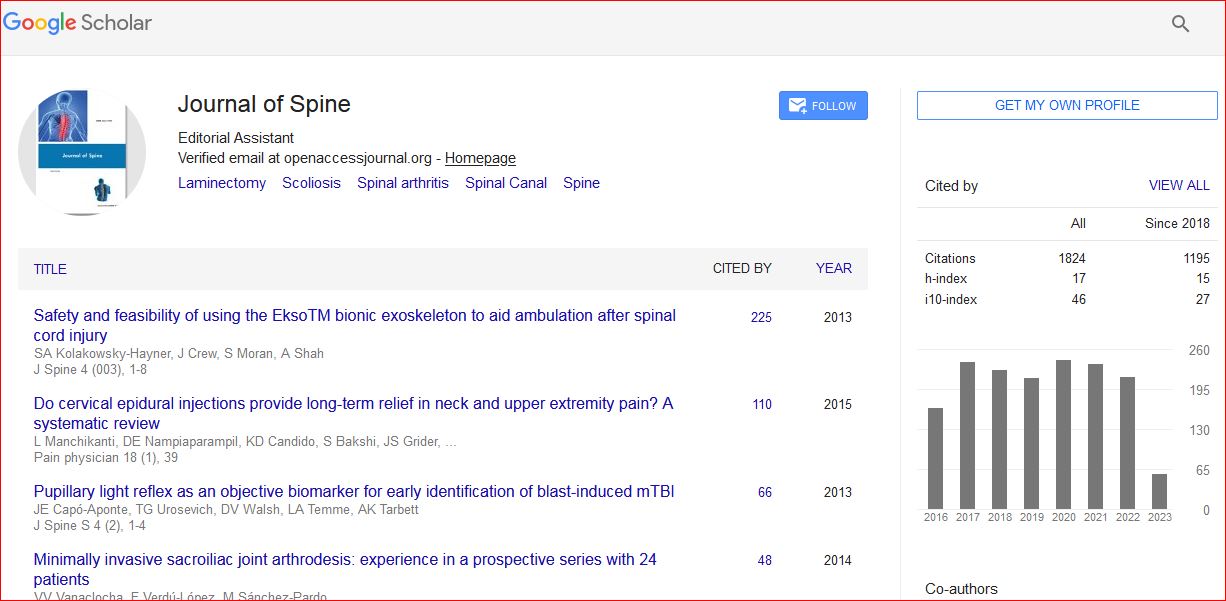
Journal of Spine received 2022 citations as per Google Scholar report