Commentary - (2025) Volume 13, Issue 6
Received: 03-Nov-2025, Manuscript No. economics-26-186079;
Editor assigned: 05-Nov-2025, Pre QC No. P-186079;
Reviewed: 19-Nov-2025, QC No. Q-186079;
Revised: 24-Nov-2025, Manuscript No. R-186079;
Published:
01-Dec-2025
, DOI: 10.37421/2375-4389.2025.13.553
Citation: Pacheco, Diego Morales. ”Social Welfare: Fueling Inclusive
Growth and Equity.” J Glob Econ 13 (2025):553.
Copyright: © 2025 Pacheco M. Diego This is an open-access article distributed under the terms of the Creative Commons Attribution License, which permits unrestricted use,
distribution and reproduction in any medium, provided the original author and source are credited.
Inclusive growth strategies, particularly those centered on social welfare programs, are vital for reducing income inequality and enhancing societal well-being. These approaches emphasize targeted interventions and equitable resource distribution, fostering sustainable development and social cohesion within a globalized economy. Adaptive policy frameworks are crucial for addressing diverse socioeconomic challenges across different regions [1].
Conditional cash transfer programs have demonstrated a significant impact on poverty reduction and human capital development. Well-designed social welfare interventions can substantially improve health and education outcomes. Furthermore, these programs highlight the importance of fiscal sustainability and administrative efficiency, advocating for evidence-based policymaking in developing countries [2].
Social protection systems play a critical role in shaping labor market outcomes in developed economies. Robust social welfare programs can stimulate economic dynamism by supporting risk-taking and facilitating job transitions, rather than creating work disincentives. Comprehensive social safety nets offer multifaceted benefits to economies [3].
Promoting social inclusion through policies that ensure equal opportunities and reduce social exclusion can unlock substantial untapped economic potential. Investing in marginalized communities and establishing equitable economic structures yield significant economic returns. A holistic development approach integrating social and economic objectives is essential [4].
Universal basic income (UBI) presents an intriguing option as a social welfare program aimed at promoting inclusive growth. Assessing its potential impacts on poverty, labor supply, and economic inequality requires careful consideration of design parameters and implementation strategies. UBI offers a balanced perspective on its feasibility and desirability in contemporary economies [5].
Social entrepreneurship serves as a powerful catalyst for innovative social welfare solutions that drive inclusive growth. Social enterprises effectively address market failures and social needs by merging social missions with sound business principles. Fostering a vibrant social enterprise sector necessitates supportive models and policies [6].
Social welfare programs significantly influence social mobility and intergenerational equity. Effective social policies can disrupt cycles of poverty and disadvantage, empowering individuals to achieve their full potential. Investments in education, healthcare, and social safety nets have demonstrable long-term impacts on social mobility [7].
Decentralized social welfare delivery systems are instrumental in promoting inclusive growth, particularly in developing nations. Challenges related to local governance, community participation, and resource allocation must be addressed to ensure programs reach intended beneficiaries. Lessons learned and best practices can enhance the efficiency and equity of decentralized welfare provision [8].
Gender equality is intrinsically linked to inclusive growth, with social welfare programs empowering women and boosting their economic participation. Gender-sensitive policies in education, health, and employment are crucial for achieving equitable development. Gender empowerment yields significant multiplier effects on overall economic prosperity [9].
Digital technologies are transforming the delivery and effectiveness of social welfare programs. Digital platforms can enhance accessibility, efficiency, and transparency in social service provision, thereby contributing to more inclusive growth. Harnessing technology for social good requires addressing the potential and challenges of digital transformation in the social sector [10].
The exploration of inclusive growth strategies underscores the critical role of social welfare programs in mitigating income inequality and enhancing societal well-being. These strategies advocate for targeted interventions and equitable resource distribution as foundational elements for sustainable development and social cohesion in an increasingly interconnected global economy. The effectiveness of adaptive policy frameworks is highlighted in navigating diverse socioeconomic challenges across various regions [1].
The analysis of conditional cash transfer programs reveals their substantial contributions to poverty reduction and human capital development. Such social welfare initiatives, when effectively designed, demonstrably improve health and educational outcomes for recipients. Furthermore, considerations of fiscal sustainability and administrative efficiency are paramount for the successful implementation of these programs, especially within the context of developing countries, emphasizing the need for evidence-based policymaking [2].
Research into social protection systems and their interplay with labor market dynamics in OECD countries suggests that comprehensive social welfare programs can foster greater economic dynamism. By supporting individuals in taking risks and facilitating transitions between employment, these programs can stimulate economic activity rather than create disincentives to work, underscoring the multifaceted advantages of robust social safety nets [3].
The economic returns of social inclusion are further elucidated by policies designed to promote equal opportunities and reduce social exclusion. These initiatives aim to unlock latent economic potential within societies by focusing on the economic benefits of investing in marginalized communities and building more equitable economic structures. A holistic development paradigm that harmonizes social and economic objectives is essential for achieving comprehensive progress [4].
Universal Basic Income (UBI) is examined as a potential social welfare program with the capacity to advance inclusive growth. This perspective involves assessing UBI's potential impacts on poverty levels, labor supply dynamics, and the reduction of economic inequality, taking into account various design choices and implementation methodologies. The research provides a balanced view on the practical viability and desirability of UBI in contemporary economic landscapes [5].
Social entrepreneurship emerges as a key driver for innovative social welfare solutions that contribute to inclusive growth. Social enterprises are uniquely positioned to address market failures and unmet social needs by integrating social missions with business acumen. The study explores successful models and proposes policy recommendations to cultivate a thriving social enterprise ecosystem [6].
The impact of social welfare programs on social mobility and intergenerational equity is a significant area of investigation. The argument presented is that well-executed social policies can effectively break the cycles of poverty and disadvantage, thereby enabling individuals to realize their full potential. Quantitative analysis demonstrates how investments in education, healthcare, and social safety nets positively influence long-term social mobility [7].
The effectiveness of decentralized social welfare delivery systems in fostering inclusive growth, particularly in developing countries, is assessed. This involves examining the inherent challenges associated with local governance, encouraging community participation, and ensuring equitable resource allocation to guarantee that social programs reach their intended recipients. The study distills lessons learned and identifies best practices for enhancing the efficiency and equity of decentralized welfare provision [8].
The intersection of gender equality and inclusive growth is explored, focusing on how social welfare programs can empower women and foster their economic participation. The importance of gender-sensitive policies across education, healthcare, and employment sectors is emphasized as a prerequisite for achieving equitable development outcomes. Evidence suggests that empowering women yields significant multiplier effects on overall economic prosperity [9].
The influence of digital technologies on the delivery and efficacy of social welfare programs is investigated. The research examines how digital platforms can augment the accessibility, efficiency, and transparency of social service provision, thereby contributing to more inclusive growth. The paper deliberates on the opportunities and obstacles associated with digital transformation within the social sector, offering policy guidance for leveraging technology for social betterment [10].
This collection of research explores the multifaceted role of social welfare programs in fostering inclusive growth and reducing socioeconomic disparities. Key themes include the impact of targeted interventions like conditional cash transfers, the importance of social protection for labor market dynamics, and the economic benefits of social inclusion. The studies also delve into innovative approaches such as universal basic income and social entrepreneurship, alongside the critical aspects of social mobility, decentralized delivery systems, gender equality, and the transformative potential of digital technologies in enhancing welfare provision. Collectively, these papers advocate for evidence-based policymaking and a holistic approach to development that integrates social and economic objectives to achieve sustainable and equitable progress.
None
None
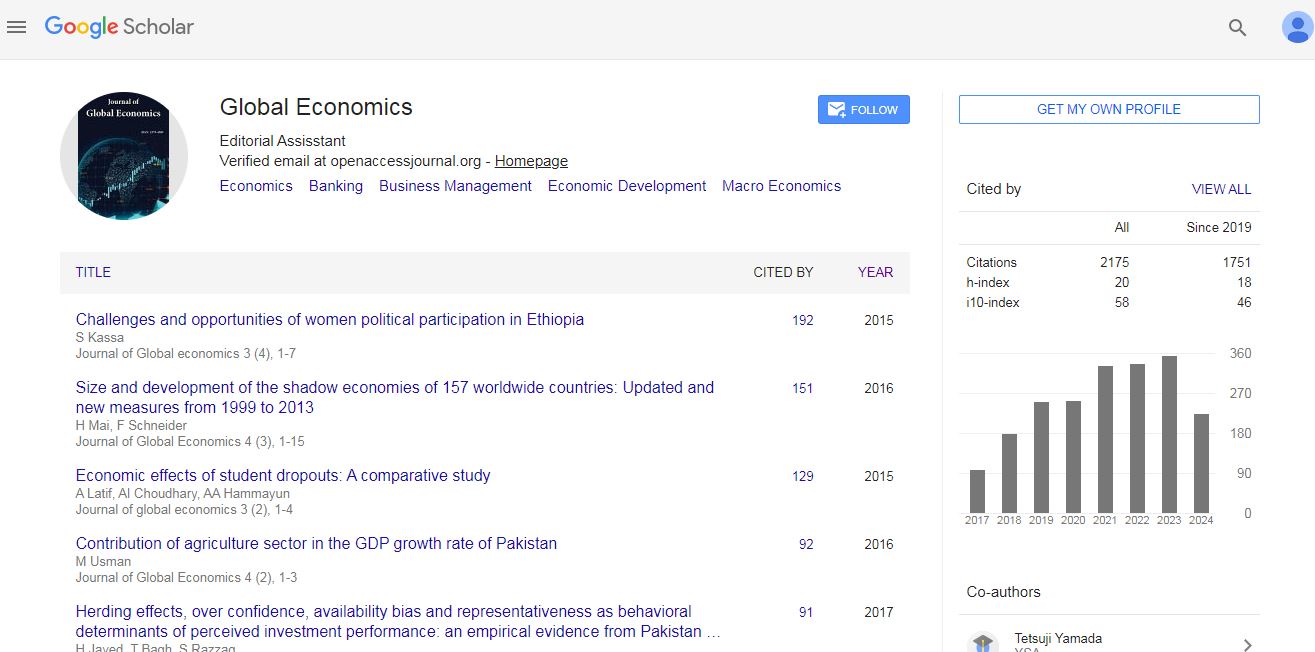
Journal of Global Economics received 2175 citations as per Google Scholar report