Brief Report - (2026) Volume 16, Issue 2
Received: 02-Mar-2026, Manuscript No. jnt-26-191279;
Editor assigned: 04-Mar-2026, Pre QC No. P-191279;
Reviewed: 18-Mar-2026, QC No. Q-191279;
Revised: 23-Mar-2026, Manuscript No. R-191279;
Published:
30-Mar-2026
, DOI: 10.37421/2161-0959.2026.16.612
Citation: Bianchi, Lucia. ”SGLT2 Inhibitors: A New Era for Diabetic Kidney Disease.” J Nephrol Ther 16 (2026):612.
Copyright: © 2026 Bianchi L. This is an open-access article distributed under the terms of the Creative Commons Attribution License, which permits unrestricted use, distribution and reproduction in any medium, provided the original author and source are credited.
SGLT2 inhibitors represent a significant advancement in managing diabetic kidney disease (DKD), offering a dual benefit of glycemic control and direct renal protection. Their mechanism extends beyond glucose lowering to reduce intraglomerular pressure, inflammation, and oxidative stress, slowing DKD progression and reducing cardiovascular events in patients with type 2 diabetes and chronic kidney disease [1].
The EMPA-REG OUTCOME trial established the cardiovascular and renal benefits of empagliflozin, a landmark study demonstrating a significant reduction in the composite outcome of cardiovascular death, non-fatal myocardial infarction, or non-fatal stroke, alongside a notable decrease in the progression of albuminuria and renal events. This underscored the systemic protective effects of SGLT2 inhibition [2].
The CREDENCE trial provided further evidence for the renal protective effects of canagliflozin in patients with type 2 diabetes and established chronic kidney disease, showing a significant reduction in the composite outcome of end-stage kidney disease, doubling of serum creatinine, or renal death. This trial solidified the role of SGLT2 inhibitors in DKD management [3].
Dapagliflozin's impact on renal outcomes in patients with type 2 diabetes and chronic kidney disease was highlighted by the DAPA-CKD trial, which demonstrated a significant reduction in the rate of kidney function decline and cardiovascular or renal death. This study expanded the indications for SGLT2 inhibitors to a broader CKD population, irrespective of diabetes status [4].
The pleiotropic effects of SGLT2 inhibitors, including their impact on inflammation, oxidative stress, and tubular function, contribute to their renoprotective properties. By reducing glomerular hyperfiltration and mitigating podocyte injury, these agents offer a multifaceted approach to slowing DKD progression [5].
The reduction in albuminuria observed with SGLT2 inhibitors is a key indicator of their renoprotective effect. This decrease reflects improved glomerular hemodynamics and reduced proteinuria, both of which are crucial in preventing the progression of kidney damage in DKD [6].
Beyond glycemic control, SGLT2 inhibitors exert beneficial effects on blood pressure and body weight, which further contribute to their cardiovascular and renal protective profiles. These effects are independent of their glucose-lowering action and are important in the overall management of patients with DKD [7].
The therapeutic landscape for DKD has been significantly altered by the introduction of SGLT2 inhibitors. They are now recommended as a foundational therapy for many patients with type 2 diabetes and CKD, offering a paradigm shift from solely focusing on glycemic control to encompassing cardiorenal protection [8].
Understanding the molecular pathways by which SGLT2 inhibitors confer renal protection is crucial for optimizing their use. Insights into their effects on mitochondrial function, hypoxia-inducible factor pathways, and fibrosis offer avenues for further therapeutic development [9].
The long-term safety and efficacy of SGLT2 inhibitors in diverse patient populations with DKD continue to be evaluated. Ongoing research aims to identify specific patient subgroups who may derive the greatest benefit and to further refine treatment strategies for preventing kidney failure [10].
SGLT2 inhibitors represent a significant advancement in managing diabetic kidney disease (DKD), offering a dual benefit of glycemic control and direct renal protection. Their mechanism extends beyond glucose lowering to reduce intraglomerular pressure, inflammation, and oxidative stress, slowing DKD progression and reducing cardiovascular events in patients with type 2 diabetes and chronic kidney disease [1].
The EMPA-REG OUTCOME trial established the cardiovascular and renal benefits of empagliflozin, a landmark study demonstrating a significant reduction in the composite outcome of cardiovascular death, non-fatal myocardial infarction, or non-fatal stroke, alongside a notable decrease in the progression of albuminuria and renal events. This underscored the systemic protective effects of SGLT2 inhibition [2].
The CREDENCE trial provided further evidence for the renal protective effects of canagliflozin in patients with type 2 diabetes and established chronic kidney disease, showing a significant reduction in the composite outcome of end-stage kidney disease, doubling of serum creatinine, or renal death. This trial solidified the role of SGLT2 inhibitors in DKD management [3].
Dapagliflozin's impact on renal outcomes in patients with type 2 diabetes and chronic kidney disease was highlighted by the DAPA-CKD trial, which demonstrated a significant reduction in the rate of kidney function decline and cardiovascular or renal death. This study expanded the indications for SGLT2 inhibitors to a broader CKD population, irrespective of diabetes status [4].
The pleiotropic effects of SGLT2 inhibitors, including their impact on inflammation, oxidative stress, and tubular function, contribute to their renoprotective properties. By reducing glomerular hyperfiltration and mitigating podocyte injury, these agents offer a multifaceted approach to slowing DKD progression [5].
The reduction in albuminuria observed with SGLT2 inhibitors is a key indicator of their renoprotective effect. This decrease reflects improved glomerular hemodynamics and reduced proteinuria, both of which are crucial in preventing the progression of kidney damage in DKD [6].
Beyond glycemic control, SGLT2 inhibitors exert beneficial effects on blood pressure and body weight, which further contribute to their cardiovascular and renal protective profiles. These effects are independent of their glucose-lowering action and are important in the overall management of patients with DKD [7].
The therapeutic landscape for DKD has been significantly altered by the introduction of SGLT2 inhibitors. They are now recommended as a foundational therapy for many patients with type 2 diabetes and CKD, offering a paradigm shift from solely focusing on glycemic control to encompassing cardiorenal protection [8].
Understanding the molecular pathways by which SGLT2 inhibitors confer renal protection is crucial for optimizing their use. Insights into their effects on mitochondrial function, hypoxia-inducible factor pathways, and fibrosis offer avenues for further therapeutic development [9].
The long-term safety and efficacy of SGLT2 inhibitors in diverse patient populations with DKD continue to be evaluated. Ongoing research aims to identify specific patient subgroups who may derive the greatest benefit and to further refine treatment strategies for preventing kidney failure [10].
SGLT2 inhibitors are transforming the management of diabetic kidney disease (DKD) by providing both glycemic control and direct renal protection. These drugs work by reducing intraglomerular pressure, inflammation, and oxidative stress, thereby slowing disease progression and cardiovascular events. Landmark trials like EMPA-REG OUTCOME, CREDENCE, and DAPA-CKD have demonstrated the significant cardiovascular and renal benefits of specific SGLT2 inhibitors such as empagliflozin, canagliflozin, and dapagliflozin. These benefits include reduced risk of cardiovascular death, stroke, myocardial infarction, and progression of kidney disease. SGLT2 inhibitors also reduce albuminuria, improve glomerular hemodynamics, and mitigate podocyte injury. Their pleiotropic effects, including positive impacts on blood pressure and body weight, further enhance their cardiorenal protective profiles. Consequently, SGLT2 inhibitors are now considered a foundational therapy for many patients with type 2 diabetes and CKD. Ongoing research is exploring their molecular mechanisms and long-term efficacy to optimize their use and identify subgroups that benefit most.
None
None
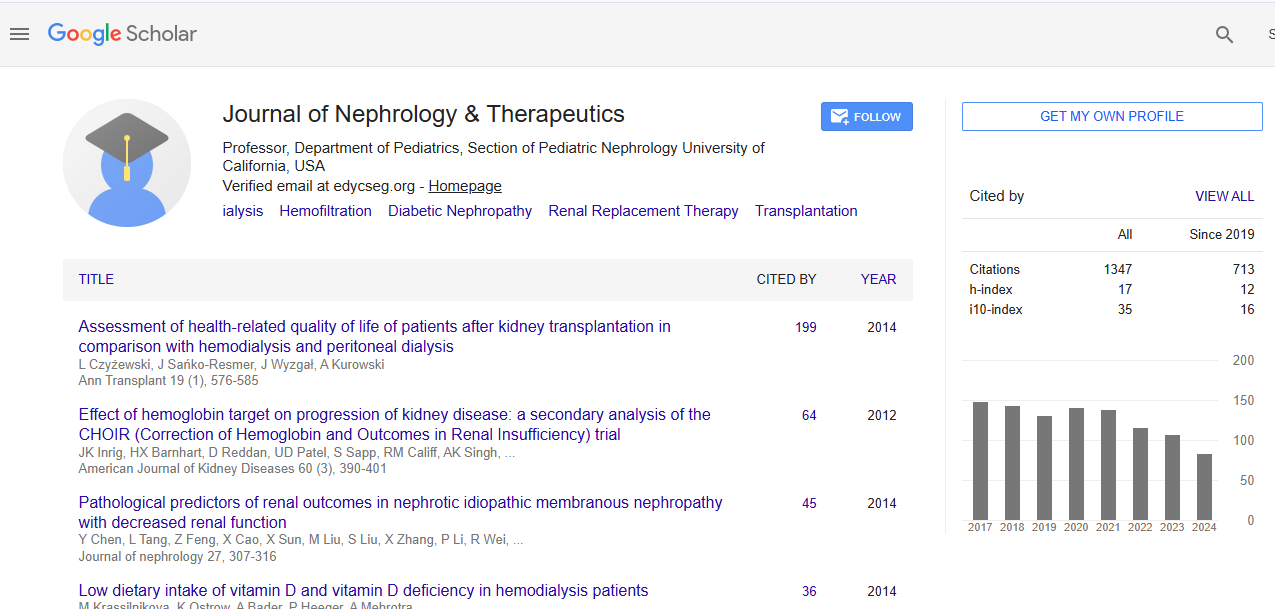
Journal of Nephrology & Therapeutics received 784 citations as per Google Scholar report