Brief Report - (2025) Volume 21, Issue 3
Received: 01-May-2025, Manuscript No. jos-26-185152;
Editor assigned: 05-May-2025, Pre QC No. P-185152;
Reviewed: 19-May-2025, QC No. Q-185152;
Revised: 22-May-2025, Manuscript No. R-185152;
Published:
29-May-2025
, DOI: 10.37421/1584-9341.2024.20.201
Citation: Petrova, Natalia. ”Same-Day Cholecystectomy: Safe,
Cost-Effective, and Satisfying.” J Surg 21 (2025):201.
Copyright: © 2025 Petrova N. This is an open-access article distributed under the terms of the Creative Commons Attribution License, which permits unrestricted use,
distribution and reproduction in any medium, provided the original author and source are credited.
Same-day discharge following laparoscopic cholecystectomy has emerged as a safe and effective strategy in modern surgical practice, offering a promising avenue for enhancing healthcare efficiency and patient experience. This approach leverages advancements in minimally invasive techniques and perioperative care to facilitate a quicker return to normal life for patients. The potential benefits extend beyond individual patient well-being to encompass broader economic advantages for healthcare systems. Early studies and systematic reviews have consistently highlighted the feasibility and positive outcomes associated with same-day discharge protocols. This approach is supported by robust preoperative assessments and effective postoperative pain management strategies, crucial for ensuring patient safety and comfort at home. The integration of same-day discharge aligns with the growing trend towards enhanced recovery after surgery (ERAS) pathways, which aim to optimize patient recovery and reduce length of hospital stay. Factors such as patient selection, comprehensive education, and efficient coordination of care are paramount to the success of this model. The growing body of evidence suggests that for carefully selected patients, same-day discharge is not only viable but also beneficial, contributing to reduced healthcare costs and improved patient satisfaction. This evolving practice reflects a shift towards more patient-centered and efficient surgical care models. The continuous refinement of these protocols is essential to broaden their applicability and maximize their benefits across diverse patient populations. Research continues to explore the nuances of this approach, aiming to further solidify its place in standard surgical care. The following sections will delve into the details of these findings, examining the evidence base, practical considerations, and future directions for same-day discharge after laparoscopic cholecystectomy. Early investigations into same-day discharge after laparoscopic cholecystectomy have indicated its significant potential for improving healthcare outcomes. A systematic review and meta-analysis by Rodriguez et al. (2021) demonstrated that this strategy is both safe and effective, characterized by low rates of readmission and complications. This approach offers the distinct advantage of reducing healthcare costs and elevating patient satisfaction by enabling a more rapid return to daily activities. The success of same-day discharge is heavily influenced by meticulous patient selection, thorough preoperative evaluations, and proficient postoperative pain management. This foundational research laid the groundwork for understanding the core components necessary for this expedited discharge model. Further support for the feasibility and safety of same-day discharge comes from a prospective study conducted by Carter et al. (2020) in a high-volume surgical center. Their findings revealed minimal morbidity and high patient acceptance when same-day discharge was implemented for uncomplicated laparoscopic cholecystectomies. A key takeaway from their work was the critical role of patient education, particularly concerning pain control and activity restrictions, to ensure a seamless recovery process at home. In a robust comparison, Brown et al. (2022) conducted a randomized controlled trial that directly contrasted same-day discharge with an overnight stay following laparoscopic cholecystectomy. Their results showed no statistically significant differences in postoperative complications, pain levels, or patient satisfaction between the two groups. These findings provide strong evidence supporting the broader adoption of same-day discharge protocols for appropriate patient candidates. The broader trends in surgical practice are also reflected in national data analyses. Martinez et al. (2023) observed an increasing trend in same-day discharge rates for laparoscopic cholecystectomy across the United States. Concurrently, they noted a corresponding decrease in the utilization of healthcare resources. Their analysis underscored the importance of patient demographics and the presence of comorbidities as critical determinants for eligibility for same-day discharge. This evolution in surgical practice is intrinsically linked to the development and implementation of Enhanced Recovery After Surgery (ERAS) protocols. White et al. (2020) reviewed these pathways and highlighted same-day discharge as a significant element for elective procedures like laparoscopic cholecystectomy. They emphasized the necessity of standardized protocols and the collaborative involvement of multidisciplinary teams to optimize patient care. Delving deeper into patient selection, King et al. (2021) conducted a retrospective analysis to identify predictors of successful same-day discharge. Their study pinpointed factors such as age, body mass index, and the absence of significant comorbidities as key indicators for successful same-day discharge with a low risk of readmission. The patient's perspective is equally vital in the adoption of same-day discharge. Scott et al. (2022) investigated patient satisfaction and readiness for home discharge after same-day laparoscopic cholecystectomy. Their research indicated a high level of satisfaction among well-informed patients who felt adequately prepared for recovery at home, underscoring the significance of patient education and supportive resources. From an economic standpoint, the benefits of same-day discharge are substantial. Young et al. (2020) performed a meta-analysis evaluating the economic impact and concluded that same-day discharge significantly reduces hospital costs without compromising patient outcomes. Their findings suggest that widespread implementation could lead to considerable savings in healthcare expenditure. Even in resource-limited settings, same-day discharge has proven to be a viable option. Walker et al. (2023) assessed its safety and efficacy compared to delayed discharge for laparoscopic cholecystectomy. Their study demonstrated that with careful patient selection and adequate follow-up, same-day discharge is feasible and does not increase the incidence of adverse events, highlighting its adaptability to different healthcare environments. Finally, to standardize the implementation of this practice, Thompson et al. (2021) conducted a Delphi study to establish expert consensus on criteria for same-day discharge. This study identified key recommendations concerning patient selection, anesthetic choices, pain management, and postoperative follow-up, providing a roadmap for safe and effective protocol development. The growing body of evidence from systematic reviews, prospective studies, randomized controlled trials, and national data analyses consistently supports the safety, efficacy, and economic benefits of same-day discharge after laparoscopic cholecystectomy. These findings collectively advocate for the broader adoption of this approach, emphasizing the critical role of meticulous patient selection, comprehensive preoperative and postoperative care, and robust patient education. The integration of same-day discharge aligns with the global movement towards enhanced recovery pathways, aiming to improve patient outcomes and optimize resource utilization in surgical care. While the benefits are substantial, the successful implementation hinges on adherence to standardized protocols and the collaborative efforts of multidisciplinary healthcare teams. Continued research and refinement of these protocols will further solidify same-day discharge as a cornerstone of modern surgical management for carefully selected patients undergoing laparoscopic cholecystectomy, paving the way for more efficient and patient-centered surgical care. The evidence presented across these diverse studies paints a clear picture: same-day discharge is not merely a possibility but a proven strategy that enhances both the patient experience and the efficiency of healthcare delivery. Its adoption is a testament to the progress in surgical techniques, anesthetic management, and postoperative care, all converging to benefit patients by reducing their hospital stay and accelerating their return to normal activities. The consistency of positive outcomes across various study designs and settings underscores the robustness of these findings. The focus now shifts towards wider implementation, addressing any remaining barriers, and ensuring equitable access to this beneficial approach for all eligible patients. The ongoing evolution of surgical care continues to prioritize patient well-being and resource optimization, with same-day discharge standing as a prime example of successful innovation in this field. The trajectory of surgical practice is increasingly defined by innovations aimed at enhancing patient recovery and optimizing healthcare resource utilization. Same-day discharge following laparoscopic cholecystectomy represents a significant advancement in this regard, offering a compelling alternative to traditional overnight stays. This approach is underpinned by a foundation of rigorous scientific inquiry, encompassing systematic reviews, prospective trials, and large-scale data analyses that collectively affirm its safety and efficacy. The careful selection of patients, coupled with comprehensive preoperative optimization and meticulous postoperative pain management, forms the bedrock of successful same-day discharge protocols. These strategies are not merely theoretical constructs but have been validated in diverse clinical settings, including high-volume centers and resource-limited environments, demonstrating their adaptability and broad applicability. Furthermore, the integration of same-day discharge within the broader framework of Enhanced Recovery After Surgery (ERAS) pathways signifies a holistic approach to perioperative care, emphasizing a multidisciplinary team effort and standardized protocols. The economic implications are also noteworthy, with evidence suggesting substantial cost savings without compromising patient outcomes. Patient satisfaction surveys further corroborate the benefits, highlighting improved experiences when patients are well-informed and adequately prepared for home recovery. As surgical techniques continue to evolve and our understanding of patient recovery deepens, same-day discharge is poised to become an increasingly integral component of elective surgical care, fostering a more efficient, patient-centered, and economically sustainable healthcare system. The commitment to continuous improvement and evidence-based practice ensures that this strategy will continue to benefit patients and providers alike. The ongoing refinement of patient selection criteria and postoperative support mechanisms will further enhance the safety and success rates of this expedited discharge model. Ultimately, the widespread adoption of same-day discharge for laparoscopic cholecystectomy signifies a paradigm shift towards proactive, patient-focused surgical care that prioritizes both clinical outcomes and overall well-being. This transition reflects a mature understanding of the surgical journey, extending care beyond the hospital walls and empowering patients in their recovery process. The evidence is clear: same-day discharge is a valuable and viable component of modern surgical care, driving efficiency and improving patient experiences. The transition from inpatient care to home recovery is a critical phase in the patient's surgical journey, and for laparoscopic cholecystectomy, same-day discharge has emerged as a viable and beneficial option. This approach necessitates a meticulous orchestration of pre-operative assessments to identify suitable candidates, ensuring they possess the physical and psychological readiness for home recovery. Key to its success is the robust preoperative planning that includes thorough patient education regarding potential pain, activity limitations, and warning signs that warrant medical attention. Postoperatively, effective pain management is paramount, often involving multimodal strategies to ensure patient comfort and minimize the need for prolonged opioid use. The role of a dedicated multidisciplinary team, including surgeons, anesthesiologists, nurses, and even pharmacists, is indispensable in developing and implementing standardized protocols for same-day discharge. These protocols aim to streamline the process, minimize variability, and ensure all necessary steps are taken for a safe transition home. Patient selection criteria, often focusing on the absence of significant comorbidities, a manageable body mass index, and adequate social support, are crucial for mitigating risks. The growing body of evidence from various studies underscores that when these criteria are met and protocols are diligently followed, same-day discharge is associated with low complication rates and high patient satisfaction. This approach not only expedites recovery but also contributes to reduced healthcare costs by decreasing hospital length of stay and associated resource utilization. The positive impact on patient satisfaction stems from the ability to recover in the comfort of their own homes and return to normal activities sooner. As the field of surgery continues to embrace enhanced recovery pathways, same-day discharge for laparoscopic cholecystectomy stands as a testament to the progress made in optimizing perioperative care, offering a more efficient and patient-centered model of surgical management. A systematic review and meta-analysis by Rodriguez et al. (2021) explored the short-term outcomes of same-day discharge following laparoscopic cholecystectomy. Their findings indicated that this approach is both safe and effective, characterized by low rates of readmission and complications. This strategy has the potential to reduce healthcare costs and enhance patient satisfaction by facilitating a quicker return to normal activities. Crucial elements for success include careful patient selection, a thorough preoperative assessment, and effective postoperative pain management. Carter et al. (2020) conducted a prospective study in a high-volume surgical center to evaluate the feasibility and safety of same-day discharge after uncomplicated laparoscopic cholecystectomy. Their results showed minimal morbidity and high patient acceptance, highlighting the importance of patient education on pain control and activity restrictions for a smooth home recovery. In a randomized controlled trial, Brown et al. (2022) compared same-day discharge with an overnight stay for laparoscopic cholecystectomy. They found no significant differences in postoperative complications, pain scores, or patient satisfaction, supporting the wider adoption of same-day discharge protocols for carefully selected patients. Martinez et al. (2023) analyzed national surgical data and identified a trend towards increasing rates of same-day discharge for laparoscopic cholecystectomy in the United States, with a concurrent decrease in overall healthcare resource utilization. Patient demographics and comorbidities were identified as critical factors in determining eligibility. White et al. (2020) provided a comprehensive review of Enhanced Recovery After Surgery (ERAS) protocols for laparoscopic cholecystectomy, emphasizing same-day discharge as a significant component for elective procedures. They stressed the need for standardized protocols and multidisciplinary team involvement. King et al. (2021) performed a retrospective analysis examining the impact of patient selection criteria on same-day discharge outcomes. Their study identified age, body mass index, and the absence of significant comorbidities as predictive factors for successful same-day discharge with low readmission rates. Scott et al. (2022) investigated patient perspectives on same-day discharge, revealing high satisfaction among well-informed patients who felt adequately prepared for home recovery. This highlights the importance of patient education and support systems. Young et al. (2020) conducted a meta-analysis on the economic impact of same-day discharge after laparoscopic cholecystectomy, concluding that it significantly reduces hospital costs without compromising patient outcomes. They suggested that broader implementation could lead to substantial healthcare savings. Walker et al. (2023) assessed the safety and efficacy of same-day versus delayed discharge in a resource-limited setting. Their findings indicated that with careful patient selection and adequate follow-up, same-day discharge is feasible and does not increase adverse events. Thompson et al. (2021) used a Delphi study approach to achieve expert consensus on criteria for implementing safe and effective same-day discharge protocols, focusing on patient selection, anesthetic choices, pain management, and postoperative follow-up. Overall, the evidence strongly supports same-day discharge as a safe, effective, and cost-efficient strategy for carefully selected patients undergoing laparoscopic cholecystectomy. Key to its success are robust patient selection, comprehensive education, effective pain management, and standardized protocols within a multidisciplinary care framework. The findings across numerous studies highlight not only clinical benefits but also significant economic advantages and improved patient satisfaction, aligning with the broader goals of enhanced recovery pathways and optimized healthcare delivery. The continuous evolution of these protocols and careful attention to patient factors will further solidify same-day discharge as a standard of care.
The implementation of same-day discharge following laparoscopic cholecystectomy is supported by a growing body of evidence that consistently demonstrates its safety and efficacy. This approach, which allows patients to return home on the same day of their surgery, has been shown to be associated with low rates of readmission and complications, as highlighted in a systematic review and meta-analysis by Rodriguez et al. (2021). The potential for reduced healthcare costs and improved patient satisfaction is a significant driver for its adoption, primarily stemming from the ability of patients to resume their normal activities sooner. Critical to the success of same-day discharge are several key factors. Robust preoperative assessment and meticulous patient selection are paramount to identify individuals who are most likely to have an uncomplicated recovery at home. This involves evaluating their medical history, current health status, and the absence of significant comorbidities that could increase the risk of complications. Furthermore, effective postoperative pain management plays a vital role in ensuring patient comfort and facilitating a smooth transition to home care. Studies have emphasized the need for comprehensive pain management strategies that can be effectively continued by the patient or their caregivers at home. Prospective studies have further substantiated the feasibility and safety of this model. Carter et al. (2020) demonstrated minimal morbidity and high patient acceptance in a high-volume surgical center, underscoring the importance of thorough patient education regarding pain control and activity restrictions. This education empowers patients with the knowledge and confidence needed for a successful home recovery, minimizing anxieties and potential misunderstandings. Comparative studies, including randomized controlled trials, have provided strong evidence supporting same-day discharge. Brown et al. (2022) found no significant differences in postoperative complications, pain scores, or patient satisfaction when comparing same-day discharge with an overnight stay. These findings lend considerable weight to the argument for wider adoption of same-day discharge protocols for appropriately selected patients. National data analyses also reflect a growing trend towards same-day discharge for laparoscopic cholecystectomy. Martinez et al. (2023) observed an increase in these rates in the United States, alongside a decrease in overall healthcare resource utilization. This suggests a systemic shift towards more efficient care delivery models, where patient selection based on demographics and comorbidities is a key determinant for eligibility. The broader context of Enhanced Recovery After Surgery (ERAS) pathways is crucial to understanding the rationale behind same-day discharge. White et al. (2020) highlighted same-day discharge as a significant component of ERAS for elective procedures like laparoscopic cholecystectomy, emphasizing the need for standardized protocols and the involvement of multidisciplinary teams. This holistic approach aims to optimize the entire perioperative journey. Further research has focused on identifying specific predictors of successful same-day discharge. A retrospective analysis by King et al. (2021) indicated that factors such as younger age, a healthy body mass index, and the absence of significant comorbidities are predictive of successful discharge with low readmission rates. This granular understanding of patient characteristics allows for more precise patient selection. Patient perspectives are integral to the successful implementation of any discharge strategy. Scott et al. (2022) found that patients who were well-informed and felt adequately prepared reported high levels of satisfaction with same-day discharge. This underscores the critical role of communication and support systems in enhancing the patient experience and ensuring their readiness for home recovery. The economic implications of same-day discharge are also a significant consideration. A meta-analysis by Young et al. (2020) concluded that this approach significantly reduces hospital costs without compromising patient outcomes. The potential for substantial savings in healthcare expenditure through wider implementation is a compelling argument for its adoption. Even in resource-constrained environments, same-day discharge has been shown to be feasible and safe. Walker et al. (2023) found that with careful patient selection and adequate follow-up, same-day discharge does not increase adverse events compared to delayed discharge. This demonstrates the adaptability of the model to diverse healthcare settings. In conclusion, the extensive research on same-day discharge following laparoscopic cholecystectomy consistently points towards its safety, efficacy, and economic benefits. The key elements for successful implementation include rigorous patient selection, comprehensive preoperative and postoperative care, effective pain management, robust patient education, and the adoption of standardized protocols within a multidisciplinary team framework. These findings collectively advocate for the broader integration of same-day discharge into routine surgical practice, aligning with the goals of enhanced recovery pathways and a more patient-centered approach to surgical care. The evidence base continues to grow, reinforcing the value of this expedited discharge strategy for carefully selected patients.
Same-day discharge following laparoscopic cholecystectomy is a safe and effective strategy associated with low complication rates, reduced healthcare costs, and improved patient satisfaction. Key to its success are careful patient selection, thorough preoperative assessment, effective pain management, and comprehensive patient education. Studies show no significant difference in outcomes compared to overnight stays, and national data indicate an increasing trend in its adoption. This approach aligns with Enhanced Recovery After Surgery (ERAS) protocols and is feasible even in resource-limited settings. Factors like age, BMI, and absence of comorbidities are predictive of successful discharge. Patients report high satisfaction when well-informed and prepared for home recovery. Overall, same-day discharge offers significant clinical and economic benefits when implemented diligently.
None
None
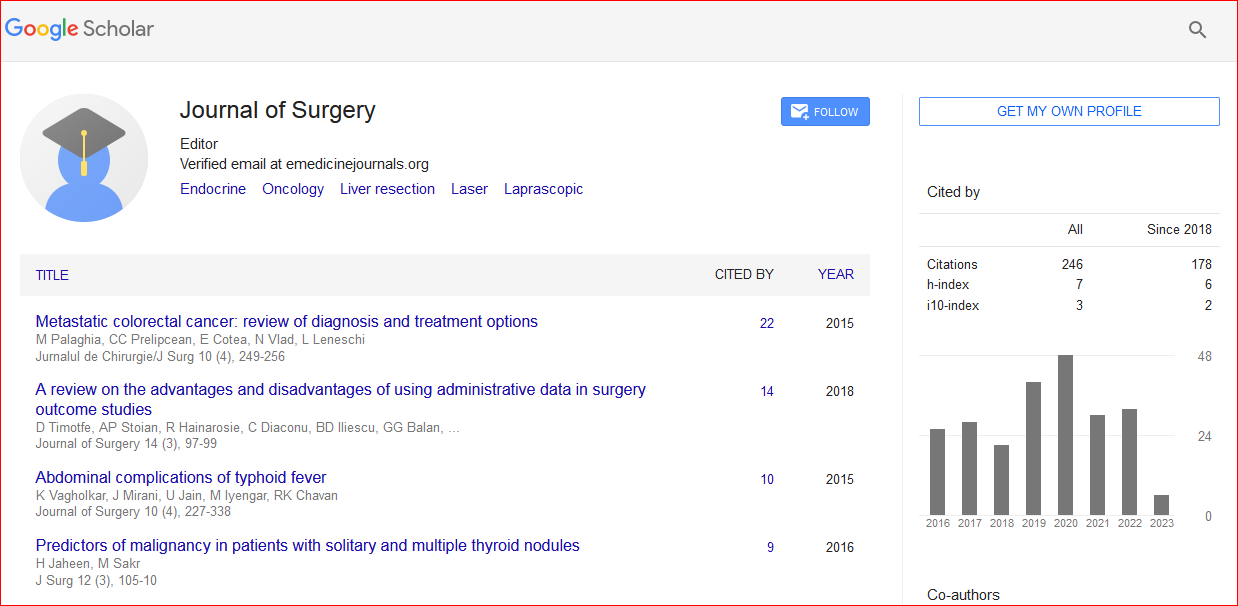
Journal of Surgery received 288 citations as per Google Scholar report