Short Communication - (2025) Volume 19, Issue 5
Received: 01-Oct-2025, Manuscript No. jmgm-26-188372;
Editor assigned: 03-Oct-2025, Pre QC No. P-188372;
Reviewed: 17-Oct-2025, QC No. Q-188372;
Revised: 22-Oct-2025, Manuscript No. R-188372;
Published:
29-Oct-2025
, DOI: 10.37421/1747-0862.2025.19.751
Citation: Zielinski, Tomasz. ”Revolutionizing Newborn Diagnostics: Genomic Screening Benefits.” J Mol Genet Med 19 (2025):751.
Copyright: © 2025 Zielinski T. This is an open-access article distributed under the terms of the Creative Commons Attribution License, which permits unrestricted use, distribution and reproduction in any medium, provided the original author and source are credited.
Neonatal genomic screening represents a transformative approach in pediatric care, offering a powerful method to identify a wide spectrum of genetic disorders in newborns shortly after birth [1].
This proactive strategy is pivotal for enabling timely diagnosis and intervention, which significantly enhances long-term health outcomes and has the potential to prevent severe disabilities or fatalities. Advances in sequencing technology and sophisticated bioinformatic analysis are increasingly making comprehensive genomic screening more feasible and cost-effective, thereby paving the way for its broader implementation in clinical settings [1].
Early detection facilitated by genomic screening is fundamentally changing how pediatric care is delivered by enabling personalized management and treatment plans that are precisely tailored to an infant's specific genetic profile. The implementation of rapid whole-genome sequencing (rWGS) within neonatal intensive care units (NICUs) has demonstrated remarkable success in diagnosing critical and often undiagnosed conditions in newborns [2].
By providing results within a matter of days, rWGS significantly accelerates clinical decision-making and can lead to the initiation of targeted therapies or the provision of palliative care, ultimately improving patient management and offering crucial support to families. This advanced sequencing technology, particularly rWGS, proves to be exceptionally impactful for neonates presenting with complex or rare diseases where traditional diagnostic methods often fall short, highlighting the limitations of conventional approaches in identifying the underlying genetic causes [2].
Expanded newborn screening (eNBS), leveraging next-generation sequencing, signifies a paradigm shift from traditional metabolic screens, enabling the identification of a much broader array of genetic disorders [3].
This enhanced screening capability allows for the detection of conditions that might not manifest until later in infancy or childhood, thereby facilitating presymptomatic diagnosis and the implementation of preventative measures. However, the expansion of newborn screening programs necessitates careful consideration and navigation of the associated ethical considerations and logistical challenges, which require ongoing discussion and robust planning to ensure equitable and effective implementation [3].
The integration of whole-exome sequencing (WES) into existing newborn screening protocols is steadily demonstrating its significant utility in the diagnosis of complex genetic syndromes [4].
WES possesses the capability to identify variants within the protein-coding regions of the genome, providing crucial insights into a vast number of known genetic disorders. While the clinical utility and cost-effectiveness of WES for neonates are still subjects of active research and development, its potential to uncover the genetic underpinnings of complex conditions is substantial and promising for future diagnostic advancements [4].
The profound impact of early genetic diagnosis extends to family well-being and the efficient utilization of healthcare resources [5].
Genomic screening empowers families to obtain a definitive diagnosis much sooner, thereby reducing the protracted diagnostic odyssey and granting access to appropriate support services and effective management strategies. This early certainty is instrumental in alleviating parental stress and facilitates more effective long-term care planning for the child, underscoring the multifaceted benefits of genomic insights in neonatal care [5].
Implementing genomic screening into the routine fabric of neonatal care requires the establishment of robust bioinformatic pipelines and the development of clear, standardized clinical guidelines [6].
The interpretation of complex genomic data demands specialized expertise to accurately differentiate between benign genetic variations and those that are pathogenic, ensuring reliable diagnostic outcomes. Standardizing analytical workflows and reporting procedures is therefore a critical step towards ensuring the consistent and dependable application of these advanced genomic technologies in clinical practice [6].
The potential for deriving pharmacogenomic insights from neonatal genomic screening is notably substantial [7].
Understanding an infant's unique genetic makeup can directly inform drug selection and optimal dosing strategies, thereby minimizing the risk of adverse reactions and maximizing therapeutic efficacy from the earliest stages of life. This personalized approach to pharmacotherapy holds significant promise for enhancing both the safety and overall outcomes for neonates receiving medical treatment [7].
Ethical considerations surrounding neonatal genomic screening are intricate and multifaceted, encompassing critical issues such as informed consent, the privacy of genetic data, the management of incidental findings, and the imperative of ensuring equitable access to these advanced diagnostic tools [8].
Striking a balance between the undeniable benefits of early detection and the potential harms or broader societal implications is paramount, necessitating ongoing dialogue among clinicians, researchers, policymakers, and the public for responsible implementation [8].
The long-term outcomes and the overall cost-effectiveness of widespread genomic newborn screening are subjects that continue to be meticulously evaluated [9].
Preliminary data, however, strongly suggest that the early identification of treatable genetic conditions can lead to significant reductions in long-term healthcare expenditures associated with managing chronic illnesses and disabilities. Demonstrating this compelling value proposition necessitates rigorous longitudinal studies to provide conclusive evidence of its economic and clinical benefits [9].
Technological advancements in both sequencing methodologies and data analysis are continuously enhancing the capabilities and operational efficiency of neonatal genomic screening platforms [10].
Innovations such as the development of portable sequencing devices and the application of artificial intelligence for variant interpretation are poised to further democratize access to these powerful tools and expand their clinical utility. The ongoing evolution within this dynamic field promises even greater precision and personalization in the delivery of pediatric care, offering hope for improved health trajectories for newborns [10].
Neonatal genomic screening offers a powerful and proactive approach to identifying a broad spectrum of genetic disorders in newborns shortly after birth, thereby significantly improving long-term health outcomes and potentially averting severe disabilities or fatalities through timely diagnosis and intervention [1].
This advanced strategy is becoming increasingly feasible and cost-effective due to progress in sequencing technology and bioinformatic analysis, which are facilitating its wider adoption in clinical practice. The early detection capabilities of genomic screening are revolutionizing pediatric care by enabling the development of personalized management and treatment plans that are precisely tailored to each infant's unique genetic profile, marking a significant shift towards precision medicine in neonatology [1].
In neonatal intensive care units (NICUs), the implementation of rapid whole-genome sequencing (rWGS) has proven exceptionally successful in diagnosing critical and previously undiagnosed conditions [2].
The ability to obtain results within days allows for expedited clinical decision-making, which can directly lead to the initiation of targeted therapies or, when necessary, the implementation of palliative care. This accelerated diagnostic process not only improves patient management but also provides essential support and clarity for families navigating complex medical situations, particularly for neonates with rare or intricate diseases where conventional diagnostics are often insufficient [2].
Expanded newborn screening (eNBS) utilizing next-generation sequencing represents a significant advancement beyond traditional metabolic screening, enabling the identification of a much wider range of genetic disorders [3].
This broader screening capacity allows for the detection of conditions that may manifest later in infancy or childhood, facilitating presymptomatic diagnosis and the proactive implementation of preventative interventions. Navigating the complexities of these expanded screening programs requires careful consideration of ethical implications and logistical challenges, underscoring the need for ongoing dialogue and strategic planning to ensure equitable and effective implementation for all newborns [3].
The integration of whole-exome sequencing (WES) into newborn screening protocols is increasingly demonstrating its value in diagnosing complex genetic syndromes [4].
WES focuses on the protein-coding regions of the genome, providing insights into a vast number of genetic disorders and offering a more targeted approach to genetic diagnostics. While the clinical utility and cost-effectiveness of WES for neonates are still areas of active research, its capacity to identify pathogenic variants holds significant promise for improving diagnostic yield in complex cases and advancing personalized pediatric care [4].
The early identification of genetic conditions through genomic screening has a profound positive impact on family well-being and the efficient utilization of healthcare resources [5].
Families benefit from reduced diagnostic odysseys, leading to earlier access to appropriate support services and management strategies. This early certainty can significantly alleviate parental stress and anxiety, enabling better long-term care planning and improving the overall family experience during a critical period [5].
For the effective implementation of genomic screening into routine neonatal care, the establishment of robust bioinformatic pipelines and clear clinical guidelines is essential [6].
The interpretation of complex genomic data requires specialized expertise to accurately distinguish between benign genetic variations and those that are truly pathogenic, ensuring diagnostic accuracy. Standardizing analytical workflows and reporting mechanisms is crucial for maintaining the reliability and consistency of these advanced genomic technologies in clinical settings [6].
Neonatal genomic screening offers substantial potential for deriving pharmacogenomic insights, which can inform personalized drug selection and dosing strategies from birth [7].
Understanding an infant's genetic makeup can help minimize adverse drug reactions and optimize therapeutic efficacy, leading to improved safety and better health outcomes. This personalized approach to pharmacotherapy in neonates is a critical step towards maximizing treatment benefits and reducing risks, representing a significant advancement in neonatal pharmacogenomics [7].
Ethical considerations surrounding neonatal genomic screening are complex and multifaceted, requiring careful attention to issues such as informed consent, data privacy, the management of incidental findings, and ensuring equitable access to these technologies [8].
Balancing the benefits of early detection with potential harms and societal implications necessitates ongoing dialogue and collaboration among all stakeholders to ensure responsible and ethical implementation [8].
While the long-term outcomes and cost-effectiveness of widespread genomic newborn screening are still under rigorous evaluation, preliminary data suggest that early identification of treatable conditions can lead to substantial reductions in long-term healthcare costs [9].
This potential for cost savings, coupled with improved health outcomes, underscores the importance of continued research and investment in proving the value proposition of genomic newborn screening through longitudinal studies [9].
Continuous technological advancements in sequencing and data analysis are further enhancing the capabilities and efficiency of neonatal genomic screening [10].
Innovations like portable sequencing devices and AI-driven variant interpretation are poised to democratize access and broaden the clinical utility of these powerful tools. The ongoing evolution of this field promises even greater precision and personalization in pediatric care, offering a brighter future for newborn health through advanced genomic insights [10].
Neonatal genomic screening, including techniques like rapid whole-genome sequencing (rWGS) and whole-exome sequencing (WES), is revolutionizing newborn diagnostics. This approach allows for early identification of a wide range of genetic disorders, enabling timely intervention and personalized treatment plans. Advances in technology have made these screenings more feasible and cost-effective. Early diagnosis reduces the diagnostic odyssey for families, alleviating stress and improving long-term care. Pharmacogenomic insights from screening can optimize drug therapy for neonates. While ethical considerations and the need for robust bioinformatic infrastructure are crucial, the potential benefits for infant health and healthcare resource utilization are significant. Ongoing research continues to evaluate long-term outcomes and cost-effectiveness.
None
None
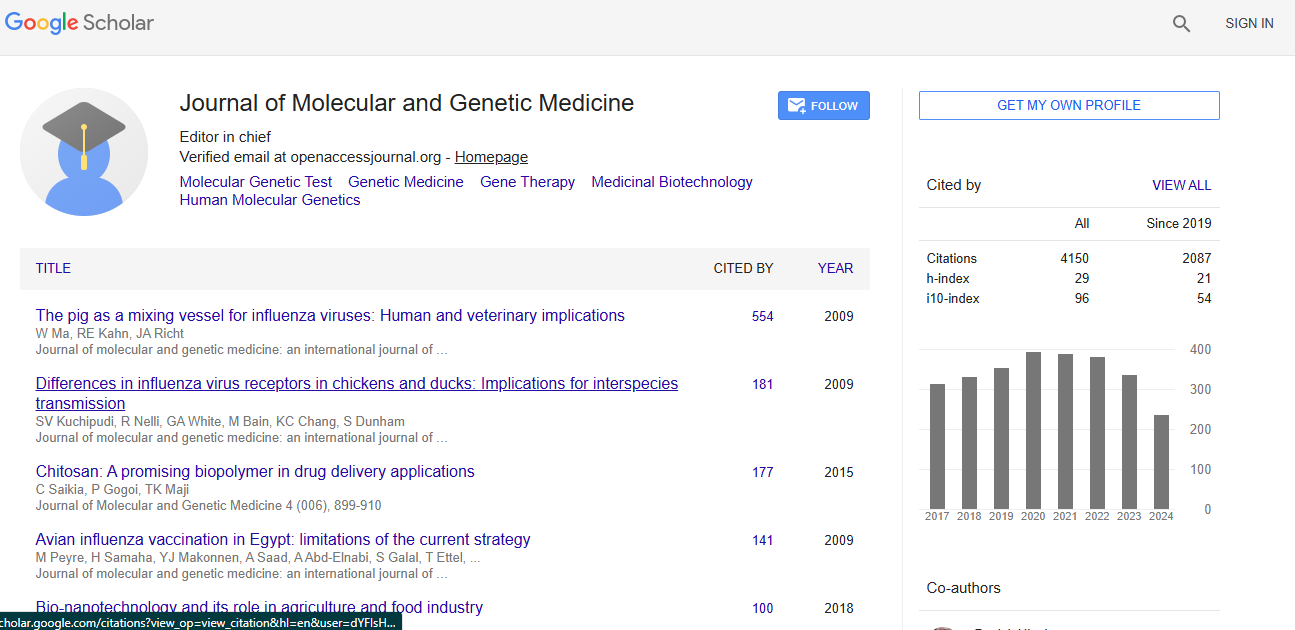
Molecular and Genetic Medicine received 3919 citations as per Google Scholar report