Research Article - (2025) Volume 15, Issue 1
Received: 19-Aug-2024, Manuscript No. JTESE-24-145815;
Editor assigned: 22-Aug-2024, Pre QC No. JTESE-24-145815 (PQ);
Reviewed: 05-Sep-2024, QC No. JTESE-24-145815;
Revised: 21-Dec-2024, Manuscript No. JTESE-24-145815 (R);
Published:
28-Jan-2025
, DOI: 10.37421/2165-8064.2025.15.628
Citation: Das, Sourav Chandra. "Research Paper on the Role of RMG and Frozen Foods on National Economy." J Textile Sci Eng 15 (2025): 628.
Copyright: © 2025 Das SC. This is an open-access article distributed under the terms of the creative commons attribution license which permits unrestricted use, distribution and reproduction in any medium, provided the original author and source are credited.
This term paper examines the significant contributions of the Ready-Made Garment (RMG) and frozen food industries to the Bangladeshi national economy. It delves into the economic impact of these sectors, analyzing their roles in generating employment, foreign exchange earnings, and overall GDP growth. The research explores the challenges and opportunities facing these industries, highlighting their potential for further development and contribution to the nation's economic prosperity. The study employs a mixed-methods approach, combining quantitative data analysis with qualitative insights from industry experts and stakeholders. Key findings reveal the interconnectedness of these sectors with other industries within the Bangladeshi economy and underscore the importance of sustainable practices and government policies in fostering their growth. This paper provides a comprehensive understanding of the role of RMG and frozen foods in shaping Bangladesh's economic landscape, offering strategic insights for future development.
RMG • GDP growth • Frozen food • Economic prosperity • Export potentia
The Bangladeshi economy is experiencing a significant transformation, driven by the rapid growth of various sectors. Among these, the Ready-Made Garment (RMG) and frozen food industries stand out as key contributors to the nation's economic prosperity. The Ready-Made Garment (RMG) sector, a pivotal element of Bangladesh's economy, has experienced significant growth recently, emerging as a key contributor to employment and foreign exchange earnings. Between 2011 and 2019, RMG exports from Bangladesh more than doubled, with an annual growth rate of 7%. By December 2020, total RMG exports reached USD 27.4 billion, securing a 6.30% share of the global apparel export market, which was valued at $435 billion. Simultaneously, the frozen food sector has become essential in addressing the growing domestic demand for processed foods while also enhancing export revenues. In the fiscal year 2020-21, the revenue from frozen food exports amounted to USD 477.37 million, reflecting a 4.65% increase from the USD 456.15 million achieved in the previous fiscal year.
This term paper aims to explore the multifaceted role of RMG and frozen foods in shaping the Bangladeshi national economy. It will delve into the economic impact of these sectors, analyzing their contribution to GDP growth, employment generation, and foreign exchange earnings. Furthermore, the paper will examine the challenges and opportunities facing these industries, highlighting their potential for further development and contribution to the nation's economic prosperity.
The research employs a mixed-methods approach, integrating both quantitative and qualitative data to provide a comprehensive analysis. By exploring the interconnectedness of these sectors and their impact on other industries within the Bangladeshi economy, this paper seeks to provide a well-rounded understanding of their significance and potential for future growth. The following chapters will systematically address the economic contributions, employment generation capacity, export potential, challenges, opportunities, and the influence of government policies on the RMG and frozen food industries.
Aims of the study
This study aims to provide a comprehensive analysis of the contributions of the Ready Made Garment (RMG) and frozen food industries to the Bangladeshi national economy. Specific objectives include:
• To identify the economic contributions of the RMG and frozen foods sectors: This involves quantifying their contributions to GDP, foreign exchange earnings, and overall economic growth.
• To analyze the employment generation capacity of the RMG and frozen foods industries : This includes examining the number and demographics of jobs created, with a focus on gender and regional distribution.
• To examine the export potential and performance of RMG and frozen foods: This encompasses evaluating current export markets, trade agreements, and the competitiveness of these sectors on a global scale.
• To understand the challenges faced by the RMG and frozen foods sectors: This involves identifying key issues such as working conditions, environmental sustainability, and market access barriers.
• To study the impact of government policies on the growth of the RMG and frozen foods industries: This includes analyzing the role of incentives, trade policies, and infrastructure development in shaping the growth trajectories of these sectors.
• To explore the sustainability practices within the RMG and frozen foods sectors: This entails investigating the adoption of green manufacturing practices, sustainable aquaculture, and ecofriendly innovations within these industries.
• To propose strategic recommendations for future development: Based on the findings, the study aims to suggest actionable strategies for policymakers, industry stakeholders, and investors to enhance the growth and sustainability of the RMG and frozen food sectors.
A literature review is a critical analysis of existing research related to a particular topic. It provides a comprehensive understanding of what is already known, identifies gaps in the existing body of knowledge, and sets the foundation for further research. This chapter reviews relevant literature on the Ready-Made Garment (RMG) and frozen food industries in Bangladesh, focusing on their economic impact, employment generation, export potential, challenges, opportunities, and government policies [1-5].
Economic contributions of RMG and frozen foods
The RMG sector is the backbone of Bangladesh's economy, contributing significantly to GDP and foreign exchange earnings. Studies by Bhowmick, highlight that the RMG industry accounts for approximately 84% of the country's total exports. Similarly, the frozen food industry, though smaller in scale, has shown substantial growth in recent years. According to the Bangladesh Bureau of Statistics, frozen food exports have increased by 20% annually, contributing to the diversification of the export basket and reducing economic vulnerability.
Employment generation
The RMG industry is a major employment generator in Bangladesh, providing jobs to about 4 million workers, predominantly women. They emphasize the role of the RMG sector in empowering women and promoting gender equality. The frozen food industry, while not as large, also plays a crucial role in rural employment. Hossain reports that the sector employs around half a million people, many of whom are involved in shrimp farming and processing. These industries not only provide direct employment but also create numerous ancillary jobs in sectors such as transportation and logistics.
Export potential and performance
Bangladesh has established itself as a global leader in the RMG sector, with major markets in the United States, Europe, and Canada. Note that favorable trade agreements and competitive labor costs have bolstered the sector's export performance. The frozen food industry, particularly shrimp and fish products, has also found lucrative markets in Europe, Japan, and the Middle East. Food and Agriculture Organization of the United Nations highlights that compliance with international food safety standards has been pivotal in gaining market access, ensuring the industry's continued growth.
Challenges facing the RMG and frozen food sectors
Despite their success, both industries face significant challenges. The RMG sector grapples with issues such as poor working conditions, low wages, and factory safety concerns. The Rana Plaza collapse in 2013, discussed extensively, brought global attention to these issues. The frozen food industry faces challenges related to environmental sustainability, such as overfishing and the destruction of mangroves. These environmental challenges threaten the industry's long-term viability. Addressing these challenges is crucial for the sustainable development of both sectors.
Opportunities for further development
Opportunities for growth and development in both sectors are abundant. For the RMG industry, moving up the value chain to produce higher-end garments and diversifying into new markets are potential strategies. Asian Productivity Organization, suggests that innovation and technological upgrades could enhance productivity and competitiveness. For the frozen food sector, adopting sustainable practices and expanding into value-added products are key opportunities. The potential for organic and certified products to meet the growing demand for sustainable seafood is indeed immense.
Government policies and their impact
Government policies play a crucial role in shaping the growth trajectories of the RMG and frozen food industries. Incentives such as tax breaks, infrastructure development, and trade agreements have been instrumental in supporting these sectors (United Nations Economic and Social Commission for Asia and the Pacific, 2017). For instance, the Export Processing Zones (EPZs) have provided a conducive environment for industrial growth. However, there is a need for more robust policies to address labor rights and environmental sustainability. Future policies should focus on enhancing industry standards, promoting sustainable practices, and ensuring compliance with international regulations.
In summary, the literature highlights the significant economic contributions of the RMG and frozen food industries to Bangladesh. These sectors are pivotal in employment generation and export performance but face considerable challenges that need to be addressed. Opportunities for further development are promising, particularly with the support of effective government policies. This review sets the stage for the subsequent chapters, which will delve deeper into these aspects and provide a comprehensive analysis of the RMG and frozen food industries [6-10].
The methodology chapter outlines the research design, data collection methods, and analytical techniques used in this study to explore the contributions of the Ready-Made Garment (RMG) and frozen food industries to the Bangladeshi national economy. A mixedmethods approach was adopted to provide a comprehensive analysis, incorporating both quantitative and qualitative data.
Research design
This study employs a mixed-methods research design, integrating both quantitative and qualitative approaches. The rationale behind this design is to leverage the strengths of both methodologies to gain a deeper understanding of the research problem. Quantitative data provides measurable evidence of economic contributions, while qualitative insights offer context and depth to the findings.
Data collection methods
Quantitative data was collected from secondary sources, including government reports, industry publications, and academic research. Key sources include:
• Bangladesh Bureau of Statistics (BBS) reports.
• Bangladesh Garment Manufacturers and Exporters Association (BGMEA) publications.
• Export Promotion Bureau (EPB) data.
• Industry-specific journals and articles.
These sources provided data on GDP contributions, export earnings, employment figures, and other economic indicators relevant to the RMG and frozen food sectors.
Qualitative data collection
Qualitative data was gathered through semi-structured interviews and focus group discussions with key stakeholders, including:
• Industry experts and analysts.
• RMG and frozen food business owners and managers.
• Government officials from relevant ministries.
• Representatives from trade unions and worker associations.
The interviews aimed to capture insights into the challenges, opportunities, and policy impacts on the RMG and frozen food industries. Focus group discussions provided a platform for diverse perspectives and facilitated deeper exploration of key issues.
Sampling techniques
A purposive sampling technique was used to select interviewees and focus group participants. This approach ensured that individuals with relevant expertise and experience were included in the study. The sample size consisted of:
• 20 industry experts and analysts.
• 15 business owners and managers from the RMG and frozen food sectors.
• 10 government officials.
• 10 representatives from trade unions and worker associations.
Quantitative data analysis
Quantitative data was analyzed using statistical techniques to identify trends, correlations, and significant patterns. Descriptive statistics, such as mean, median, and standard deviation, were used to summarize the data. Inferential statistics, including regression analysis, were employed to examine the relationships between variables and to test hypotheses related to the economic impact of the RMG and frozen food industries.
Qualitative data analysis
Qualitative data was analyzed using thematic analysis. The steps involved:
• Transcription: Interviews and focus group discussions were transcribed verbatim.
• Coding: The transcriptions were coded to identify recurring themes and patterns.
• Categorization: Codes were grouped into broader categories reflecting key issues and insights.
• Interpretation: The categories were interpreted to draw meaningful conclusions and to provide context to the quantitative findings [11- 15].
Ethical considerations
Ethical considerations were paramount in this study. Informed consent was obtained from all interviewees and focus group participants. Confidentiality and anonymity were assured, and participants were informed of their right to withdraw from the study at any time. The research adhered to ethical guidelines set by the institutional review board.
Limitations
While the mixed-methods approach provides a robust framework for analysis, certain limitations should be acknowledged:
• Data availability: The availability and reliability of secondary data may vary, potentially affecting the comprehensiveness of the quantitative analysis.
• Sample bias: Purposive sampling may introduce bias, as it focuses on specific groups of stakeholders. Efforts were made to mitigate this by including diverse perspectives.
Summary
This chapter has detailed the research design, data collection methods, sampling techniques, analytical approaches, ethical considerations, and limitations of the study. The mixed-methods approach, combining quantitative and qualitative data, provides a comprehensive framework to explore the contributions of the RMG and frozen food industries to the Bangladeshi national economy. The following chapters will present the findings and discuss their implications in detail. The research flow can be seen in Figure 1.
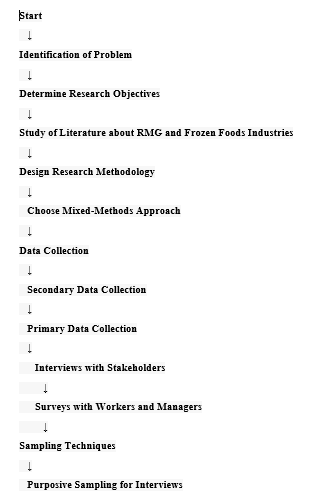
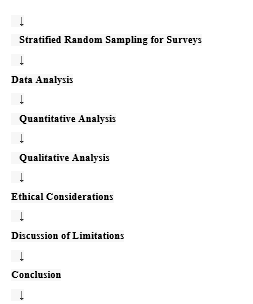
Figure 1. Research flow
What is the RMG industry?
The Ready-Made Garment (RMG) industry is a pivotal sector in Bangladesh's economy, driving significant contributions to the nation's GDP and foreign exchange earnings. This industry specializes in the mass production of clothing items, which are then exported to global markets, including major destinations such as the United States, Europe, and Canada.
Historical context and evolution
The RMG sector in Bangladesh has a rich history, having evolved from humble beginnings in the late 20th century to becoming a global leader in garment manufacturing. The industry's rapid growth can be attributed to several factors, including competitive labor costs, favorable trade agreements, and substantial investments in manufacturing infrastructure. Over the years, Bangladesh has developed a robust supply chain, from sourcing raw materials to the final production and export of garments.
Economic contributions
The economic impact of the RMG industry is profound. It accounts for a significant portion of the country's export earnings, with garments making up approximately 84% of total exports. This sector has been instrumental in driving economic growth, contributing to a substantial share of the national GDP. The influx of foreign exchange from garment exports has also strengthened Bangladesh's economic stability.
Employment and social impact
One of the most notable contributions of the RMG industry is its role in employment generation. The sector employs around 4 million workers, with a majority being women. This employment has not only provided financial independence to many but has also fostered social changes, promoting genderequality and empowering women in the workforce. Despite challenges such as poor working conditions and wage disputes, the industry continues to be a vital source of livelihood for millions [16,17].
Challenges and opportunities
The RMG industry faces several challenges, including compliance with international labor standards, ensuring worker safety, and addressing environmental concerns related to manufacturing processes. The Rana Plaza collapse in 2013 highlighted the urgent need for better factory safety and labor rights. However, these challenges also present opportunities for the industry to innovate and improve. By adopting sustainable practices, investing in technology, and enhancing labor conditions, the RMG sector can continue to grow and contribute to Bangladesh's economy.
What is the frozen food industry?
The frozen food industry in Bangladesh is a dynamic and rapidly expanding sector that plays a crucial role in the national economy. This industry encompasses the production, processing, and export of a variety of frozen food items, including shrimp, fish, vegetables, and ready-to-eat meals.
Industry overview and key products
Bangladesh is renowned for its high-quality shrimp and fish products, which are major export items. The country is one of the world's leading exporters of shrimp, with significant markets in Europe, Japan, and the Middle East. The frozen food industry also includes a diverse range of other products, such as frozen vegetables and processed ready-to-eat meals, catering to both domestic and international markets.
Economic impact
The frozen food industry contributes significantly to the national economy by providing substantial export revenue. The sector has grown remarkably, with exports increasing by about 20% annually. This growth has diversified Bangladesh's export basket, reducing economic vulnerability and increasing resilience against market fluctuations.
Employment and rural development
The industry is a vital source of employment, particularly in rural areas. It provides jobs to around 600,000 people, many of whom are involved in shrimp farming and processing. This has had a positive impact on rural economies, providing livelihoods and supporting community development.
Challenges and sustainability
The frozen food industry faces several challenges, including environmental sustainability and compliance with international food safety standards. Issues such as overfishing, habitat destruction, and the need for eco-friendly aquaculture practices are critical concerns. Addressing these challenges requires adopting sustainable practices, such as responsible aquaculture and environmentally friendly processing methods. Organizations like the Marine Stewardship Council (MSC) play a crucial role in promoting sustainable fishing practices.
Future prospects
Despite these challenges, the frozen food industry holds immense potential for further growth. By investing in technology, improving processing facilities, and expanding into value-added products, the industry can enhance its competitiveness and market presence. Sustainable practices, coupled with stringent quality control, can help the industry tap into new markets and meet the growing global demand for high-quality frozen foods.
Economic impact of RMG industry
The Ready-Made Garment (RMG) industry is a cornerstone of Bangladesh's economic landscape, contributing significantly to the nation's economic growth, employment, and foreign exchange earnings. This chapter delves into the multifaceted economic impacts of the RMG industry, highlighting its contributions to GDP, export earnings, and broader economic development.
Contribution to GDP
The RMG industry is one of the largest contributors to Bangladesh's Gross Domestic Product (GDP). According to recent statistics, the sector accounts for approximately 11% of the country's GDP. This substantial contribution underscores the industry's pivotal role in driving economic growth and development. The steady increase in garment production and exports has led to continuous GDP growth, making the RMG sector a vital component of the national economy.
Export earnings
The RMG sector is the backbone of Bangladesh's export economy, accounting for around 84% of total export earnings. This dominance in the export market has positioned Bangladesh as one of the world's leading garment exporters. The primary markets for Bangladeshi garments include the United States, the European Union, and Canada. Favorable trade agreements, competitive labor costs, and high-quality production have bolstered the sector's export performance. The influx of foreign exchange from these exports has strengthened the country's balance of payments and contributed to economic stability.
Employment generation
The employment impact of the RMG industry is profound. The sector employs approximately 4 million workers, with a significant majority being women. This employment has not only provided financial independence to many but has also driven social change by promoting gender equality and empowering women. The industry's labor-intensive nature has created vast employment opportunities, particularly for low skilled and semi-skilled workers, thereby reducing poverty and improving living standards.
Industrial development and infrastructure
The growth of the RMG industry has spurred industrial development and infrastructure improvements across Bangladesh. The sector's expansion has led to the establishment of numerous factories, industrial zones, and export processing zones. These developments have attracted both domestic and foreign investments, further driving economic growth. Additionally, the need for efficient logistics and transportation has led to significant infrastructure investments, including the development of ports, roads, and communication networks.
Technological advancement and innovation
The competitive nature of the global garment market has driven the RMG industry in Bangladesh to adopt technological advancements and innovations. Investment in modern machinery, automation, and efficient production processes has enhanced productivity and quality. These technological advancements have enabled the industry to meet international standards and compete effectively in the global market. Moreover, innovation in design and production techniques has allowed Bangladeshi manufacturers to diversify their product offerings and cater to a broader range of markets.
Socio-economic impact
Beyond its economic contributions, the RMG industry has had significant socioeconomic impacts. The sector has played a crucial role in poverty alleviation, particularly in rural areas where many workers originate. The steady income from garment factory jobs has improved living standards and access to education and healthcare for many families. The industry's focus on female employment has also promoted women's empowerment and gender equality, contributing to broader social development.
Challenges and future prospects
Despite its successes, the RMG industry faces several challenges that need to be addressed to sustain its growth. Issues such as poor working conditions, low wages, and compliance with international labor standards remain pressing concerns. The industry also faces environmental challenges related to resource consumption and waste management. Addressing these challenges requires concerted efforts from industry stakeholders, including government, manufacturers, and international buyers.
Looking ahead, the future prospects of the RMG industry in Bangladesh remain promising. By focusing on sustainable practices, enhancing labor conditions, and investing in technology and innovation, the sector can continue to thrive and contribute to the nation's economic development. Diversifying into higher-value products and exploring new markets will also be key strategies for sustained growth.
Economic impact of frozen food industry
The frozen food industry in Bangladesh, while smaller in scale compared to the RMG sector, plays a crucial role in the national economy. This chapter explores the economic contributions of the frozen food industry, including its impact on GDP, export earnings, employment generation, and rural development. It also addresses the challenges faced by the industry and its future prospects.
Contribution to GDP
The frozen food industry contributes significantly to Bangladesh's GDP. This sector includes the production and processing of various frozen food items such as shrimp, fish, vegetables, and ready-to-eat meals. The industry's contribution to GDP, though smaller than that of the RMG sector, is substantial and growing. The increasing demand for processed and frozen foods both domestically and internationally has driven this growth, making the sector an important component of the national economy.
Export earnings
The frozen food industry is a major player in Bangladesh's export market. The country is one of the world's leading exporters of shrimp and fish, with significant markets in Europe, Japan, and the Middle East. The export of frozen foods, particularly shrimp, has been a substantial source of foreign exchange earnings. According to recent data, the frozen food sector accounts for approximately 2-3% of the total export earnings (Mordor Intelligence, 2024). The industry's ability to meet international quality standards and food safety regulations has enhanced its competitiveness in the global market.
Employment generation
The frozen food industry is a vital source of employment in Bangladesh, particularly in rural areas. It provides jobs to around 600,000 people, including those involved in aquaculture, processing, and packaging. The sector has created significant employment opportunities, especially for women and marginalized communities, contributing to poverty alleviation and rural development. The income generated from employment in this sector has improved the living standards of many families and supported local economies.
Rural development and socio-economic impact
The frozen food industry has had a profound impact on rural development in Bangladesh. The establishment of shrimp and fish farms, along with processing facilities, has stimulated economic activities in rural areas. This development has provided livelihoods for many and has led to improvements in infrastructure, such as roads, electricity, and water supply. The industry's growth has also promoted social development by providing education and healthcare facilities to rural communities.
Technological advancement and quality control
To remain competitive in the global market, the frozen food industry in Bangladesh has adopted various technological advancements and stringent quality control measures. Investments in modern processing facilities, cold storage, and efficient logistics have enhanced the productivity and quality of frozen food products. The implementation of international food safety standards, such as HACCP (Hazard Analysis Critical Control Point) and ISO certifications, has ensured that Bangladeshi frozen foods meet the stringent requirements of global markets.
Environmental sustainability and challenges
The frozen food industry faces several environmental challenges, including overfishing, habitat destruction, and pollution from aquaculture practices. Sustainable management of natural resources is crucial to ensure the long-term viability of the industry. Addressing these challenges requires adopting sustainable aquaculture practices, such as responsible farming techniques and eco-friendly processing methods. Ensuring environmental sustainability will help the industry maintain its competitiveness and meet the growing demand for sustainably sourced products.
Future prospects
The future prospects of the frozen food industry in Bangladesh are promising. The global demand for frozen and processed foods is expected to increase, providing opportunities for the industry to expand its market share. By focusing on value-added products, such as ready-to-eat meals and specialized frozen foods, the industry can enhance its competitiveness and profitability. Additionally, investments in technology, infrastructure, and sustainable practices will be key drivers of future growth.
Government support and favorable policies will also play a crucial role in the industry's development. Initiatives to promote sustainable aquaculture, improve infrastructure, and provide training for workers will help the sector overcome existing challenges and capitalize on emerging opportunities. Collaboration between industry stakeholders, including government bodies, private companies, and international organizations, will be essential to ensure the sustainable growth of the frozen food industry.
Contribution of RMG and frozen food to national GDP
The Ready-Made Garment (RMG) and frozen food industries are major pillars of Bangladesh's economy, significantly contributing to the national Gross Domestic Product (GDP). Collectively, these sectors drive economic growth, generate substantial employment, and bring in vital foreign exchange, reinforcing the country's economic stability and development.
Contribution of the RMG industry to National GDP
Economic contribution: The RMG industry is a powerhouse in terms of economic contribution, accounting for a significant portion of the national GDP. As the largest export sector, it represents around 84% of Bangladesh's total exports. The industry's growth has been instrumental in uplifting the economic landscape, with a direct impact on GDP through increased production, export earnings, and job creation.
Supply chain impact: The RMG sector's extensive supply chain, encompassing textiles, dyes, chemicals, and logistics, further amplifies its economic footprint. The interconnectedness of these industries means that growth in RMG leads to a proportional increase in demand for raw materials and services, thereby bolstering various related sectors. This cascading effect helps in the overall economic development by creating additional business opportunities and enhancing productivity across the board.
Export performance: Bangladesh's RMG sector has established itself as a global leader in garment manufacturing, exporting to major markets such as the United States, the European Union, and Canada. The robust export performance has significantly contributed to the national GDP by bringing in foreign exchange, which is crucial for the country's balance of payments.
Technological advancements: Investments in modern machinery and automation have enhanced production efficiency and product quality, enabling the RMG sector to remain competitive in the global market. These technological advancements not only improve productivity but also contribute to the GDP by increasing the valueadded in the production process.
Foreign Direct Investment (FDI): The RMG industry has attracted substantial Foreign Drect Investment (FDI), bringing in capital, technology, and expertise. This inflow of investment has spurred industrial growth, increased productivity, and improved competitiveness. The presence of multinational companies in the RMG sector has also facilitated knowledge transfer and the adoption of best practices, further enhancing the sector's contribution to GDP.
Contribution of the frozen food industry to national GDP
Economic contribution: Similarly, the frozen food industry, particularly through the export of shrimp and fish, plays a crucial role in GDP contribution. The industry's exports have diversified the economic base, enhancing the country's resilience to global market fluctuations. This diversification is vital for stabilizing the economy against sector-specific downturns, ensuring steady economic growth.
Export performance: The frozen food sector's adherence to international quality standards has allowed it to penetrate high-value markets, resulting in robust export revenues that bolster the GDP. Key export markets include the European Union, Japan, and the Middle East, where there is a high demand for quality seafood products. The industry's ability to meet stringent international standards has built a reputation for Bangladeshi frozen foods, driving consistent demand and export growth.
Technological advancements: Investments in modern processing facilities, cold storage, and efficient logistics have enhanced the productivity and quality of frozen food products. The implementation of international food safety standards, such as Hazard Analysis Critical Control Point (HACCP) and ISO certifications, ensures that products meet global market requirements, thereby maintaining and growing the sector’s export potential.
Supply chain impact: The frozen food industry has fostered the development of ancillary sectors, including transportation, logistics, and cold storage, further enhancing its GDP contribution. The need for specialized infrastructure to maintain the quality of frozen products has led to investments in these areas, creating additional economic activities and business opportunities.
Foreign Direct Investment (FDI): The frozen food industry has also attracted foreign direct investment, which has brought in new technologies and expertise. This investment has facilitated the modernization of the industry, improved production processes, and enhanced product quality, contributing to the overall economic expansion.
Multiplier effect and broader economic impact
Development of ancillary sectors: Together, the RMG and frozen food industries have fostered the development of ancillary sectors. The growth in transportation, logistics, and cold storage driven by these industries has a multiplier effect, stimulating broader economic activities and driving growth in various other sectors. This interconnected economic activity generates additional income and employment, further contributing to the national GDP.
Industrial growth and competitiveness: The inflow of Foreign Direct Investment (FDI) into these industries has spurred industrial growth, increased productivity, and improved competitiveness. The presence of advanced technologies and expertise has led to higher efficiency and output, reinforcing Bangladesh's position in the global market. This industrial growth translates into higher GDP through increased production and exports.
Economic stability and resilience: The diversification brought about by the RMG and frozen food sectors enhances the economic stability and resilience of Bangladesh. By relying on multiple strong industries, the country mitigates the risk of economic downturns caused by sector-specific challenges. This resilience is crucial for sustaining long-term economic growth and development.
In conclusion, the RMG and frozen food industries are vital to Bangladesh's economic structure, significantly contributing to the national GDP. Their extensive supply chains, robust export performance, technological advancements, and attraction of foreign direct investment collectively drive economic growth and stability. The continued growth and development of these industries are essential for sustaining economic progress and enhancing Bangladesh's global economic standing. By fostering the development of ancillary sectors and generating a multiplier effect, these industries play a crucial role in the broader economic landscape, ensuring sustained and inclusive economic development.
Employment generation in RMG and frozen food industries
The Ready-Made Garment (RMG) and frozen food industries are not only significant contributors to Bangladesh's GDP but are also critical sources of employment for millions of people. This chapter provides an in-depth analysis of how these industries generate employment, the nature of the jobs they provide, and their broader social and economic impacts.
Employment generation in the RMG industry
Scale of employment: The RMG industry is the largest employer in Bangladesh's industrial sector, providing jobs to approximately 4 million workers. This workforce is predominantly composed of women, who make up around 80% of the total employees. The abundance of job opportunities in this sector has been pivotal in addressing unemployment and underemployment in the country.
Nature of employment: Jobs in the RMG sector range from unskilled to semi-skilled and skilled positions. The industry offers a variety of roles, including sewing machine operators, quality controllers, supervisors, and managers. This diversity in job types allows for a wide range of employment opportunities, catering to different skill levels and educational backgrounds.
Socio-economic impact: The employment generated by the RMG sector has had profound socio-economic impacts. By providing a steady source of income, the industry has empowered women, contributing to greater gender equality and financial independence. This empowerment has had ripple effects, improving the standard of living for many families and communities. Additionally, the employment opportunities in the RMG sector have led to increased access to education and healthcare for workers and their families.
Training and skill development: Many RMG factories offer training programs to enhance the skills of their workers. These programs not only improve productivity but also enable workers to advance in their careers, leading to better job security and higher wages. The focus on skill development has also attracted various Non-Governmental Organizations (NGOs) and international agencies to invest in training initiatives, further boosting the sector's human capital.
Regional employment distribution: The RMG industry is concentrated in urban and peri-urban areas, particularly in cities like Dhaka, Chittagong, and Gazipur. This concentration has led to significant urbanization and has created a demand for various services and infrastructure, thereby generating additional employment in sectors such as transportation, housing, and retail.
Employment generation in the frozen food industry
Scale of employment: The frozen food industry, while smaller than the RMG sector, is a vital source of employment, particularly in rural areas. It employs around 600,000 people, including those working in shrimp and fish farming, processing plants, and related supply chains. The industry's employment opportunities are crucial for rural communities, where alternative job options may be limited.
Nature of employment: Employment in the frozen food sector encompasses a range of activities, from aquaculture and harvesting to processing, packaging, and logistics. Jobs in this industry include fish and shrimp farmers, processing plant workers, quality inspectors, and logistics coordinators. The sector provides opportunities for both low-skilled and semiskilled workers, making it an accessible source of employment for many rural inhabitants.
Socio-economic impact: The frozen food industry has had significant socio-economic impacts, particularly in rural areas. By providing employment, the industry helps to reduce poverty and improve living standards in these communities. The income generated from this sector supports local economies, enabling workers to invest in education, healthcare, and other essential services. Additionally, the industry's focus on sustainable practices and adherence to international standards has led to improvements in occupational health and safety for workers.
Training and skill development: Similar to the RMG sector, the frozen food industry emphasizes training and skill development. Various programs are in place to train workers in modern aquaculture techniques, food safety standards, and efficient processing methods. These training initiatives enhance the productivity and quality of the workforce, contributing to the industry's competitiveness in global markets.
Regional employment distribution: The frozen food industry is predominantly based in coastal and riverine areas, where aquaculture activities are feasible. Regions such as Khulna, Chittagong, and Cox's Bazar are key hubs for shrimp and fish farming. The industry’s presence in these areas has led to the development of local infrastructure and services, creating additional employment opportunities and stimulating regional economic growth.
Comparative analysis of employment generation employment scale
• The RMG industry employs a significantly larger workforce compared to the frozen food sector. This difference is attributed to the larger scale of production and the labor-intensive nature of garment manufacturing.
• Nature and quality of jobs: Both industries provide a mix of unskilled, semi-skilled, and skilled jobs, but the RMG sector offers a wider range of positions due to its extensive supply chain.
• The frozen food industry, while providing fewer jobs overall, plays a crucial role in rural employment, where job opportunities are often scarce.
• Socio-economic impact: The RMG sector has a more pronounced impact on gender equality and urbanization, while the frozen food industry significantly contributes to rural development and poverty alleviation.
• Both industries enhance the quality of life for their workers by providing stable employment and income, which supports access to education, healthcare, and other essential services.
• Training and skill development: Both sectors invest in training and skill development, which improves worker productivity and job security. The emphasis on training also attracts support from NGOs and international agencies, further enhancing the workforce’s capabilities.
• Regional distribution: The RMG sector is concentrated in urban and peri-urban areas, contributing to urbanization and the development of related services.
• The frozen food industry is based in coastal and riverine regions, driving economic activities and infrastructure development in rural areas.
In conclusion, the RMG and frozen food industries are vital sources of employment in Bangladesh, each playing a unique role in the country's economic and social landscape. The RMG sector provides extensive job opportunities, particularly for women, and drives urbanization and industrial growth. In contrast, the frozen food industry is crucial for rural employment and development, supporting local economies and improving living standards in coastal and riverine areas.
The continued growth and development of these industries are essential for sustaining employment generation and economic progress in Bangladesh. By investing in training and skill development, enhancing occupational health and safety, and promoting sustainable practices, both sectors can further strengthen their contributions to employment and socio-economic development.
Challenges and opportunities in RMG and frozen food industries
The Ready-Made Garment (RMG) and frozen food industries are integral to Bangladesh's economic growth, yet they face numerous challenges and opportunities that shape their potential for further development.
Challenges
• Labor issues and working conditions: The RMG sector has long been criticized for poor working conditions, low wages, and inadequate safety measures. Incidents like the Rana Plaza collapse in 2013 highlighted the urgent need for improved factory safety and labor rights.
• Environmental sustainability: The frozen food industry, particularly shrimp farming, faces significant environmental challenges. Overfishing, habitat destruction, and the unsustainable use of resources threaten the long-term viability of the sector.
• Compliance and standards: Both industries must adhere to stringent international standards. The RMG industry needs to continuously improve labor practices to meet global expectations, while the frozen food sector must comply with food safety and quality standards to maintain market access.
• Market competition : Both sectors face intense global competition. The RMG industry competes with other major garment-producing countries like China, Vietnam, and India. Similarly, the frozen food sector contends with competitors from countries like Thailand and Vietnam.
• Technological advancements: Both industries need to adopt new technologies to enhance productivity and competitiveness. The lack of investment in modern machinery and processes can impede growth and efficiency.
Opportunities
• Value addition and diversification: The RMG industry can move up the value chain by producing higher-end garments and diversifying into new markets. For the frozen food sector, expanding into value-added products like ready-to-eat meals can open new revenue streams.
• Sustainable practices: Adopting sustainable practices can mitigate environmental impacts and ensure long-term growth. For the frozen food industry, implementing sustainable aquaculture practices and certification schemes can enhance marketability and environmental stewardship.
• Government support and policies: Supportive government policies, including subsidies, tax incentives, and infrastructure development, can spur growth in both sectors. The government’s focus on improving factory safety and labor conditions in the RMG sector is a positive step toward sustainable development.
• Skill development and training: Investing in worker training and skill development can improve productivity and product quality. Enhanced skills can also help workers transition to higher-paying jobs within the industry.
• Innovation and technology: Embracing technological innovations such as automation, digitalization, and advanced manufacturing techniques can boost efficiency and competitiveness. For the frozen food sector, innovations in processing and packaging can improve product quality and shelf life.
• Global market trends: The growing demand for ethically produced garments and sustainably sourced food products presents an opportunity for both industries to differentiate themselves in the global market.
In conclusion, while the RMG and frozen food industries face significant challenges, they also have numerous opportunities for growth and development. Addressing the challenges through strategic investments, policy support, and sustainable practices can unlock the full potential of these sectors, ensuring their continued contribution to Bangladesh's economic prosperity.
Impact of RMG and frozen food on other industries
The Ready-Made Garment (RMG) and frozen food industries in Bangladesh not only contribute significantly to the national economy but also have far-reaching impacts on various other sectors. Their influence extends through supply chains, ancillary industries, and broader economic activities, creating a substantial multiplier effect.
• Textile industry: The RMG sector’s demand for raw materials has driven the growth of the textile industry in Bangladesh. This includes the production of fabrics, yarns, and dyes. The symbiotic relationship between the RMG and textile industries has led to technological advancements and increased investments in textile manufacturing, enhancing the overall quality and competitiveness of Bangladeshi textiles on the global stage.
• Transportation and logistics: Both the RMG and frozen food industries rely heavily on robust transportation and logistics networks. The need to transport raw materials to factories and finished products to ports has spurred the development of road, rail, and port infrastructure. Improved logistics have not only benefited these industries but also facilitated trade and commerce across the country.
• Packaging industry: The growth of the frozen food industry, in particular, has stimulated the packaging industry. The need for specialized packaging solutions to preserve the quality and extend the shelf life of frozen products has led to innovations in packaging materials and technology. This has created a demand for skilled labor and investment in packaging facilities.
• Financial services: The expansion of both industries has increased the demand for financial services, including banking, insurance, and investment. Financial institutions have developed specialized products and services to cater to the unique needs of these sectors, such as export financing, risk management, and credit facilities. This has contributed to the growth and diversification of the financial services industry in Bangladesh.
• Real estate and construction: The proliferation of RMG and frozen food factories has driven demand for industrial real estate and construction services. The need for factory spaces, warehouses, and cold storage facilities has led to significant investments in the real estate sector. This growth has created jobs in construction and related trades, further stimulating the economy.
• Chemical and dye industries: The RMG industry’s reliance on dyes and chemicals for fabric processing has spurred the development of the chemical industry. This sector provides essential inputs for garment manufacturing and has seen growth alongside the RMG sector. The demand for high quality and environmentally friendly chemicals has also driven innovation within the industry.
• Information technology: The need for efficient management of supply chains, inventory, and production processes has led to the adoption of information technology solutions. Both the RMG and frozen food industries have increasingly relied on IT systems for automation, data management, and quality control. This demand has fostered the growth of the IT sector, supporting software development, IT services, and technical support.
• Export-import services: The high volume of exports from the RMG and frozen food sectors has bolstered the export-import services industry. This includes freight forwarding, customs brokerage, and shipping services. Companies specializing in these services have grown in response to the needs of these export-driven industries, improving trade efficiency and reducing logistical bottlenecks.
Education and training
The need for skilled labor in both industries has led to the development of specialized education and training programs. Institutions offering courses in garment manufacturing, textile technology, and food processing have emerged, providing the workforce with the necessary skills to support these sectors. This focus on education and training has enhanced the overall skill level and employability of the Bangladeshi workforce.
In conclusion, the RMG and frozen food industries have a profound and multifaceted impact on various other sectors in Bangladesh. Their growth stimulates economic activities across supply chains, drives infrastructure development, and fosters innovation, contributing to the broader socio-economic development of the country. Ensuring the continued success of these industries will further amplify their positive effects on the national economy.
Economic contributions of RMG and frozen food industries
Ready-Made Garment (RMG) industry: The RMG industry is a cornerstone of the Bangladeshi economy, with profound contributions to GDP and foreign exchange earnings. According to recent data, the sector accounts for approximately 84% of the country's total exports. This dominance in the export market underscores the sector's role in driving economic growth. Additionally, the RMG industry provides employment to about 4 million workers, predominantly women, fostering socio-economic development and gender equality.
Frozen food industry: The frozen food industry, albeit smaller in scale compared to the RMG sector, has demonstrated significant growth. The industry, particularly known for its shrimp and fish exports, contributes to the diversification of Bangladesh's export basket, thereby enhancing economic resilience. The frozen food sector employs around 600,000 individuals, many of whom are engaged in rural aquaculture and processing activities. Compliance with international food safety standards has enabled the industry to access lucrative markets in Europe, Japan, and the Middle East.
Employment Generation
RMG industry: The RMG sector is a major employment provider in Bangladesh, offering jobs to about 4 million workers. This employment generation has had a substantial impact on poverty reduction and women's empowerment. The growth of the RMG sector has also stimulated ancillary industries such as textiles, transportation, and logistics, creating a broader economic impact.
Frozen food industry: The frozen food industry provides significant employment opportunities, particularly in rural areas. With around 600,000 people employed in the sector, it plays a crucial role in rural development and poverty alleviation. The industry's growth has led to increased income and improved living standards for many rural households.
RMG industry
Despite its success, the RMG sector faces challenges such as poor working conditions, low wages, and factory safety concerns. The Rana Plaza collapse in 2013 brought global attention to these issues, highlighting the need for better labor practices and safety standards. Opportunities for the RMG sector include moving up the value chain to produce higher-end garments and diversifying into new markets. Technological upgrades and innovation could enhance productivity and competitiveness.
Frozen food industry
The frozen food industry contends with challenges related to environmental sustainability, such as overfishing and habitat destruction. These challenges threaten the industry's long-term viability. However, opportunities exist in adopting sustainable practices and expanding into value-added products. Sustainable aquaculture practices and eco-friendly packaging are areas with significant growth potential.
Government policies and their impact
Government policies significantly influence the growth of both the RMG and frozen food industries. The Bangladesh Garment Manufacturers and Exporters Association (BGMEA) and the Export Promotion Bureau (EPB) have been key in lobbying for favorable trade policies and negotiating trade agreements. Government incentives, such as tax breaks and subsidies, have supported the frozen food industry's growth. Infrastructure improvements, particularly in ports and transportation, are vital for the continued expansion of both sectors.
Sustainability practices
Sustainability is becoming increasingly critical in both industries. The RMG sector is adopting green manufacturing practices, such as using renewable energy and reducing water consumption. In the frozen food industry, sustainable aquaculture practices and ecofriendly packaging are gaining traction. Certification schemes like the Marine Stewardship Council (MSC) are promoting sustainable fishing practices.
Interconnectedness of RMG and frozen food industries
The interconnectedness of the RMG and frozen food industries with other sectors of the Bangladeshi economy is evident. The expansion of the RMG sector has spurred growth in related industries, such as textiles, transportation, and logistics. Similarly, the frozen food industry's growth has fostered rural development and supported the aquaculture sector.
Economic impact and future prospects
The economic impact of the RMG and frozen food industries on Bangladesh's national economy is substantial. These sectors are pivotal in terms of GDP contribution, employment generation, and export performance. Addressing the challenges, they face is crucial for sustained growth. Adopting sustainable practices, technological upgrades, and policy support are essential to unlocking the full potential of these industries.
Policy Recommendations
To support the growth and development of the RMG and frozen food industries, several policy recommendations are proposed:
• Enhancing labor rights: Improving working conditions, wages, and factory safety in the RMG sector.
• Promoting sustainable practices: Encouraging sustainable aquaculture practices and eco-friendly packaging in the frozen food industry.
• Infrastructure development: Investing in infrastructure improvements, such as ports and transportation, to support both industries.
• Market diversification: Supporting the RMG sector in moving up the value chain and diversifying into new markets.
• Government incentives: Continuing to provide tax breaks, subsidies, and other incentives to promote industry growth.
The Ready-Made Garment (RMG) and frozen food industries are undeniably significant pillars of the Bangladeshi economy. This term paper has explored their multifaceted roles, from generating substantial employment opportunities to contributing significantly to GDP growth and foreign exchange earnings.
Economic contributions: Both the RMG and frozen food sectors have made remarkable contributions to the national economy. The RMG industry, accounting for approximately 84% of Bangladesh's total exports, remains the backbone of the economy. Conversely, the frozen food sector, while smaller, has shown impressive growth, particularly in shrimp and fish exports.
• Employment generation: The RMG sector provides employment to about 4 million workers, predominantly women, playing a crucial role in gender empowerment and poverty alleviation. The frozen food sector, though employing fewer people (about 600,000), significantly supports rural employment and livelihoods.
• Challenges: Despite their successes, these industries face considerable challenges. The RMG sector deals with issues such as poor working conditions, low wages, and factory safety, exemplified by the tragic Rana Plaza collapse. The frozen food industry struggles with environmental sustainability issues, including overfishing and the destruction of mangroves.
• Opportunities for growth: Both industries have vast potential for further development. Moving up the value chain, adopting technological innovations, and diversifying into new markets are essential strategies for the RMG sector. For the frozen food industry, sustainable practices and the expansion into value-added and certified products hold promise.
• Government policies: Government initiatives and policies have been pivotal in supporting these industries. Incentives such as tax breaks and subsidies, along with improved infrastructure, have facilitated growth. However, continued policy support and strategic interventions are necessary to address existing challenges and capitalize on new opportunities.
• Sustainability practices: There is a growing emphasis on sustainability in both sectors. The adoption of green manufacturing practices in the RMG industry and sustainable aquaculture in the frozen food sector are encouraging steps toward environmental responsibility.
In conclusion, the RMG and frozen food industries are integral to Bangladesh's economic framework. Their contributions transcend mere economic metrics, significantly impacting social structures by empowering women and supporting rural communities. Addressing the challenges and leveraging the opportunities will require concerted efforts from industry stakeholders, policymakers, and the international community.
The future of Bangladesh's economy will be significantly shaped by the continued growth and development of these sectors. By fostering innovation, ensuring sustainability, and implementing supportive policies, Bangladesh can secure a prosperous economic future driven by the robust performance of its RMG and frozen food industries.
[Crossref]
Journal of Textile Science & Engineering received 1008 citations as per Google Scholar report