Commentary - (2025) Volume 10, Issue 5
Received: 01-Oct-2025, Manuscript No. jcct-26-183269;
Editor assigned: 03-Oct-2025, Pre QC No. P-183269;
Reviewed: 17-Oct-2025, QC No. Q-183269;
Revised: 22-Oct-2025, Manuscript No. R-183269;
Published:
29-Oct-2025
, DOI: 10.37421/2577-0535.2025.9.332
Citation: Lin, Wei-Feng. ”Real-World Evidence: Shaping Oncology Therapies Post-Approval.” J Cancer Clin Trials 10 (2025):332.
Copyright: © 2025 Lin W. This is an open-access article distributed under the terms of the Creative Commons Attribution License, which permits unrestricted use, distribution and reproduction in any medium, provided the original author and source are credited.
Post-marketing surveillance and Phase IV studies represent a critical phase in the lifecycle of oncology therapeutics, extending beyond initial drug approval to assess real-world effectiveness and long-term outcomes. These investigations are indispensable for evaluating how cancer treatments perform in diverse patient populations and routine clinical settings, thereby informing clinical practice and regulatory agencies about their broader impact beyond the controlled environments of earlier trials [1].
Real-world data (RWD) derived from Phase IV studies are increasingly vital for augmenting evidence from randomized controlled trials (RCTs) in oncology. This data captures the efficacy and safety of treatments as administered in everyday clinical practice, including patients with comorbidities and complex treatment histories that are often excluded from rigorous RCTs, thus offering a more comprehensive understanding of therapeutic value [2].
The implementation of post-marketing studies is paramount for thoroughly understanding the long-term safety profiles of novel cancer therapies, particularly targeted agents and immunotherapies. These studies are crucial for the identification of rare but serious adverse events that might not be apparent during initial clinical trials, thereby ensuring patient safety and informing ongoing risk management strategies [3].
Phase IV trials play an instrumental role in exploring new indications and optimizing treatment strategies for existing oncology drugs. Through systematic investigation in varied patient cohorts or in combination with other agents, researchers can uncover additional therapeutic utility and refine clinical outcomes, embodying a fundamental iterative process for advancing cancer care [4].
The integration of real-world evidence (RWE) derived from post-marketing studies has a significant influence on drug pricing and reimbursement decisions within the oncology landscape. Demonstrating the value and effectiveness of therapies in real-world scenarios provides essential data for health technology assessments and payer negotiations, ultimately impacting patient access to innovative treatments [5].
Phase IV studies are critically important for evaluating patient-reported outcomes (PROs) in oncology, offering a patient-centered perspective on the benefits and burdens associated with various treatments. Capturing PROs is essential for understanding the impact of therapies on quality of life, symptom management, and functional status, which are increasingly recognized as vital endpoints in modern clinical oncology [6].
The advent of advanced analytics and artificial intelligence is revolutionizing the design and execution of post-marketing studies in oncology. These technological advancements facilitate more efficient data collection, sophisticated analysis of RWD, and improved prediction of treatment responses and adverse events, leading to more personalized and effective cancer care strategies [7].
Comparative effectiveness research, frequently conducted in the post-marketing phase, holds substantial importance in guiding clinical decision-making for oncology treatments. By comparing the outcomes associated with different therapeutic interventions in real-world settings, these studies furnish evidence-based insights for optimal treatment selection and the efficient allocation of healthcare resources [8].
The ethical considerations inherent in the post-marketing surveillance of oncology drugs are of utmost importance, particularly concerning data privacy and the necessity of informed consent in real-world studies. Upholding transparency and safeguarding patient confidentiality are fundamental to maintaining trust and ensuring the integrity of research findings [9].
Regulatory agencies are increasingly relying on RWD obtained from Phase IV studies to inform their decision-making processes, including applications for label expansions and requirements for post-approval commitments. This trend underscores the critical role of robust, high-quality real-world data in the comprehensive lifecycle management of oncology medications [10].
Post-marketing surveillance and Phase IV studies are indispensable for the evaluation of real-world effectiveness and long-term outcomes of cancer therapies following their initial approval. These studies provide vital data on treatment patterns, patient adherence, and comparative effectiveness across diverse patient populations, thereby informing clinical practice and guiding regulatory decisions. They are essential for identifying rare adverse events and understanding the broader impact of treatments in routine care settings [1].
Real-world data (RWD) generated from Phase IV studies are increasingly being utilized to complement evidence from randomized controlled trials (RCTs) in oncology. This data reflects how treatments perform in everyday clinical settings, encompassing patients with comorbidities and varied treatment histories that are often excluded from RCTs. Analysis of RWD helps refine treatment guidelines and assess the value of new therapies [2].
The implementation of post-marketing studies in oncology is critical for understanding the long-term safety profiles of targeted therapies and immunotherapies. These studies are essential for detecting rare but serious adverse events that may not emerge during initial clinical trials. Comprehensive pharmacovigilance ensures patient safety and supports ongoing risk management strategies [3].
Phase IV trials are instrumental in exploring new indications and optimizing treatment strategies for existing oncology drugs. By studying these drugs in different patient populations or in combination with other agents, researchers can expand their therapeutic utility and improve clinical outcomes. This iterative process of drug evaluation is fundamental to advancing cancer care [4].
The integration of real-world evidence (RWE) generated from post-marketing studies significantly impacts drug pricing and reimbursement decisions in oncology. Demonstrating the value and effectiveness of therapies in a real-world setting provides crucial data for health technology assessments and payer negotiations, influencing access to innovative treatments [5].
Phase IV studies are critical for evaluating patient-reported outcomes (PROs) in oncology, providing a patient-centered perspective on treatment benefits and burdens. Capturing PROs helps in understanding the impact of therapies on quality of life, symptom management, and functional status, which are increasingly important endpoints in clinical oncology [6].
The advent of advanced analytics and artificial intelligence is transforming the design and execution of post-marketing studies in oncology. These technologies enable more efficient data collection, sophisticated analysis of RWD, and improved prediction of treatment response and adverse events, leading to more personalized and effective cancer care [7].
Comparative effectiveness research, often conducted in the post-marketing phase, plays a vital role in guiding clinical decision-making for oncology treatments. By comparing the outcomes of different therapies in real-world settings, these studies provide evidence for optimal treatment selection and resource allocation [8].
The ethical considerations in post-marketing surveillance of oncology drugs are paramount, particularly regarding data privacy and informed consent in real-world studies. Ensuring transparency and protecting patient confidentiality are essential for maintaining trust and the integrity of research findings [9].
Regulatory agencies increasingly rely on RWD from Phase IV studies to inform regulatory decisions, including label expansions and post-approval commitments. This highlights the critical role of robust, high-quality real-world data in the lifecycle management of oncology medications [10].
Post-marketing surveillance and Phase IV studies are crucial in oncology for evaluating real-world effectiveness, safety, and long-term outcomes of cancer therapies beyond initial approvals. These studies generate vital data on treatment patterns, patient adherence, and comparative effectiveness in diverse patient populations, informing clinical practice and regulatory decisions. They are essential for identifying rare adverse events and understanding the broader impact of treatments in routine care. Real-world data (RWD) from Phase IV studies is increasingly utilized to complement randomized controlled trial (RCT) evidence, reflecting how treatments perform in everyday clinical settings. This data helps refine treatment guidelines and assess the value of new therapies. Post-marketing studies are critical for understanding the long-term safety profiles of targeted therapies and immunotherapies, detecting rare adverse events and ensuring patient safety. Phase IV trials also explore new indications and optimize treatment strategies, expanding the utility of existing oncology drugs. The integration of real-world evidence (RWE) impacts drug pricing and reimbursement, while the evaluation of patient-reported outcomes (PROs) provides a patient-centered perspective on treatment benefits. Advanced analytics and AI are transforming study design and execution, enabling more efficient data collection and sophisticated analysis. Comparative effectiveness research in the post-marketing phase guides clinical decision-making and resource allocation. Ethical considerations, including data privacy and informed consent, are paramount. Regulatory agencies increasingly rely on RWD for decision-making, underscoring its importance in the lifecycle management of oncology medications.
None
None
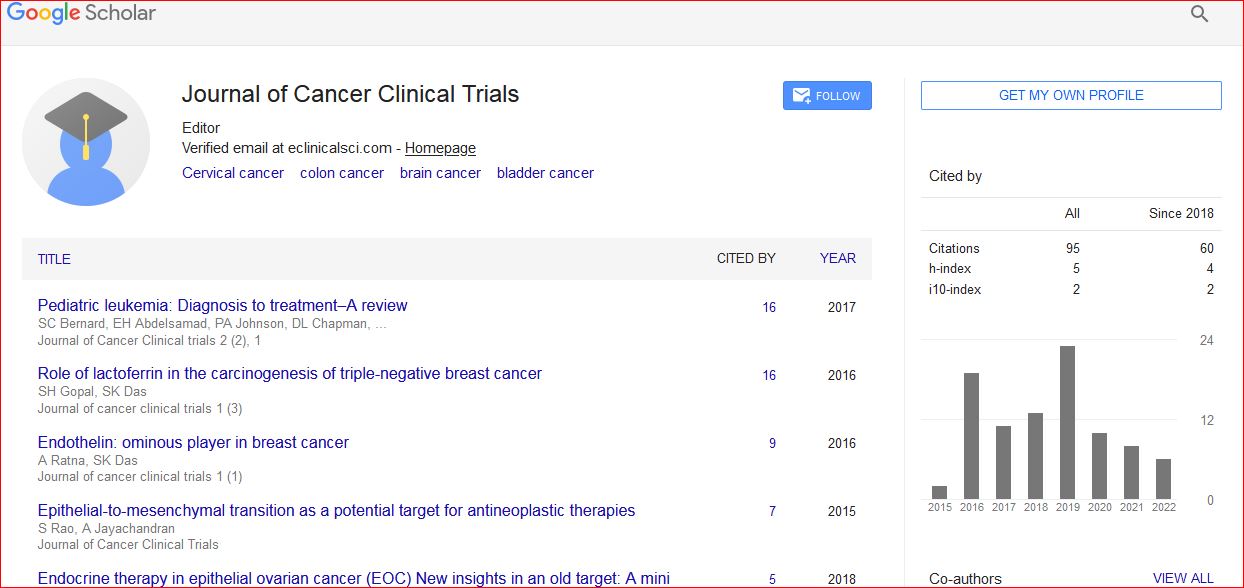
Journal of Cancer Clinical Trials received 95 citations as per Google Scholar report