Short Communication - (2025) Volume 14, Issue 6
Received: 31-Oct-2025, Manuscript No. jmmd-26-184716;
Editor assigned: 03-Nov-2025, Pre QC No. P-184716;
Reviewed: 17-Nov-2025, QC No. Q-184716;
Revised: 21-Nov-2025, Manuscript No. R-184716;
Published:
29-Nov-2025
, DOI: 10.37421/2161-0703.2025.14.560
Citation: Fernandez, Mateo. ”Probiotics: Immune Defense Against Infections.” J Med Microb Diagn 14 (2025):560.
Copyright: © 2025 Fernandez M. This is an open-access article distributed under the terms of the Creative Commons Attribution License, which permits unrestricted use, distribution and reproduction in any medium, provided the original author and source are credited.
Probiotics represent a significant and evolving strategy for the prevention of various infections, primarily by modulating the host's immune system and engaging in direct competition with pathogenic microorganisms. Their multifaceted mechanisms of action contribute to a robust defense, encompassing the strengthening of the gut barrier, the synthesis of antimicrobial compounds, and the regulation of immune cell functions. This integrated approach holds particular promise for addressing prevalent health concerns such as respiratory tract infections, a wide spectrum of gastrointestinal disorders, and conditions like antibiotic-associated diarrhea, highlighting their broad applicability in infectious disease prevention [1].
The established efficacy of probiotics in mitigating antibiotic-associated diarrhea (AAD) is supported by substantial clinical evidence. Specific probiotic strains, notably *Lactobacillus rhamnosus* GG and *Saccharomyces boulardii*, have consistently demonstrated their ability to restore the delicate balance of the gut microbiota, which is often severely disrupted by antibiotic treatments. This restoration is crucial for preventing the onset and severity of AAD, underscoring the targeted therapeutic potential of these beneficial microorganisms [2].
Beyond their well-documented effects within the gastrointestinal tract, probiotics possess the capacity to influence mucosal immunity at sites distant from the gut, including the respiratory tract. By modulating both innate and adaptive immune responses, probiotics may contribute to a reduced susceptibility to respiratory infections. While this area shows considerable promise, further research is essential to precisely identify and characterize the specific probiotic strains that confer the greatest protection against respiratory pathogens [3].
The concept of the gut-lung axis elucidates a critical bidirectional communication pathway between the gut microbiota and pulmonary health. This axis suggests that the composition and metabolic activity of the gut microbiome, along with its modulation by probiotics, can profoundly impact lung function and an individual's susceptibility to respiratory infections. Imbalances in the gut microbiome can lead to systemic inflammation, which in turn can compromise the lung's natural defense mechanisms [4].
Probiotics exert their protective effects through a diverse array of mechanisms that collectively fortify the host's defenses against pathogens. These mechanisms include the direct production of bacteriocins and organic acids, which actively inhibit the growth of harmful bacteria, as well as competition with pathogens for essential nutrients and colonization sites within the host. Furthermore, probiotics can enhance the host's innate immune responses, such as increasing phagocytic activity and stimulating the production of key cytokines [5].
Emerging research indicates that specific probiotic strains may play a role in modulating the immune system's response to vaccination, potentially leading to enhanced vaccine efficacy and a reduced risk of infection following immunization. Evidence suggests that probiotics might act as an immune primer, preparing the body to mount a more potent and effective response to vaccine antigens, thereby improving overall immunization outcomes [6].
The application of probiotics in vulnerable populations, including infants and the elderly, presents a particularly promising avenue for preventing common infections. For instance, certain probiotic formulations have been explored for their ability to decrease the incidence of rotavirus infections in infants and to reduce the occurrence of respiratory infections among the elderly population, demonstrating their potential utility across different age groups and risk profiles [7].
A critical consideration in the use of probiotics for infection prevention is their inherent strain specificity. The efficacy of probiotics is not a universal characteristic; rather, it is highly dependent on the specific strain of the microorganism, the prescribed dosage, the duration of administration, and the particular type of infection being targeted. This specificity emphasizes the importance of careful selection and targeted application to achieve desired health benefits [8].
In addition to their well-known roles in the gastrointestinal tract, probiotics can also positively influence the urogenital microbiome, contributing to the prevention of conditions such as urinary tract infections (UTIs) and bacterial vaginosis. Certain species, particularly those belonging to the *Lactobacillus* genus, have demonstrated an ability to restore a healthy vaginal flora and effectively inhibit the colonization of uropathogens [9].
While the overall safety profile of probiotic supplementation is generally favorable, potential side effects can occur, particularly in individuals with compromised immune systems. Therefore, thorough clinical evaluation to determine suitability, along with strict adherence to recommended dosages and usage guidelines, are paramount to maximizing the benefits and minimizing any potential risks associated with the use of probiotics for infection prevention [10].
Probiotics offer a compelling strategy for preventing infections by modulating the host's immune system and competing with pathogens. They achieve this through various mechanisms, including enhancing gut barrier function, producing antimicrobial substances, and influencing immune cell activity. This approach is particularly promising for respiratory tract infections, gastrointestinal disorders, and even conditions like antibiotic-associated diarrhea [1].
The use of probiotics in preventing antibiotic-associated diarrhea (AAD) is well-established. Certain probiotic strains, such as *Lactobacillus rhamnosus* GG and *Saccharomyces boulardii*, have demonstrated efficacy in clinical trials by restoring the gut microbiota disrupted by antibiotics [2].
Beyond the gut, probiotics can influence mucosal immunity at distant sites, including the respiratory tract. Modulation of innate and adaptive immune responses by probiotics may contribute to the prevention of respiratory infections, though more research is needed to identify specific effective strains [3].
The concept of the gut-lung axis highlights how the gut microbiota and its modulation by probiotics can impact pulmonary health and susceptibility to infections. Disruptions in the gut microbiome can lead to systemic inflammation, affecting lung defenses [4].
Probiotics exert their protective effects through multiple mechanisms, including the production of bacteriocins and organic acids that inhibit pathogen growth, competition for nutrients and binding sites, and enhancement of the host's innate immune responses like phagocytosis and cytokine production [5].
Specific probiotic strains can modulate the immune response to vaccination, potentially enhancing efficacy and reducing the risk of infection. Research suggests that probiotics may prime the immune system, leading to a more robust response to vaccine antigens [6].
The use of probiotics in vulnerable populations, such as infants and the elderly, shows promise in preventing common infections. For instance, certain probiotics have been investigated for their ability to reduce the incidence of rotavirus infections in infants and respiratory infections in the elderly [7].
The efficacy of probiotics in infection prevention is highly strain-specific. It is crucial to consider the specific probiotic strain, dose, duration of use, and the target infection when evaluating their benefits. Not all probiotics are created equal when it comes to preventing disease [8].
Beyond the gastrointestinal tract, probiotics can influence the urogenital microbiome, playing a role in the prevention of urinary tract infections (UTIs) and bacterial vaginosis. Certain *Lactobacillus* species have been shown to restore a healthy vaginal flora and inhibit pathogen colonization [9].
The safety profile of probiotics is generally good, but potential side effects can occur, especially in immunocompromised individuals. Thorough clinical evaluation and adherence to recommended dosages are essential to maximize benefits and minimize risks when using probiotics for infection prevention [10].
Probiotics are effective in preventing infections through immune modulation and pathogen competition. They enhance gut barrier function, produce antimicrobials, and influence immune cells, offering benefits for respiratory and gastrointestinal infections, including antibiotic-associated diarrhea. Specific strains like *Lactobacillus rhamnosus* GG and *Saccharomyces boulardii* are proven for AAD prevention. Probiotics also impact mucosal immunity at distant sites like the respiratory tract and influence pulmonary health via the gut-lung axis. Their protective mechanisms include inhibiting pathogen growth and boosting innate immunity. Probiotics may enhance vaccine responses and are beneficial in vulnerable populations like infants and the elderly. Strain specificity is crucial for efficacy, and while generally safe, caution is advised for immunocompromised individuals. Probiotics also play a role in urogenital health, preventing UTIs and bacterial vaginosis.
None
None
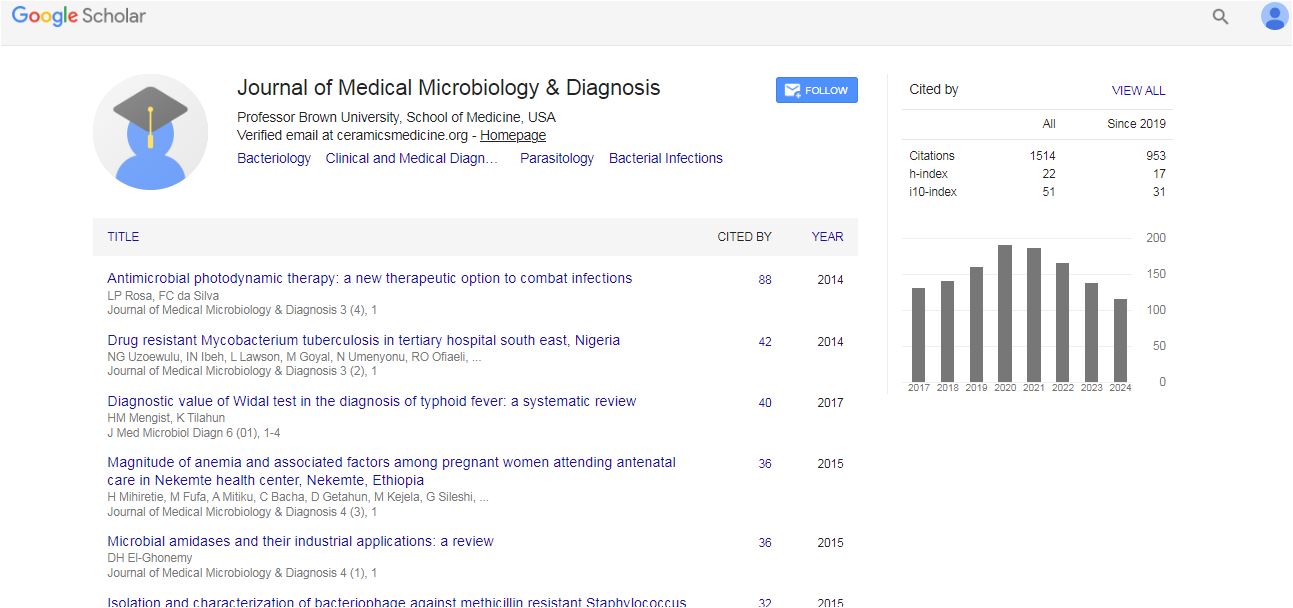
Medical Microbiology & Diagnosis received 14 citations as per Google Scholar report