Perspective - (2025) Volume 9, Issue 6
Received: 01-Dec-2025, Manuscript No. cmcr-25-178336;
Editor assigned: 03-Dec-2025, Pre QC No. P-178336;
Reviewed: 17-Dec-2025, QC No. Q-178336;
Revised: 22-Dec-2025, Manuscript No. R-178336;
Published:
29-Dec-2025
, DOI: 10.37421/2684-4915.2025.9.408
Citation: Nakamura, Aiko. ”Precision Prognosis: Biomarkers, AI, Personalized Care.” Clin Med Case Rep 09 (2025):408.
Copyright: © 2025 Nakamura A. This is an open-access article distributed under the terms of the Creative Commons Attribution License, which permits unrestricted use, distribution and reproduction in any medium, provided the original author and source are credited.
This article really highlights how crucial tumor mutational burden (TMB) is for patients with non-small cell lung cancer receiving immunotherapy. It shows that TMB is more than just a number; it serves as a significant indicator of how effective treatment might be and what a patient's long-term outcome looks like. This means by assessing TMB, clinicians can better tailor treatment strategies, potentially improving patient responses to these innovative therapies[1].
Regarding cardiovascular disease prognosis: machine learning is rapidly transforming how we predict patient outcomes. This systematic review makes it clear that Artificial Intelligence (AI) algorithms can sift through vast amounts of data to identify patterns traditional methods might miss, leading to more accurate risk stratification. Essentially, this tech is not replacing doctors, but giving them powerful tools to anticipate disease progression and personalize care more effectively[2].
When it comes to early-stage colorectal cancer, this study shows that circulating tumor DNA (ctDNA) holds significant prognostic value. It is not merely about finding cancer; itâ??s about understanding how the disease might behave even after initial treatment. This means ctDNA could serve as a powerful, non-invasive biomarker to identify patients at higher risk of recurrence, allowing for more individualized follow-up and potentially earlier intervention[3].
This research provides a compelling look into artificial intelligence's potential for predicting outcomes in prostate cancer. Itâ??s clear that AI is more than just a buzzword; it is proving valuable in prognostication by analyzing complex data sets more efficiently than human clinicians alone. This means we are moving towards a future where AI can help guide treatment decisions, identify high-risk patients, and ultimately personalize patient management in ways previously unimaginable[4].
Understanding the risk of colorectal cancer in patients with inflammatory bowel disease (IBD) is critical, and this meta-analysis sheds light on a key factor: the specific IBD subtype. It shows that inflammatory bowel disease is not uniform when it comes to future cancer risk, suggesting that tailored screening and surveillance strategies are warranted. This means by knowing the IBD subtype, we can better predict long-term outcomes and optimize preventive care for these patients[5].
This systematic review offers a clear picture of how prognostic scores function for hospitalized COVID-19 patients. It is clear that these scores are not merely academic exercises; they provide practical, real-time guidance for clinicians on patient severity and likely trajectories. This means using validated prognostic tools can significantly improve risk assessment and resource allocation, ensuring that patients receive the appropriate level of care during a critical illness like COVID-19[6].
When talking about breast cancer, microRNAs in circulation are proving to be more than just cellular signals. This meta-analysis demonstrates their significant potential as prognostic biomarkers, offering a non-invasive way to predict disease progression and treatment response. This means these tiny molecules could become routine tools for patient stratification, helping us to identify those who need more aggressive treatment or closer monitoring[7].
A key insight for hepatocellular carcinoma: the neutrophil-lymphocyte ratio (NLR) is emerging as a powerful predictor for patients undergoing curative resection. This systematic review makes it clear that a simple blood test marker, NLR, can provide valuable prognostic information regarding recurrence and survival. This means that a readily available and inexpensive marker can help clinicians identify patients who might benefit from closer surveillance or adjuvant therapies post-surgery[8].
When assessing heart failure with preserved ejection fraction, this review emphasizes the crucial role of echocardiographic global longitudinal strain (GLS). It is not merely about ejection fraction anymore; GLS provides a more nuanced picture of ventricular function and is a strong independent predictor of future adverse events. This means incorporating GLS into routine cardiac assessments can lead to a more accurate prognosis and potentially guide earlier, more effective interventions[9].
Discussing sarcopenia, often overlooked but increasingly recognized as a significant prognostic factor, particularly for gastrointestinal cancer patients undergoing surgery. This meta-analysis confirms that muscle loss before an operation directly impacts patient outcomes, influencing complications and survival rates. This means that assessing sarcopenia preoperatively is a critical step in identifying vulnerable patients and implementing nutritional or physical interventions to improve their prognosis[10].
Advancements in prognostic tools are significantly enhancing patient care, particularly in oncology and precision medicine. This body of research highlights various innovative approaches. For instance, in non-small cell lung cancer (NSCLC), tumor mutational burden (TMB) is proving to be a crucial indicator for patients undergoing immunotherapy. More than just a number, it serves as a significant indicator of how effective treatment might be and what a patient's long-term outcome looks like. This means by assessing TMB, clinicians can better tailor treatment strategies, potentially improving patient responses to these innovative therapies [1]. Similarly, for early-stage colorectal cancer, circulating tumor DNA (ctDNA) holds substantial prognostic value. It is not merely about finding cancer; itâ??s about understanding how the disease might behave even after initial treatment. This means ctDNA could serve as a powerful, non-invasive biomarker to identify patients at higher risk of recurrence, allowing for more individualized follow-up and potentially earlier intervention [3].
The integration of Artificial Intelligence (AI) and machine learning (ML) is rapidly transforming prognostic predictions across various medical disciplines. Regarding cardiovascular disease prognosis, ML is rapidly transforming how patient outcomes are predicted. This systematic review makes it clear that AI algorithms can sift through vast amounts of data to identify patterns traditional methods might miss, leading to more accurate risk stratification. Essentially, this tech is not replacing doctors, but giving them powerful tools to anticipate disease progression and personalize care more effectively [2]. This application extends significantly to prostate cancer, where AI is demonstrating its utility in prognostication by analyzing complex data sets more efficiently than human clinicians alone. This means we are moving towards a future where AI can help guide treatment decisions, identify high-risk patients, and ultimately personalize patient management in ways previously unimaginable [4].
Beyond advanced molecular and computational methods, more conventional and readily available markers also offer crucial prognostic insights. A key insight for hepatocellular carcinoma is that the neutrophil-lymphocyte ratio (NLR) is emerging as a powerful predictor for patients undergoing curative resection. This systematic review makes it clear that a simple blood test marker, NLR, can provide valuable prognostic information regarding recurrence and survival. This means that a readily available and inexpensive marker can help clinicians identify patients who might benefit from closer surveillance or adjuvant therapies post-surgery [8]. Understanding the risk of colorectal cancer in patients with inflammatory bowel disease (IBD) is critical, and this meta-analysis sheds light on a key factor: the specific IBD subtype. It shows that inflammatory bowel disease is not uniform when it comes to future cancer risk, suggesting that tailored screening and surveillance strategies are warranted. This means by knowing the IBD subtype, we can better predict long-term outcomes and optimize preventive care for these patients [5]. Discussing sarcopenia, often overlooked but increasingly recognized as a significant prognostic factor, particularly for gastrointestinal cancer patients undergoing surgery, this meta-analysis confirms that muscle loss before an operation directly impacts patient outcomes, influencing complications and survival rates. This means assessing sarcopenia preoperatively is a critical step in identifying vulnerable patients and implementing nutritional or physical interventions to improve their prognosis [10].
Specific biomarkers and imaging techniques are further refining prognostication in other critical areas. When talking about breast cancer, microRNAs in circulation are proving to be more than just cellular signals. This meta-analysis demonstrates their significant potential as prognostic biomarkers, offering a non-invasive way to predict disease progression and treatment response. This means these tiny molecules could become routine tools for patient stratification, helping to identify those who need more aggressive treatment or closer monitoring [7]. For hospitalized COVID-19 patients, this systematic review offers a clear picture of how prognostic scores function. It is clear that these scores are not merely academic exercises; they provide practical, real-time guidance for clinicians on patient severity and likely trajectories. This means using validated prognostic tools can significantly improve risk assessment and resource allocation, ensuring that patients receive the appropriate level of care during a critical illness like COVID-19 [6]. Finally, when assessing heart failure with preserved ejection fraction, this review emphasizes the crucial role of echocardiographic global longitudinal strain (GLS). It is not merely about ejection fraction anymore; GLS provides a more nuanced picture of ventricular function and is a strong independent predictor of future adverse events. This means incorporating GLS into routine cardiac assessments can lead to a more accurate prognosis and potentially guide earlier, more effective interventions [9].
Recent research underscores a growing emphasis on enhancing prognostic accuracy across various medical conditions, leveraging both novel biomarkers and advanced analytical techniques. Tumor mutational burden (TMB) is a critical indicator for non-small cell lung cancer (NSCLC) patients receiving immunotherapy, guiding personalized treatment strategies and improving outcomes. Circulating tumor DNA (ctDNA) holds significant prognostic value in early-stage colorectal cancer, identifying patients at higher recurrence risk and enabling individualized follow-up. Artificial Intelligence (AI) and machine learning (ML) are rapidly transforming prognosis in cardiovascular disease and prostate cancer, with algorithms analyzing vast datasets to improve risk stratification and personalize patient management. The neutrophil-lymphocyte ratio (NLR) serves as a powerful, inexpensive predictor for hepatocellular carcinoma patients post-resection, informing surveillance and adjuvant therapy decisions. Echocardiographic global longitudinal strain (GLS) provides a nuanced picture of ventricular function in heart failure with preserved ejection fraction, enhancing prognosis and guiding interventions. Prognostic scores for hospitalized COVID-19 patients offer real-time guidance on severity, optimizing risk assessment and resource allocation. Finally, specific inflammatory bowel disease (IBD) subtypes critically influence colorectal cancer risk, necessitating tailored screening, while preoperative sarcopenia is a significant prognostic factor for gastrointestinal cancer patients undergoing surgery, impacting complications and survival rates. Collectively, these studies drive a move towards more precise, personalized prognostication, integrating diverse markers and powerful computational tools to better anticipate disease progression and refine patient care.
None
None
Indexed at, Google Scholar, Crossref
Indexed at, Google Scholar, Crossref
Indexed at, Google Scholar, Crossref
Indexed at, Google Scholar, Crossref
Indexed at, Google Scholar, Crossref
Indexed at, Google Scholar, Crossref
Indexed at, Google Scholar, Crossref
Indexed at, Google Scholar, Crossref
Indexed at, Google Scholar, Crossref
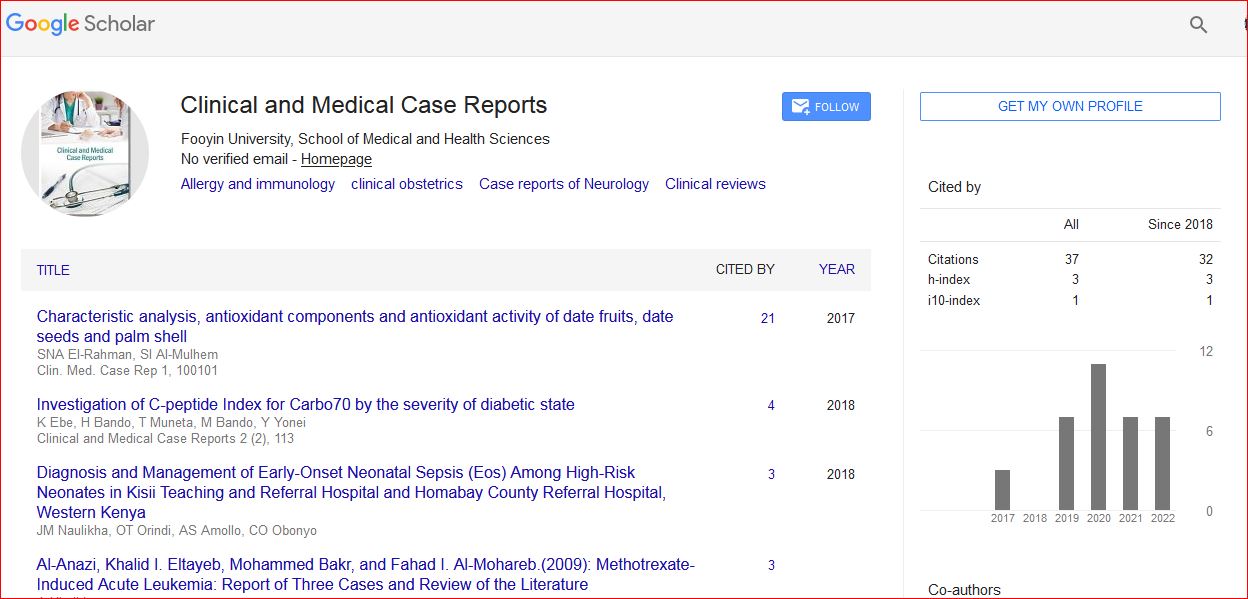
Clinical and Medical Case Reports received 53 citations as per Google Scholar report