Commentary - (2025) Volume 16, Issue 3
Received: 02-Jun-2025, Manuscript No. jmbd-25-168340;
Editor assigned: 04-Jun-2025, Pre QC No. P-168340;
Reviewed: 15-Jun-2025, QC No. Q-168340;
Revised: 23-Jun-2025, Manuscript No. R-168340;
Published:
30-Jun-2025
, DOI: 10.37421/2155-9929.2025.16.702
Citation: Silva, Isabella. ”Precision Oncology: Guiding Cancer Treatment with Biomarkers.” J Mol Biomark Diagn 16 (2025):702.
Copyright: © 2025 Silva I. This is an open-access article distributed under the terms of the Creative Commons Attribution License, which permits unrestricted use, distribution and reproduction in any medium, provided the original author and source are credited.
Precision oncology is fundamentally transforming the landscape of cancer treatment by leveraging molecular biomarkers to guide the selection of targeted therapies. This sophisticated approach tailors interventions to the specific genetic alterations that drive a patient's tumor growth, thereby enhancing treatment efficacy and minimizing the adverse effects associated with conventional chemotherapy. Key molecular biomarkers encompass a range of genetic and protein-level features, including gene mutations such as EGFR, BRAF, and KRAS, as well as gene amplifications, rearrangements, and protein expression levels, all of which are crucial for identifying appropriate drugs like tyrosine kinase inhibitors and monoclonal antibodies [1].
The widespread adoption of next-generation sequencing (NGS) has been pivotal in enabling comprehensive profiling of tumor genomes. This technological advancement facilitates the identification of actionable targets, even in the context of rare or uncommon cancers, thereby expanding treatment possibilities. Despite these significant advancements, persistent challenges remain in the critical areas of biomarker discovery and validation, understanding the complex mechanisms of treatment resistance, and ensuring equitable access to these advanced diagnostic tools and cutting-edge therapies [1].
Genomic profiling, especially through the application of next-generation sequencing (NGS), stands as a cornerstone of precision oncology. This powerful technology enables the simultaneous analysis of a multitude of genes and genomic regions, allowing for the detection of a wide array of alterations that can be leveraged as therapeutic targets. Comprehensive genomic profiling (CGP) has demonstrated considerable effectiveness in identifying actionable mutations, gene fusions, and amplifications, frequently uncovering unexpected therapeutic avenues and informing treatment decisions for patients with advanced or rare malignancies. Furthermore, assessing tumor mutational burden (TMB) and microsatellite instability (MSI) provides critical insights into a patient's potential response to immunotherapies [2].
The role of NGS in precision oncology is indispensable, providing a detailed molecular portrait of tumors. This allows clinicians to move beyond generalized treatment approaches and toward highly individualized therapeutic strategies. By interrogating the tumor at a genomic level, NGS can pinpoint specific vulnerabilities that can be exploited by targeted drugs, a paradigm shift from traditional chemotherapy. The ability to perform comprehensive genomic profiling has become increasingly vital for patients with advanced or rare cancers, where standard treatment options may be limited or ineffective [2].
Targeted therapies are meticulously designed to specifically interrupt molecular pathways or molecules that are essential for the proliferation and survival of cancer cells. The selection of these therapies is contingent upon the presence of particular molecular biomarkers within the tumor, ensuring that the treatment is directed at the specific driver of the cancer. Notable examples include inhibitors targeting EGFR in non-small cell lung cancer (NSCLC), BRAF inhibitors for melanoma, and HER2-targeted agents utilized in the treatment of breast cancer. The overall success of these targeted treatments is directly correlated with the precise identification of the targetable genetic alteration, highlighting the paramount importance of robust and accurate biomarker testing [3].
Biomarker discovery and validation represent indispensable phases in the progression of precision oncology. The identification of novel molecular alterations that can be effectively targeted by existing or newly developed drugs necessitates rigorous scientific investigation, encompassing both preclinical research and comprehensive clinical trials. The validation process is crucial for ensuring that a biomarker is reliable, consistently reproducible, and possesses genuine clinical utility in predicting treatment response or patient prognosis. Emerging technologies such as liquid biopsies, which involve the analysis of circulating tumor DNA (ctDNA) or circulating tumor cells (CTCs) in blood samples, are proving to be exceptionally valuable tools for non-invasive biomarker assessment and for monitoring the development of treatment resistance [4].
Tumor heterogeneity presents a formidable obstacle within the field of precision oncology. Tumors are inherently complex and not uniform; rather, they comprise a diverse population of cells exhibiting distinct genetic and molecular characteristics. This inherent heterogeneity can ultimately lead to the emergence of drug-resistant cell populations, thereby compromising treatment outcomes. A thorough understanding and effective management of tumor heterogeneity, through comprehensive genomic analysis and the implementation of adaptive treatment strategies, are absolutely essential for improving patient survival rates and achieving more durable responses to therapy [5].
The development of resistance to targeted therapies constitutes a significant clinical challenge that demands ongoing attention and research. Cancer cells possess the remarkable ability to acquire new genetic mutations or to activate alternative signaling pathways that enable them to circumvent the effects of targeted drugs. Elucidating the precise molecular mechanisms underlying this resistance, which may include bypass signaling pathways, enhanced drug efflux, or the activation of compensatory signaling cascades, is vital for devising effective strategies to overcome or prevent resistance. These strategies may involve the judicious use of combination therapies or carefully planned sequential treatment regimens [6].
Immunotherapy, particularly in the form of immune checkpoint inhibitors (ICIs), has dramatically reshaped the therapeutic approaches for a wide spectrum of cancers. Biomarkers such as programmed death-ligand 1 (PD-L1) expression, tumor mutational burden (TMB), and microsatellite instability (MSI) are routinely employed to predict a patient's likelihood of responding to ICIs. Precision oncology effectively integrates these immunotherapeutic biomarkers with comprehensive genomic profiling to accurately identify patients who are most likely to benefit from specific immunotherapies, often in conjunction with targeted agents, thereby maximizing treatment effectiveness [7].
The integration of artificial intelligence (AI) and machine learning (ML) is becoming increasingly indispensable in the domain of precision oncology. These advanced computational technologies possess the capability to analyze vast quantities of complex genomic and clinical data, enabling the identification of novel biomarkers, the prediction of treatment responses with greater accuracy, and the optimization of therapeutic strategies. AI/ML algorithms are proving invaluable in the interpretation of NGS data, uncovering intricate gene interactions, and ultimately facilitating the personalization of treatment plans for individual patients, thereby enhancing the precision and efficacy of cancer care [8].
Despite the remarkable progress in precision oncology, its widespread implementation continues to face several significant hurdles. These include the considerable cost associated with molecular testing, persistent disparities in access to essential diagnostics and therapies across different patient populations, and the critical need for enhanced interdisciplinary collaboration among various medical specialists, such as oncologists, pathologists, geneticists, and bioinformaticians. Addressing these multifaceted challenges is imperative to ensure that the profound benefits of precision medicine are equitably distributed and accessible to all patients who could potentially benefit [9].
In conclusion, the field of precision oncology represents a paradigm shift in cancer care, driven by a deep understanding of tumor biology at the molecular level. By integrating advanced genomic technologies, sophisticated biomarker analysis, and innovative therapeutic strategies, clinicians can now offer more personalized and effective treatments. However, ongoing challenges related to biomarker discovery, resistance mechanisms, tumor heterogeneity, and equitable access necessitate continued research and development to fully realize the promise of precision medicine for all cancer patients [10].
Genomic profiling, notably through next-generation sequencing (NGS), is a foundational element of precision oncology. This technology facilitates the simultaneous examination of numerous genes and genomic regions, enabling the detection of a wide spectrum of alterations that can be targeted therapeutically. Comprehensive genomic profiling (CGP) has proven its worth in identifying actionable mutations, fusions, and amplifications, often uncovering unexpected treatment opportunities and guiding decisions for patients with advanced or rare cancers. The assessment of tumor mutational burden (TMB) and microsatellite instability (MSI) also offers critical insights into responses to immunotherapies [2].
Targeted therapies are precisely engineered to interfere with specific molecules or pathways vital for cancer cell growth and survival. Their selection is predicated on the presence of particular molecular biomarkers within the tumor. Examples include EGFR inhibitors for non-small cell lung cancer (NSCLC), BRAF inhibitors for melanoma, and HER2-targeted agents for breast cancer. The effectiveness of these treatments hinges directly on the accurate identification of targetable alterations, emphasizing the importance of robust biomarker testing [3].
Biomarker discovery and validation are crucial steps in advancing precision oncology. The identification of novel molecular alterations that can be targeted requires rigorous research, including preclinical studies and clinical trials. Validation ensures that a biomarker is reliable, reproducible, and clinically useful for predicting treatment response or prognosis. Liquid biopsies, analyzing circulating tumor DNA (ctDNA) or circulating tumor cells (CTCs) in blood, are emerging as powerful tools for non-invasive biomarker assessment and monitoring treatment resistance [4].
Tumor heterogeneity poses a significant challenge in precision oncology. Tumors are not uniform but consist of diverse cell populations with different genetic and molecular profiles. This heterogeneity can lead to the emergence of drug-resistant clones, impacting treatment outcomes. Understanding and addressing tumor heterogeneity through comprehensive genomic analysis and adaptive treatment strategies are crucial for improving patient survival [5].
The development of resistance to targeted therapies is a major clinical challenge. Cancer cells can acquire new mutations or activate alternative signaling pathways to circumvent targeted drugs. Understanding the molecular mechanisms of resistance, such as bypass signaling, drug efflux, or compensatory pathways, is essential for developing strategies to overcome or prevent resistance, including combination therapies and sequential treatments [6].
Immunotherapy, especially immune checkpoint inhibitors (ICIs), has transformed cancer treatment. Biomarkers such as PD-L1 expression, tumor mutational burden (TMB), and microsatellite instability (MSI) are used to predict patient response to ICIs. Precision oncology integrates these immunotherapeutic biomarkers with genomic profiling to identify patients most likely to benefit from specific immunotherapies, often in combination with targeted agents [7].
The integration of artificial intelligence (AI) and machine learning (ML) is increasingly important in precision oncology. These technologies can analyze vast amounts of complex genomic and clinical data to identify novel biomarkers, predict treatment response, and optimize therapeutic strategies. AI/ML algorithms assist in interpreting NGS data, uncovering complex gene interactions, and personalizing treatment plans [8].
The implementation of precision oncology faces several challenges, including the cost of molecular testing, disparities in access to diagnostics and therapies, and the need for interdisciplinary collaboration among oncologists, pathologists, geneticists, and bioinformaticians. Addressing these challenges is crucial to ensure that the benefits of precision medicine are available to all patients [9].
The landscape of molecular biomarkers in oncology is constantly evolving, with ongoing research identifying new targets and refining existing ones. Advances in genomics, transcriptomics, and proteomics are continuously expanding our understanding of cancer biology and informing the development of novel targeted therapies. The future of precision oncology lies in further integrating these molecular insights with clinical data to achieve more personalized and effective cancer care [10].
Precision oncology represents a paradigm shift in cancer treatment, emphasizing individualized therapeutic strategies based on the molecular characteristics of a patient's tumor. This approach leverages molecular biomarkers, identified through advanced genomic technologies, to guide the selection of targeted therapies. These biomarkers can include specific gene mutations, amplifications, rearrangements, and protein expression levels, which are critical for determining the most effective drug [1].
Next-generation sequencing (NGS) plays a pivotal role in precision oncology by enabling comprehensive genomic profiling of tumors. This technology allows for the simultaneous analysis of multiple genes and genomic regions, facilitating the identification of a broad spectrum of alterations that can serve as therapeutic targets. Comprehensive genomic profiling (CGP) has proven effective in detecting actionable mutations, fusions, and amplifications, often revealing unexpected therapeutic opportunities and informing treatment decisions, particularly for patients with advanced or rare cancers. Additionally, metrics like tumor mutational burden (TMB) and microsatellite instability (MSI) provide valuable insights into potential responses to immunotherapies [2].
Targeted therapies are specifically designed to disrupt molecular pathways or molecules essential for cancer cell proliferation and survival. The choice of these therapies is dictated by the presence of particular molecular biomarkers within the tumor. Examples include the use of EGFR inhibitors in non-small cell lung cancer (NSCLC), BRAF inhibitors in melanoma, and HER2-targeted agents in breast cancer. The clinical success of these targeted treatments is directly dependent on the accurate identification of the targetable alteration, underscoring the critical importance of robust biomarker testing [3].
Biomarker discovery and validation are indispensable steps in the advancement of precision oncology. The identification of novel molecular alterations that can be targeted by existing or new drugs necessitates rigorous scientific investigation, including preclinical studies and clinical trials. Validation ensures that a biomarker is reliable, reproducible, and clinically useful for predicting treatment response or prognosis. The development and application of liquid biopsies, which analyze circulating tumor DNA (ctDNA) or circulating tumor cells (CTCs) from blood samples, represent emerging and powerful tools for non-invasive biomarker assessment and for monitoring the development of treatment resistance [4].
Tumor heterogeneity presents a significant challenge within the field of precision oncology. Tumors are inherently complex and comprise a diverse population of cells with varying genetic and molecular profiles. This inherent heterogeneity can lead to the emergence of drug-resistant clones, which can adversely impact treatment outcomes. A thorough understanding and effective management of tumor heterogeneity, achieved through comprehensive genomic analysis and the implementation of adaptive treatment strategies, are crucial for improving patient survival rates [5].
The development of resistance to targeted therapies is a major clinical obstacle. Cancer cells can acquire new genetic mutations or activate alternative signaling pathways to bypass the effects of targeted drugs. Understanding the underlying molecular mechanisms of resistance, such as the activation of bypass signaling, increased drug efflux, or the engagement of compensatory pathways, is essential for devising effective strategies to overcome or prevent resistance. These strategies may include the use of combination therapies or sequential treatment regimens [6].
Immunotherapy, particularly immune checkpoint inhibitors (ICIs), has dramatically transformed the treatment landscape for many types of cancer. Biomarkers such as programmed death-ligand 1 (PD-L1) expression, tumor mutational burden (TMB), and microsatellite instability (MSI) are utilized to predict patient responses to ICIs. Precision oncology integrates these immunotherapeutic biomarkers with comprehensive genomic profiling to identify patients who are most likely to benefit from specific immunotherapies, often in combination with targeted agents, thereby optimizing treatment efficacy [7].
The integration of artificial intelligence (AI) and machine learning (ML) is becoming increasingly important in the field of precision oncology. These computational technologies can analyze extensive amounts of complex genomic and clinical data to identify novel biomarkers, predict treatment responses with enhanced accuracy, and optimize therapeutic strategies. AI/ML algorithms are proving beneficial in interpreting NGS data, uncovering complex gene interactions, and personalizing treatment plans for individual patients [8].
The implementation of precision oncology faces several considerable challenges. These include the high cost associated with molecular testing, disparities in access to crucial diagnostics and therapies among different patient populations, and the essential need for robust interdisciplinary collaboration among oncologists, pathologists, geneticists, and bioinformaticians. Effectively addressing these multifaceted challenges is imperative to ensure that the transformative benefits of precision medicine are accessible to all patients who could benefit from them [9].
The landscape of molecular biomarkers in oncology is in a constant state of evolution, with ongoing research continually identifying new therapeutic targets and refining existing ones. Advances in genomics, transcriptomics, and proteomics are systematically expanding our understanding of cancer biology and informing the development of novel targeted therapies. The future trajectory of precision oncology hinges on the further integration of these molecular insights with comprehensive clinical data to achieve increasingly personalized and effective cancer care for all patients [10].
Precision oncology revolutionizes cancer treatment by using molecular biomarkers to guide targeted therapies, tailoring treatments to specific genetic alterations for improved efficacy and reduced toxicity. Next-generation sequencing (NGS) is crucial for comprehensive tumor profiling, identifying actionable targets. Key biomarkers include gene mutations, amplifications, and protein expression. Targeted therapies like kinase inhibitors and monoclonal antibodies are selected based on these biomarkers, exemplified by EGFR inhibitors in NSCLC and BRAF inhibitors in melanoma. Biomarker discovery and validation, including liquid biopsies, are vital. Challenges include tumor heterogeneity, drug resistance mechanisms, and equitable access to testing and therapies. Immunotherapy, guided by biomarkers like PD-L1 and TMB, is integrated into precision oncology. Artificial intelligence and machine learning aid in data analysis and personalization. Future progress relies on integrating molecular insights with clinical data for more personalized and effective cancer care.
None
None
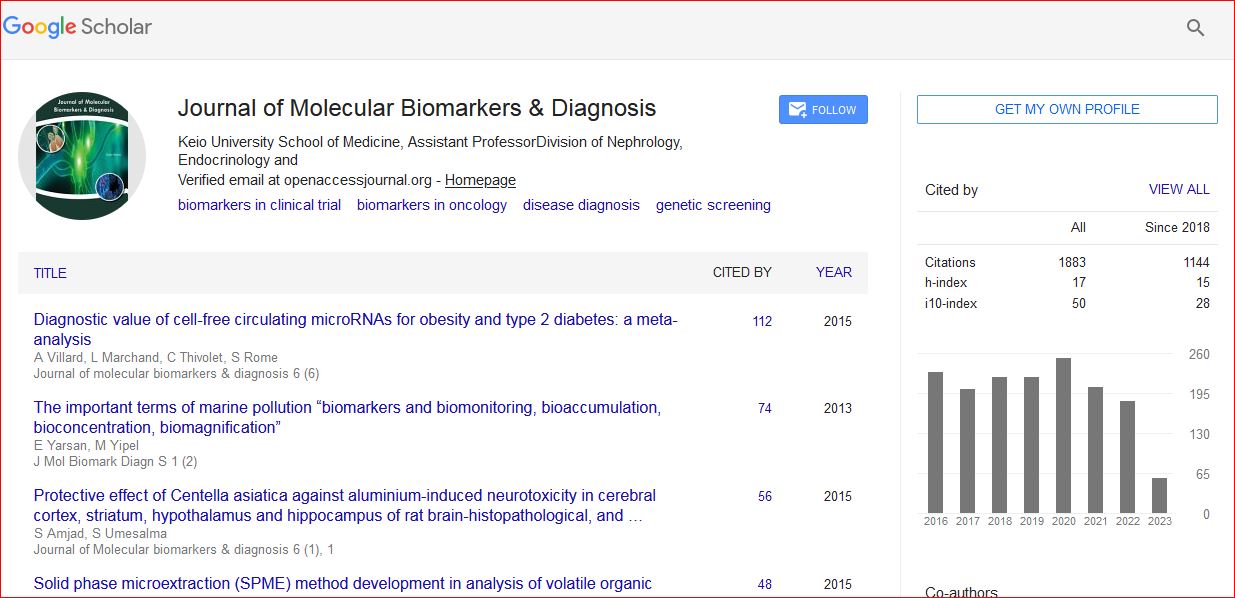
Journal of Molecular Biomarkers & Diagnosis received 2054 citations as per Google Scholar report