Opinion - (2025) Volume 9, Issue 5
Received: 01-Oct-2025, Manuscript No. ahbs-26-182533;
Editor assigned: 03-Oct-2025, Pre QC No. P-182533;
Reviewed: 17-Oct-2025, QC No. Q-182533;
Revised: 22-Oct-2025, Manuscript No. R-182533;
Published:
29-Oct-2025
, DOI: 10.37421/2952-8097.2025.9.337
Citation: MacLeod, Fiona. ”Pollutants Threaten Wildlife Health
And Ecosystem Stability.” J Anim Health Behav Sci 09 (2025):337.
Copyright: © 2025 MacLeod F. This is an open-access article distributed under the terms of the Creative Commons Attribution License, which permits unrestricted use,
distribution and reproduction in any medium, provided the original author and source are credited.
Environmental pollutants represent a multifaceted threat to wildlife, impacting various physiological and behavioral aspects across numerous species. Heavy metals and persistent organic pollutants (POPs) are known to significantly disrupt animal behavior and health, leading to neurotoxic effects that alter foraging patterns, social interactions, and reproductive success [1].
Lead exposure, a prominent heavy metal contaminant, has been extensively studied in avian species, revealing a clear link to impaired cognitive function and motor skills. This impairment affects crucial survival behaviors such as navigation, food acquisition, and predator avoidance, underscoring the urgent need for regulatory action against lead sources like ammunition and fishing weights to protect wild bird populations [2].
The pervasive presence of microplastics in aquatic environments is increasingly recognized as a significant threat to fish health and behavior. Ingestion of microplastics can result not only in physical damage and reduced nutrient absorption but also in inflammatory responses, profoundly impacting fish well-being and survival [3].
Agricultural practices, particularly the widespread use of pesticides like neonicotinoids, have been strongly implicated in the alarming decline of pollinator populations, with bees being particularly vulnerable. Sub-lethal doses of these chemicals can severely impair learning, memory, and navigation abilities, contributing to widespread colony collapse [4].
Air pollution, encompassing particulate matter and ozone, poses considerable respiratory and cardiovascular risks to both domestic and wild animals. Beyond direct health impacts, altered olfactory cues resulting from air contaminants can disrupt vital animal communication and social bonding processes, a growing concern for those monitoring animal welfare [5].
Endocrine-disrupting chemicals (EDCs), frequently found in industrial effluents and plastic waste, possess the capacity to mimic or block natural hormones. This interference can lead to severe reproductive abnormalities and developmental issues in wildlife, affecting sexual differentiation and reproductive behaviors in aquatic and terrestrial species [6].
Noise pollution, originating from a variety of anthropogenic sources including industrial and urban activities, is emerging as a significant environmental stressor. Increased noise levels can cause animals to avoid otherwise suitable habitats and can reduce breeding success, impacting the dynamics of various populations [7].
Flame retardants, commonly integrated into consumer products, are persistent environmental pollutants that tend to accumulate in animal tissues over time. Studies suggest these chemicals can interfere with crucial thyroid hormone functions, thereby impacting development and behavior in both aquatic and terrestrial species [8].
Heavy metal contamination, with mercury being a particular concern, presents a substantial neurotoxic threat to apex predators. This contamination can impair cognitive abilities, coordination, and reproductive success, with implications for the health and stability of entire ecosystems due to bioaccumulation and biomagnification [9].
Pharmaceuticals and personal care products (PPCPs) entering aquatic environments have been identified as potential endocrine disruptors and neurotoxicants. Research on fish has documented behavioral alterations, including compromised predator avoidance and disrupted social interactions, highlighting an underestimated threat to aquatic ecosystems and animal welfare [10].
Environmental pollutants, including heavy metals and persistent organic pollutants (POPs), have been shown to significantly disrupt animal behavior and health across a wide array of species. Studies have revealed profound neurotoxic effects, leading to alterations in foraging strategies, social interactions, and overall reproductive success, impacting the viability of populations [1].
In avian species, lead exposure has been definitively linked to impaired cognitive function and motor skills. These deficits hinder the birds' capacity for essential survival tasks such as navigation, locating food sources, and effectively avoiding predators. This research highlights the critical need for stringent regulations on lead sources like ammunition and fishing weights to safeguard wild bird populations [2].
The widespread presence of microplastics in aquatic ecosystems is increasingly recognized as a serious threat to the health and behavioral integrity of fish. Ingestion of these particles can result in direct physical damage to the gastrointestinal tract, diminished nutrient absorption, and pronounced inflammatory responses, all of which compromise fish well-being and survival [3].
Agricultural pesticides, with a particular focus on neonicotinoids, have been strongly implicated in the substantial decline observed in pollinator populations, notably bees. Evidence suggests that even sub-lethal doses of these chemicals can severely impair crucial cognitive functions like learning, memory, and navigation, contributing significantly to colony collapse phenomena [4].
Air pollution, characterized by contaminants such as particulate matter and ozone, poses significant risks to the respiratory and cardiovascular systems of both domestic and wild animals. Beyond these direct physiological impacts, the alteration of olfactory cues by airborne contaminants can disrupt essential animal communication pathways and social bonding behaviors, representing a growing concern for animal welfare monitoring [5].
Endocrine-disrupting chemicals (EDCs), commonly found in industrial discharges and plastic materials, have the ability to mimic or block the action of natural hormones. This disruption can lead to serious reproductive abnormalities and developmental problems in wildlife, affecting critical processes like sexual differentiation and reproductive behaviors, particularly in fish and amphibians [6].
Noise pollution, emanating from industrial and urban activities, is an escalating environmental concern impacting wildlife. Elevated noise levels can significantly affect animal communication, disrupt predator-prey dynamics, and increase stress levels, leading to habitat avoidance and reduced breeding success in various species [7].
Flame retardants, ubiquitous in consumer products, are persistent environmental pollutants that can bioaccumulate in animal tissues. Research indicates that these compounds can interfere with vital thyroid hormone functions, consequently impacting the development and behavior of both aquatic and terrestrial species, an area of significant interest in environmental toxicology [8].
Heavy metal contamination, especially mercury, poses a severe neurotoxic threat to apex predators, compromising their cognitive capabilities, motor coordination, and reproductive outcomes. Studies across diverse animal populations underscore the processes of bioaccumulation and biomagnification of these pollutants, with far-reaching implications for ecosystem health and conservation strategies [9].
Pharmaceuticals and personal care products (PPCPs) entering waterways can function as endocrine disruptors and neurotoxicants, exerting detrimental effects on aquatic organisms. Research on fish has demonstrated notable behavioral alterations, including diminished predator avoidance and changes in social interactions, indicating a substantial and often underestimated threat to aquatic ecosystems and animal welfare [10].
Environmental pollutants like heavy metals, POPs, microplastics, pesticides, air contaminants, EDCs, noise, flame retardants, and PPCPs pose significant threats to wildlife. These substances disrupt animal behavior, health, reproduction, and cognitive functions across various species, including birds, fish, pollinators, and apex predators. Impacts range from neurotoxicity and endocrine disruption to impaired navigation and communication. The accumulation and biomagnification of pollutants like mercury and flame retardants further exacerbate these issues, affecting ecosystem stability and animal welfare. Addressing these threats requires stringent regulations and a deeper understanding of their complex interactions with wildlife.
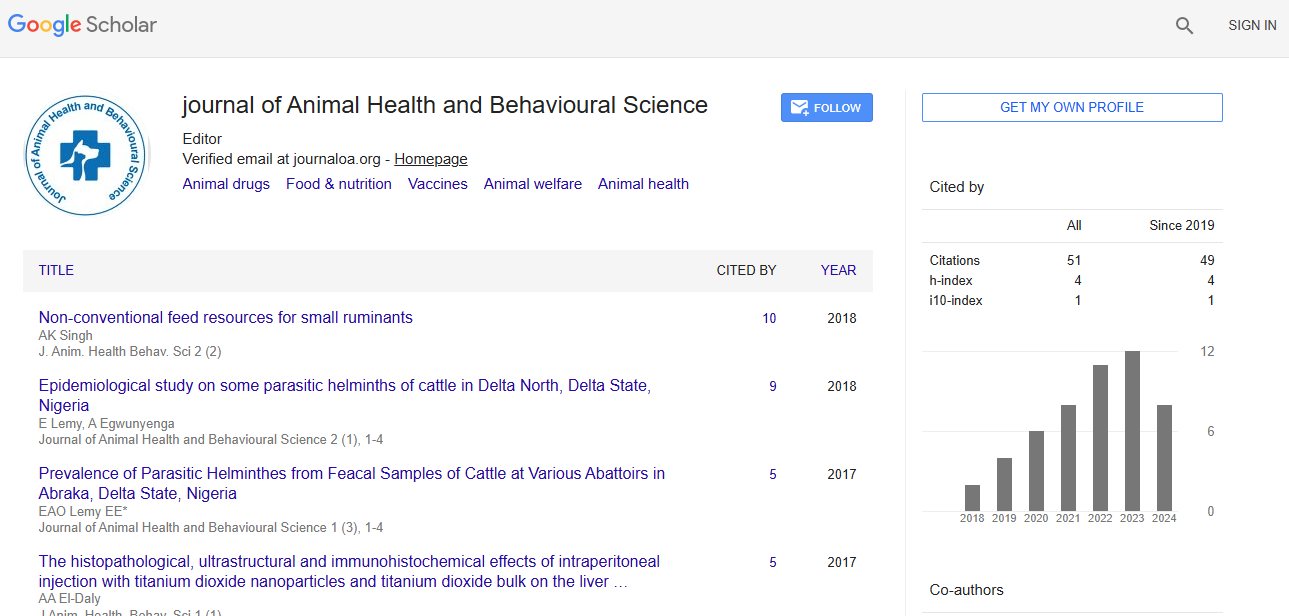
Journal of Animal Health and Behavioural Science received 38 citations as per Google Scholar report