Perspective - (2025) Volume 10, Issue 6
Received: 01-Nov-2025, Manuscript No. PE-26-179322;
Editor assigned: 03-Nov-2025, Pre QC No. P-179322;
Reviewed: 17-Nov-2025, QC No. Q-179322;
Revised: 24-Nov-2025, Manuscript No. R-179322;
Published:
29-Nov-2025
, DOI: 10.37421/2472-1042.2025.10.317
Citation: Nguyen, Linh Tran. ”Pharmacy Services: Saving Costs, Improving Outcomes.” Pharmacoeconomics 10 (2025):317.
Copyright: © 2025 Nguyen T. Linh This is an open-access article distributed under the terms of the Creative Commons Attribution License, which permits unrestricted use, distribution and reproduction in any medium, provided the original author and source are credited.
This article explores the economic benefits of clinical pharmacy services, highlighting how pharmacists contribute to cost savings through medication therapy management, reduced hospital readmissions, and improved patient outcomes. It emphasizes the need for robust pharmacoeconomic evaluations to demonstrate the value of these services to healthcare systems and payers [1].
The study assesses the cost-effectiveness of pharmacist-led interventions in managing chronic diseases such as diabetes and hypertension. It demonstrates that these services lead to better glycemic and blood pressure control, thereby reducing the incidence of costly complications and improving overall patient quality of life [2].
This research evaluates the economic impact of clinical pharmacy services in reducing medication-related problems and emergency department visits. It highlights the proactive role of pharmacists in medication reconciliation and patient education, leading to improved adherence and fewer adverse drug events [3].
The paper examines the economic contribution of clinical pharmacists in optimizing antibiotic stewardship programs. It demonstrates how appropriate antibiotic use, guided by pharmacists, leads to reduced healthcare costs associated with resistant infections and shorter hospital stays [4].
This review discusses the return on investment for clinical pharmacy services in various healthcare settings. It emphasizes the importance of data collection and analysis to quantify the economic benefits, such as reduced length of stay, decreased adverse drug events, and improved medication adherence [5].
The article presents a cost-benefit analysis of pharmacist-led anticoagulation management services. It demonstrates that these services lead to improved patient safety, fewer bleeding and thrombotic events, and ultimately, reduced healthcare expenditures [6].
This study investigates the economic implications of clinical pharmacy interventions in reducing polypharmacy and improving medication safety in elderly patients. The findings suggest that pharmacists play a crucial role in deprescribing and optimizing medication regimens, leading to decreased hospitalizations and healthcare costs [7].
The article quantifies the economic value of pharmacist-led medication reconciliation at transitions of care. It highlights the reduction in medication errors and subsequent adverse events, leading to improved patient safety and cost savings for the healthcare system [8].
This research evaluates the economic benefits of pharmacist-led medication therapy management in patients with multiple chronic conditions. It demonstrates improved health outcomes, reduced healthcare utilization, and cost savings, underscoring the efficiency of these specialized pharmacy services [9].
The article provides a comprehensive overview of the economic evaluation methodologies for clinical pharmacy services. It discusses various pharmacoeconomic models and their application in demonstrating the value of pharmacists' contributions to patient care and healthcare system efficiency [10].
Clinical pharmacy services offer significant economic advantages by enhancing medication therapy management, which directly contributes to cost savings. Pharmacists are instrumental in reducing hospital readmissions through comprehensive patient care and education, thereby improving overall patient outcomes and alleviating financial burdens on healthcare systems [1].
The cost-effectiveness of pharmacist-led interventions is particularly evident in the management of chronic diseases. By improving glycemic and blood pressure control in patients with conditions like diabetes and hypertension, pharmacists help avert costly complications and enhance the quality of life for these individuals [2].
Clinical pharmacy services play a vital role in mitigating medication-related problems and reducing emergency department visits. Through proactive measures such as medication reconciliation and patient education, pharmacists ensure better adherence and minimize adverse drug events, leading to economic efficiencies [3].
Pharmacists contribute economically by optimizing antibiotic stewardship programs. Their guidance on appropriate antibiotic use leads to a decrease in healthcare costs associated with resistant infections and shorter hospital stays, benefiting both patients and providers [4].
Evaluating the return on investment for clinical pharmacy services reveals substantial economic benefits across diverse healthcare settings. Quantifying these advantages, including reduced length of stay and fewer adverse drug events, underscores the financial value of pharmacist interventions [5].
Pharmacist-led anticoagulation management services demonstrate clear cost-benefit advantages. These services enhance patient safety by reducing bleeding and thrombotic events, ultimately leading to lower overall healthcare expenditures [6].
In the context of elderly patients, clinical pharmacy interventions aimed at reducing polypharmacy and improving medication safety yield considerable economic benefits. Pharmacists' expertise in deprescribing and optimizing regimens decreases hospitalizations and healthcare costs [7].
The economic value of pharmacist-led medication reconciliation during transitions of care is substantial. By reducing medication errors and preventing adverse events, these services improve patient safety and generate significant cost savings for healthcare systems [8].
Pharmacist-led medication therapy management for patients with multiple chronic conditions leads to improved health outcomes, reduced healthcare utilization, and substantial cost savings. This highlights the efficiency and economic viability of specialized pharmacy services [9].
Methodologies for economic evaluation of clinical pharmacy services are crucial for demonstrating their value. Various pharmacoeconomic models help quantify the contributions of pharmacists to patient care and the overall efficiency of healthcare systems [10].
Clinical pharmacy services demonstrably contribute to cost savings and improved patient outcomes across various healthcare settings. Pharmacists play a crucial role in medication therapy management, reducing hospital readmissions, and optimizing chronic disease management, leading to better patient health and reduced healthcare expenditures. Their interventions in areas like antibiotic stewardship, anticoagulation management, and polypharmacy reduction further enhance patient safety and economic efficiency. Pharmacists also contribute significantly by minimizing medication errors through reconciliation and by providing essential patient education. The economic impact of these services is increasingly being quantified through robust pharmacoeconomic evaluations, underscoring their value to healthcare systems and payers.
None
None
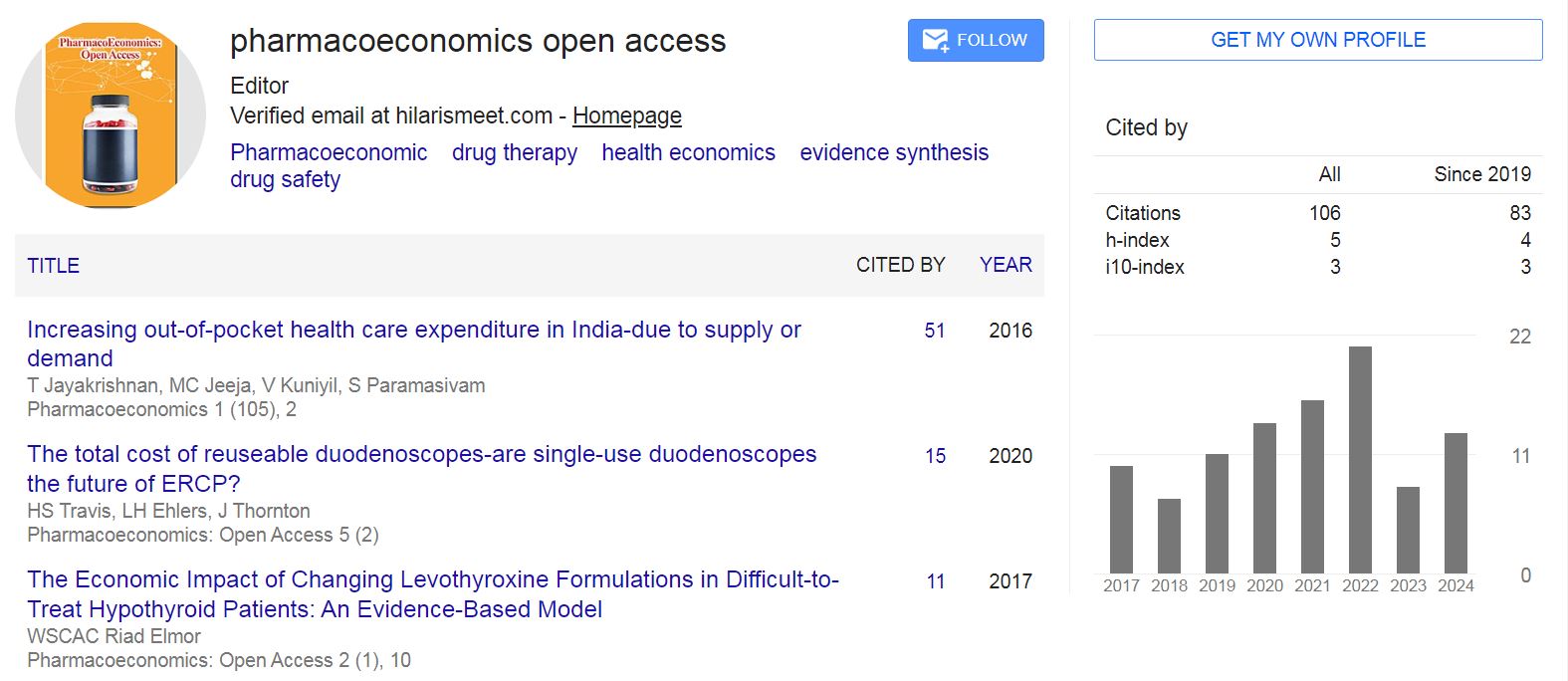
Pharmacoeconomics: Open Access received 106 citations as per Google Scholar report