Opinion - (2025) Volume 14, Issue 6
Received: 01-Nov-2025, Manuscript No. pbt-25-178159;
Editor assigned: 03-Nov-2025, Pre QC No. P-178159;
Reviewed: 17-Nov-2025, QC No. Q-178159;
Revised: 24-Nov-2025, Manuscript No. R-178159;
Published:
29-Nov-2025
, DOI: 10.37421/2167-7689.2025.14.513
Citation: Nair, Priya. ”Pharmacovigilance: Modern Safety, Real- World Data, AI.” Pharmaceut Reg Affairs 14 (2025):513.
Copyright: © 2025 Nair P. This is an open-access article distributed under the terms of the Creative Commons Attribution License, which permits unrestricted use, distribution and reproduction in any medium, provided the original author and source are credited.
Pharmacovigilance is a critical discipline focused on the detection, assessment, understanding, and prevention of adverse effects or any other drug-related problems, playing an indispensable role in ensuring the safety of medicines following their introduction into the market. This multifaceted process encompasses the systematic collection of information on suspected adverse drug reactions (ADRs), the detection of potential safety signals, rigorous assessment of the evidence, continuous monitoring of drug safety profiles, and the implementation of preventative measures to mitigate risks associated with pharmaceutical products. Recent advancements in the field are increasingly emphasizing the integration of diverse real-world data sources, such as electronic health records, patient registries, and even social media platforms, with the goal of enhancing the sensitivity and specificity of signal detection and refining risk assessment methodologies. The department of Pharmaceutical Sciences is actively engaged in the comprehensive understanding and practical implementation of these evolving pharmacovigilance strategies, with a particular focus on their application and relevance within the complex and dynamic Indian healthcare landscape [1].
The burgeoning utilization of artificial intelligence (AI) and machine learning (ML) is profoundly transforming the landscape of pharmacovigilance, offering unprecedented capabilities for the efficient analysis of vast and complex datasets. These advanced computational approaches enable earlier and more robust detection of potential safety signals, thereby significantly reducing the time and resources traditionally allocated to manual monitoring processes. Such advancements pave the way for faster regulatory interventions and ultimately contribute to an improved overall patient safety. The research endeavors within the department are keenly exploring the practical applications and efficacy of these cutting-edge technologies in the identification of novel or previously unrecognized adverse drug reactions [2].
Real-world evidence (RWE), meticulously derived from a wide array of data sources including electronic health records, insurance claims databases, patient registries, and wearable devices, is now being increasingly integrated into the fabric of pharmacovigilance programs worldwide. RWE serves as a vital complement to the controlled data generated from clinical trials, offering invaluable insights into drug safety and effectiveness as observed in routine clinical practice. This integration enables a more nuanced and comprehensive understanding of a drug's risk-benefit profile under real-world conditions. The department is actively investigating innovative methodologies for how RWE can be leveraged to substantially strengthen post-marketing surveillance systems, particularly within the specific context of the Indian pharmaceutical market [3].
The regulatory framework governing pharmacovigilance is in a state of continuous evolution, dynamically adapting to address emerging challenges and to proactively incorporate significant technological advancements. A thorough understanding of these ongoing changes and the unwavering commitment to ensuring compliance are absolutely paramount for pharmaceutical manufacturers, healthcare providers, and regulatory bodies alike. This evolving regulatory landscape necessitates a keen awareness of global trends and their direct implications for the effective monitoring of drug safety. The department remains diligently abreast of these critical regulatory shifts to ensure its practices align with international standards and best practices [4].
Pharmacovigilance within the specific context of rare diseases presents a unique set of challenges that demand specialized approaches and considerable ingenuity. These challenges stem primarily from the inherent characteristic of smaller patient populations and the consequent limited availability of comprehensive data. Consequently, the development and implementation of robust strategies, such as dedicated patient registries, the formation of collaborative networks among researchers and clinicians, and the adoption of innovative data collection methods, are absolutely crucial for the effective safety monitoring of drugs used in these often underserved patient groups. The department expresses a strong interest in contributing to the growing body of knowledge concerning pharmacovigilance for specific rare disease indications [5].
The burgeoning use of social media platforms as a channel for pharmacovigilance, often referred to as 'social media surveillance', offers a valuable supplementary avenue for the early identification of potential adverse drug events that might otherwise go unreported through traditional pharmacovigilance systems. While significant challenges persist regarding the rigorous validation of data obtained from these informal channels and the potential for inherent biases, social media can indeed provide invaluable early signals of emerging safety concerns. Research initiatives within the department are actively exploring the practical feasibility and inherent limitations of applying this innovative approach within the specific socio-cultural and technological context of India [6].
Robust global pharmacovigilance networks are indispensable for the efficient sharing of critical information pertaining to drug safety and for the coordinated and timely response to emerging public health risks. Fostering strong collaboration between regulatory authorities, pharmaceutical companies, healthcare professionals, and academic institutions on a worldwide scale is fundamentally key to achieving a harmonized and effective global approach to drug safety monitoring and management. The department explicitly acknowledges the profound importance of these international collaborations in its ongoing efforts to enhance patient safety on a broader scale [7].
The pharmacovigilance of complex biological products and their biosimilar counterparts necessitates highly specialized approaches due to their inherent complexity in manufacturing processes and their unique biological nature. Vigilant monitoring for immunogenicity, the assessment of long-term safety outcomes, and the careful evaluation of any potential differences in the safety profiles between a reference biologic and its corresponding biosimilar are critically important aspects of post-marketing surveillance. The department is actively engaged in deepening its understanding of the specific pharmacovigilance considerations pertinent to these advanced therapeutic products [8].
Increasingly, patient engagement in pharmacovigilance activities is recognized as a vital component, as patients themselves can serve as exceptionally valuable sources of firsthand information regarding their personal experiences with medications, including any adverse effects encountered. Empowering patients to confidently report adverse events and encouraging their active participation in the ongoing process of drug safety monitoring can collectively lead to a more comprehensive and nuanced understanding of drug safety in real-world settings. The department is actively seeking avenues for enhancing patient involvement in all aspects of pharmacovigilance activities [9].
Signal detection and subsequent validation represent fundamental and critical steps within the overall pharmacovigilance process, with the primary objective of identifying potential causal relationships between the administration of a specific drug and the occurrence of an adverse event. Methodologies employed in this crucial phase range from sophisticated statistical signal detection techniques applied to large-scale databases to meticulous expert review and detailed case-by-case analysis. This article aims to meticulously examine the intricate process of signal detection and underscore its absolutely critical role in effective risk management strategies. The department's ongoing research work includes the continuous refinement and optimization of these vital detection methods [10].
Pharmacovigilance, a cornerstone of public health, is dedicated to ensuring the safety of medicines post-approval through a rigorous cycle of collecting, detecting, assessing, monitoring, and preventing adverse drug reactions (ADRs). This involves a continuous effort to understand the potential harms associated with pharmaceutical products once they are in widespread use. Contemporary approaches are increasingly integrating diverse real-world data sources, such as electronic health records, social media content, and insurance claims data, to significantly enhance the ability to detect safety signals and conduct thorough risk assessments. The department of Pharmaceutical Sciences is deeply involved in understanding and implementing these sophisticated, evolving pharmacovigilance strategies, with a specific emphasis on their practical application within the unique context of the Indian healthcare system [1].
The integration of artificial intelligence (AI) and machine learning (ML) into pharmacovigilance represents a paradigm shift, enabling the highly efficient analysis of massive datasets for the early identification of safety signals. This technological advancement has the potential to dramatically decrease the time and resources required by traditional monitoring methods, facilitating more rapid regulatory actions and, consequently, improving patient safety. The research conducted by the department is focused on exploring the practical implementation and effectiveness of these advanced technologies in identifying novel ADRs and potential safety issues [2].
Real-world evidence (RWE), gathered from a multitude of sources including electronic health records, insurance claims data, patient registries, and even data from wearable devices, is becoming an integral component of modern pharmacovigilance programs. RWE provides crucial insights into drug safety and efficacy in everyday clinical practice, thereby complementing data from controlled clinical trials. This approach allows for a more comprehensive and nuanced understanding of a drug's risk-benefit profile throughout its lifecycle. The department is actively investigating how RWE can be effectively utilized to strengthen post-marketing surveillance initiatives within India [3].
The regulatory landscape for pharmacovigilance is in a constant state of flux, adapting to new challenges and incorporating the latest technological innovations. Maintaining an up-to-date understanding of these regulatory changes and ensuring strict compliance are essential for all pharmaceutical manufacturers and healthcare providers. This ongoing evolution necessitates a careful examination of global trends in pharmacovigilance regulation and their implications for drug safety monitoring. The department is committed to staying informed about these dynamic regulatory shifts [4].
Conducting pharmacovigilance for rare diseases presents distinctive challenges, primarily due to the limited number of patients affected and the consequent scarcity of available data. To address these issues, specialized strategies such as establishing dedicated patient registries, fostering collaborative research networks, and employing innovative data collection methodologies are indispensable for ensuring the effective safety monitoring of drugs used in these rare conditions. The department is keen to contribute to the advancement of knowledge regarding pharmacovigilance for specific rare disease indications [5].
The utilization of social media for pharmacovigilance, often termed 'social media surveillance', offers a supplementary means of identifying potential adverse events that might not be captured by traditional reporting systems. While challenges related to data validation and potential biases need to be carefully managed, social media can serve as an important source of early safety signals. The department's research efforts are focused on assessing the feasibility and understanding the limitations of this approach within the Indian context [6].
Global pharmacovigilance networks play a vital role in the international exchange of drug safety information and in coordinating responses to emerging global health risks. Effective collaboration among regulatory agencies, pharmaceutical companies, healthcare professionals, and academic institutions worldwide is fundamental to establishing a harmonized and consistent approach to drug safety. The department recognizes the critical importance of these international collaborations in its mission to enhance patient safety on a global scale [7].
The pharmacovigilance of biologics and biosimilars requires specialized methodologies owing to their complex manufacturing processes and unique nature. Key aspects include monitoring for immunogenicity, assessing long-term safety, and identifying any potential differences in safety profiles between a reference biologic and its biosimilar. The department is actively involved in understanding and addressing these specific pharmacovigilance considerations for these advanced therapeutic products [8].
There is a growing recognition of the importance of patient engagement in pharmacovigilance. Patients can provide invaluable firsthand information about their experiences with medications, including any adverse events. Empowering patients to report ADRs and involving them actively in safety monitoring processes can lead to a more comprehensive understanding of drug safety in real-world settings. The department is actively exploring avenues to foster greater patient involvement in pharmacovigilance activities [9].
Signal detection and validation are foundational steps in pharmacovigilance, aimed at identifying potential causal links between a drug and an adverse event. Methodologies vary from statistical analysis of large databases to expert judgment and detailed case reviews. This article examines the signal detection process and its crucial role in drug safety risk management. The department's work includes the continuous refinement of these detection methods to improve their accuracy and efficiency [10].
Pharmacovigilance is essential for post-marketing drug safety, involving the collection, detection, assessment, monitoring, and prevention of adverse drug reactions. Modern approaches integrate real-world data sources like electronic health records and social media to improve signal detection and risk assessment. Artificial intelligence and machine learning are transforming the field by enabling efficient analysis of large datasets for early safety signal detection, reducing time and resources. Real-world evidence (RWE) from diverse sources complements clinical trial data, offering insights into drug safety and effectiveness in routine practice. The evolving regulatory landscape requires constant adaptation and compliance. Pharmacovigilance for rare diseases faces unique challenges due to small patient populations, necessitating specialized strategies like patient registries and collaborative networks. Social media surveillance offers a supplementary channel for identifying potential adverse events, though data validation remains a challenge. Global pharmacovigilance networks are crucial for information sharing and coordinated responses, emphasizing international collaboration. The pharmacovigilance of biologics and biosimilars requires specialized approaches due to their complexity. Patient engagement is increasingly important, empowering individuals to report adverse events and contribute to safety monitoring. Signal detection and validation are fundamental processes for identifying potential causal relationships between drugs and adverse events, with ongoing efforts to refine these methods.
None
None
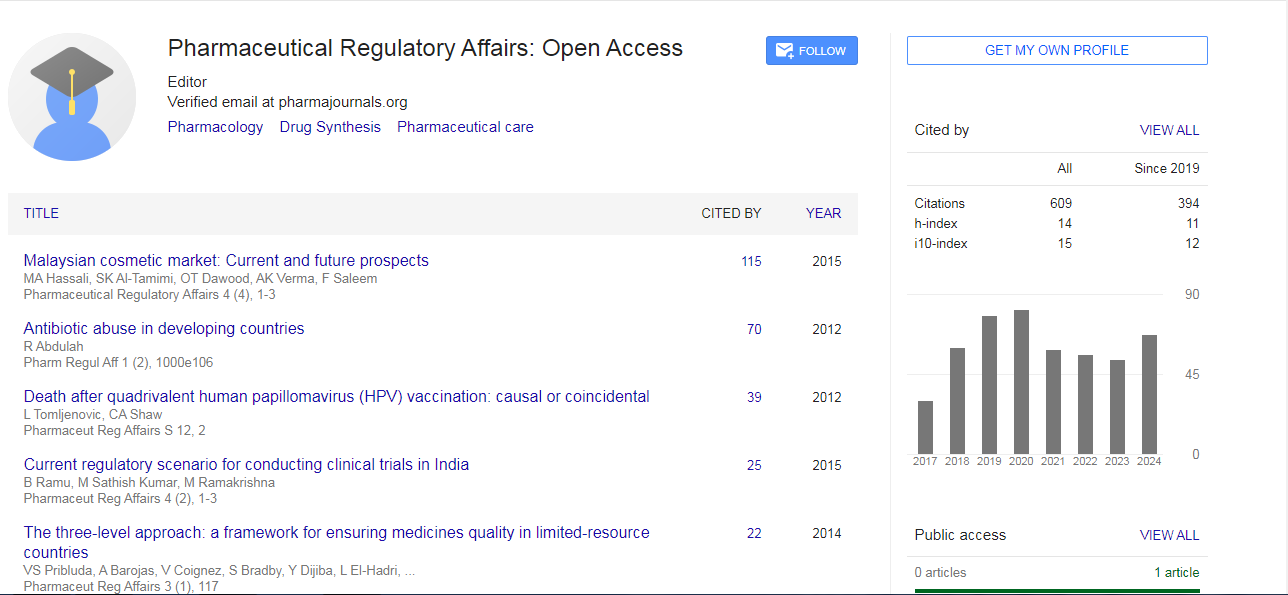
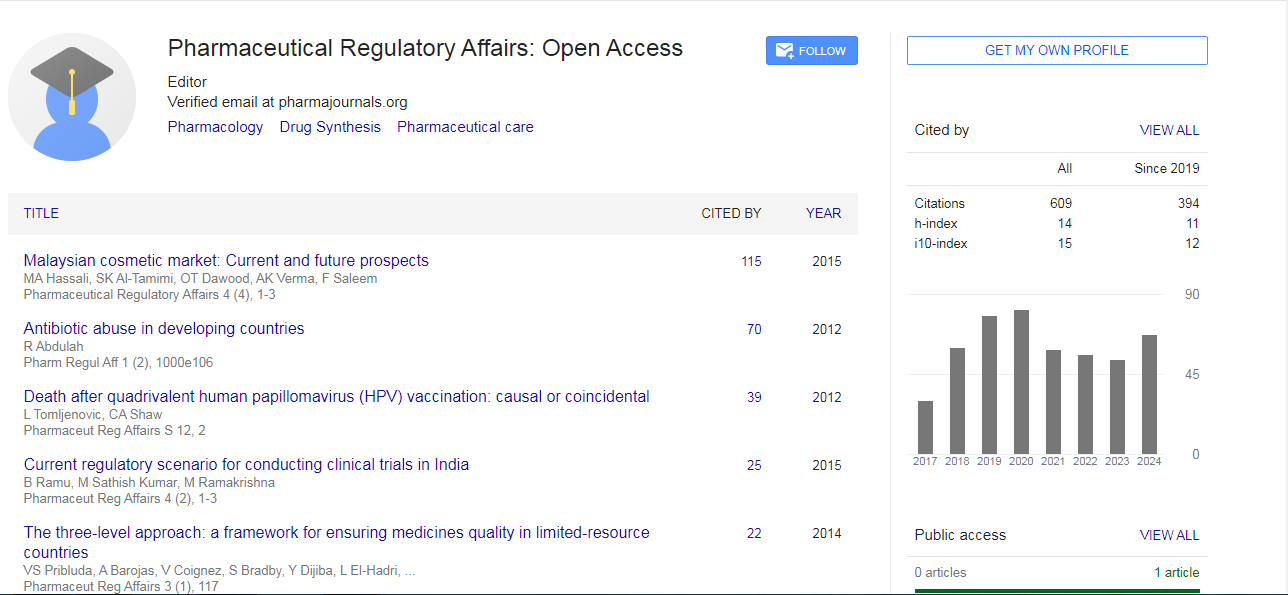
Pharmaceutical Regulatory Affairs: Open Access received 533 citations as per Google Scholar report