Short Communication - (2025) Volume 16, Issue 4
Received: 01-Jul-2025, Manuscript No. assj-25-174786;;
Editor assigned: 03-Jul-2025, Pre QC No. P-174786;;
Reviewed: 17-Jul-2025, QC No. Q-174786;;
Revised: 22-Jul-2025, Manuscript No. R-174786;;
Published:
29-Jul-2025
, DOI: 10.37421/2151-6200.2025.16.680
Citation: Crestfall, Arden. ”Pervasive Systemic Inequalities: Cross-Sectoral Insights.” Arts Social Sci J 16 (2025):680
Copyright: © 2025 Crestfall A. This is an open-access article distributed under the terms of the Creative Commons Attribution License, which permits unrestricted use, distribution and reproduction in any medium, provided the original author and source are credited
This comprehensive review synthesizes current evidence on health inequalities across Europe, exploring their profound social determinants and proposing targeted policy solutions. It highlights the persistent disparities in health outcomes among different socioeconomic groups, emphasizing the critical need for multifaceted strategies that address root causes like poverty, education, and equitable access to healthcare systems [1].
This article investigates how socioeconomic status influenced educational outcomes, particularly during the unprecedented challenges of the COVID-19 pandemic. The findings reveal that pre-existing educational inequalities were significantly exacerbated, with students from disadvantaged socioeconomic backgrounds experiencing greater learning loss due to unequal access to remote learning resources and essential academic support [2].
This review synthesizes recent empirical research on racial and ethnic disparities prevalent within the criminal justice system. It underscores persistent biases in key areas such as policing practices, sentencing decisions, and incarceration rates, demonstrating unequivocally how systemic racism continues to shape criminal justice outcomes and perpetuate broader social inequalities [3].
The authors explore the intricate relationship between rapid technological advancements and the escalating problem of wage inequality. They contend that while new technologies certainly boost productivity, their uneven adoption and varied impact across different skill levels can widen income disparities, necessitating proactive policy responses to ensure a more equitable distribution of their economic benefits [4].
This article delves into the mechanisms that allow gender inequality to persist within organizational settings, highlighting the critical roles played by organizational culture and leadership. It suggests that biases embedded within prevailing cultural norms and leadership practices significantly contribute to disparities in career progression, compensation, and overall opportunities for women in the workplace [5].
This systematic review meticulously examines the social determinants that contribute to food insecurity in high-income countries. It identifies interconnected factors such as poverty, unemployment, lack of affordable housing, and racial discrimination as primary drivers, underscoring how various forms of social inequality converge to shape unequal access to nutritious and adequate food [6].
This comprehensive review offers a thorough overview of the digital divide, arguing that its implications extend far beyond mere access to technology, encompassing disparities in digital skills, usage patterns, and the resulting outcomes. It highlights how digital inequalities reinforce existing social stratification and advocates for a holistic approach to effectively bridge these multifaceted gaps [7].
This article analyzes the pervasive issue of housing inequality within major global cities. It meticulously details how powerful market forces, processes of gentrification, and insufficient social housing policies collectively lead to significant disparities in housing access and affordability. It underscores the profound and far-reaching impact of these inequalities on residents' overall well-being and their opportunities for social mobility [8].
This systematic review thoroughly examines socioeconomic inequalities in mental health on a global scale. It uncovers consistent evidence demonstrating that individuals with lower socioeconomic status disproportionately bear a higher burden of mental health disorders, emphasizing the critical necessity for interventions that address both individual mental health needs and the broader social determinants influencing well-being [9].
This review delves into the concept of environmental injustice, clearly demonstrating how marginalized communities, often defined by racial and socioeconomic lines, disproportionately endure the adverse impacts of environmental pollution and various hazards. It thoroughly discusses the resulting health disparities and strongly advocates for the implementation of policies that actively promote environmental equity across all communities [10].
Research consistently highlights the pervasive nature of social and economic disparities affecting critical aspects of human well-being. Across Europe, health inequalities persist significantly among different socioeconomic groups, with profound social determinants demanding multifaceted policy solutions that address root causes such as poverty, education, and equitable access to healthcare systems [1]. The COVID-19 pandemic starkly exposed and exacerbated pre-existing educational inequalities, revealing that students from disadvantaged socioeconomic backgrounds experienced greater learning loss due to unequal access to remote learning resources and essential academic support [2]. On a global scale, socioeconomic status is deeply intertwined with mental health outcomes; evidence consistently shows that individuals with lower socioeconomic status disproportionately bear a higher burden of mental health disorders, emphasizing the critical need for interventions that address both individual needs and the broader social determinants influencing well-being [9]. These findings collectively underscore how foundational social conditions critically shape health and educational trajectories, perpetuating cycles of disadvantage.
Economic dimensions of inequality are equally significant, shaping access to resources and opportunities. Rapid technological advancements, while boosting productivity, have been shown to contribute to escalating wage inequality. Their uneven adoption and varied impact across different skill levels can widen income disparities, necessitating proactive policy responses to ensure a more equitable distribution of their economic benefits [4]. Food insecurity, even in high-income countries, is not merely a matter of supply but is deeply rooted in social determinants such as poverty, unemployment, lack of affordable housing, and racial discrimination. This illustrates how various forms of social inequality converge to create unequal access to nutritious and adequate food [6]. Furthermore, major global cities grapple with pervasive housing inequality, where powerful market forces, gentrification processes, and insufficient social housing policies collectively lead to significant disparities in housing access and affordability, profoundly impacting residents' overall well-being and opportunities for social mobility [8].
Beyond direct economic factors, systemic and structural biases perpetuate inequalities across various societal structures. Within the criminal justice system, racial and ethnic disparities are prevalent, with persistent biases evident in policing practices, sentencing decisions, and incarceration rates. This demonstrates how systemic racism continues to shape criminal justice outcomes and perpetuate broader social inequalities [3]. Similarly, gender inequality in the workplace is maintained by biases embedded within organizational culture and leadership practices, significantly contributing to disparities in career progression, compensation, and overall opportunities for women [5]. These areas reveal how deeply entrenched biases and unequal structures limit opportunities and outcomes for specific demographic groups based on race and gender.
The digital divide represents another crucial facet of contemporary inequality, extending beyond mere access to technology. It encompasses disparities in digital skills, usage patterns, and resulting outcomes. These digital inequalities actively reinforce existing social stratification and demand a holistic approach to bridge these multifaceted gaps effectively [7]. Concurrent with digital disparities, environmental injustice presents a pressing concern: marginalized communities, often defined by racial and socioeconomic lines, disproportionately endure the adverse impacts of environmental pollution and various hazards [10]. This unequal burden leads to significant health disparities, making the implementation of policies that actively promote environmental equity across all communities a moral and practical imperative.
This collection of research highlights the pervasive nature of social and economic inequalities across diverse sectors. It explores persistent disparities in health outcomes among socioeconomic groups in Europe, underscoring the need for strategies addressing root causes like poverty and education. During the COVID-19 pandemic, educational inequalities worsened for disadvantaged students due to unequal access to remote learning resources. The criminal justice system shows enduring racial and ethnic biases, impacting policing, sentencing, and incarceration rates, which perpetuates broader social inequalities. Rapid technological advancements are linked to rising wage inequality, as their uneven adoption creates wider income gaps, requiring policies for fair economic distribution. In the workplace, gender inequality persists, influenced by organizational culture and leadership biases that affect career progression and opportunities for women. Food insecurity in affluent nations is driven by factors such as poverty, unemployment, and discrimination, illustrating how various social inequalities limit access to adequate food. The digital divide encompasses not just access but also disparities in skills and usage patterns, reinforcing existing social stratification. Housing inequality in global cities, shaped by market forces, gentrification, and inadequate social housing, significantly impacts well-being and social mobility. Furthermore, socioeconomic status consistently correlates with mental health outcomes, with lower status individuals bearing a higher burden of disorders. Finally, environmental injustice reveals how marginalized communities disproportionately suffer from pollution and hazards, leading to health disparities and necessitating environmental equity policies. Collectively, these studies emphasize the systemic character of inequality and the necessity for comprehensive interventions across these critical areas.
None
None
Indexed at, Google Scholar, Crossref
Indexed at, Google Scholar, Crossref
Indexed at, Google Scholar, Crossref
Indexed at, Google Scholar, Crossref
Indexed at, Google Scholar, Crossref
Indexed at, Google Scholar, Crossref
Indexed at, Google Scholar, Crossref
Indexed at, Google Scholar, Crossref
Indexed at, Google Scholar, Crossref
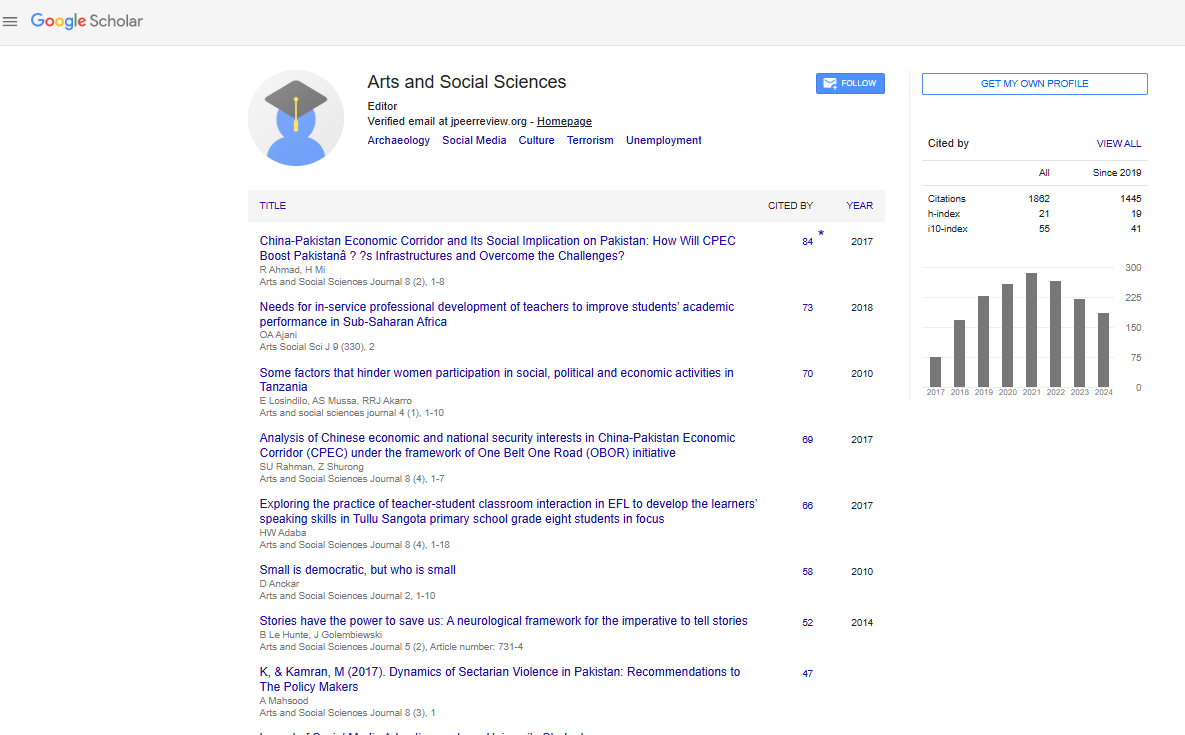
Arts and Social Sciences Journal received 1413 citations as per Google Scholar report