Short Communication - (2025) Volume 9, Issue 5
Received: 01-Oct-2025, Manuscript No. cmcr-25-178084;
Editor assigned: 03-Oct-2025, Pre QC No. P-178084;
Reviewed: 17-Oct-2025, QC No. Q-178084;
Revised: 22-Oct-2025, Manuscript No. R-178084;
Published:
29-Oct-2025
, DOI: 10.37421/2684-4915.2025.9.400
Citation: Rossi, Ethan. ”Personalized Medicine: Tailoring Care, Challenges, AI.” Clin Med Case Rep 09 (2025):400.
Copyright: © 2025 Rossi E. This is an open-access article distributed under the terms of the Creative Commons Attribution License, which permits unrestricted use, distribution and reproduction in any medium, provided the original author and source are credited.
Personalized medicine is fundamentally transforming how healthcare is approached, shifting from a generalized model to one that tailors medical decisions, treatments, and prevention strategies to an individual's unique genetic makeup, lifestyle, and environment [1].
What this really means is integrating genomic data into clinical practice, offering a more precise and effective path for patient care. Itâ??s about leveraging our understanding of individual biology to optimize outcomes, making medicine far more targeted and potentially more successful [1].
Here's the thing about cancer treatment: personalized medicine marks a significant paradigm change. Instead of universal chemotherapy or radiation, oncologists now employ genomic profiling to identify specific mutations within a patient's tumor [2].
This allows for targeted therapies that are far more effective and less toxic, directly attacking the cancer cells' weaknesses. This precise approach is transforming oncology, moving us closer to treating cancer as an individual disease rather than a single entity [2].
Let's break it down: while personalized medicine holds immense promise, it is not without its hurdles. These challenges span from the complexity of integrating vast amounts of genomic and clinical data to ensuring equitable access and managing significant ethical implications [3].
What this really means is that robust infrastructure, advanced bioinformatics, and thoughtful policy are crucial to realize its full potential. Future innovations and collaborations aim to overcome these obstacles, ensuring this transformative approach benefits everyone [3].
Cardiovascular diseases, incredibly common yet varied in individual impact, are also seeing the application of personalized medicine. This comprehensive approach recognizes that genetic predispositions, lifestyle, and other health factors all play a role in an individual's risk and response to treatment [4].
It covers aspects like pharmacogenomics for optimizing drug dosages, identifying high-risk individuals, and tailoring lifestyle interventions. The ultimate goal is to move beyond generic recommendations to truly individualized strategies for more effective prevention and management of heart conditions [4].
Drug responses are not uniform; some metabolize medications quickly, others slowly, and adverse reactions vary. Pharmacogenomics, a key component of personalized medicine, studies how an individual's genes affect their response to drugs [5].
This offers opportunities in clinical practice to select the right drug at the right dose for each patient, minimizing side effects and maximizing efficacy. However, integrating this complex genetic information into routine care presents challenges, requiring new clinical workflows and educational initiatives for healthcare providers [5].
Any significant medical advancement brings a host of ethical, legal, and social considerations, and personalized medicine is no exception. Critical issues include data privacy and security, equitable access to advanced therapies, the potential for genetic discrimination, and the ethical implications of genetic screening [6].
Developing robust frameworks and policies is important to guide the responsible implementation of personalized medicine, ensuring its benefits are realized while protecting individual rights and societal values [6].
The intersection of Artificial Intelligence (AI) and big data is proving transformative for personalized medicine. AI can sift through massive datasets of genomic information, electronic health records, and lifestyle data far faster and more effectively than humans, identifying patterns that inform treatment decisions [7].
AI algorithms can predict disease risk, optimize drug dosages, and discover new therapeutic targets. Yet, significant challenges persist, such as data integration, privacy concerns, and the need for explainable AI to build trust in these advanced systems [7].
Rare diseases, affecting small populations and often posing research and treatment challenges, find a beacon of hope in personalized medicine. Genetic sequencing and advanced diagnostic tools enable more precise diagnoses for these elusive conditions [8].
What this means is treatments can then be tailored to the specific genetic mutation causing the disease, rather than relying on broad, often ineffective therapies. This individualized approach drives advances in gene therapy and orphan drug development, truly changing lives for those with rare conditions [8].
You might not immediately think of personalized medicine for infectious diseases, but itâ??s becoming increasingly relevant. Understanding an individual's genetic susceptibility to infection, their microbiome composition, and immune response can inform more effective prevention and treatment strategies [9].
For example, tailoring antimicrobial therapies based on individual pathogen strains and host factors can improve outcomes and combat antibiotic resistance. It's about optimizing interventions based on both the pathogen and the host's unique biology [9].
Developing new drugs is often a long, expensive, and unsuccessful process. Personalized medicine offers significant opportunities to revolutionize this. Integrating biomarkers, genetic insights, and patient-specific data into drug development can lead to more targeted and effective therapies [10].
By identifying patient subgroups most likely to respond to a particular drug, pharmaceutical companies can design more efficient clinical trials, reduce failure rates, and bring safer, more effective medicines to market faster. Itâ??s about making drug development smarter and more patient-centric [10].
Personalized medicine is fundamentally transforming healthcare by shifting from a universal approach to one that customizes medical decisions, treatments, and prevention strategies based on an individual's distinct genetic makeup, lifestyle, and environment [1]. This involves the increasing integration of genomic data into clinical practice, providing a more precise and effective pathway for patient care. It aims to harness our understanding of individual biology to optimize health outcomes, leading to far more targeted and potentially more successful medical interventions [1]. This individualized strategy holds particular promise in fields like oncology, where it represents a significant paradigm shift. Instead of relying on standard chemotherapy or radiation for all patients, oncologists can now leverage genomic profiling to pinpoint specific mutations within a patientâ??s tumor [2]. This capability allows for the development and application of targeted therapies that are not only more effective but also less toxic, as they directly address the inherent weaknesses of the cancer cells. This precise methodology is actively transforming cancer treatment, evolving it into an approach that recognizes cancer as an individual disease rather than a singular entity [2].
However, the path to fully realizing the potential of personalized medicine is not without its considerable challenges. Key hurdles include the inherent complexity of integrating vast and diverse datasets, encompassing genomic information, clinical records, and lifestyle data. Ensuring equitable access to these advanced therapies across all populations is another critical concern, alongside managing the profound ethical implications that arise from handling sensitive genetic information [3]. These ethical considerations range from safeguarding data privacy and security to preventing genetic discrimination and navigating the complexities of genetic screening. To overcome these obstacles and ensure that personalized medicine benefits everyone, there is a clear need for robust infrastructure, sophisticated bioinformatics tools, and thoughtfully developed policies and regulatory frameworks [3, 6]. Furthermore, the integration of complex genetic information into routine clinical care demands the creation of new clinical workflows and substantial educational initiatives for healthcare providers to effectively utilize these tools [5].
Artificial Intelligence (AI) and big data analytics are proving to be transformative forces in advancing personalized medicine. AI algorithms possess the remarkable ability to sift through massive datasetsâ??including genomic information, electronic health records, and lifestyle dataâ??at speeds and efficiencies far beyond human capability [7]. This enables the identification of intricate patterns and correlations that are invaluable for informing personalized treatment decisions. Specifically, AI algorithms can predict individual disease risk, optimize drug dosages for maximum efficacy and minimal side effects, and even discover novel therapeutic targets, thereby accelerating drug development [7, 10]. This data-driven approach is also revolutionizing the development of new drugs by incorporating biomarkers, genetic insights, and patient-specific data to create more targeted and effective therapies. By identifying patient subgroups most likely to respond to a particular drug, pharmaceutical companies can design more efficient clinical trials, reduce failure rates, and bring safer, more effective medicines to market much faster [10].
The scope of personalized medicine extends beyond common conditions, offering significant hope for patients with rare diseases. Given the small affected populations, research and treatment development for rare conditions have historically been challenging. Here, genetic sequencing and advanced diagnostic tools are enabling more precise diagnoses for these often elusive conditions [8]. What this means is that treatments can be meticulously tailored to the specific genetic mutation causing the disease, moving away from broad, often ineffective, therapies. This individualized approach is a driving force behind advances in gene therapy and the development of orphan drugs, truly changing lives for those with rare conditions [8].
Surprisingly, personalized medicine is also becoming increasingly relevant for infectious diseases. By understanding an individual's genetic susceptibility to infection, their unique microbiome composition, and their immune response, more effective prevention and treatment strategies can be informed [9]. For instance, tailoring antimicrobial therapies based on individual pathogen strains and host factors can significantly improve patient outcomes and combat the growing challenge of antibiotic resistance. This approach focuses on optimizing interventions based on both the pathogen and the hostâ??s distinct biology [9]. This comprehensive application across various medical disciplines underscores the broad and impactful reach of personalized medicine in modern healthcare.
Personalized medicine is reshaping healthcare, moving away from a one-size-fits-all approach to tailoring medical decisions to an individual's unique genetic makeup, lifestyle, and environment. This involves integrating genomic data into clinical practice for more precise and effective patient care. Itâ??s about leveraging our understanding of individual biology to optimize outcomes, making medicine far more targeted and potentially more successful. In oncology, personalized medicine represents a major shift. Oncologists use genomic profiling to pinpoint specific tumor mutations, enabling targeted therapies that are more effective and less toxic than standard treatments. This precise approach transforms cancer care, treating it as an individual disease. Beyond cancer, this individualized strategy extends to cardiovascular diseases, where understanding genetic predispositions and lifestyle factors allows for tailored prevention and management plans, including optimizing drug dosages through pharmacogenomics. Pharmacogenomics is a crucial component, studying how genes influence drug response to ensure the right drug at the right dose, minimizing side effects. While the promise is immense, personalized medicine faces significant hurdles. These include the complexity of integrating vast amounts of genomic and clinical data, ensuring equitable access, and managing profound ethical implications like data privacy and genetic discrimination. Robust infrastructure, advanced bioinformatics, and thoughtful policy are essential to navigate these challenges responsibly. Artificial Intelligence (AI) and big data are proving transformative, allowing AI algorithms to analyze massive datasets, predict disease risk, optimize drug dosages, and discover new therapeutic targets. This approach also holds great promise for rare diseases, enabling precise diagnoses and tailored treatments based on specific genetic mutations. Even infectious diseases are benefiting, with insights into individual genetic susceptibility and immune responses informing more effective prevention and treatment strategies, including combating antibiotic resistance. Ultimately, personalized medicine also revolutionizes drug development by incorporating biomarkers and genetic insights to create more targeted therapies and efficient clinical trials.
None
None
Indexed at, Google Scholar, Crossref
Indexed at, Google Scholar, Crossref
Indexed at, Google Scholar, Crossref
Indexed at, Google Scholar, Crossref
Indexed at, Google Scholar, Crossref
Indexed at, Google Scholar, Crossref
Indexed at, Google Scholar, Crossref
Indexed at, Google Scholar, Crossref
Indexed at, Google Scholar, Crossref
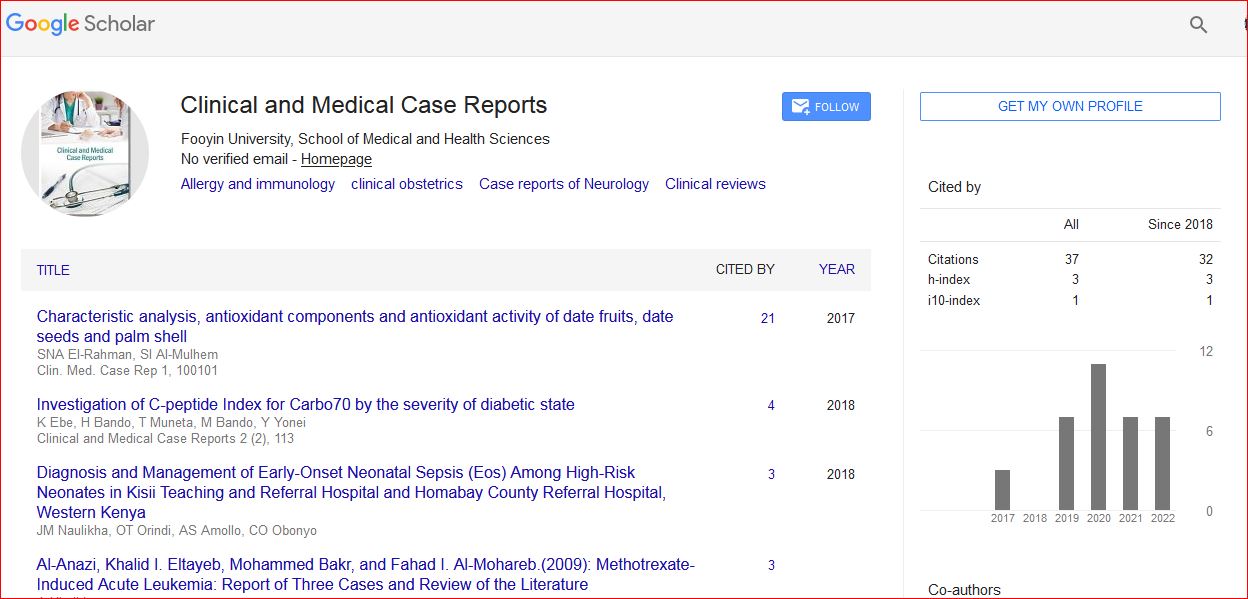
Clinical and Medical Case Reports received 53 citations as per Google Scholar report