Short Communication - (2025) Volume 9, Issue 5
Received: 01-Oct-2025, Manuscript No. cmcr-25-178085;
Editor assigned: 03-Oct-2025, Pre QC No. P-178085;
Reviewed: 17-Oct-2025, QC No. Q-178085;
Revised: 22-Oct-2025, Manuscript No. R-178085;
Published:
29-Oct-2025
, DOI: 10.37421/2684-4915.2025.9.401
Citation: Khalil, Samira. ”Personalized Medicine: AI-Driven Tailored Care, Challenges.” Clin Med Case Rep 09 (2025):401.
Copyright: © 2025 Khalil S. This is an open-access article distributed under the terms of the Creative Commons Attribution License, which permits unrestricted use, distribution and reproduction in any medium, provided the original author and source are credited.
Personalized medicine is revolutionizing healthcare, moving from generalized approaches to treatments tailored to an individual's unique biological and genetic makeup. This paradigm promises optimized therapeutic outcomes across many medical disciplines. For instance, pharmacogenomics translates complex genetic information into actionable clinical guidance to personalize drug therapy, enhancing efficacy and minimizing adverse reactions based on genetic profiles [1].
In oncology, personalized approaches offer transformative potential for advanced cancer patients. Molecular profiling, biomarker identification, and targeted therapies redefine treatment strategies. This considers unique genetic and molecular characteristics of each patient's tumor, shifting to highly individualized regimens [2].
Despite vast opportunities, personalized medicine faces significant challenges. These include complex data integration, regulatory hurdles, economic considerations, and the need for robust bioinformatics infrastructure. Nevertheless, personalized approaches promise more effective disease prevention, diagnosis, and treatment across medical fields [3].
Progress in applying personalized medicine to rare diseases is notable, yet gaps persist. Genetic sequencing and advanced diagnostic tools enable precise diagnoses, fostering the development of highly specific, individualized therapies for conditions historically lacking effective treatments. This brings new hope for affected patients [4].
Digital health technologies synergize with personalized medicine. Wearables, mobile health apps, Artificial Intelligence (AI), and big data analytics facilitate continuous patient monitoring, data collection, and risk prediction. This enables individualized health interventions and proactive disease management [5].
As personalized medical practices spread, ethical considerations are paramount. These concerns include data privacy, equitable access, potential for discrimination, informed consent, and societal implications of genetic information. Robust ethical frameworks and public engagement are crucial [6].
Personalized medicine offers compelling prospects for managing cardiovascular diseases. It integrates individual patient profilesâ??genetic predispositions, lifestyle factors, and biomarker dataâ??to tailor preventive strategies, diagnostic approaches, and therapeutic interventions. The goal is more effective and safer outcomes for cardiac patients [7].
The shift to individualized therapies in autoimmune diseases is also advancing. A deeper understanding of patient-specific immunological profiles, genetic susceptibilities, and disease pathways facilitates targeted treatments. These promise greater efficacy and reduced side effects compared to traditional broad-spectrum immunosuppressants [8].
Artificial Intelligence (AI) plays a pivotal role in advancing precision medicine. AI excels at analyzing complex biological data, identifying disease biomarkers, predicting drug responses, and optimizing treatment selection. This highlights AI's potential to revolutionize medical decisions and treatment tailoring [9].
Finally, personalized medicine profoundly impacts drug development. Patient stratification, biomarker-driven clinical trials, and advanced diagnostic tools lead to more targeted and effective drugs. This transforms traditional drug discovery to deliver therapies for specific patient populations [10].
Personalized medicine represents a fundamental shift in healthcare, emphasizing treatments tailored to an individual's unique genetic, environmental, and lifestyle profile. It promises more effective disease prevention, diagnosis, and treatment across diverse medical fields by leveraging detailed patient information [3]. A key aspect of this approach is pharmacogenomics, which translates genetic data into clinical guidance for drug therapy. This ensures optimal drug efficacy and minimizes adverse reactions based on an individual's genetic makeup, highlighting a global perspective on this critical area [1].
The impact of personalized medicine is particularly profound in specific clinical domains. For instance, in oncology, it offers transformative potential for individuals with advanced cancer. Here, molecular profiling, precise biomarker identification, and targeted therapies replace broad-spectrum treatments with highly individualized regimens that consider the unique genetic and molecular characteristics of each patient's tumor [2]. Similarly, personalized medicine is making significant strides in treating rare diseases. Genetic sequencing and advanced diagnostic tools provide precise diagnoses, paving the way for highly specific, often individualized therapies for conditions that historically lacked effective treatments, thus offering new hope to affected patients [4].
Beyond oncology and rare diseases, personalized approaches are also vital in managing chronic conditions. For cardiovascular diseases, it integrates individual patient profiles, including genetic predispositions, lifestyle factors, and biomarker data. This information helps to tailor preventive strategies, diagnostic methods, and therapeutic interventions, aiming for more effective and safer outcomes for cardiac patients [7]. In autoimmune diseases, there is a clear move towards individualized therapies. A deeper understanding of patient-specific immunological profiles, genetic susceptibilities, and disease pathways facilitates the development of targeted treatments, which promise greater efficacy and fewer side effects compared to traditional broad-spectrum immunosuppressants [8].
Enabling technologies are crucial for the widespread adoption and advancement of personalized medicine. Digital health technologies, such as wearables, mobile health applications, Artificial Intelligence (AI), and big data analytics, play a pivotal role. They facilitate continuous patient monitoring, comprehensive data collection, and robust risk prediction. These tools are instrumental in enabling truly individualized health interventions and proactive disease management, creating a dynamic and responsive healthcare system [5]. Furthermore, Artificial Intelligence significantly advances precision medicine by analyzing complex biological data, identifying critical disease biomarkers, accurately predicting drug responses, and optimizing treatment selection, revolutionizing medical decision-making [9].
The influence of personalized medicine extends to the entire drug development pipeline. Patient stratification, coupled with biomarker-driven clinical trials and advanced diagnostic tools, is leading to the creation of more targeted and effective drugs. This transformation reshapes the traditional drug discovery process to deliver therapies specifically tailored for defined patient populations [10]. However, this evolution also brings forth important ethical considerations. Discussions around data privacy, ensuring equitable access to these advanced therapies, and preventing potential discrimination based on genetic information are paramount. Informed consent and the broader societal implications of genetic data require robust ethical frameworks and active public engagement to navigate these advancements responsibly [6].
Personalized medicine is transforming healthcare by focusing on individual patient profiles for tailored prevention, diagnosis, and treatment. It leverages genetic information to guide personalized drug therapy, optimizing efficacy and minimizing adverse reactions, a field known as pharmacogenomics [1]. This individualized approach is particularly impactful in oncology, where molecular profiling and targeted therapies are replacing one-size-fits-all strategies for advanced cancer patients [2]. The scope extends to rare diseases, where genetic sequencing and advanced diagnostics offer specific, often individualized, therapies for previously untreatable conditions [4]. Furthermore, personalized medicine is being applied effectively in managing cardiovascular diseases, integrating genetic predispositions, lifestyle factors, and biomarker data for safer outcomes [7]. Similarly, it is revolutionizing autoimmune disease treatment by developing targeted therapies based on patient-specific immunological profiles [8]. Digital health technologies, including wearables, mobile apps, and big data analytics, are crucial enablers, facilitating continuous monitoring and proactive disease management [5]. Artificial Intelligence (AI) further advances precision medicine by analyzing complex biological data, identifying biomarkers, predicting drug responses, and optimizing treatment selection [9]. This has a profound impact on drug development, leading to more targeted and effective drugs through patient stratification and biomarker-driven clinical trials [10]. Despite its immense promise, personalized medicine faces significant challenges. These include issues with data integration, regulatory hurdles, economic considerations, and the need for robust bioinformatics infrastructure [3]. Ethical considerations are also paramount, addressing concerns like data privacy, equitable access, and potential discrimination, emphasizing the need for strong ethical frameworks as these practices become widespread [6]. The future of medicine increasingly relies on these personalized approaches for more effective and individualized patient care.
None
None
Indexed at, Google Scholar, Crossref
Indexed at, Google Scholar, Crossref
Indexed at, Google Scholar, Crossref
Indexed at, Google Scholar, Crossref
Indexed at, Google Scholar, Crossref
Indexed at, Google Scholar, Crossref
Indexed at, Google Scholar, Crossref
Indexed at, Google Scholar, Crossref
Indexed at, Google Scholar, Crossref
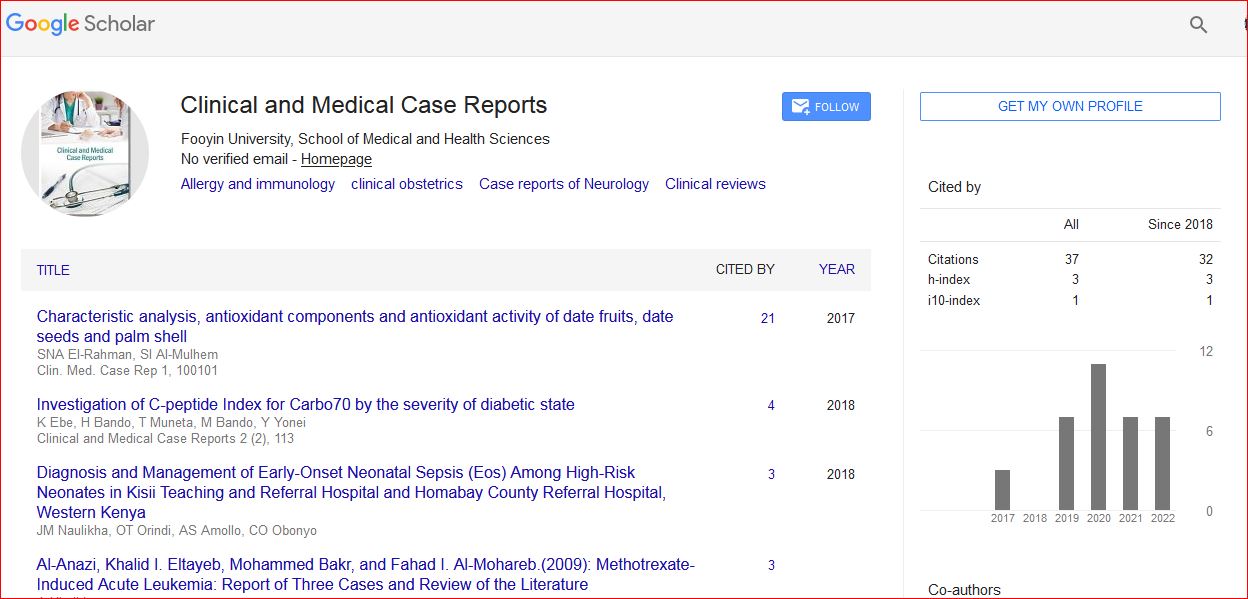
Clinical and Medical Case Reports received 53 citations as per Google Scholar report