Brief Report - (2025) Volume 14, Issue 4
Received: 01-Jul-2025, Manuscript No. aim-25-177759;
Editor assigned: 03-Jul-2025, Pre QC No. P-177759;
Reviewed: 17-Jul-2025, QC No. Q-177759;
Revised: 22-Jul-2025, Manuscript No. R-177759;
Published:
29-Jul-2025
, DOI: 10.37421/2427-5162.2025.14.579
Citation: Wen, Li. ”Personalized Ayurvedic Care for Metabolic Syndrome.” Alt Integr Med 14 (2025):579.
Copyright: © 2025 Wen L. This is an open-access article distributed under the terms of the Creative Commons Attribution License, which permits unrestricted use, distribution and reproduction in any medium, provided the original author and source are credited.
The global prevalence of metabolic syndrome presents a significant public health challenge, necessitating diverse and effective management strategies. Traditional medical systems, such as Ayurveda, offer unique perspectives and interventions that warrant thorough examination. This comprehensive review explores the foundational principles and practical applications of Ayurveda in addressing the multifaceted nature of metabolic syndrome, focusing on its potential for both prevention and management. Ayurveda approaches metabolic syndrome through a holistic lens, emphasizing personalized constitutional analysis, known as Prakriti, alongside specific dietary (Ahara), lifestyle (Vihara), and herbal (Aushadhi) interventions. This framework allows for a patient-centered strategy that extends beyond mere symptom management, aiming to restore overall physiological balance and well-being [1].
Systematic reviews provide robust evidence regarding the efficacy of various Ayurvedic treatments for metabolic syndrome. Therapies, including specialized herbal formulations, structured dietary modifications, and Panchakarma detoxification procedures, have been shown to significantly improve key metabolic markers such as blood sugar levels, lipid profiles, and blood pressure, validating Ayurveda as a viable complementary therapeutic path [2].
Lifestyle adjustments form a cornerstone of Ayurvedic interventions for preventing and managing metabolic syndrome. The integration of a balanced diet, consistent physical activity, effective stress management techniques, and targeted Ayurvedic herbs is crucial. These practices collectively work to ameliorate underlying physiological imbalances that contribute to the development and progression of the syndrome [3].
The Ayurvedic understanding of obesity, a primary component of metabolic syndrome, extends to a detailed analysis of herbal interventions. Reviews of this literature identify numerous traditional Ayurvedic herbs and complex formulations that demonstrate considerable potential in both preclinical and clinical studies. These interventions show promise in enhancing metabolic health parameters, with ongoing research elucidating their specific mechanisms of action [4].
Randomized controlled trials have further elucidated the positive impact of integrating Yoga and Ayurvedic lifestyle practices on metabolic syndrome parameters. Participants in such studies have exhibited measurable improvements in critical health indicators, including waist circumference, blood pressure, and blood glucose levels. This underscores the potential of these combined traditional approaches as a practical, non-pharmacological strategy for disease management [5].
Beyond standalone interventions, an integrated approach combining Ayurvedic principles with modern medical practices holds substantial promise for metabolic syndrome management. This complementary model seeks to leverage traditional Ayurvedic treatments and insights to potentially enhance conventional medical care, thereby fostering a more comprehensive and patient-centric healthcare paradigm [6].
Rigorous systematic reviews and meta-analyses specifically focusing on Ayurvedic dietary and lifestyle interventions have provided strong scientific support for their inclusion in preventive and management strategies for metabolic syndrome. These analyses confirm that such traditional approaches can induce significant improvements in various metabolic health indicators, reinforcing their evidence-based value [7].
The role of Ayurvedic Rasayana drugs presents another specialized aspect of intervention in metabolic syndrome. These rejuvenating formulations are traditionally understood to bolster tissue health, enhance immune function, and harmonize bodily processes. Their application is believed to contribute significantly to the prevention and management of metabolic imbalances and their associated conditions [8].
Finally, the application of Ayurvedic principles to personalized nutrition offers a sophisticated strategy for preventing metabolic syndrome. The concept of 'Prakriti,' or individual constitution, is instrumental in tailoring dietary recommendations, suggesting that a highly individualized approach, deeply rooted in Ayurvedic wisdom, surpasses generalized dietary advice in maintaining optimal metabolic health [10].
Ayurveda offers a holistic framework for metabolic syndrome, moving beyond symptoms to patient-centered care. It integrates personalized constitutional analysis (Prakriti) with diet (Ahara), lifestyle (Vihara), and herbal remedies (Aushadhi). This approach focuses on preventing and managing syndrome aspects by restoring systemic balance, underscoring individualized health promotion [1]. A systematic review highlights the effectiveness of Ayurvedic treatments for metabolic syndrome. It identifies herbal formulations, dietary regimens, and Panchakarma procedures as significantly improving crucial metabolic markers. These include better blood sugar regulation, favorable lipid profiles, and enhanced blood pressure control, positioning Ayurveda as a valuable complementary approach for this complex condition [2]. Essential for both prevention and management, Ayurvedic interventions emphasize lifestyle adjustments. This encompasses a balanced diet, consistent physical activity, effective stress reduction, and judicious use of specific Ayurvedic herbs. These integrated practices collectively address and correct fundamental physiological imbalances contributing to metabolic syndrome pathogenesis and progression [3]. An in-depth review of the Ayurvedic perspective on obesity and metabolic syndrome underscores the efficacy of herbal interventions. It identifies numerous traditional Ayurvedic herbs and formulations demonstrating considerable potential in preclinical and clinical studies. These improve metabolic health parameters, with the review also exploring their proposed mechanisms of action [4]. A randomized controlled trial provided evidence for integrating Yoga and Ayurvedic lifestyle practices on metabolic syndrome parameters. Participants exhibited significant improvements in markers including waist circumference, blood pressure, and blood glucose levels. These findings suggest that combined traditional disciplines constitute a practical, effective non-pharmacological strategy for managing the condition [5]. This narrative review posits that an integrated approach, combining Ayurveda with modern medicine, offers substantial benefits for metabolic syndrome management. It examines how traditional Ayurvedic principles and treatments can complement conventional medical care. This integration holds potential to enhance therapeutic outcomes and foster a more comprehensive, holistically oriented patient care model [6]. A robust systematic review and meta-analysis evaluated the impact of Ayurvedic dietary and lifestyle interventions on metabolic syndrome. Conclusive findings confirm that these traditional approaches lead to demonstrable and significant improvements in metabolic health indicators. This provides compelling scientific support for including Ayurvedic principles in preventive and management strategies [7]. The specific role of Ayurvedic Rasayana drugs in metabolic syndrome is thoroughly explored. Rasayana formulations are believed to enhance tissue health, optimize immune function, and systematically balance bodily functions. This contribution is considered vital for both prevention and effective management of metabolic imbalances and their associated conditions, reflecting a unique therapeutic paradigm [8]. Innovative research explores the potential of Ayurvedic formulations to modulate gut microbiota, offering a novel therapeutic avenue for metabolic syndrome management. This work hypothesizes that beneficial alterations to the gut microbiome through traditional Ayurvedic medicines could lead to significant improvements in metabolic health. This represents a rapidly expanding area of scientific inquiry [9]. This paper articulates how Ayurvedic principles can guide personalized nutrition strategies for preventing metabolic syndrome. It emphasizes 'Prakriti' (individual constitution) as critical for tailoring dietary recommendations. A personalized approach, rooted in Ayurvedic wisdom, is considerably more efficacious than generic dietary advice for sustaining optimal metabolic health [10].
Ayurveda offers a comprehensive and patient-centered approach to the prevention and management of metabolic syndrome, grounded in its foundational principles. This traditional system integrates personalized constitutional analysis (Prakriti), specific dietary recommendations (Ahara), targeted lifestyle modifications (Vihara), and a range of herbal remedies (Aushadhi). Robust scientific evidence, including systematic reviews and randomized controlled trials, indicates that various Ayurvedic interventions effectively improve critical metabolic markers. These include positive impacts on blood sugar regulation, lipid profiles, blood pressure, and waist circumference through therapies like specialized herbal formulations, structured dietary changes, Panchakarma procedures, and integrated Yoga practices. The core philosophy centers on correcting underlying physiological imbalances that contribute to the syndrome's progression, moving beyond mere symptom management. Recent investigations are also exploring novel mechanisms, such as the modulation of gut microbiota by Ayurvedic formulations and the rejuvenating role of Rasayana drugs in enhancing tissue health and immunity. The system strongly advocates for personalized nutrition strategies tailored to individual constitutional needs, presenting a potentially more effective alternative to universal dietary guidelines. Ultimately, an integrated approach combining Ayurvedic wisdom with modern medical care is seen as a promising pathway to enhance therapeutic outcomes and offer a more holistic care model for metabolic syndrome.
None
None
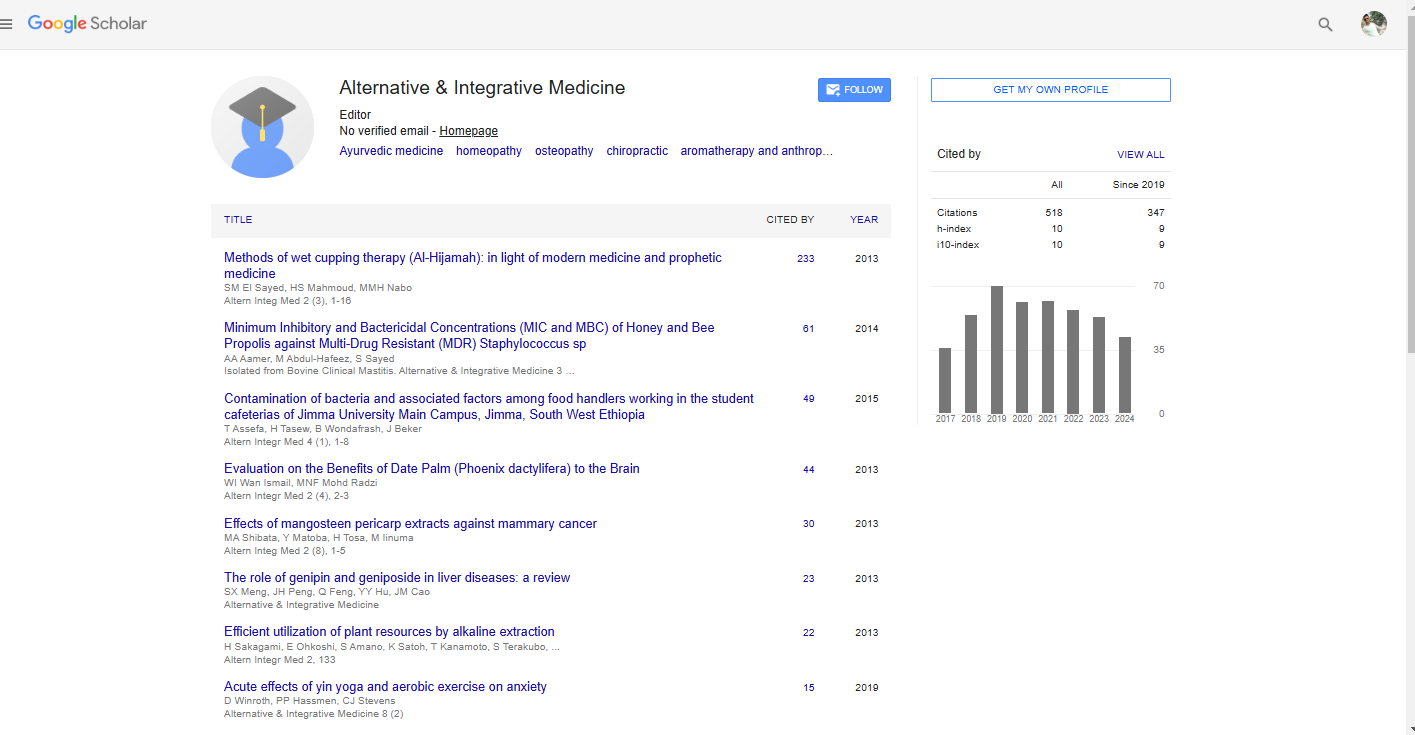
Alternative & Integrative Medicine received 476 citations as per Google Scholar report