Short Communication - (2025) Volume 10, Issue 4
Received: 01-Jul-2025, Manuscript No. JPNM-26-185765;
Editor assigned: 03-Jul-2025, Pre QC No. P-185765;
Reviewed: 17-Jul-2025, QC No. Q-185765;
Revised: 22-Jul-2025, Manuscript No. R-185765;
Published:
29-Jul-2025
, DOI: 10.37421/2472-100X.2025.10.358
Citation: Andersen, Lucas. ”Pediatric Respiratory Disorders: Diagnosis, Treatment, and Advances.” J Pediatr Neurol Med 10 (2025):357.
Copyright: © 2025 Andersen L. This is an open-access article distributed under the terms of the Creative Commons Attribution License, which permits unrestricted use, distribution and reproduction in any medium, provided the original author and source are credited.
Pediatric respiratory disorders represent a significant area of medical concern, encompassing a wide spectrum of conditions that affect the breathing of children from infancy through adolescence. These illnesses demand a thorough understanding of their underlying pathophysiology, accurate diagnostic approaches, and effective therapeutic interventions to ensure optimal patient outcomes. Early and precise diagnosis is paramount, paving the way for timely and appropriate management strategies tailored to the specific needs of young patients. Commonly encountered conditions include asthma, a chronic inflammatory airway disease, bronchiolitis, a viral infection primarily affecting infants, pneumonia, an infection of the lung air sacs, and cystic fibrosis, a genetic disorder that damages the lungs and other organs over time. These prevalent conditions, among others, necessitate a comprehensive diagnostic and therapeutic framework [1].
The initial presentation of respiratory distress in infants, often attributed to bronchiolitis, requires careful evaluation to distinguish it from other causes such as pneumonia. The diagnostic process for these conditions relies on a combination of clinical assessment, laboratory markers, and imaging studies. Differentiating between viral and bacterial etiologies of pneumonia is crucial for guiding antibiotic therapy, with chest radiography often playing a key role alongside inflammatory markers. Management strategies for community-acquired pneumonia encompass appropriate antibiotic selection and supportive care, with ongoing consideration for emerging trends in prevention and treatment, including vaccination protocols [2].
Asthma in children presents with varying degrees of severity, from mild intermittent symptoms to severe persistent disease, posing diagnostic and management challenges. Objective measures such as spirometry are vital for confirming the diagnosis and assessing disease severity, complemented by tests like fractional exhaled nitric oxide (FeNO) and allergy testing. Treatment paradigms involve inhaled corticosteroids as the cornerstone of therapy, alongside bronchodilators and, for severe cases, newer biologic agents. Patient education and adherence to treatment plans are critical components of successful asthma management [3].
Cystic fibrosis (CF) is a complex genetic disorder characterized by a range of respiratory and systemic manifestations in children. Advances in understanding the genetic basis of CF have led to significant progress in diagnostic methods, including newborn screening and sweat chloride testing. The advent of targeted therapies, such as CFTR modulator drugs, has revolutionized CF management, offering improved lung function and quality of life. Nevertheless, challenges persist in managing chronic respiratory infections and nutritional deficiencies inherent to the disease [4].
Pulmonary function tests (PFTs) serve as an indispensable tool in the diagnostic arsenal for pediatric respiratory disorders. These tests, including spirometry and measurements of lung volumes and airway resistance, provide objective data on lung function. They are essential for evaluating conditions like asthma and cystic fibrosis, as well as neuromuscular disorders affecting respiration. Age-appropriate techniques and careful interpretation of PFT results are critical for accurate diagnosis, disease monitoring, and assessing treatment efficacy [5].
Beyond conventional radiography, advanced imaging techniques have become increasingly important in the diagnosis of pediatric respiratory diseases. High-resolution computed tomography (HRCT) and magnetic resonance imaging (MRI) offer detailed visualization of airway abnormalities, lung parenchyma, and pleural involvement, particularly when standard X-rays are inconclusive. These modalities not only aid in diagnosis but also provide valuable information to guide treatment decisions, enabling a more precise management approach [6].
The landscape of inherited respiratory disorders in children is continually being illuminated by advances in genetic testing. Techniques such as whole exome sequencing and targeted gene panels are instrumental in diagnosing rare conditions like primary ciliary dyskinesia and alpha-1 antitrypsin deficiency. The implications of genetic diagnoses extend to family counseling, the development of personalized treatment strategies, and the exploration of novel gene-based therapies, offering hope for previously untreatable conditions [7].
Severe asthma in children, especially cases that are refractory to standard therapies, requires specialized management approaches. Biologic agents, including monoclonal antibodies targeting specific inflammatory pathways such as IgE, IL-4, and IL-5, have emerged as valuable therapeutic options. These treatments are effective in reducing exacerbations and improving lung function in carefully selected patients. Establishing clear diagnostic criteria for severe asthma and identifying suitable candidates for biologic therapy are key aspects of optimizing care [8].
Rare pediatric respiratory disorders, such as interstitial lung diseases and congenital anomalies of the airway, present unique diagnostic and therapeutic challenges. Their diagnosis and management often necessitate a collaborative effort from a multidisciplinary team, comprising specialists in pulmonology, radiology, genetics, and surgery. While treatment strategies for these less common conditions are being refined, ongoing research is crucial for advancing our understanding and improving patient outcomes [9].
Ultimately, the effective management of pediatric respiratory disorders hinges on a patient-centered approach that prioritizes shared decision-making, comprehensive family education, and robust psychosocial support. Continuous research is vital to enhance diagnostic accuracy, develop innovative therapeutic interventions, and improve the long-term health and well-being of children affected by these conditions, fostering a holistic and supportive care environment [10].
This article delves into the multifaceted landscape of pediatric respiratory disorders, emphasizing current diagnostic modalities and evidence-based treatment strategies. It underscores the critical importance of early and accurate diagnosis for optimizing patient outcomes. The review covers common conditions such as asthma, bronchiolitis, pneumonia, and cystic fibrosis, highlighting the role of advanced imaging techniques, pulmonary function tests, and genetic screening in diagnosis. Therapeutic approaches discussed include pharmacotherapy, airway clearance techniques, and emerging biological treatments, alongside an examination of the interplay between genetic predispositions, environmental factors, and disease progression [1].
Bronchiolitis, a frequent viral respiratory infection in infants, is addressed with a focus on diagnostic markers and management guidelines. The review critically differentiates between viral and bacterial pneumonia, detailing the diagnostic utility of chest radiography and inflammatory markers. Treatment strategies for community-acquired pneumonia, including antibiotic selection and supportive care, are comprehensively discussed. Furthermore, emerging trends in pneumonia management and prevention, such as the role of vaccination, are considered within the context of current pediatric care [2].
The complexities of asthma diagnosis and management in children are explored, ranging from mild intermittent to severe persistent forms. The article outlines the crucial role of spirometry, fractional exhaled nitric oxide (FeNO), and allergy testing in confirming the diagnosis and accurately assessing disease severity. Treatment strategies encompass the use of inhaled corticosteroids, bronchodilators, and newer biologic agents for severe asthma, emphasizing their efficacy. The profound importance of patient education and adherence to prescribed treatment plans is also highlighted as a key determinant of successful outcomes [3].
Cystic fibrosis (CF) in pediatric populations is examined through the lens of its genetic and environmental underpinnings, with a particular focus on diagnostic advancements and therapeutic breakthroughs. Key diagnostic methods, including newborn screening and sweat chloride testing, are meticulously detailed. The article provides a thorough review of current CFTR modulator therapies and their demonstrable impact on disease progression, lung function, and overall quality of life, while also acknowledging persistent challenges in CF management, such as recurrent respiratory infections and nutritional deficiencies [4].
This section specifically focuses on the diagnostic utility of pulmonary function tests (PFTs) in the evaluation of pediatric respiratory disorders. It covers the fundamental principles and practical applications of spirometry, lung volumes, and airway resistance measurements in the assessment of conditions like asthma, cystic fibrosis, and various neuromuscular disorders. The article further discusses age-appropriate PFT techniques and the critical interpretation of results, underscoring their indispensable role in disease monitoring and the assessment of treatment response [5].
The role of advanced imaging techniques, such as high-resolution computed tomography (HRCT) and magnetic resonance imaging (MRI), in the diagnosis of pediatric respiratory disorders is thoroughly examined. The article highlights their significant utility in visualizing complex airway abnormalities, parenchymal lung disease, and pleural effusions, particularly in cases where conventional radiography proves inconclusive. The benefits and inherent limitations of these advanced imaging modalities in guiding subsequent treatment decisions are also critically discussed [6].
This review delves into the rapidly evolving field of genetic testing for inherited respiratory disorders in children. It comprehensively covers the diagnostic yield of sophisticated techniques such as whole exome sequencing and specialized gene panels for identifying conditions like primary ciliary dyskinesia and alpha-1 antitrypsin deficiency. The article also explores the far-reaching implications of obtaining genetic diagnoses for enhanced family counseling, the development of truly personalized treatment approaches, and the potential future development of gene therapies [7].
This section is dedicated to the management of severe asthma in children, with a specific emphasis on those who exhibit a refractory response to conventional therapeutic interventions. It provides a current overview of the role of biologic agents, including monoclonal antibodies designed to target key inflammatory mediators like IgE, IL-4, and IL-5, in effectively reducing exacerbations and improving overall lung function. The article also addresses the diagnostic criteria used for identifying severe asthma and outlines strategies for pinpointing candidates who would benefit most from biologic therapy [8].
The article tackles the diagnostic challenges and diverse treatment approaches associated with rare pediatric respiratory disorders, encompassing conditions such as interstitial lung diseases and congenital anomalies of the airway. It strongly emphasizes the indispensable role of a multidisciplinary team in the accurate diagnosis and effective management of these complex cases, often involving close collaboration among pulmonologists, radiologists, geneticists, and surgeons. Current therapeutic strategies for these less common conditions are reviewed, alongside an update on ongoing research efforts aimed at improving care [9].
This concluding section underscores the paramount importance of adopting a patient-centered approach in the comprehensive management of pediatric respiratory disorders. This approach emphasizes the principles of shared decision-making, thorough family education, and essential psychosocial support. It also reinforces the continuous need for ongoing research to enhance diagnostic accuracy, pioneer novel therapeutic interventions, and ultimately improve the long-term health outcomes for children living with respiratory conditions [10].
This collection of articles explores pediatric respiratory disorders, covering diagnosis and treatment strategies for common conditions like asthma, bronchiolitis, pneumonia, and cystic fibrosis. It highlights the importance of early diagnosis through methods such as advanced imaging, pulmonary function tests, and genetic screening. Therapeutic approaches discussed include pharmacotherapy, airway clearance techniques, and emerging biological treatments. The articles also address specialized management for severe asthma, rare respiratory disorders, and the integration of patient-centered care. Advances in genetic testing and imaging modalities are emphasized as crucial for improving diagnostic accuracy and tailoring treatment plans. Ongoing research is identified as key to enhancing long-term health outcomes for children with respiratory conditions.
None
None
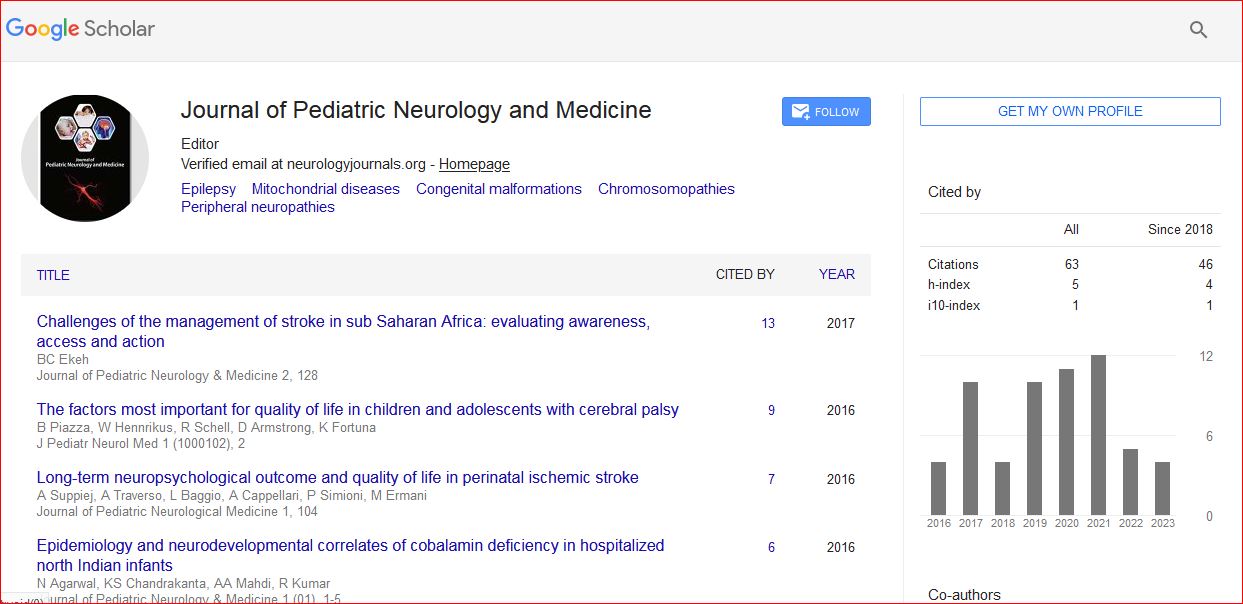
Journal of Pediatric Neurology and Medicine received 68 citations as per Google Scholar report