Commentary - (2025) Volume 10, Issue 5
Received: 01-Sep-2025, Manuscript No. JPNM-26-185757;
Editor assigned: 03-Sep-2025, Pre QC No. P-185757;
Reviewed: 17-Sep-2025, QC No. Q-185757;
Revised: 22-Sep-2025, Manuscript No. R-185757;
Published:
29-Sep-2025
, DOI: 10.37421/2472-100X.2025.10.367
Citation: Nakamura, Koji. ”Pediatric Neuroimmunology: Novel Therapies and Future Hope.” J Pediatr Neurol Med 10 (2025):367.
Copyright: © 2025 Nakamura K. This is an open-access article distributed under the terms of the Creative Commons Attribution License, which permits unrestricted use, distribution and reproduction in any medium, provided the original author and source are credited.
The field of pediatric neuroimmunology is rapidly advancing, offering new insights into autoimmune conditions affecting the nervous system in children. Recent research has focused on novel therapeutic strategies designed to combat these complex disorders, aiming to improve patient outcomes and mitigate long-term neurological damage. This burgeoning area of study is characterized by a multidisciplinary approach, integrating neurology, immunology, and pediatrics to address the unique challenges presented by pediatric patients [1].
The development of targeted immunotherapies has shown significant promise in managing pediatric demyelinating diseases. These advanced treatments are being rigorously evaluated for their efficacy and safety profiles, with a strong emphasis on early diagnosis and personalized therapeutic plans to halt disease progression and encourage neurological recovery. Understanding the underlying immune mechanisms is crucial for optimizing these interventions [2].
B-cell depletion therapies represent a significant advancement in the treatment of pediatric autoimmune encephalopathies. These therapies, including agents like rituximab, offer a potent mechanism for modulating the immune response by targeting B-cells. Extensive research is ongoing to refine their application and monitor their long-term impact on disease control in children [3].
Innovative approaches such as gene therapy and gene editing are emerging as potential game-changers for rare pediatric neuroimmunological disorders. These cutting-edge techniques hold the promise of correcting genetic defects or precisely modulating immune responses at the cellular level, paving the way for highly personalized treatment strategies in the future [4].
The intricate relationship between the gut microbiome and pediatric neuroinflammation is gaining considerable attention. Emerging research suggests that imbalances in gut bacteria may contribute to the onset or exacerbation of autoimmune neurological conditions. Consequently, therapies aimed at restoring microbial balance are being explored as potential adjunctive treatments [5].
Antibody-mediated autoimmune neurological disorders in children present unique diagnostic and therapeutic challenges. Identification of specific autoantibodies is critical for accurate diagnosis, while therapies such as intravenous immunoglobulin (IVIg) and plasma exchange, alongside newer immunomodulatory agents, are instrumental in managing conditions like anti-NMDA receptor encephalitis [6].
Janus kinase (JAK) inhibitors are emerging as a promising therapeutic avenue for pediatric neuroinflammatory and autoimmune diseases. Their ability to modulate cytokine signaling offers a new strategy for managing conditions that are refractory to other treatments, providing hope for patients with severe or persistent symptoms [7].
Pediatric neurosarcoidosis, a rare granulomatous inflammatory condition affecting the central nervous system, requires a comprehensive management approach. Current strategies involve a combination of corticosteroids, immunosuppressants, and biologic agents, tailored to the individual patient's clinical presentation and disease severity [8].
Chimeric antigen receptor T-cell (CAR T-cell) therapy represents a novel frontier in the treatment of pediatric autoimmune neurological diseases. This cutting-edge approach aims to specifically target and eliminate autoreactive immune cells, offering a highly personalized and potentially curative treatment option for certain complex autoimmune conditions [9].
Precision medicine is transforming the landscape of pediatric neuroimmunology by enabling tailored therapeutic interventions. By leveraging genetic and molecular profiling, clinicians can identify specific targets for therapy, leading to improved treatment efficacy and reduced off-target effects in a variety of autoimmune neurological conditions, ultimately optimizing patient care [10].
The evolving landscape of pediatric neuroimmunology is marked by a significant focus on novel therapeutic strategies for autoimmune conditions impacting children's nervous systems. These advancements are crucial for improving patient prognoses and reducing the incidence of long-term disabilities. The exploration of new treatments underscores a deeper understanding of the underlying pathogenesis of these complex disorders, offering a beacon of hope for affected children [1].
Targeted immunotherapies are at the forefront of managing pediatric demyelinating diseases, with recent research concentrating on their efficacy and safety. The importance of early and accurate diagnosis, coupled with personalized treatment plans, is emphasized as key to halting disease progression and promoting neurological repair. Continued investigation into immune mechanisms will further refine these approaches [2].
B-cell depletion therapies are gaining traction as effective treatments for pediatric autoimmune encephalopathies. These therapies, including the use of rituximab, offer a targeted approach to immune modulation. Clinical outcomes are being closely monitored, and strategies for long-term disease control are a primary focus of ongoing research [3].
Gene therapy and gene editing techniques represent a forward-looking frontier in treating rare pediatric neuroimmunological disorders. These advanced modalities have the potential to correct genetic anomalies or precisely modulate immune responses at the cellular level, heralding a new era of personalized medicine for these challenging conditions [4].
The role of the gut microbiome in pediatric neuroinflammation and autoimmune diseases is an area of intense investigation. Disruptions in microbial balance are increasingly linked to the initiation or worsening of these conditions. Therapies designed to restore this balance, such as prebiotics and probiotics, are being explored as novel treatment options [5].
Antibody-mediated autoimmune neurological disorders in children require sophisticated diagnostic tools, particularly for identifying novel autoantibodies. Therapeutic interventions commonly include intravenous immunoglobulin (IVIg), plasma exchange, and emerging immunomodulatory agents, which are vital for managing conditions like anti-NMDA receptor encephalitis [6].
Janus kinase (JAK) inhibitors are emerging as a valuable therapeutic option for pediatric neuroinflammatory and autoimmune conditions. Their mechanism of action, which involves modulating cytokine signaling, makes them particularly useful in managing refractory cases and offers a promising avenue for improving treatment outcomes [7].
Pediatric neurosarcoidosis necessitates a multifaceted approach to management, encompassing corticosteroids, immunosuppressants, and biologic agents. This rare but serious condition requires careful diagnosis and tailored treatment strategies to effectively manage its impact on the central nervous system [8].
Chimeric antigen receptor T-cell (CAR T-cell) therapy is being investigated for its potential in pediatric autoimmune neurological diseases. This innovative cell-based therapy targets autoreactive immune cells, offering a highly personalized and potentially transformative treatment option for severe cases [9].
Precision medicine is revolutionizing pediatric neuroimmunology by enabling the development of tailored therapies. By utilizing genetic and molecular data, treatment strategies can be optimized for individual patients, enhancing efficacy and minimizing adverse effects across a spectrum of autoimmune neurological conditions [10].
This collection of articles explores advancements in pediatric neuroimmunology, focusing on novel therapeutic strategies for autoimmune neurological conditions in children. Key areas of focus include PANDAS, demyelinating diseases, B-cell depletion therapies, gene therapy, the gut-brain axis, antibody-mediated disorders, JAK inhibitors, neurosarcoidosis, CAR T-cell therapy, and precision medicine. The research highlights improved understanding of disease pathogenesis, early diagnosis, personalized treatment approaches, and the potential for long-term disease control. Emerging therapies aim to precisely target immune responses and restore neurological function, offering new hope for improved patient outcomes.
None
None
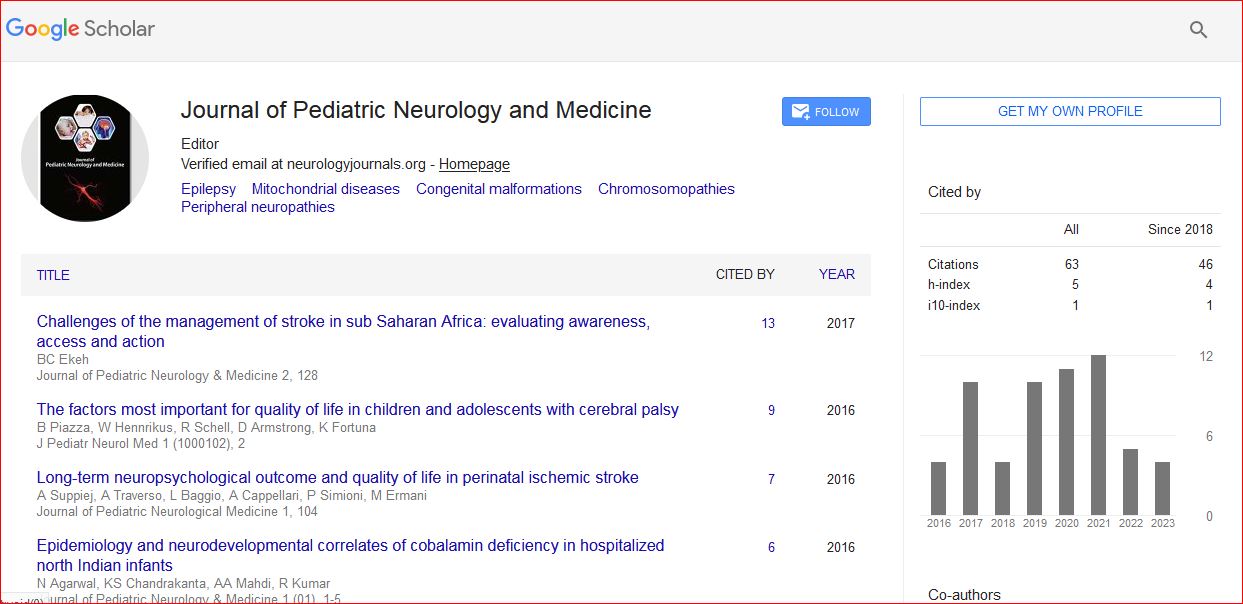
Journal of Pediatric Neurology and Medicine received 68 citations as per Google Scholar report