Commentary - (2025) Volume 9, Issue 2
Received: 01-Apr-2025, Manuscript No. cmcr-25-177676;
Editor assigned: 03-Apr-2025, Pre QC No. P-177676;
Reviewed: 17-Apr-2025, QC No. Q-177676;
Revised: 22-Apr-2025, Manuscript No. R-177676;
Published:
29-Apr-2025
, DOI: 10.37421/2684-4915.2025.9.363
Citation: Kato, Naomi. ”Patient Safety: Addressing Challenges, Driving Solutions.” Clin Med Case Rep 09 (2025):363.
Copyright: © 2025 Kato N. This is an open-access article distributed under the terms of the Creative Commons Attribution License, which permits unrestricted use, distribution and reproduction in any medium, provided the original author and source are credited.
This systematic review highlights the critical role of leadership in shaping patient safety culture within healthcare organizations. Effective leadership is strongly associated with positive safety outcomes, emphasizing the need for leaders to actively promote and support safety initiatives, foster open communication, and create an environment where staff feel empowered to report errors without fear of reprisal. The study suggests that sustained improvements in patient safety rely on a robust safety culture, underpinned by visible and engaged leadership [1].
As Artificial Intelligence (AI) becomes more integrated into healthcare, understanding its impact on patient safety and ethical considerations is crucial. This article explores the potential benefits of AI in diagnosis and treatment, while also addressing inherent risks such as data bias, algorithmic errors, and privacy concerns. It advocates for stringent regulatory frameworks and robust validation processes to ensure AI tools enhance, rather than compromise, patient safety and maintain ethical standards [2].
This systematic review examines the significant correlation between nurses' workload and adverse patient outcomes. High workload, often characterized by inadequate staffing levels and increased patient-to-nurse ratios, directly compromises patient safety by increasing the likelihood of medication errors, falls, and other preventable incidents. The findings underscore the urgency of addressing nursing workforce challenges to ensure optimal patient care and safety [3].
Medication errors represent a persistent threat to patient safety, particularly in pediatric care settings where dosage calculations and administration complexities are heightened. This systematic review identifies common types of medication errors in children, their root causes, and effective interventions for prevention. It stresses the importance of pharmacist involvement, double-checking systems, and technology-driven solutions to minimize harm to vulnerable young patients [4].
This review delves into the conceptual framework and existing evidence surrounding patient safety culture. It defines safety culture as the shared values, beliefs, and norms that influence behaviors and practices related to patient safety within an organization. The article emphasizes that a strong safety culture, characterized by trust, open reporting, and continuous learning, is foundational for reducing adverse events and improving overall quality of care [5].
Effective communication during patient handover is a cornerstone of patient safety. This systematic review synthesizes evidence on the impact of structured handover processes on reducing medical errors and improving patient outcomes. It highlights that standardized tools, dedicated time for communication, and active participation from both transferring and receiving clinicians are vital to ensure accurate information transfer and continuity of care [6].
Surgical safety checklists have become a global standard for preventing adverse events in operating rooms. This systematic review and meta-analysis demonstrate that implementing these checklists significantly improves patient outcomes by reducing morbidity and mortality rates. The article confirms the effectiveness of structured protocols in promoting teamwork, communication, and adherence to essential safety steps during surgical procedures [7].
This review emphasizes that robust infection prevention and control practices are paramount for patient safety, especially in healthcare settings prone to healthcare-associated infections. It outlines key strategies, including hand hygiene adherence, proper sterilization techniques, environmental cleaning, and surveillance, which effectively reduce the spread of pathogens. Implementing these measures protects both patients and healthcare workers, contributing to a safer care environment [8].
Diagnostic errors pose a significant threat to patient safety, leading to delayed or incorrect treatments. This systematic review identifies common contributing factors, such as cognitive biases, communication breakdowns, and system-level issues, and explores various mitigation strategies. It highlights the need for interdisciplinary collaboration, improved clinical reasoning training, and technological aids to reduce diagnostic inaccuracies and enhance patient outcomes [9].
Healthcare professionals experiencing burnout are more likely to make errors, directly impacting patient safety. This systematic review explores the link between burnout symptoms, such as emotional exhaustion and depersonalization, and adverse patient outcomes. It advocates for organizational support, manageable workloads, and mental health resources to address burnout, thereby safeguarding both the well-being of staff and the safety of patients [10].
The bedrock of quality healthcare rests on unwavering patient safety, a principle deeply influenced by the caliber of leadership and the robustness of an organization's safety culture. It's clear that leaders who are visible and engaged are crucial for fostering positive safety outcomes. They need to actively promote and support safety initiatives, encourage open communication, and cultivate an environment where staff members feel truly empowered to report errors without the looming fear of reprisal [1]. A strong safety culture, defined by shared values, collective beliefs, and established norms, is not merely beneficial; it's foundational. This culture, built on trust, transparent reporting, and a commitment to continuous learning, is what ultimately reduces adverse events and elevates the overall quality of care [5].
Examining specific threats, human factors repeatedly emerge as significant risks to patient safety. High workload among nurses, often a direct consequence of inadequate staffing levels and increased patient-to-nurse ratios, directly compromises patient well-being. This scenario inevitably increases the likelihood of critical incidents such as medication errors, patient falls, and other preventable adverse events. The urgency of addressing these nursing workforce challenges cannot be overstated if we aim for optimal patient care and safety [3]. On another front, healthcare professionals grappling with burnout are demonstrably more likely to make errors, highlighting a critical link between staff well-being and patient safety. Symptoms like emotional exhaustion and depersonalization directly correlate with adverse patient outcomes. This calls for substantial organizational support, manageable workloads, and accessible mental health resources, safeguarding both the invaluable well-being of staff and, by extension, the safety of patients [10].
Beyond individual well-being, communication breakdowns are a potent source of risk. Effective communication, particularly during the critical transition of patient handover, is a cornerstone of patient safety. Evidence shows that structured handover processes, involving standardized tools, dedicated time for information exchange, and active participation from both transferring and receiving clinicians, are vital. These elements ensure accurate information transfer and seamless continuity of care, drastically reducing medical errors and improving patient outcomes [6]. Furthermore, diagnostic errors continue to pose a significant threat to patient safety, frequently leading to delayed or incorrect treatments. Common contributing factors include cognitive biases, communication failures within teams, and system-level issues. Mitigating these inaccuracies requires a concerted effort in interdisciplinary collaboration, enhanced clinical reasoning training, and the strategic deployment of technological aids to improve overall patient outcomes [9].
Certain medical procedures and technological integrations also introduce distinct safety concerns. Medication errors, for instance, represent a persistent threat, especially heightened in pediatric care settings where dosage calculations and administration complexities are significantly greater. Identifying common error types, their root causes, and implementing effective interventions, such as pharmacist involvement, rigorous double-checking systems, and technology-driven solutions, is crucial to minimize harm to vulnerable young patients [4]. Concurrently, the increasing integration of Artificial Intelligence (AI) into healthcare demands a thorough understanding of its impact on patient safety and ethical considerations. While AI offers potential benefits in diagnosis and treatment, it also carries inherent risks, including data bias, algorithmic errors, and privacy concerns. Therefore, the development and deployment of AI tools necessitate stringent regulatory frameworks and robust validation processes to ensure they genuinely enhance, rather than compromise, patient safety and ethical standards [2].
Implementing systemic safeguards and best practices is crucial for preventing widespread adverse events. Surgical safety checklists have emerged as a global standard for preventing such events in operating rooms. Systematic reviews and meta-analyses consistently demonstrate that implementing these checklists significantly improves patient outcomes by reducing morbidity and mortality rates. These structured protocols are highly effective in promoting teamwork, enhancing communication, and ensuring adherence to essential safety steps throughout surgical procedures [7]. Equally important are robust infection prevention and control practices. These are paramount for patient safety, particularly in healthcare settings prone to healthcare-associated infections. Key strategies like consistent hand hygiene adherence, proper sterilization techniques, thorough environmental cleaning, and continuous surveillance effectively reduce the spread of pathogens. Implementing these comprehensive measures diligently protects both patients and healthcare workers, contributing substantially to a safer and healthier care environment [8]. Ultimately, a proactive and integrated approach across all these domains is indispensable for fostering truly safe and high-quality patient care.
Patient safety is a critical concern in healthcare, influenced by a complex interplay of leadership, organizational culture, human factors, and technological advancements. Effective leadership and a strong safety culture are paramount, fostering environments where staff feel empowered to report errors and continuously learn [1, 5]. Numerous threats compromise patient safety, including high nursing workload and professional burnout, which increase the likelihood of errors [3, 10]. Communication breakdowns, particularly during patient handovers, also contribute to adverse events, highlighting the need for structured processes [6]. Diagnostic errors, stemming from cognitive biases and systemic issues, demand improved clinical reasoning and interdisciplinary collaboration [9]. Medication errors, especially in pediatric care, require rigorous prevention strategies like pharmacist involvement and double-checking systems [4]. The integration of Artificial Intelligence (AI) presents a new frontier, offering benefits but also posing risks related to data bias and algorithmic errors, necessitating strict regulatory oversight [2]. To counteract these challenges, systemic interventions are vital. Surgical safety checklists have proven effective in reducing surgical complications [7], while robust infection prevention and control practices, including stringent hand hygiene and sterilization, are essential for preventing healthcare-associated infections [8]. Collectively, these findings underscore that sustained patient safety improvements depend on a comprehensive, multi-faceted approach addressing both human and systemic vulnerabilities, supported by proactive leadership and a culture of safety.
None
None
Indexed at, Google Scholar, Crossref
Indexed at, Google Scholar, Crossref
Indexed at, Google Scholar, Crossref
Indexed at, Google Scholar, Crossref
Indexed at, Google Scholar, Crossref
Indexed at, Google Scholar, Crossref
Indexed at, Google Scholar, Crossref
Indexed at, Google Scholar, Crossref
Indexed at, Google Scholar, Crossref
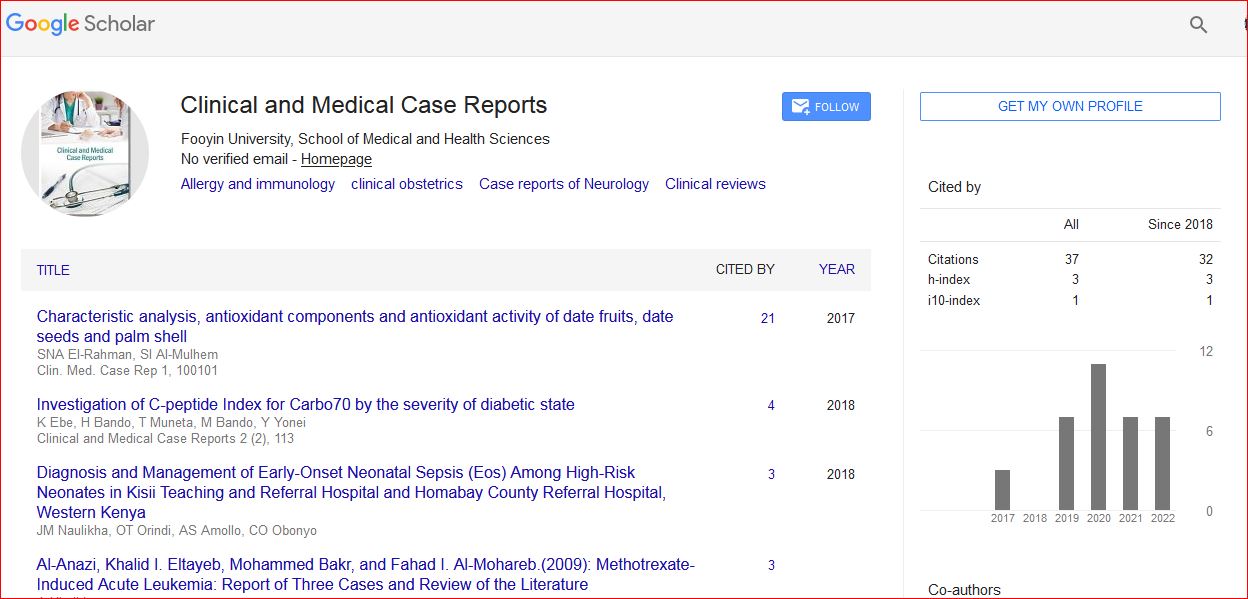
Clinical and Medical Case Reports received 53 citations as per Google Scholar report