Perspective - (2025) Volume 21, Issue 1
Received: 01-Jan-2025, Manuscript No. jos-26-185148;
Editor assigned: 03-Jan-2025, Pre QC No. P-185148;
Reviewed: 17-Jan-2025, QC No. Q-185148;
Revised: 22-Jan-2025, Manuscript No. R-185148;
Published:
29-Jan-2025
, DOI: 10.37421/1584-9341.2024.20.197
Citation: Mansouri, Fatima El. ”Optimizing Nutrition to Prevent
Surgical Site Infections.” J Surg 21 (2025):197.
Copyright: © 2025 Mansouri E. Fatima This is an open-access article distributed under the terms of the Creative Commons Attribution License, which permits unrestricted use,
distribution and reproduction in any medium, provided the original author and source are credited.
Optimizing patient nutrition prior to surgical intervention is a critical determinant in the prevention of surgical site infections (SSIs). A well-nourished state underpins robust immune function and facilitates effective tissue repair, thereby substantially diminishing the likelihood of complications such as SSIs. Key strategies involve a comprehensive assessment of a patient's nutritional status, the provision of targeted nutritional supplementation when deemed necessary, and the diligent education of patients regarding pre-operative dietary guidelines and recommendations [1].
A systematic review of the existing literature unequivocally highlights the significant role of various nutritional interventions in reducing SSI rates among surgical patients. Specifically, the evidence strongly advocates for the integration of prehabilitation programs, which intrinsically include nutritional support, into the standard surgical care pathways for patients. This approach aims to enhance patient readiness for surgery through proactive nutritional measures [2].
Malnutrition presents as a prevalent challenge among individuals scheduled for surgical procedures, correlating directly with poorer post-operative outcomes, including a heightened incidence of SSIs. The early and accurate identification of malnutrition through the application of validated screening tools, followed by the implementation of tailored nutritional management strategies, are indispensable components of effective pre-operative patient care [3].
The profound influence of specific micronutrients, notably vitamin C and zinc, on the processes of wound healing and the modulation of the immune response is well-established within scientific literature. Ensuring that patients maintain adequate levels of these essential nutrients in the pre-operative period may contribute to the mitigation of SSI risk, although further rigorous research is warranted to ascertain optimal dosing protocols and timing for their administration [4].
Adequate protein intake is fundamentally important for the preservation of muscle mass and the maintenance of a functional immune system. Perioperative protein supplementation has demonstrated considerable promise in enhancing functional recovery post-surgery and has the potential to lower SSI rates, particularly in patient populations with elevated protein requirements or those at risk of developing sarcopenia [5].
The complex ecosystem of the gut microbiome plays a significant and often underappreciated role in regulating immune responses and inflammatory processes. Preoperative nutritional strategies that actively promote the development and maintenance of a healthy gut microbiome, such as ensuring sufficient dietary fiber intake and judicious use of probiotics, may indirectly contribute to a reduced incidence of SSIs [6].
Active patient education and the fostering of patient engagement in their own preoperative nutritional care are paramount for ensuring adherence to prescribed recommendations. By empowering patients with a clear understanding of the critical importance of nutrition for their surgical recovery, there is a greater likelihood of better compliance with dietary plans, which can subsequently lead to improved SSI outcomes [7].
Individualized nutritional plans, meticulously crafted to account for specific factors such as the type of surgery being performed, the patient's existing comorbidities, and their baseline nutritional status, are demonstrably more effective than generalized dietary recommendations. The optimal achievement of preoperative nutritional optimization necessitates a collaborative, multidisciplinary approach involving surgeons, registered dietitians, and nursing staff [8].
The economic ramifications of SSIs are substantial and far-reaching, encompassing prolonged hospital stays, increased demand for additional medical treatments, and a significant reduction in overall productivity. Consequently, proactive and evidence-based nutritional interventions can be viewed as a highly cost-effective strategy for preventing these debilitating complications and thereby enhancing overall patient outcomes [9].
Malnourished individuals may exhibit increased insulin resistance and impaired glucose metabolism, which can consequently elevate the risk of developing SSIs. By optimizing a patient's nutritional status before surgery, it is possible to improve glycemic control and support a more favorable inflammatory and immune response, contributing to a safer surgical experience [10].
The optimization of patient nutrition before undergoing surgical procedures is paramount for the effective prevention of surgical site infections (SSIs). A sufficient nutritional status is fundamental for supporting adequate immune function and promoting efficient tissue repair, which collectively serve to reduce the risk of complications such as SSIs. The critical interventions in this regard include a thorough assessment of the patient's nutritional state, the provision of specific nutritional supplements when indicated by the assessment, and comprehensive patient education on appropriate pre-operative dietary practices [1].
A comprehensive systematic review of existing research has underscored the significant impact of various nutritional interventions, including supplementation with proteins and essential micronutrients, on substantially lowering SSI rates in surgical patient cohorts. The body of evidence strongly supports the adoption of prehabilitation programs, which inherently incorporate nutritional support, into the established surgical care pathways for patients undergoing operative procedures [2].
Malnutrition is a widespread issue observed among individuals who are candidates for surgery, and it is a significant contributor to less favorable post-operative outcomes, notably an increased incidence of SSIs. Therefore, the early detection of malnutrition through the utilization of validated screening instruments, followed by the implementation of carefully tailored nutritional management plans, are essential components of pre-operative patient management [3].
The well-documented role of specific micronutrients, such as vitamin C and zinc, in facilitating wound healing and bolstering the immune system's response is a crucial consideration. Ensuring that patients maintain adequate levels of these vital nutrients in the perioperative period may play a role in attenuating the risk of SSIs, although further investigation into optimal dosage and timing strategies is necessary [4].
Protein intake holds critical importance for the maintenance of lean muscle mass and the robust functioning of the immune system. The application of perioperative protein supplementation has shown considerable promise in improving the speed and quality of functional recovery post-surgery and may also contribute to a reduction in SSI rates, particularly in patients with elevated protein requirements or those identified as being at risk for sarcopenia [5].
The gut microbiome is increasingly recognized for its significant involvement in the intricate regulation of immune responses and inflammatory pathways. Preoperative nutritional strategies designed to foster a healthy gut microbiome, for instance, by ensuring adequate intake of dietary fiber and the judicious use of probiotics, may exert an indirect but beneficial influence on the development of SSIs [6].
Effective patient education and the active engagement of patients in their own preoperative nutritional care are vital for ensuring adherence to the recommended dietary plans. When patients are well-informed about the importance of nutrition for their surgical recovery, they are more likely to comply with recommendations, which can subsequently lead to improved SSI outcomes [7].
Personalized nutritional plans that take into account specific factors such as the type of surgical procedure, the presence of patient comorbidities, and their baseline nutritional status are more effective than generalized dietary advice. The most effective approach to achieving successful preoperative nutritional optimization involves a multidisciplinary team comprising surgeons, dietitians, and nurses [8].
The substantial economic burden associated with SSIs, characterized by prolonged hospital stays, increased costs for additional treatments, and reduced patient productivity, underscores the importance of prevention. Proactive nutritional interventions represent a highly cost-effective strategy for mitigating these complications and improving the overall quality of patient care and outcomes [9].
Malnourished individuals may experience heightened insulin resistance and compromised glucose metabolism, which can consequently elevate their risk of developing SSIs. Optimizing a patient's nutritional status prior to surgery can significantly contribute to improved glycemic control and support a more effective inflammatory and immune response, leading to better surgical outcomes [10].
Optimizing pre-operative nutrition is crucial for preventing surgical site infections (SSIs) by supporting immune function and tissue repair. Key interventions include nutritional assessment, supplementation, and patient education. Research indicates that nutritional prehabilitation, protein and micronutrient supplementation, and addressing malnutrition can significantly lower SSI rates. Specific micronutrients like vitamin C and zinc, along with adequate protein intake, are vital for wound healing and immune response. Promoting a healthy gut microbiome through dietary strategies and ensuring patient engagement are also important. Individualized, multidisciplinary nutritional plans are more effective than generalized advice. Preventing SSIs through nutritional interventions offers significant economic benefits by reducing hospital stays and treatment costs. Furthermore, optimizing nutrition can improve glycemic control, mitigating risks associated with malnutrition.
None
None
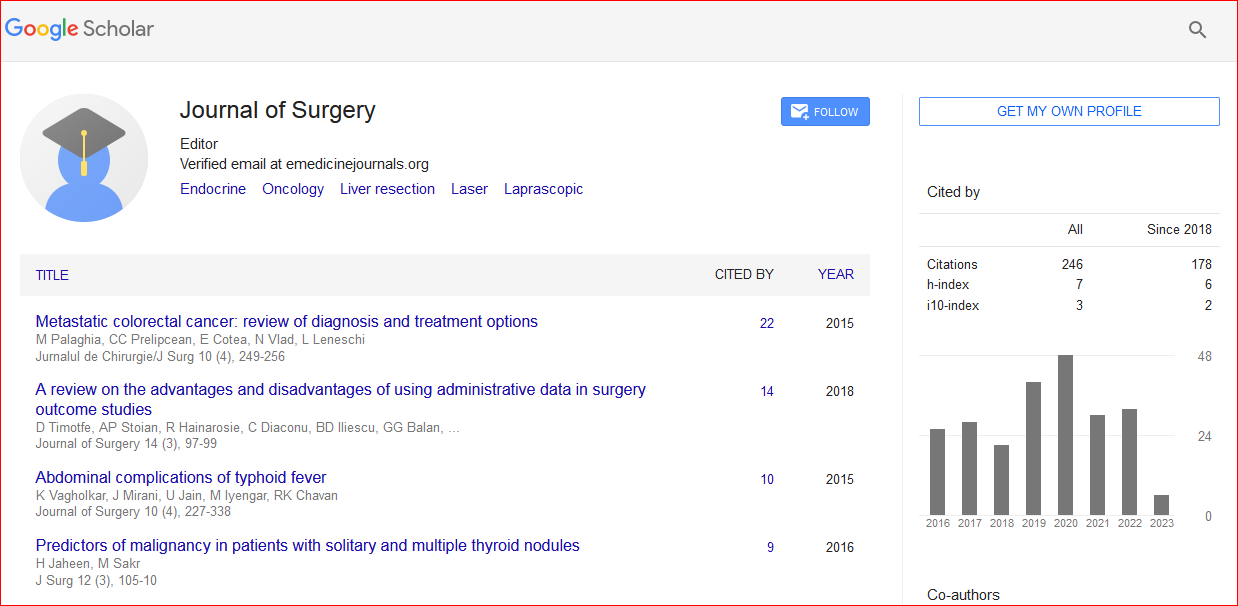
Journal of Surgery received 288 citations as per Google Scholar report