Short Communication - (2025) Volume 13, Issue 5
Received: 01-Oct-2025, Manuscript No. jaat-26-183183;
Editor assigned: 03-Oct-2025, Pre QC No. P-183183;
Reviewed: 17-Oct-2025, QC No. Q-183183;
Revised: 22-Oct-2025, Manuscript No. R-183183;
Published:
29-Oct-2025
, DOI: 10.37421/2329-6542.2025.13.380
Citation: Romano, Luca. ”Optimizing Interplanetary Mission Design: Efficiency, Time, Risk.” J Astrophys Aerospace Technol 13 (2025):380.
Copyright: © 2025 Romano L. This is an open-access article distributed under the terms of the Creative Commons Attribution License, which permits unrestricted use, distribution and reproduction in any medium, provided the original author and source are credited.
Optimizing mission design for interplanetary travel represents a complex endeavor, demanding a multi-objective approach that meticulously balances critical parameters such as fuel efficiency, transit time, and overall mission risk. This intricate process relies heavily on sophisticated trajectory optimization techniques, which must account for diverse factors including gravitational assists, the application of low-thrust propulsion systems, and the stringent constraints associated with rendezvous maneuvers. The accelerating advancements in computational power, coupled with a deeper understanding of astrodynamics, are increasingly empowering engineers and scientists to conceptualize and implement more efficient and ambitious mission profiles. These advancements are particularly crucial for missions targeting the outer solar system, where vast distances and limited communication bandwidth pose significant challenges, as well as for missions requiring complex rendezvous operations with multiple celestial bodies [1].
The continuous development of advanced propulsion systems, with a particular emphasis on electric propulsion, is proving to be an indispensable factor in significantly reducing the required propellant mass for interplanetary missions. This reduction in propellant mass, in turn, enables substantially faster transit times, a crucial element for many scientific objectives. The effective optimization of these advanced systems within the broader context of mission design necessitates a granular analysis of parameters such as thrust profiles, the associated power requirements, and the long-term performance characteristics of the propulsion units. This research area is actively exploring how to seamlessly integrate these high-efficiency propulsion technologies into mission planning paradigms, aiming to overcome the inherent limitations that have historically constrained conventional chemical propulsion systems [2].
Leveraging the gravitational influence of planets, commonly known as planetary gravity assists or flybys, stands as a fundamental strategy in the pursuit of efficient interplanetary mission design. These maneuvers offer the potential for substantial propellant savings and can achieve significant velocity changes for the spacecraft without expending onboard fuel. The current focus of this research is on developing and refining advanced algorithms capable of autonomously identifying and sequencing optimal gravity assist maneuvers. This process must meticulously consider the complex interplay of orbital mechanics, the precise geometry of the celestial body encounters, and the various departure and arrival constraints that govern the mission trajectory. The overarching aim is to enhance the inherent flexibility of mission planning and to substantially reduce the computational burden currently associated with the design of highly complex interplanetary trajectories [3].
Navigating the vastness of interplanetary space presents inherent challenges stemming from uncertainties in spacecraft navigation and the persistent influence of environmental perturbations. These factors can significantly impact the accuracy of spacecraft trajectories during extended transits. This study is specifically focused on developing and implementing robust mission design methodologies. These methodologies incorporate advanced techniques such as stochastic optimization and sophisticated feedback control strategies, all aimed at effectively mitigating the impact of these unavoidable uncertainties. The ultimate goal is to engineer resilient mission plans that can reliably ensure successful arrival at the intended target destination, even in the face of deviations from the nominal, pre-planned trajectory [4].
The synergistic integration of low-thrust, high-efficiency propulsion systems with cutting-edge guidance, navigation, and control (GNC) systems is emerging as a pivotal area for the optimization of interplanetary mission design. This particular paper delves into the application of optimal control techniques specifically tailored for managing continuous low-thrust trajectories. The primary objective is to minimize propellant consumption while rigorously satisfying all essential mission constraints, including critical parameters like flight time and the required precision of arrival at the destination. The research aims to illuminate the inherent trade-offs that exist between the performance capabilities of advanced propulsion systems and the precise control required for trajectory management [5].
Designing missions specifically for asteroid rendezvous and subsequent sample return presents a unique set of formidable challenges. These challenges are largely driven by the complex and often unpredictable dynamics associated with close proximity operations around small celestial bodies. This research is dedicated to optimizing the trajectories required for these ambitious missions, focusing on enabling efficient transfers to the target asteroid, ensuring safe and controlled rendezvous, and facilitating the successful acquisition and subsequent return of samples to Earth. The study critically analyzes the intricate interplay between fundamental orbital mechanics, the precise control of the spacecraft's attitude, and the navigation accuracy that is paramount for the successful execution of these demanding mission profiles [6].
The exploration of Jupiter's Trojan asteroids, a dynamically rich and scientifically compelling region of the solar system, necessitates the design of highly efficient trajectories. These trajectories must strive to minimize both flight time and the expenditure of propellant, resources that are always at a premium in deep space missions. This paper critically examines the application of advanced methodologies, including optimal control principles and surrogate-based optimization techniques, specifically for the design of low-energy transfer trajectories leading to these unique celestial bodies. Furthermore, the research carefully considers the significant impact that Jupiter's immense gravitational field and the subtle but persistent effects of solar radiation pressure can have on the overall feasibility and success of such missions [7].
Designing missions destined for the distant ice giants, Uranus and Neptune, presents a substantial challenge primarily due to the immense distances involved and the severely limited launch windows that occur infrequently. This research endeavors to explore and propose innovative trajectory design concepts specifically aimed at addressing these challenges. These concepts include the strategic utilization of multiple gravity assists from various celestial bodies and the incorporation of advanced propulsion systems. The overarching goal is to enable timely and fuel-efficient exploration of these enigmatic planets. The study meticulously evaluates the feasibility and potential advantages of various mission architectures that could be employed for future reconnaissance missions to Uranus and Neptune [8].
The strategic deployment of Earth-gravity-assist trajectories, often referred to as 'free-return' trajectories, offers a remarkably robust and fuel-efficient methodology, particularly well-suited for initial interplanetary missions. This paper undertakes a comprehensive analysis of the design space associated with these trajectories and explores methods for their optimization. A significant emphasis is placed on highlighting their inherent safety features and the considerable mission flexibility they provide, especially for missions targeting the Moon and Mars. The research also critically discusses the inherent trade-offs that exist when comparing these trajectories with other types, particularly concerning the crucial factors of travel time and the potential payload capacity of the spacecraft [9].
Developing efficient trajectories for missions that involve multiple flybys of various celestial bodies, such as those within the complex gravitational environment of the Jupiter system, demands the application of highly advanced computational techniques. This particular study concentrates on the utilization of multi-objective optimization algorithms. The primary objective of these algorithms is to identify trajectories that not only minimize propellant consumption but also maximize the scientific return of the mission. The research explores the efficacy of various optimization approaches, including evolutionary algorithms and gradient-based methods, for effectively navigating these intricate multi-body gravitational scenarios [10].
Interplanetary mission design is fundamentally a multi-objective optimization problem, requiring a delicate balance between minimizing fuel consumption, reducing travel time, and mitigating mission risk. The realization of such ambitious goals hinges on the application of sophisticated trajectory optimization techniques. These techniques must adeptly incorporate a range of complex factors, including the strategic use of gravitational assists from celestial bodies, the efficient deployment of low-thrust propulsion systems, and the adherence to strict rendezvous constraints. The continuous evolution of computational capabilities and a deeper understanding of astrodynamics are paving the way for the development of more efficient and expansive mission profiles. These advancements are particularly vital for missions venturing into the outer solar system and for those requiring intricate rendezvous operations with multiple targets [1].
A critical enabler for reducing propellant mass and accelerating transit times in interplanetary missions lies in the ongoing development of advanced propulsion systems, particularly electric propulsion. The effective integration of these systems into mission design mandates a thorough analysis of their thrust profiles, power demands, and long-term operational performance. Research in this domain actively investigates methodologies for incorporating these high-efficiency propulsion technologies into mission planning to surmount the limitations inherent in traditional chemical propulsion [2].
Planetary gravity assists are an indispensable tool in the design of efficient interplanetary missions, offering substantial savings in propellant and enabling significant velocity modifications. This work focuses on developing advanced algorithms designed for the autonomous identification and sequencing of optimal gravity assist maneuvers. The algorithms consider orbital mechanics, encounter geometries, and departure and arrival constraints to enhance mission flexibility and reduce the computational complexity of designing intricate interplanetary trajectories [3].
Ensuring accurate spacecraft trajectories during long interplanetary transits is significantly challenged by uncertainties in navigation and external environmental perturbations. This study concentrates on robust mission design strategies that integrate stochastic optimization and feedback control to counteract these uncertainties. The objective is to create resilient mission plans that guarantee successful arrival despite deviations from the nominal trajectory [4].
The optimization of interplanetary mission design is significantly advanced by the integration of low-thrust, high-efficiency propulsion with advanced guidance, navigation, and control (GNC) systems. This paper explores optimal control methodologies for managing continuous low-thrust trajectories, prioritizing propellant minimization while adhering to mission constraints such as flight duration and arrival accuracy. It highlights the trade-offs between propulsion capabilities and trajectory control precision [5].
Mission design for asteroid rendezvous and sample return missions faces unique challenges due to complex dynamics and the need for precise proximity operations. This research optimizes trajectories for efficient asteroid transfer, safe rendezvous, and successful sample acquisition and return. It analyzes the interplay of orbital mechanics, spacecraft attitude control, and navigation accuracy for these demanding missions [6].
Efficient trajectories that minimize flight time and propellant usage are essential for missions to Jupiter's Trojan asteroids. This paper examines the application of optimal control and surrogate-based optimization for low-energy transfers to these bodies, considering the influence of Jupiter's gravity and solar radiation pressure on mission feasibility [7].
Reaching Uranus and Neptune presents considerable challenges due to vast distances and limited launch windows. This research explores innovative trajectory designs, including multiple gravity assists and advanced propulsion, to achieve timely and fuel-efficient exploration. The study assesses the viability of various mission architectures for future reconnaissance [8].
Earth-gravity-assist trajectories, or 'free-return' trajectories, provide a robust and fuel-efficient method for initial interplanetary missions. This paper analyzes their design space and optimization, emphasizing their safety and flexibility for lunar and Mars missions, while also discussing trade-offs in travel time and payload capacity [9].
Designing efficient trajectories for multi-flyby missions, particularly within the Jupiter system, requires advanced computational approaches. This study focuses on multi-objective optimization algorithms to minimize propellant and maximize scientific return, exploring evolutionary and gradient-based methods for navigating complex multi-body gravitational environments [10].
Interplanetary mission design is a complex, multi-objective challenge balancing fuel efficiency, travel time, and risk. Advanced trajectory optimization techniques, including gravitational assists and low-thrust propulsion, are crucial. Electric propulsion offers significant advantages in reducing propellant mass and transit times. Automated algorithms are being developed for optimal gravity assists, and robust design methodologies are employed to mitigate navigation and environmental uncertainties. Integrating low-thrust propulsion with advanced GNC systems optimizes trajectories by minimizing fuel while meeting mission constraints. Missions to asteroids and the outer solar system, like Jupiter's Trojans, Uranus, and Neptune, require specialized trajectory designs due to unique dynamics and vast distances. Earth-gravity-assist trajectories offer a safe and fuel-efficient option for initial missions. Multi-flyby missions, especially in complex gravitational systems, rely on advanced multi-objective optimization algorithms to balance competing mission objectives.
None
None
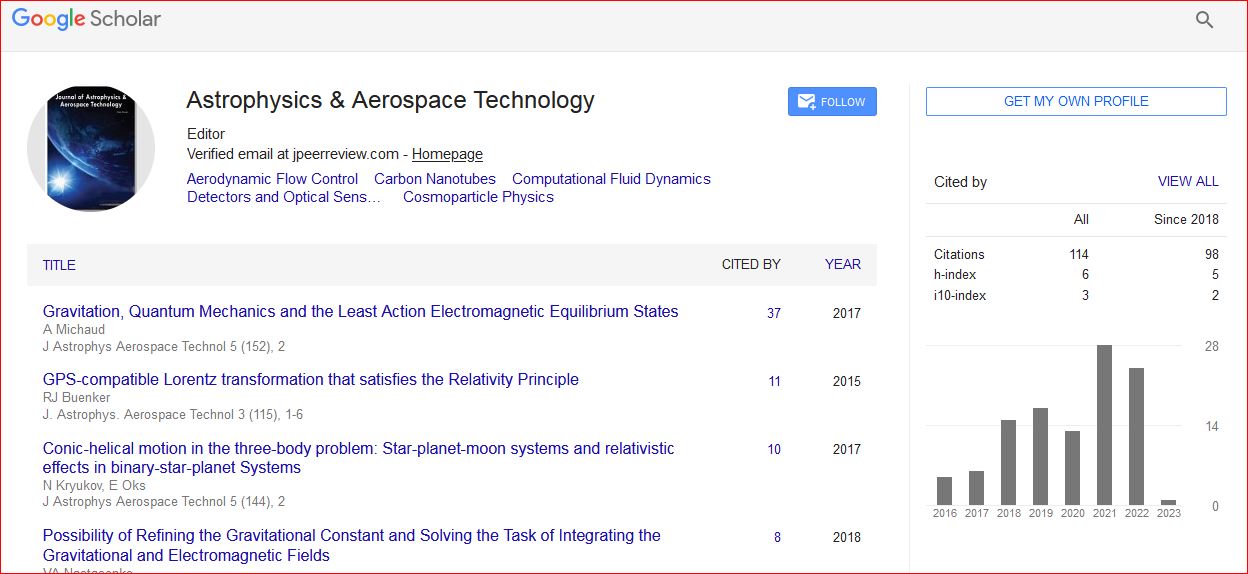
Astrophysics & Aerospace Technology received 114 citations as per Google Scholar report