Perspective - (2025) Volume 14, Issue 5
Received: 01-Sep-2025, Manuscript No. iem-26-179831;
Editor assigned: 03-Sep-2025, Pre QC No. P-179831;
Reviewed: 14-Sep-2025, QC No. Q-179831;
Revised: 22-Sep-2025, Manuscript No. R-179831;
Published:
29-Sep-2025
, DOI: 10.37421/2169- 0316.2025.14.322
Citation: Costa, Sofia. âOptimizing Distribution Networks: Efficiency, Sustainability, Resilience.â J Ind Eng Manag 14 (2025):322.
Copyright: © 2025 Costa S. This is an open-access article distributed under the terms of the Creative Commons Attribution License, which permits unrestricted use, distribution and reproduction in any medium, provided the original author and source are credited.
The optimization of distribution networks is a critical area of study for enhancing operational efficiency and achieving strategic business objectives. A holistic approach is essential, considering multifaceted factors such as inventory management, diverse transportation modes, and the strategic placement of facilities. This integrated perspective aims to minimize costs while simultaneously improving service levels offered to customers. The application of advanced analytical techniques is increasingly vital for dissecting complex network dynamics and identifying areas for improvement [1].
The landscape of distribution networks is undergoing a significant transformation driven by rapid digitalization. The integration of data analytics, automation technologies, and the Internet of Things (IoT) is fundamentally reshaping how these networks operate, offering unprecedented visibility and enhancing decision-making capabilities. Adapting to these pervasive digital trends is no longer optional but a necessity for maintaining competitiveness and ensuring responsiveness in dynamic markets [2].
Environmental sustainability has emerged as a paramount concern, leading to the integration of green logistics principles into the very fabric of distribution network design. Strategies focus on minimizing environmental impact through optimized routing, the selection of eco-friendly transportation options, and comprehensive waste reduction initiatives throughout the distribution chain. The growing emphasis on environmental responsibility underscores its increasing importance in industrial engineering practices [3].
Last-mile delivery, particularly within congested urban environments, presents a unique set of challenges that demand innovative solutions for efficient distribution. The exploration of concepts like micro-fulfillment centers, urban consolidation centers, and the deployment of delivery robots are key strategies to overcome urban congestion and significantly reduce delivery times, thereby improving both operational efficiency and customer satisfaction [4].
The strategic placement of distribution centers is a cornerstone of effective logistics, directly impacting total logistics costs. This involves meticulous consideration of demand variability and specific service level requirements. Advanced mathematical modeling and simulation techniques are employed to pinpoint optimal locations and determine appropriate capacities for these facilities, ultimately leading to enhanced overall network performance [5].
Enhancing the efficiency of transportation operations within distribution networks is another critical area of focus. This involves the implementation of sophisticated route optimization algorithms, effective load consolidation strategies, and the judicious adoption of multimodal transportation to achieve reductions in both transit times and overall costs. Furthermore, efficient transportation practices yield significant environmental benefits [6].
Effective inventory management plays a pivotal role in the efficiency of distribution networks. A variety of inventory control strategies, including Just-In-Time (JIT), Economic Order Quantity (EOQ), and safety stock optimization, are employed to strike a balance between inventory holding costs and the risks associated with stockouts. Maintaining optimal inventory levels is fundamental to network performance [7].
Simulation and modeling techniques offer powerful tools for evaluating and systematically improving the performance of distribution networks. These methodologies allow for the rigorous testing of various operational scenarios, the identification of critical bottlenecks, and the precise assessment of the impact of proposed changes prior to their implementation, thereby fostering more informed and robust design decisions [8].
Integrating robust risk management practices into distribution network design is essential for building resilience against disruptions. Identifying potential risks, such as natural disasters, geopolitical instabilities, and supplier failures, is the first step towards developing agile and adaptable distribution systems capable of navigating unforeseen circumstances effectively [9].
Navigating the inherent trade-offs between cost and service level is a fundamental aspect of distribution network design. Developing a clear framework for analyzing these trade-offs enables informed decisions regarding network configuration, ensuring that customer expectations are met while operational expenses are managed effectively, thereby balancing network complexity with essential responsiveness [10].
The optimization of distribution networks encompasses a broad spectrum of considerations to enhance overall efficiency and achieve strategic goals. Key factors include sophisticated inventory management techniques, the selection and integration of various transportation modes, and the judicious determination of facility locations. The overarching aim is to adopt a holistic perspective that minimizes operational costs while simultaneously elevating service levels. The sophisticated application of advanced analytics is instrumental in dissecting the complexities of these networks and pinpointing opportunities for enhancement [1].
Digitalization is profoundly reshaping modern distribution networks, with a significant emphasis on the strategic deployment of data analytics, automation, and the Internet of Things (IoT). These technologies collectively contribute to improved operational visibility and more informed decision-making processes. Consequently, organizations must actively adapt to these evolving digital trends to sustain their competitive edge and maintain a high degree of responsiveness in an increasingly dynamic marketplace [2].
The integration of green logistics principles into the design of distribution networks is becoming increasingly critical for mitigating environmental impact. This involves implementing strategies that focus on optimizing transportation routes, selecting modes of transport that have a lower environmental footprint, and actively working to minimize waste generation throughout the entire distribution process. The growing recognition of environmental sustainability is a significant trend in industrial engineering [3].
Addressing the complexities of last-mile delivery in dense urban settings requires innovative approaches to ensure efficient distribution. Solutions such as the establishment of micro-fulfillment centers, the creation of urban consolidation centers, and the deployment of autonomous delivery robots are being explored to overcome the challenges posed by urban congestion and to expedite delivery times, ultimately enhancing both operational efficiency and customer satisfaction [4].
Strategic facility location is a critical component of designing efficient distribution networks, directly influencing total logistics costs. This process necessitates a thorough analysis of demand fluctuations and specific service level requirements. The utilization of advanced mathematical modeling and simulation methodologies is crucial for identifying optimal locations and determining the appropriate capacities for distribution facilities, thereby boosting network performance [5].
The efficiency of transportation operations within distribution networks is a key area of improvement. This is achieved through strategies such as the application of advanced route optimization algorithms, effective load consolidation practices, and the adoption of multimodal transportation systems, all aimed at reducing transit times and associated costs. Furthermore, these efficient transportation strategies contribute to positive environmental outcomes [6].
Inventory management plays a crucial role in ensuring the effectiveness of distribution networks. A range of inventory control strategies, including Just-In-Time (JIT), Economic Order Quantity (EOQ), and the optimization of safety stock levels, are employed to effectively balance the costs of holding inventory against the risks of stockouts. Maintaining optimal inventory levels is essential for network efficiency [7].
Simulation and modeling techniques provide powerful tools for the assessment and enhancement of distribution network performance. These methods enable the testing of diverse operational scenarios, the identification of critical bottlenecks, and the evaluation of the potential impact of planned changes before their actual implementation, facilitating more informed and strategic design decisions [8].
Incorporating comprehensive risk management strategies into distribution network design is paramount for building resilience against potential disruptions. This involves identifying a wide array of risks, from natural disasters and geopolitical events to supplier-related failures, and developing robust and agile distribution systems capable of adapting to unpredictable circumstances [9].
Understanding and managing the inherent trade-offs between cost efficiency and service level performance is fundamental to effective distribution network design. The development of analytical frameworks allows for informed decision-making regarding network configuration, ensuring that customer expectations are met while operational expenditures are carefully managed, thereby achieving a balance between network complexity and necessary responsiveness [10].
This collection of research addresses critical aspects of distribution network optimization, focusing on enhancing efficiency, sustainability, and resilience. Key areas explored include the integration of advanced analytics, digitalization, green logistics, and effective last-mile delivery solutions. The strategic placement of facilities, optimization of transportation, and robust inventory management are highlighted as crucial for minimizing costs and improving service levels. The use of simulation and modeling aids in evaluating network performance and informing design decisions. Furthermore, building resilience through risk management and balancing cost-service trade-offs are emphasized for creating agile and responsive distribution systems.
None
None
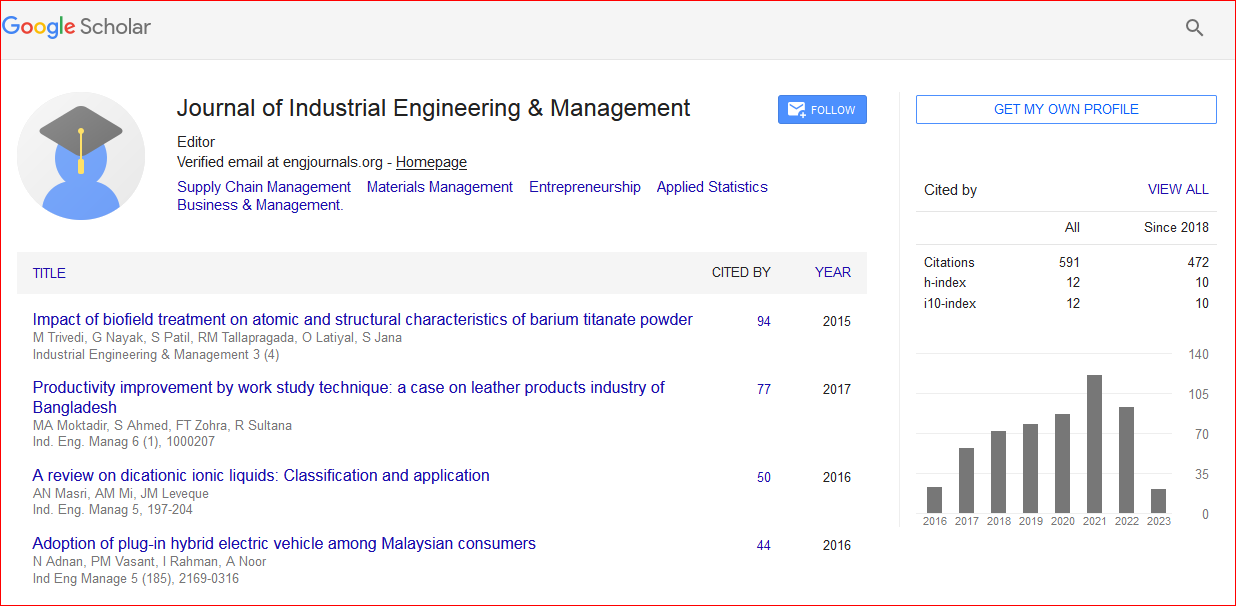
Industrial Engineering & Management received 739 citations as per Google Scholar report