Short Communication - (2025) Volume 14, Issue 3
Received: 01-Sep-2025, Manuscript No. jms-25-172637;
Editor assigned: 03-Sep-2025, Pre QC No. P-172637;
Reviewed: 17-Sep-2025, QC No. Q-172637;
Revised: 22-Sep-2025, Manuscript No. R-172637;
Published:
29-Sep-2025
, DOI: 10.37421/2167-0943.2024.14.410
Citation: Vaughn, Carter. "Nutrition"s Vast Influence: Gut, Health, and Sustainability."J Metabolic Synd 14 (2025):410.
Copyright: © 2025 Vaughn C. This is an open-access article distributed under the terms of the Creative Commons Attribution License, which permits unrestricted use,
distribution and reproduction in any medium, provided the original author and source are credited.
Initial studies underscore the vital role of dietary choices in shaping the gut microbiome, which is foundational for overall health. This body of research delves into the intricate links between diverse eating patterns, host physiology, and the resident microbial communities. It clearly shows how distinct food components, from complex fibers to various fats, can profoundly change the diversity and function of gut bacteria, thereby influencing critical aspects like metabolic health and immune responses [1].
Shifting to broader dietary impacts, a global perspective highlights how plant-based diets significantly contribute to both preventing and managing chronic diseases. Evidence drawn from epidemiological studies and mechanistic insights reveals that these diets, rich in fruits, vegetables, whole grains, and legumes, effectively lower risks for conditions such as cardiovascular disease, type 2 diabetes, and certain types of cancers [2].
Addressing specific nutritional challenges, iron deficiency anemia remains a pressing global health concern, particularly affecting infants, children, and adolescents. Practical guides detail nutritional management strategies, emphasizing crucial screening protocols, targeted dietary interventions, and appropriate supplementation to enhance iron status and improve health outcomes in these young populations [3].
Looking towards future nutritional advancements, nutrigenomics emerges as a rapidly advancing field set to transform obesity treatment. This approach centers on understanding how individual genetic variations interact with dietary components. Reviews in this area highlight the immense potential of genomic insights to customize nutritional recommendations, moving beyond generalized advice towards personalized interventions that are more effective in preventing and managing obesity [4].
The interconnectedness of nutrition, human well-being, and environmental sustainability necessitates the adoption of sustainable diets. This topic explores how dietary patterns influence ecological footprints, resource consumption, and greenhouse gas emissions. Simultaneously, these diets aim to provide optimal nutrition and lessen the burden of diet-related diseases, ultimately fostering food systems beneficial for both people and the planet [5].
Early-life nutrition has a profound and lasting impact on brain development in children. Comprehensive reviews synthesize compelling evidence on the roles of essential micronutrients and macronutrients, demonstrating how deficiencies or excesses during critical developmental periods can impair cognitive function, emotional regulation, and overall neurological health, thereby stressing the importance of optimal nutrition for lifelong brain capacity [6].
For adult bone health, updated perspectives clarify the roles of calcium and vitamin D. This research explores the latest clinical evidence and evolving concepts regarding the optimal intake, absorption, and utilization of these vital nutrients. It addresses ongoing controversies and provides clear insights into their impact on bone mineral density, fracture risk, and overall skeletal integrity [7].
A burgeoning area of research reveals a strong connection between nutrition, the gut microbiota, and mental health. Narrative reviews compile evidence on how specific dietary components and the composition of gut microbes can influence brain function, mood, and susceptibility to mental disorders. This highlights the significant potential for dietary interventions to support psychological well-being through the complex gut-brain axis [8].
Regarding muscle health in older adults, current recommendations and ongoing debates focus on dietary protein intake. This work discusses protein's critical role in mitigating sarcopenia and maintaining functional independence, offering insights into the ideal quantity, timing, and sources of protein to support muscle protein synthesis in the aging population [9].
Finally, recent reviews continue to explore the relationship between ultra-processed foods (UPFs) and various adverse health outcomes. The growing body of research consistently indicates that high consumption of UPFs correlates with increased risks of obesity, cardiovascular disease, type 2 diabetes, and other chronic conditions. This underscores significant public health implications for these ubiquitous products [10].
Understanding the gut microbiome's intricate role, and how dietary choices shape it, is fundamental for overall health. Research extensively explores the deep connections between diverse eating patterns, an individual's physiology, and the resident microbial communities. This work illustrates how various food components, from beneficial fibers to specific fats, can profoundly alter the diversity and function of gut bacteria, impacting metabolic health and immune responses [1]. Furthermore, the fascinating connection between nutrition, the gut microbiota, and mental health is increasingly recognized. Evidence shows how specific dietary components and the composition of gut microbes can influence brain function, mood, and even susceptibility to mental disorders, pointing towards dietary interventions as a way to support psychological well-being through the gut-brain axis [8].
A global perspective reveals how plant-based diets are vital in preventing and managing chronic diseases. Insights from epidemiological studies and underlying mechanisms highlight how these diets, rich in fruits, vegetables, whole grains, and legumes, significantly reduce risks for cardiovascular disease, type 2 diabetes, and certain cancers [2]. Conversely, the growing body of research on ultra-processed foods (UPFs) indicates that their high consumption is linked to increased risks of obesity, cardiovascular disease, type 2 diabetes, and other chronic conditions. This emphasizes major public health implications associated with these ubiquitous products [10].
Iron deficiency anemia continues to be a global health challenge, especially for vulnerable groups like infants, children, and adolescents. Practical guides outline nutritional management, focusing on screening, dietary interventions, and proper supplementation to improve iron status and health outcomes in younger age groups [3]. For children's brain development, early-life nutrition has a profound impact. A critical review synthesizes evidence on essential micronutrients and macronutrients, detailing how deficiencies or excesses during critical developmental windows can affect cognitive function, emotional regulation, and overall neurological health, underscoring the necessity of optimal nutrition for lifelong brain capacity [6]. In adults, calcium and vitamin D are critical for bone health. Clinical updates and new concepts address optimal intake, absorption, and utilization of these nutrients, clarifying their impact on bone mineral density, fracture risk, and skeletal integrity [7]. Finally, for older adults, dietary protein intake remains crucial for muscle health. Discussions address recommendations and controversies, highlighting protein's role in mitigating sarcopenia and preserving functional independence, and suggesting optimal quantities, timing, and sources to support muscle protein synthesis [9].
Nutrigenomics is an evolving field with the potential to revolutionize obesity treatment by examining how individual genetic variations interact with dietary components. This review highlights the power of genomics to customize nutritional recommendations, shifting from generic advice to personalized interventions for more effective obesity prevention and management [4]. Moreover, the connection between nutrition, human health, and environmental sustainability necessitates the adoption of sustainable diets. This approach considers how dietary patterns affect ecological footprints, resource consumption, and greenhouse gas emissions, while simultaneously providing optimal nutrition and mitigating diet-related diseases. The ultimate goal is to foster food systems that benefit both people and the planet [5].
This compilation of research covers a broad spectrum of nutritional science, emphasizing how dietary choices profoundly influence human health and well-being. It details the intricate relationship between diet and the gut microbiome, highlighting how food components alter gut bacteria to impact metabolic health and immune responses. Studies also underscore the efficacy of plant-based diets in preventing and managing chronic diseases, contrasting this with the significant health risks associated with ultra-processed food consumption, including obesity and cardiovascular issues. Furthermore, the collection addresses specific nutritional challenges like iron deficiency anemia in young populations and the critical role of early-life nutrition in brain development. It also explores the importance of calcium and Vitamin D for adult bone health, and optimal protein intake to maintain muscle health in older adults. Emerging fields such as nutrigenomics offer personalized approaches to obesity treatment, while broader discussions connect nutrition, health, and environmental sustainability through the concept of sustainable diets. The fascinating interplay between nutrition, gut microbiota, and mental health via the gut-brain axis also receives significant attention.
None
None
Indexed at, Google Scholar, Crossref
Indexed at, Google Scholar, Crossref
Indexed at, Google Scholar, Crossref
Indexed at, Google Scholar, Crossref
Indexed at, Google Scholar, Crossref
Indexed at, Google Scholar, Crossref
Indexed at, Google Scholar, Crossref
Indexed at, Google Scholar, Crossref
Indexed at, Google Scholar, Crossref
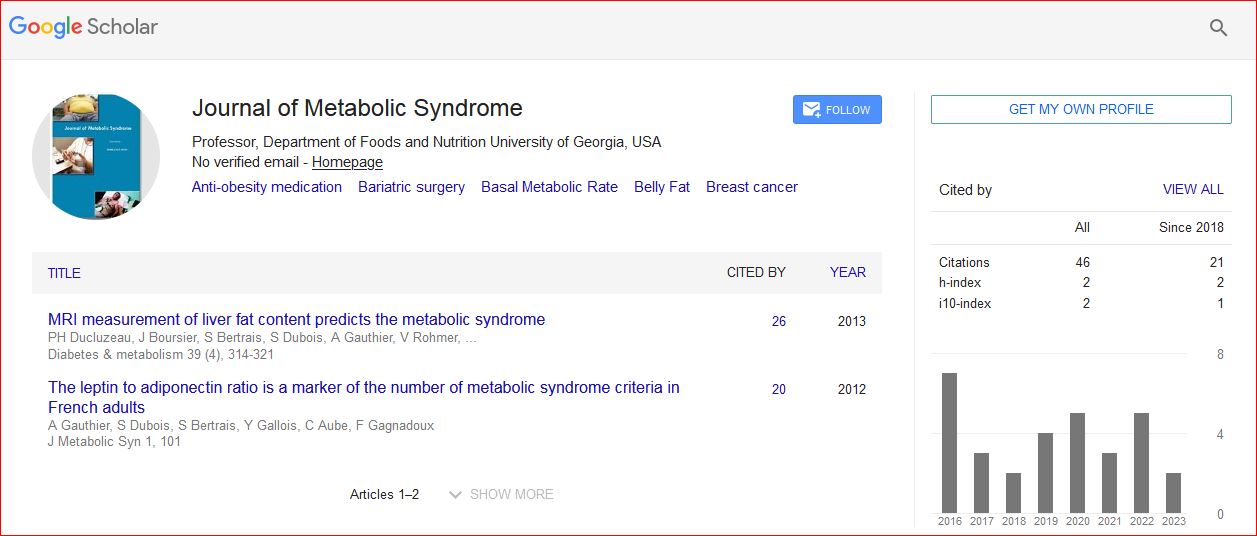
Journal of Metabolic Syndrome received 48 citations as per Google Scholar report