Perspective - (2025) Volume 14, Issue 6
Received: 01-Dec-2025, Manuscript No. jnc-25-178144;
Editor assigned: 03-Dec-2025, Pre QC No. P-178144;
Reviewed: 17-Dec-2025, QC No. Q-178144;
Revised: 22-Dec-2025, Manuscript No. R-178144;
Published:
29-Dec-2025
, DOI: DOI: 10.37421/2167-1168.2025.14.739
Citation: Gonzales, Maria. ”Nursing Ethics and Legal Responsibilities: A Comprehensive Guide.” J Nurs Care 14 (2025):739.
Copyright: © 2025 Gonzales M. This is an open-access article distributed under the terms of the Creative Commons Attribution License, which permits unrestricted use, distribution and reproduction in any medium, provided the original author and source are credited.
The practice of nursing is inherently complex, demanding a delicate balance between ethical considerations and strict legal responsibilities to ensure optimal patient care. Nurses operate within a dynamic environment where ethical dilemmas are commonplace, necessitating a deep understanding of evolving legal frameworks to safeguard patient well-being and uphold professional integrity. Key ethical tenets such as informed consent, patient confidentiality, and professional accountability form the bedrock of nursing practice, while technological advancements introduce new layers of ethical challenges that require careful consideration. Continuous education and robust institutional support are vital for empowering nurses to effectively navigate these dual responsibilities and maintain high standards of care in all practice settings [1].
In recent years, the widespread adoption of telehealth has introduced a novel set of ethical and legal challenges specifically for nursing practice. This paradigm shift necessitates a thorough exploration of its implications, particularly concerning patient privacy, the security of sensitive health data, the establishment and maintenance of therapeutic nurse-patient relationships in a remote context, and the critical imperative of ensuring equitable access to care for all individuals, irrespective of their location or circumstances. The dynamic nature of virtual care demands the development and implementation of updated policies and guidelines to proactively address these emerging issues, thereby ensuring that established ethical principles and legal obligations are consistently upheld within the virtual care environment [2].
A fundamental aspect of nursing care is the duty of care, which encompasses principles of negligence and professional misconduct. A comprehensive examination of this duty involves reviewing landmark legal cases that have shaped nursing practice and discussing the rigorous standards of practice that are expected of all registered nurses. This includes an emphasis on the critical importance of meticulous and accurate documentation, fostering timely and effective communication among healthcare team members, and unwavering adherence to all established protocols. These elements are not merely procedural; they are crucial for fulfilling the nursing duty of care and proactively mitigating potential legal risks, thereby protecting both the patient and the nurse [3].
Patient advocacy stands as a core ethical and legal responsibility intrinsically woven into the fabric of nursing practice. This crucial role involves actively empowering patients, meticulously ensuring that their fundamental rights are protected throughout their healthcare journey, and facilitating clear, effective communication between patients and their healthcare providers. Understanding the ethical frameworks that underpin and strongly support patient advocacy is essential, as is recognizing the significant legal implications that can arise from a failure to advocate for patients, particularly when dealing with vulnerable populations who may have diminished capacity to speak for themselves [4].
Informed consent is undeniably a cornerstone of both ethical patient care and legal compliance within the healthcare system. This vital process requires a critical examination of its practical application, with a specific focus on the nurse's multifaceted role in this endeavor. This includes accurately assessing a patient's comprehension of their medical condition and treatment options, ensuring that consent is given voluntarily without coercion, and diligently documenting the entire informed consent process. Nurses must also be prepared to address various challenges, such as determining patient capacity, overcoming language barriers, and navigating the complexities of emergency situations, to uphold this fundamental patient right effectively [5].
The ethical and legal dimensions surrounding end-of-life care present a particularly complex and sensitive area of nursing practice. Nurses are entrusted with the significant responsibility of navigating these challenges with compassion and expertise. This involves a thorough understanding of the core principles of palliative care, the legal and ethical considerations of advance directives, and the nurse's vital role in supporting both patients and their families through profoundly difficult decision-making processes. Clear communication, unwavering respect for patient autonomy, and strict adherence to all legal requirements pertaining to death and dying are paramount in providing dignified and ethical end-of-life care [6].
Maintaining the utmost patient confidentiality and diligently ensuring data privacy are fundamental ethical and legal obligations that lie at the heart of responsible nursing practice. This is particularly relevant in the modern healthcare landscape, where the pervasive use of electronic health records (EHRs) and other advanced digital technologies introduces new and complex implications for patient privacy. Nurses must be well-versed in best practices for safeguarding sensitive patient information, rigorously complying with relevant regulations such as HIPAA, and developing effective strategies for addressing and mitigating potential data breaches [7].
The critical interplay between nurse staffing ratios, overall workload, and patient outcomes is a subject of significant ethical and legal scrutiny within the healthcare system. Inadequate staffing levels can have profound negative consequences, directly compromising patient safety, substantially increasing the likelihood of medical errors, and contributing to significant ethical distress among nursing staff. Consequently, there is a strong and growing advocacy for the implementation of evidence-based staffing models that are specifically designed to ensure safe patient care, thereby upholding the highest professional nursing standards and protecting both patients and caregivers [8].
This discourse addresses the multifaceted ethical and legal considerations that govern the use of physical restraints in nursing practice. It involves a comprehensive review of the established rationale for employing restraints, a critical assessment of the inherent potential for their misuse or abuse, and a detailed examination of the legal frameworks that meticulously regulate their application. A central tenet of this discussion is the paramount importance of actively exploring and implementing alternatives to restraint use whenever feasible, ensuring that any application of restraints is judicious, strictly time-limited, and thoroughly documented, with the patient's well-being consistently maintained as the primary focus of care [9].
The progressive integration of artificial intelligence (AI) into the healthcare sector is actively shaping new ethical and legal frontiers for the nursing profession. This exploration delves into the potential benefits and inherent risks associated with AI applications in critical areas such as diagnosis, treatment planning, and patient monitoring, and critically examines their subsequent implications for the evolving landscape of nursing practice. It underscores the essential need for nurses to possess a comprehensive understanding of AI's capabilities and limitations, to consistently maintain essential human oversight in AI-assisted care, and to ensure that all AI applications rigorously align with established ethical principles and applicable legal standards, particularly concerning issues of algorithmic bias and accountability [10].
Nursing practice is deeply intertwined with ethical principles and legal mandates, forming a critical nexus that directly influences patient care. Nurses are constantly faced with complex ethical dilemmas, requiring them to diligently adhere to evolving legal frameworks to guarantee patient safety and uphold the high standards of their profession. Central to this are principles such as informed consent, patient confidentiality, and professional accountability, all of which are increasingly impacted by rapid technological advancements. To effectively manage these dual responsibilities, nurses rely on continuous education and strong institutional backing [1].
The advent of telehealth has introduced a new dimension of ethical and legal considerations for nurses. This innovation brings forth significant challenges related to patient privacy, the security of health data, the formation of therapeutic relationships across a distance, and the equitable provision of care. To navigate these complexities, updated policies and guidelines are essential to ensure that ethical standards and legal obligations are met in the virtual healthcare setting [2].
The duty of care is a fundamental concept in nursing, encompassing the avoidance of negligence and professional misconduct. Understanding this duty involves examining key legal cases and adhering to established standards of practice. Accurate documentation, clear communication, and strict protocol adherence are vital components in fulfilling this duty and minimizing legal risks associated with nursing care [3].
Patient advocacy is a critical ethical and legal function for nurses. This involves empowering patients, protecting their rights, and facilitating communication with healthcare providers. The ethical frameworks supporting advocacy are crucial, as is understanding the legal ramifications of failing to advocate, especially for vulnerable patient populations [4].
Obtaining informed consent is a vital ethical and legal requirement in nursing. The nurse's role is pivotal in assessing patient understanding, ensuring voluntary agreement, and documenting the process. Challenges such as capacity issues, language barriers, and emergencies must be addressed to uphold this fundamental patient right [5].
End-of-life care presents significant ethical and legal complexities for nurses. Principles of palliative care, advance directives, and supporting patients and families through difficult decisions are central. Clear communication, respecting patient autonomy, and adhering to legal guidelines for end-of-life situations are essential [6].
Patient confidentiality and data privacy are non-negotiable ethical and legal obligations for nurses. The widespread use of electronic health records and digital technologies necessitates vigilance in safeguarding patient information, complying with regulations like HIPAA, and preparing for potential data breaches [7].
The relationship between nurse staffing ratios, workload, and patient outcomes is a critical ethical and legal concern. Insufficient staffing can jeopardize patient safety and increase the likelihood of errors, leading to ethical distress for nurses. Advocating for evidence-based staffing models is crucial for safe patient care and professional standards [8].
The use of restraints in nursing is governed by specific ethical and legal considerations. Examining the justifications for restraint use, the potential for abuse, and the legal requirements for their application is important. Prioritizing alternatives to restraints and ensuring their judicious, time-limited, and documented use is paramount for patient well-being [9].
Artificial intelligence in healthcare introduces new ethical and legal frontiers for nursing. Understanding the benefits and risks of AI in diagnosis, treatment, and monitoring is vital. Nurses must maintain human oversight and ensure AI aligns with ethical principles and legal standards, especially concerning bias and accountability [10].
This collection of articles explores the multifaceted intersection of ethics and legal responsibilities within nursing practice. Key themes include navigating ethical dilemmas, adhering to legal frameworks for patient safety, and upholding professional standards. Specific areas of focus encompass informed consent, patient confidentiality, professional accountability, and the impact of technological advancements like telehealth and artificial intelligence. The duty of care, patient advocacy, end-of-life care, staffing ratios, and the use of restraints are also examined through an ethical and legal lens. The overarching message emphasizes the critical need for continuous education, robust institutional support, updated policies, and diligent adherence to established principles and regulations to ensure high-quality and legally compliant patient care.
None
None
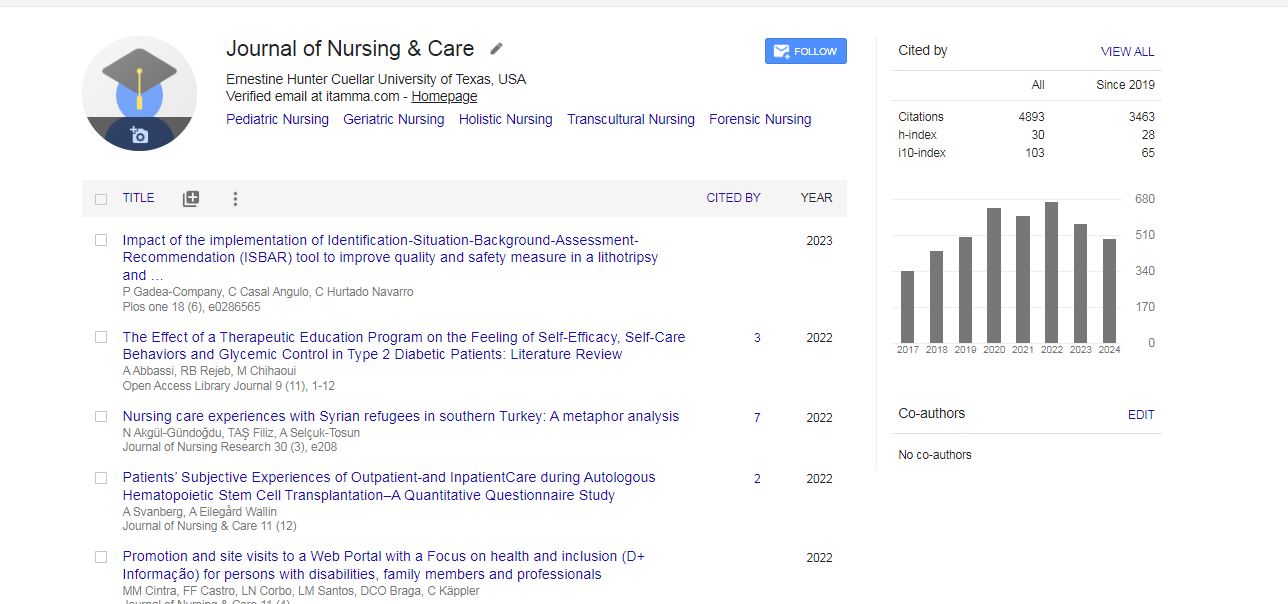
Journal of Nursing & Care received 4230 citations as per Google Scholar report