Short Communication - (2025) Volume 14, Issue 3
Received: 02-Jun-2025, Manuscript No. jnc-25-171662;
Editor assigned: 04-Jun-2025, Pre QC No. P-171662;
Reviewed: 11-Jun-0005, QC No. Q-171662;
Revised: 23-Jun-2025, Manuscript No. R-171662;
Published:
30-Jun-2025
, DOI: 10.37421/2167-1168.2025.14.712
Citation: Kassis, Maissa. “Nursing Approaches to Managing Postpartum Depression: Support, Care and Recovery.” J Nurs Care 14 (2025): 712.
Copyright: © 2025 Kassis M. This is an open-access article distributed under the terms of the Creative Commons Attribution License, which permits unrestricted use, distribution and reproduction in any medium, provided the original author and source are credited.
PPD typically manifests within the first few weeks postpartum but can develop up to a year after delivery. Unlike the transient "baby blues," PPD is more intense and long-lasting, requiring targeted intervention. Its symptoms include feelings of hopelessness, difficulty sleeping, loss of appetite and a lack of interest in the baby. The exact causes of PPD are multifactorial, involving hormonal changes, personal history of depression, lack of social support and psychosocial stressors. Nurses must remain vigilant in identifying early warning signs, as many new mothers may feel ashamed or afraid to disclose their emotional struggles. Routine screening using tools like the Edinburgh Postnatal Depression Scale (EPDS) during postnatal visits is a critical nursing responsibility. Timely identification allows for early intervention and prevents escalation of symptoms. Nurses must also be aware of cultural and personal barriers that prevent open communication and ensure a non-judgmental environment for mothers to express their concerns. Nurses are essential in providing emotional support to mothers navigating postpartum challenges. Active listening, empathetic communication and validation of the mother's feelings are fundamental to building trust. Peer support groups facilitated by nurses can help mothers share experiences and reduce isolation. Additionally, educating family members about PPD empowers them to assist in the recovery process, enhancing the motherâ??s social support network [2-3].
One of the key nursing strategies is patient education. Nurses should provide evidence-based information about postpartum emotional changes, coping mechanisms and self-care practices such as rest, nutrition and physical activity. Teaching stress reduction techniques and mindfulness practices can also promote emotional regulation and resilience. Educating mothers on the normalcy of seeking help can dismantle stigma and foster proactive mental health management. Effective management of PPD often involves a multidisciplinary team, including mental health professionals, obstetricians and social workers. Nurses serve as crucial coordinators, facilitating referrals and ensuring continuity of care. Follow-up and monitoring of the motherâ??s progress are vital to ensuring that therapeutic interventionsâ??whether pharmacological or psychologicalâ??are effective and well-tolerated. Encouraging skin-to-skin contact, rooming-in and breastfeeding support helps strengthen maternal-infant bonding, which can be disrupted in cases of PPD. Nurses should create a nurturing environment that promotes these practices while simultaneously respecting the motherâ??s emotional readiness. By supporting maternal identity and competency, nurses can help mothers regain confidence in their caregiving role. Understanding cultural perceptions of motherhood and mental health is essential. Nurses must provide culturally sensitive care that respects the beliefs and practices of the mother while ensuring that essential mental health needs are met. Adapting communication styles, involving community leaders when necessary and integrating culturally acceptable coping strategies can enhance care outcomes [4-5].
Google Scholar Cross Ref Indexed at
Google Scholar Cross Ref Indexed at
Google Scholar Cross Ref Indexed at
Google Scholar Cross Ref Indexed at
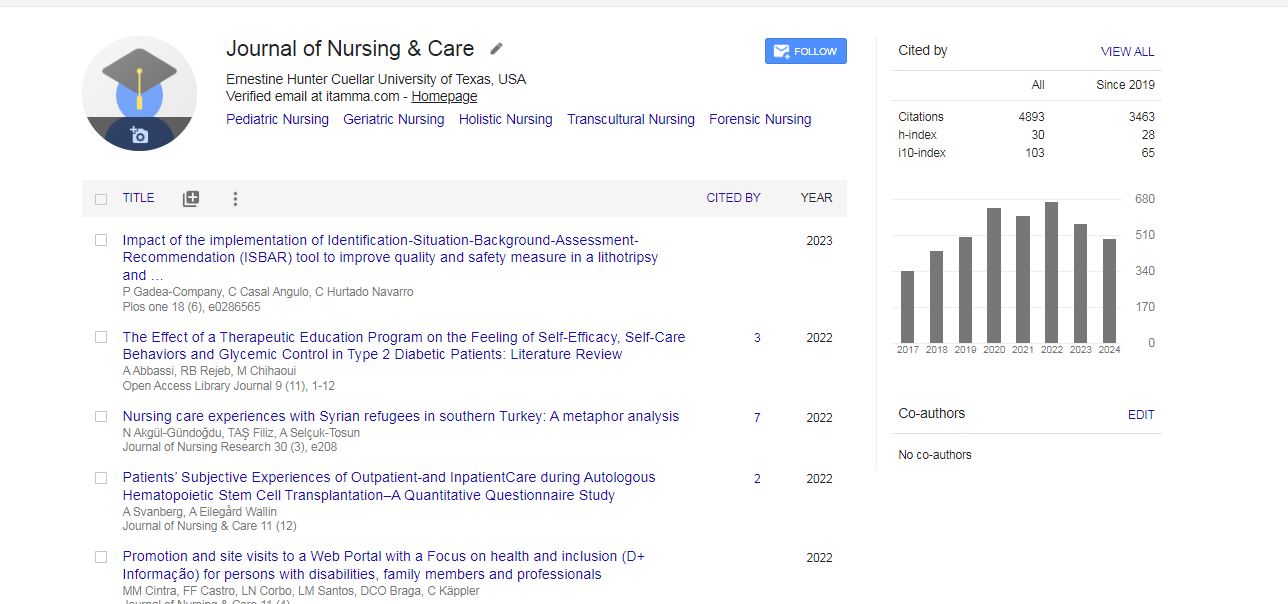
Journal of Nursing & Care received 4230 citations as per Google Scholar report