Perspective - (2025) Volume 10, Issue 3
Received: 01-May-2025, Manuscript No. apn-26-179105;
Editor assigned: 04-May-2025, Pre QC No. P-179105;
Reviewed: 14-May-2025, QC No. Q-179105;
Revised: 21-May-2025, Manuscript No. R-179105;
Published:
28-May-2025
, DOI: 10.37421/2573-0347.2025.10.432
Citation: Karim, Aisha. âNurses: Leading Sepsis Management Bundle Implementation.â J Adv Practice Nurs 10 (2025):432.
Copyright: © 2025 Karim A. This is an open-access article distributed under the terms of the Creative Commons Attribution License, which permits unrestricted use, distribution
and reproduction in any medium, provided the original author and source are credited.
The critical importance of prompt and effective sepsis management within acute care settings cannot be overstated, given the condition's high morbidity and mortality rates. Nurses, as frontline caregivers, play a pivotal role in the implementation of sepsis bundles, which are evidence-based protocols designed to standardize and improve patient care. This article explores the crucial role of nurses in implementing sepsis bundles within acute care settings. It highlights the challenges and facilitators encountered by nursing staff, emphasizing the importance of standardized protocols, continuous education, and interdisciplinary collaboration to improve timely recognition and treatment of sepsis, ultimately leading to better patient outcomes [1].
Investigating the impact of a sepsis bundle on patient mortality and length of stay in an intensive care unit. The study found a significant reduction in mortality and a decrease in hospital days following the implementation of a structured sepsis management protocol [2].
Examining the role of nursing education and simulation in improving the adherence to sepsis bundle elements. The findings suggest that targeted educational interventions, including high-fidelity simulation, can enhance nurses' confidence and performance in sepsis management [3].
A systematic review and meta-analysis of interventions to improve sepsis recognition and management in hospitals. The review underscores the effectiveness of multifaceted approaches, including sepsis screening tools and multidisciplinary teams, in reducing sepsis-related morbidity and mortality [4].
Exploring patient and family perspectives on sepsis care and the implementation of sepsis bundles. This qualitative study reveals the importance of clear communication, patient education, and family involvement in improving the overall care experience during sepsis [5].
Assessing the barriers and facilitators to the successful implementation of sepsis bundles in a community hospital setting. The study identifies organizational culture, staff workload, and access to resources as key factors influencing bundle adherence [6].
The impact of a real-time sepsis alert system on the timeliness of sepsis bundle compliance. This research demonstrates that automated alerts can significantly improve the initiation of sepsis interventions within the recommended timeframes [7].
Analyzing the nurse-to-patient ratio and its relationship to sepsis bundle adherence. The study suggests that adequate staffing levels are essential for nurses to effectively implement sepsis protocols and provide optimal patient care [8].
Evaluating the effectiveness of bedside handovers in improving the continuity of care for patients with sepsis. This research indicates that structured handovers facilitated by checklists can enhance communication and ensure critical elements of sepsis management are transferred effectively [9].
A qualitative study exploring nurses' experiences with implementing electronic health record (EHR) based sepsis protocols. The study identifies workflow integration, system usability, and the need for adequate training as critical factors for successful EHR adoption in sepsis management [10].
The implementation of sepsis bundles in acute care settings is a cornerstone of modern sepsis management, and nurses are central to their successful execution. These bundles, comprising a set of evidence-based interventions, aim to standardize care and improve patient outcomes. This article explores the crucial role of nurses in implementing sepsis bundles within acute care settings. It highlights the challenges and facilitators encountered by nursing staff, emphasizing the importance of standardized protocols, continuous education, and interdisciplinary collaboration to improve timely recognition and treatment of sepsis, ultimately leading to better patient outcomes [1].
The impact of comprehensive sepsis management protocols on critical care outcomes is a significant area of research. Investigating the impact of a sepsis bundle on patient mortality and length of stay in an intensive care unit. The study found a significant reduction in mortality and a decrease in hospital days following the implementation of a structured sepsis management protocol [2].
Enhancing nursing proficiency in sepsis management through specialized training is crucial for improving adherence to care guidelines. Examining the role of nursing education and simulation in improving the adherence to sepsis bundle elements. The findings suggest that targeted educational interventions, including high-fidelity simulation, can enhance nurses' confidence and performance in sepsis management [3].
Multifaceted approaches are vital for optimizing sepsis recognition and management across hospital settings. A systematic review and meta-analysis of interventions to improve sepsis recognition and management in hospitals. The review underscores the effectiveness of multifaceted approaches, including sepsis screening tools and multidisciplinary teams, in reducing sepsis-related morbidity and mortality [4].
Integrating patient and family experiences into the care pathway is essential for holistic sepsis management. Exploring patient and family perspectives on sepsis care and the implementation of sepsis bundles. This qualitative study reveals the importance of clear communication, patient education, and family involvement in improving the overall care experience during sepsis [5].
The contextual factors within healthcare organizations significantly influence the adoption of new clinical practices. Assessing the barriers and facilitators to the successful implementation of sepsis bundles in a community hospital setting. The study identifies organizational culture, staff workload, and access to resources as key factors influencing bundle adherence [6].
Leveraging technological advancements can streamline clinical processes and improve response times. The impact of a real-time sepsis alert system on the timeliness of sepsis bundle compliance. This research demonstrates that automated alerts can significantly improve the initiation of sepsis interventions within the recommended timeframes [7].
Adequate staffing is a prerequisite for effective clinical practice, particularly in managing complex conditions like sepsis. Analyzing the nurse-to-patient ratio and its relationship to sepsis bundle adherence. The study suggests that adequate staffing levels are essential for nurses to effectively implement sepsis protocols and provide optimal patient care [8].
Effective communication during patient transitions of care is paramount to ensuring continuity and quality of care. Evaluating the effectiveness of bedside handovers in improving the continuity of care for patients with sepsis. This research indicates that structured handovers facilitated by checklists can enhance communication and ensure critical elements of sepsis management are transferred effectively [9].
The integration of electronic health records into clinical workflows presents both opportunities and challenges for sepsis management protocols. A qualitative study exploring nurses' experiences with implementing electronic health record (EHR) based sepsis protocols. The study identifies workflow integration, system usability, and the need for adequate training as critical factors for successful EHR adoption in sepsis management [10].
This collection of studies highlights the critical role of nurses in implementing sepsis management bundles. Research indicates that nurses are central to the timely recognition and treatment of sepsis, with factors such as education, staffing levels, and the use of technology influencing adherence to protocols. Implementing sepsis bundles has been shown to reduce mortality and hospital stays. Barriers to implementation include organizational culture and workload, while facilitators involve standardized protocols and interdisciplinary collaboration. Patient and family involvement is also crucial for comprehensive care. The effective use of electronic health records and real-time alert systems can further enhance sepsis care. Ultimately, a coordinated and evidence-based approach, with nurses at the forefront, is essential for improving sepsis outcomes.
None
None
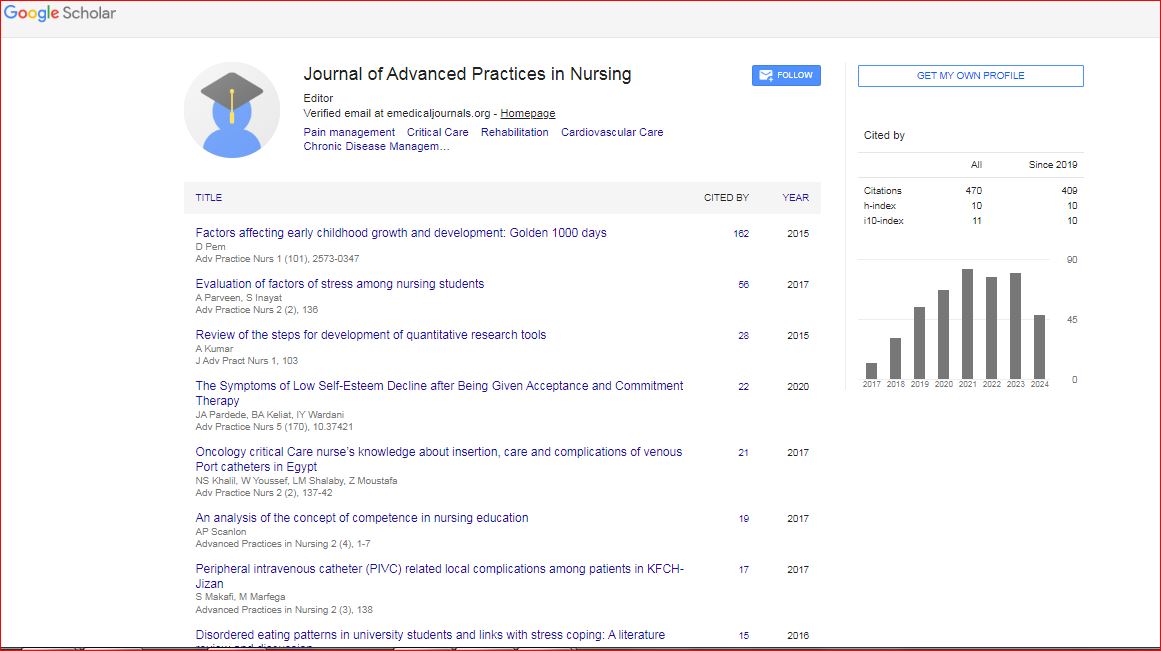
Journal of Advanced Practices in Nursing received 410 citations as per Google Scholar report