Opinion - (2025) Volume 10, Issue 3
Received: 01-May-2025, Manuscript No. apn-26-179118;
Editor assigned: 04-May-2025, Pre QC No. P-179118;
Reviewed: 14-May-2025, QC No. Q-179118;
Revised: 21-May-2025, Manuscript No. R-179118;
Published:
28-May-2025
, DOI: 10.37421/2573-0347.2025.10.434
Citation: Alvarez, Sofia. âNurse-Led Telehealth: Access, Quality, and Future Readiness.â J Adv Practice Nurs 10 (2025):434.
Copyright: © 2025 Alvarez S. This is an open-access article distributed under the terms of the Creative Commons Attribution License, which permits unrestricted use,
distribution and reproduction in any medium, provided the original author and source are credited.
Nurse-led telehealth interventions are significantly enhancing both access to and the quality of healthcare by leveraging technology to extend the reach of nursing services, particularly to underserved or remote populations. These initiatives provide remote monitoring, virtual consultations, and educational support, enabling nurses to proactively manage chronic conditions, improve patient adherence to treatment plans, and reduce hospital readmissions, thereby empowering patients and optimizing resource utilization within healthcare systems [1].
A study exploring the perceived barriers and facilitators to implementing nurse-led telehealth services in primary care identified technology proficiency, adequate training for nurses, patient acceptance, and integration into existing clinical workflows as crucial considerations. Addressing these factors through supportive policies and ongoing professional development is essential for successful widespread adoption and maximizing patient care benefits [2].
The impact of nurse-led remote patient monitoring on patients with heart failure demonstrated a significant reduction in hospitalizations and emergency department visits. This highlights the proactive and preventive capabilities of nurse-led telehealth in managing complex chronic conditions, leading to improved patient outcomes and reduced healthcare costs [3].
A systematic review synthesizing evidence on the effectiveness of nurse-led telehealth for managing diabetes revealed that these interventions can improve glycemic control, enhance patient self-management skills, and increase satisfaction with care. The findings underscore the potential of telehealth to bridge geographical barriers and provide consistent, high-quality support for individuals living with chronic diseases [4].
The role of advanced practice nurses in leading telehealth initiatives for mental health services was explored, highlighting how this approach can increase access to timely mental healthcare, reduce stigma, and improve patient engagement. The flexibility and anonymity offered by virtual care are particularly beneficial for individuals facing barriers to traditional in-person psychiatric support [5].
Integration of telehealth into nursing education is crucial for preparing future nurses for digitally-enabled care delivery. This involves curriculum development that includes competencies in using telehealth platforms, understanding ethical considerations, and mastering effective virtual communication strategies to equip nurses for leading and utilizing telehealth interventions in their practice [6].
Patient experiences with nurse-led telehealth services have shown high levels of satisfaction, citing convenience, accessibility, and perceived quality of care. Patients appreciate the personalized attention and the ability to manage their health from home, especially those with mobility issues or living in rural areas, underscoring the patient-centered benefits of these interventions [7].
Evaluation of the cost-effectiveness of nurse-led telehealth for post-operative care suggests that it can reduce healthcare costs by decreasing the need for in-person follow-up visits and mitigating complications through early remote detection. This economic benefit, combined with improved patient recovery, positions it as a valuable model for surgical care [8].
Ethical considerations surrounding nurse-led telehealth interventions are paramount, including patient privacy, data security, informed consent in a virtual environment, and ensuring equitable access for all patients, particularly those with limited digital literacy or access to technology. A thoughtful approach to these ethical challenges is crucial for responsible implementation [9].
Research on nurse well-being and job satisfaction in telehealth practice indicates that while telehealth offers flexibility, it also presents challenges such as increased workload, the need for new technical skills, and potential for burnout if not managed effectively. Strategies for supporting nurses in telehealth roles are therefore essential [10].
Nurse-led telehealth interventions are significantly enhancing both access to and the quality of healthcare by leveraging technology to extend the reach of nursing services, particularly to underserved or remote populations. These initiatives provide remote monitoring, virtual consultations, and educational support, enabling nurses to proactively manage chronic conditions, improve patient adherence to treatment plans, and reduce hospital readmissions, thereby empowering patients and optimizing resource utilization within healthcare systems [1].
A study exploring the perceived barriers and facilitators to implementing nurse-led telehealth services in primary care identified technology proficiency, adequate training for nurses, patient acceptance, and integration into existing clinical workflows as crucial considerations. Addressing these factors through supportive policies and ongoing professional development is essential for successful widespread adoption and maximizing patient care benefits [2].
The impact of nurse-led remote patient monitoring on patients with heart failure demonstrated a significant reduction in hospitalizations and emergency department visits. This highlights the proactive and preventive capabilities of nurse-led telehealth in managing complex chronic conditions, leading to improved patient outcomes and reduced healthcare costs [3].
A systematic review synthesizing evidence on the effectiveness of nurse-led telehealth for managing diabetes revealed that these interventions can improve glycemic control, enhance patient self-management skills, and increase satisfaction with care. The findings underscore the potential of telehealth to bridge geographical barriers and provide consistent, high-quality support for individuals living with chronic diseases [4].
The role of advanced practice nurses in leading telehealth initiatives for mental health services was explored, highlighting how this approach can increase access to timely mental healthcare, reduce stigma, and improve patient engagement. The flexibility and anonymity offered by virtual care are particularly beneficial for individuals facing barriers to traditional in-person psychiatric support [5].
Integration of telehealth into nursing education is crucial for preparing future nurses for digitally-enabled care delivery. This involves curriculum development that includes competencies in using telehealth platforms, understanding ethical considerations, and mastering effective virtual communication strategies to equip nurses for leading and utilizing telehealth interventions in their practice [6].
Patient experiences with nurse-led telehealth services have shown high levels of satisfaction, citing convenience, accessibility, and perceived quality of care. Patients appreciate the personalized attention and the ability to manage their health from home, especially those with mobility issues or living in rural areas, underscoring the patient-centered benefits of these interventions [7].
Evaluation of the cost-effectiveness of nurse-led telehealth for post-operative care suggests that it can reduce healthcare costs by decreasing the need for in-person follow-up visits and mitigating complications through early remote detection. This economic benefit, combined with improved patient recovery, positions it as a valuable model for surgical care [8].
Ethical considerations surrounding nurse-led telehealth interventions are paramount, including patient privacy, data security, informed consent in a virtual environment, and ensuring equitable access for all patients, particularly those with limited digital literacy or access to technology. A thoughtful approach to these ethical challenges is crucial for responsible implementation [9].
Research on nurse well-being and job satisfaction in telehealth practice indicates that while telehealth offers flexibility, it also presents challenges such as increased workload, the need for new technical skills, and potential for burnout if not managed effectively. Strategies for supporting nurses in telehealth roles are therefore essential [10].
Nurse-led telehealth interventions significantly improve healthcare access and quality, especially for underserved populations. These services empower nurses to manage chronic conditions proactively, leading to better patient outcomes and reduced healthcare costs. Key benefits include improved chronic disease management, enhanced patient self-management skills, and increased patient satisfaction due to convenience and accessibility. Telehealth also plays a crucial role in mental health services by increasing access and reducing stigma. However, successful implementation requires addressing barriers such as technology proficiency, adequate training, patient acceptance, and integration into clinical workflows. Ethical considerations like privacy, data security, and equitable access are vital. Furthermore, preparing the future nursing workforce through integrated education is essential, and strategies to support nurse well-being in telehealth roles are necessary to mitigate potential burnout and ensure effective care delivery.
None
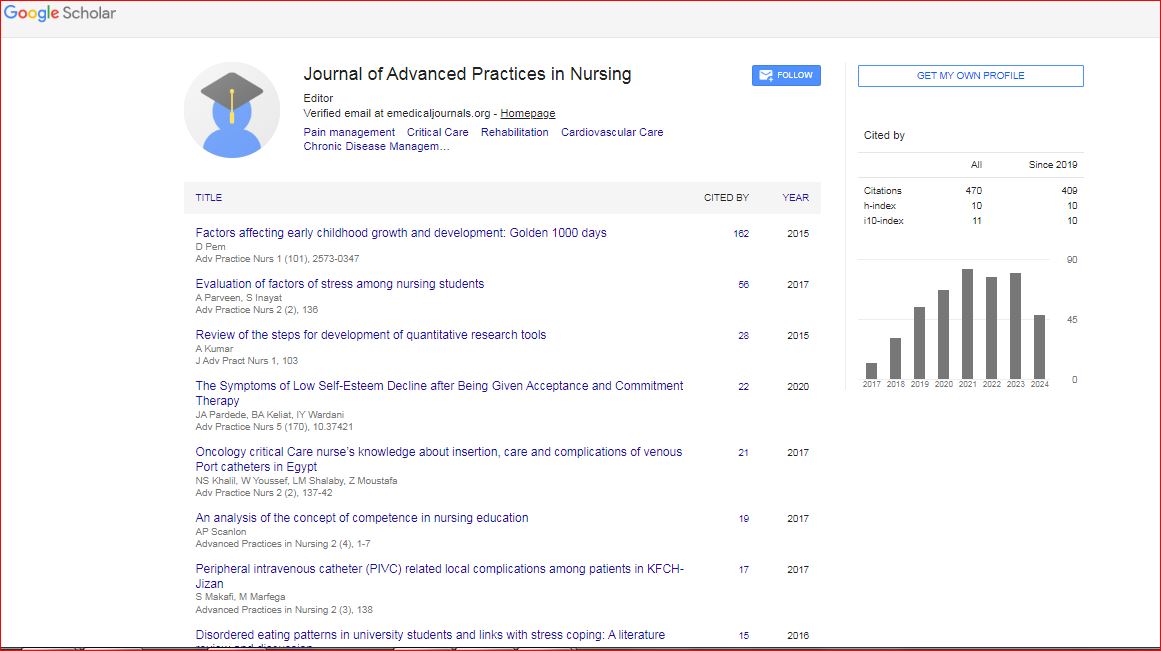
Journal of Advanced Practices in Nursing received 410 citations as per Google Scholar report