Short Communication - (2025) Volume 10, Issue 3
Received: 02-Jun-2025, Manuscript No. jdcm-26-182199;
Editor assigned: 04-Jun-2025, Pre QC No. P-182199;
Reviewed: 18-Jun-2025, QC No. Q-182199;
Revised: 23-Jun-2025, Manuscript No. R-182199;
Published:
30-Jun-2025
, DOI: 10.37421/2475-3211.2025.10.318
Citation: Schneider, Thomas L.. ”Novel Therapies Targeting Diabetic Complications Pathways.” J Diabetic Complications Med 10 (2025):318.
Copyright: © 2025 Schneider L. Thomas This is an open-access article distributed under the terms of the Creative Commons Attribution License, which permits unrestricted use, distribution and reproduction in any medium, provided the original author and source are credited.
The management of diabetic complications remains a significant challenge in clinical practice, necessitating the exploration of novel therapeutic strategies. Emerging research is identifying and validating new molecular targets that offer promising avenues for more effective interventions [1].
Understanding the complex pathophysiology of conditions such as diabetic nephropathy, retinopathy, and neuropathy is paramount to developing targeted therapies that can halt or even reverse disease progression [1].
The renin-angiotensin-aldosterone system (RAAS) has long been implicated in the development of diabetic kidney disease, and recent investigations are focusing on novel pharmacological agents that can modulate specific components of this system, extending beyond the traditional use of ACE inhibitors and ARBs [2].
Diabetic retinopathy, a leading cause of blindness, is increasingly understood to involve intricate inflammatory pathways and oxidative stress. Current research is actively investigating novel anti-inflammatory agents that can specifically target these mechanisms, offering new hope for preserving vision in diabetic patients [3].
Cardiovascular complications represent a major source of morbidity and mortality in individuals with diabetes. Beyond their glycemic control benefits, GLP-1 receptor agonists are emerging as significant players in protecting against these complications by positively influencing endothelial function and reducing inflammation [4].
Advanced glycation end products (AGEs) and their receptor (RAGE) signaling are recognized contributors to the pathogenesis of diabetic complications. Targeting these pathways presents a promising strategy to impede the cumulative damage that occurs in diabetes [5].
The gut microbiome has also emerged as a critical factor influencing metabolic health and the development of diabetic complications. Therapeutic interventions aimed at modulating the gut microbiome through prebiotics and probiotics are being explored as a novel approach to improve glycemic control and mitigate complications [6].
Mitochondrial dysfunction is a fundamental cellular defect that plays a significant role in the development of various diabetic complications. Pharmacological agents that can restore mitochondrial function or mitigate oxidative stress are under active investigation as potential therapeutic tools [7].
Sirtuins, a family of NAD+-dependent deacetylases, are implicated in regulating cellular metabolism and stress responses, and their modulation through activators is being explored as a therapeutic strategy for diabetic complications and other metabolic disorders [8].
Diabetic neuropathy, characterized by nerve damage, is a debilitating complication that significantly impacts quality of life. Novel pharmacological targets that specifically address neuroinflammation and oxidative stress are being investigated to provide more effective treatment options for this condition [9].
Furthermore, the accumulation of senescent cells, a hallmark of aging, has been linked to the pathogenesis of diabetic complications. Senolytic therapies, designed to clear these senescent cells, represent a new and promising strategy for treating various diabetes-related complications [10].
The field of diabetic complication management is rapidly evolving, with a strong emphasis on identifying and exploiting novel therapeutic targets. One significant area of focus is the development of new pharmacological agents that can intervene in the intricate molecular pathways driving complications such as nephropathy, retinopathy, and neuropathy [1].
These advanced therapies aim to move beyond symptomatic relief towards addressing the root causes of tissue damage in diabetes [1].
The renin-angiotensin-aldosterone system (RAAS) is a central player in the pathophysiology of diabetic kidney disease. While ACE inhibitors and ARBs have been cornerstones of treatment, current research is delving into novel pharmacological interventions that target specific components of the RAAS with greater precision, offering potential for improved outcomes in nephropathy [2].
Diabetic retinopathy, a major cause of vision loss, is being addressed through the investigation of novel anti-inflammatory agents. These agents are designed to specifically target the inflammatory cytokine production and oxidative stress pathways that contribute to retinal damage, presenting a new therapeutic frontier [3].
Cardiovascular disease remains a critical concern for individuals with diabetes. Emerging evidence highlights the pleiotropic effects of GLP-1 receptor agonists, demonstrating their capacity to protect against cardiovascular complications independently of their glucose-lowering effects. Their beneficial impact on endothelial function and inflammation positions them as a key therapeutic class [4].
The accumulation of advanced glycation end products (AGEs) and the activation of their receptor (RAGE) are significant contributors to the pathogenesis of diabetic complications. Strategies targeting AGEs and RAGE signaling are being explored as a means to halt or slow the progression of diabetes-related organ damage [5].
The gut microbiome's influence on metabolic health and diabetic complications is an area of intense research. Interventions such as prebiotics and probiotics are being evaluated for their potential to modulate the gut microbiome, offering a novel approach to therapeutic benefit in diabetes management and its associated complications [6].
Mitochondrial dysfunction is increasingly recognized as a key mediator in the development of diabetic complications. Research is focused on identifying pharmacological agents that can restore mitochondrial function and combat oxidative stress, thereby protecting tissues from damage [7].
Sirtuins, a class of proteins involved in metabolic regulation and cellular stress responses, are implicated in the pathogenesis of diabetic complications. The development of sirtuin activators is being pursued as a therapeutic strategy, aiming to harness the protective effects of these proteins in various metabolic disorders, including diabetes [8].
For diabetic neuropathy, novel pharmacological targets are being investigated that specifically address the underlying mechanisms of neuroinflammation and oxidative stress, aiming to provide more effective treatments for nerve damage [9].
Finally, senolytic therapies, which target and eliminate senescent cells, are emerging as a promising new strategy for managing diabetic complications, as these cells accumulate in diabetic tissues and contribute to disease progression [10].
This collection of research highlights novel therapeutic strategies for managing diabetic complications by targeting key molecular pathways. Advances include new pharmacological agents for diabetic nephropathy by modulating the renin-angiotensin-aldosterone system, and anti-inflammatory therapies for diabetic retinopathy. GLP-1 receptor agonists show promise in cardiovascular protection beyond glucose control. Targeting advanced glycation end products and their receptors offers a way to halt disease progression. The gut microbiome is being explored as a therapeutic target through prebiotics and probiotics. Mitochondrial dysfunction and sirtuin pathways are also under investigation. For diabetic neuropathy, new targets focus on neuroinflammation and oxidative stress, while senolytic therapies aim to clear senescent cells contributing to complications. These diverse approaches underscore a shift towards precision medicine in diabetes care.
None
None
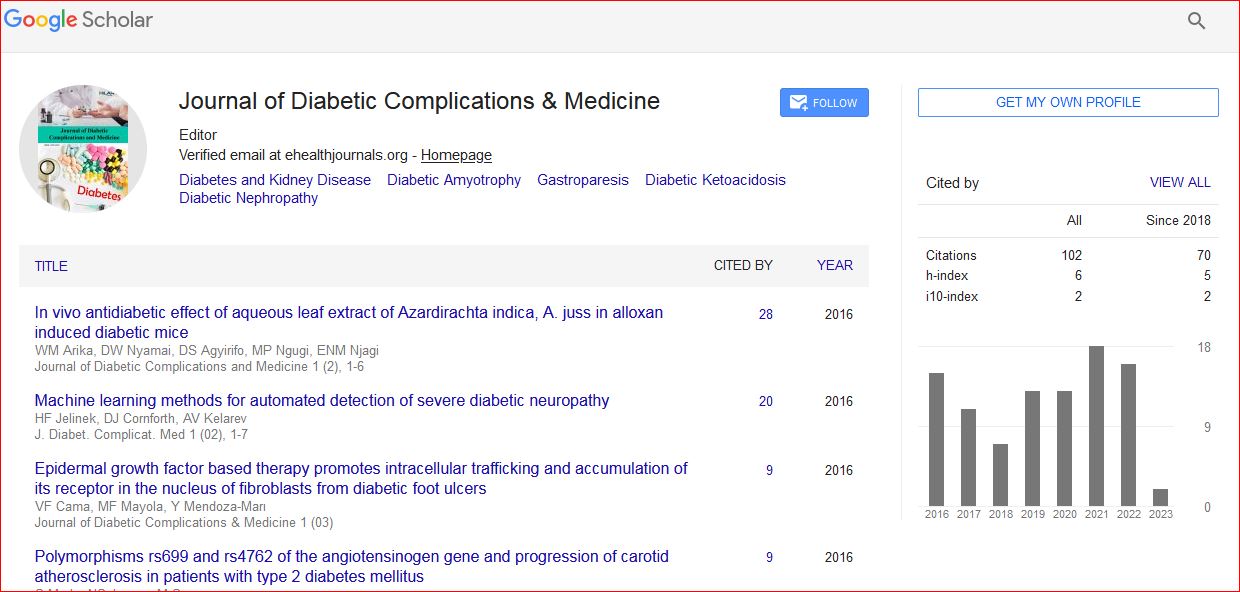
Journal of Diabetic Complications & Medicine received 102 citations as per Google Scholar report