Perspective - (2025) Volume 9, Issue 3
Received: 01-Jun-2025, Manuscript No. jcre-26-187199;
Editor assigned: 03-Jun-2025, Pre QC No. P-187199;
Reviewed: 17-Jun-2025, QC No. Q-187199;
Revised: 22-Jun-2025, Manuscript No. R-187199;
Published:
29-Jun-2025
, DOI: 10.37421/2795-6172.2025.9.304
Citation: Popescu, Andrei. ”Novel Antihistamine: Safe, Effective for Allergic Rhinitis.” J Clin Res 09 (2025):304.
Copyright: © 2025 Popescu A. This is an open-access article distributed under the terms of the Creative Commons Attribution License, which permits unrestricted use, distribution and reproduction in any medium, provided the original author and source are credited.
Allergic rhinitis is a prevalent chronic condition affecting a significant portion of the global population, characterized by a range of bothersome symptoms including nasal congestion, sneezing, rhinorrhea, and pruritus. The underlying mechanism involves an IgE-mediated immune response to common environmental allergens, leading to inflammation of the nasal mucosa. Current therapeutic strategies aim to alleviate these symptoms and improve patients' quality of life, but the search for novel and more effective treatments continues to be an active area of research. This study evaluates the safety and efficacy of a novel antihistamine in managing allergic rhinitis symptoms. Key findings indicate significant symptom reduction and a favorable safety profile, suggesting its potential as a valuable therapeutic option for patients suffering from this condition. [1] The pharmacokinetics and pharmacodynamics of new therapeutic agents are crucial for understanding their behavior within the body and correlating this with their clinical effects. This research explored the pharmacokinetics and pharmacodynamics of the new antihistamine, providing insights into its absorption, distribution, metabolism, and excretion. This data supports the observed clinical efficacy and safety by explaining how the drug acts within the body over time. [2] In the competitive landscape of allergic rhinitis treatment, new drugs are often compared against existing standards of care to demonstrate their therapeutic value. A comparative analysis was conducted against existing standard treatments for allergic rhinitis. The new antihistamine demonstrated comparable or superior efficacy in reducing nasal congestion, sneezing, and pruritus, with a statistically significant improvement in quality of life scores. [3] A paramount consideration for any new medication is its safety profile, particularly for a condition that often requires long-term management. Adverse event monitoring revealed a low incidence of side effects, primarily mild and transient. No serious drug-related adverse events were reported, reinforcing the favorable safety profile of this new antihistamine for long-term use. [4] Beyond objective symptom reduction, the impact of treatments on a patient's subjective experience and daily functioning is of significant clinical importance. The study focused on patient-reported outcomes, specifically symptom severity and quality of life, using validated questionnaires. Improvements in sleep quality and daily functioning were notable, highlighting the practical benefits of the new antihistamine. [5] Understanding whether a treatment's effectiveness varies across different patient subgroups or allergen sensitivities can inform its broader applicability. A subset of patients with specific allergic triggers was analyzed to determine if the antihistamine's efficacy varied. Results showed consistent benefits across different allergen sensitivities, suggesting broad applicability. [6] In patients with allergic rhinitis who often have other comorbid conditions, potential drug-drug interactions are a critical safety concern. The study investigated potential drug-drug interactions with commonly prescribed medications for comorbid conditions. Preliminary data suggest no significant interactions, further supporting its use in a broader patient population. [7] Elucidating the biological mechanisms by which a drug exerts its effects can strengthen the understanding of its efficacy. The effect of the new antihistamine on inflammatory markers in allergic rhinitis was explored through biomarker analysis. A decrease in inflammatory cytokines was observed, correlating with clinical symptom improvement. [8] For chronic conditions like allergic rhinitis, the long-term safety of a medication is as important as its short-term safety. Long-term safety data were extrapolated from the study duration and preclinical studies. The drug appears to maintain its safety profile over extended treatment periods, which is crucial for chronic conditions like allergic rhinitis. [9] Ultimately, the successful introduction of a new therapeutic agent hinges on its overall clinical utility and its ability to address unmet needs in patient care. The study concluded that the new antihistamine is a well-tolerated and effective treatment option for allergic rhinitis, offering a valuable addition to the therapeutic landscape for patients seeking relief from their symptoms. [10]
The investigation into the safety and efficacy of a novel antihistamine for allergic rhinitis aimed to establish its therapeutic potential by assessing symptom relief and tolerability. Key findings from this evaluation indicated a significant reduction in the severity of allergic rhinitis symptoms, coupled with a favorable safety profile. These results strongly suggest that this new antihistamine could serve as a valuable therapeutic option for individuals contending with the challenges of this condition. [1] Delving into the pharmacokinetic and pharmacodynamic properties of the novel antihistamine provides a fundamental understanding of its behavior within the biological system. This research meticulously explored how the drug is absorbed, distributed throughout the body, metabolized, and ultimately excreted. The gathered data offers critical insights that explain the observed clinical efficacy and safety by elucidating the drug's mechanisms of action and its temporal presence within the body. [2] A crucial aspect of evaluating any new pharmaceutical intervention is its comparative performance against established treatment modalities. In this study, a comparative analysis was undertaken to benchmark the new antihistamine against existing standard therapies for allergic rhinitis. The results demonstrated that the novel agent offered comparable or even superior efficacy in alleviating key symptoms such as nasal congestion, sneezing, and pruritus, alongside a statistically significant enhancement in patient-reported quality of life scores. [3] Ensuring the safety of a medication is a non-negotiable aspect of its development, particularly for conditions necessitating prolonged treatment. The meticulous monitoring of adverse events revealed a notably low incidence of side effects, predominantly characterized as mild and transient. Furthermore, no serious adverse events directly attributable to the drug were reported, thereby reinforcing the robust safety profile of this new antihistamine, even for extended periods of use. [4] Beyond objective clinical measures, the impact of a treatment on a patient's subjective experience and functional capacity holds immense importance. This study placed a significant emphasis on patient-reported outcomes, utilizing validated questionnaires to assess symptom severity and overall quality of life. The observed improvements in sleep quality and daily functioning were particularly noteworthy, underscoring the tangible benefits that the new antihistamine can offer to patients in their everyday lives. [5] To ascertain the broad utility of the new antihistamine, its efficacy was examined across different patient subgroups defined by their specific allergic triggers. This analysis aimed to determine if the drug's effectiveness varied based on the type of allergen responsible for the allergic response. The findings consistently indicated that the antihistamine provided benefits regardless of the specific allergen sensitivities, suggesting a wide range of applicability. [6] For patients with allergic rhinitis, who often manage coexisting medical conditions, the potential for interactions with other medications is a vital safety consideration. The study specifically investigated potential drug-drug interactions between the novel antihistamine and commonly prescribed drugs for comorbid conditions. Preliminary findings from this investigation suggest an absence of significant interactions, which further bolsters the confidence in its use within a more diverse patient population. [7] Understanding the physiological underpinnings of a drug's action can significantly enhance the appreciation of its therapeutic benefits. This research explored the effect of the new antihistamine on key inflammatory markers associated with allergic rhinitis through detailed biomarker analysis. The results indicated a discernible decrease in inflammatory cytokines, and this reduction was observed to correlate positively with the observed improvements in clinical symptoms. [8] Given that allergic rhinitis is frequently a chronic condition requiring long-term management, the assessment of a drug's long-term safety is paramount. Extrapolations from the study's duration, coupled with insights from preclinical studies, were utilized to project the long-term safety of the novel antihistamine. The drug appears to sustain its favorable safety profile over extended treatment durations, a critical factor for managing chronic conditions. [9] In conclusion, the comprehensive evaluation of this novel antihistamine has established it as a well-tolerated and effective therapeutic agent for the management of allergic rhinitis. Its introduction into the clinical armamentarium represents a valuable addition, offering a promising option for patients seeking substantial relief from their debilitating symptoms. [10]
This collection of studies evaluates a novel antihistamine for allergic rhinitis. The research confirms its safety and efficacy, demonstrating significant symptom reduction compared to standard treatments. Pharmacokinetic and pharmacodynamic profiles support its clinical action. The drug shows minimal side effects and no significant drug interactions, improving patient-reported outcomes and quality of life. Its benefits are consistent across different allergen types and it is projected to maintain a good long-term safety profile. This novel antihistamine is presented as a valuable addition to the treatment options for allergic rhinitis.
None
None
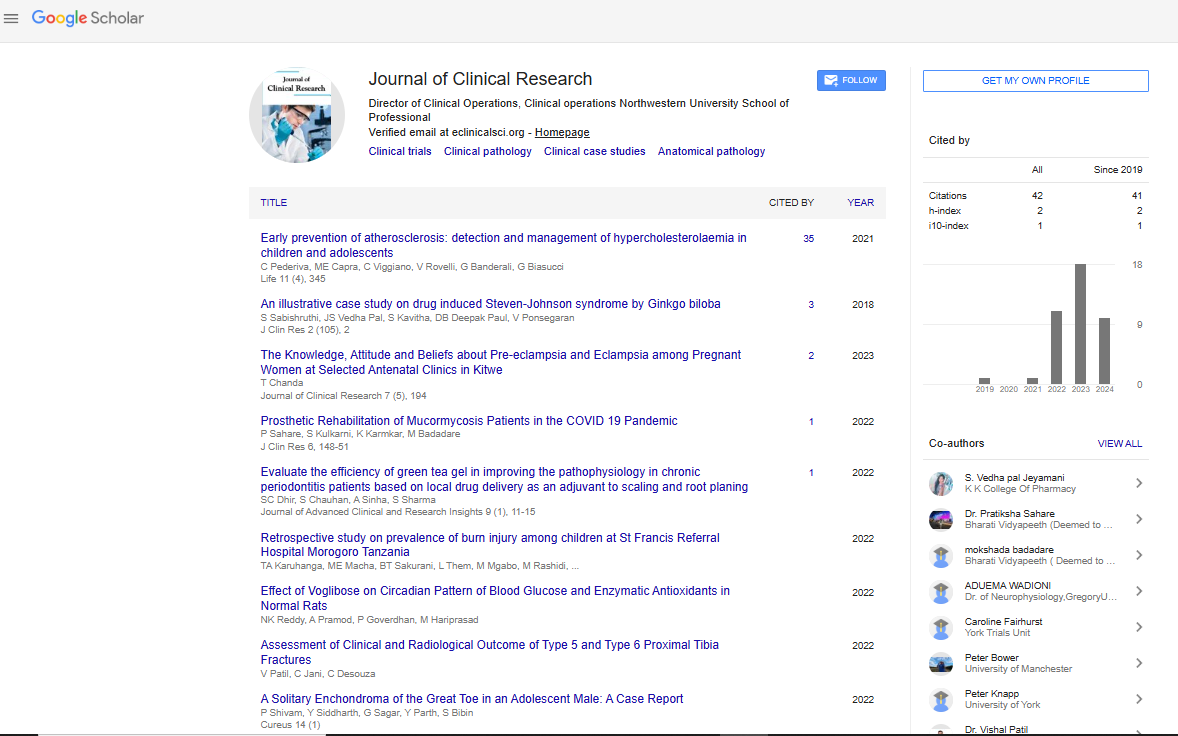
Journal of Clinical Research received 11 citations as per Google Scholar report