Opinion - (2025) Volume 17, Issue 5
Received: 01-Sep-2025, Manuscript No. jcst-25-176300;
Editor assigned: 03-Sep-2025, Pre QC No. P-176300;
Reviewed: 17-Sep-2025, QC No. Q-176300;
Revised: 22-Sep-2025, Manuscript No. R-176300;
Published:
29-Sep-2025
, DOI: 10.37421/1948-5956.2025.17.725
Citation: Marino, Isabella. ”NK Cell Therapy: Progress, Potential,
Hurdles.” J Cancer Sci Ther 17 (2025):725.
Copyright: © 2025 Marino I. This is an open-access article distributed under the terms of the Creative Commons Attribution License, which permits unrestricted use, distribution
and reproduction in any medium, provided the original author and source are credited.
This article offers a solid overview of CAR-NK cell therapy for blood cancers. It really gets into how these engineered NK cells target and destroy cancer cells, highlighting their potential as a safer alternative to CAR-T cell therapies. What's clear is the ongoing push to optimize their persistence and effectiveness in patients[1].
When we talk about NK cell therapy in solid tumors, it's a different ball game compared to blood cancers. This review lays out the current strategies and hurdles, like the suppressive tumor microenvironment. It's a critical discussion on making these therapies effective against tough, solid cancers, exploring various ways to enhance NK cell function[2].
This article is a great pulse check on where allogeneic NK cell therapy stands in clinical trials. It unpacks the progress in using NK cells from healthy donors, addressing safety and efficacy across different cancers. The main takeaway is the continued optimization of these approaches to minimize side effects while boosting anti-tumor responses[3].
One of the big challenges with NK cell therapy is exhaustion â?? NK cells can lose their punch over time. This paper explores strategies to combat that, specifically looking at how to maintain NK cell function and persistence in the fight against cancer. Itâ??s all about making sure these cells stay active and effective for longer[4].
Getting enough NK cells for therapy is a major practical hurdle. This review dives into the latest methods for expanding NK cells outside the body, making sure we have sufficient numbers for clinical use. It's about scaling up production effectively and safely, which is crucial for broad application of these therapies[5].
Induced pluripotent stem cell (iPSC)-derived NK cells are a fascinating area, offering an 'off-the-shelf' solution. This paper tracks the journey of iPSC-NK cells from lab to potential clinical use, highlighting their promise for consistent, scalable, and readily available cancer immunotherapy. It's really about tackling the supply chain issues[6].
This article explores various advanced strategies to boost NK cell therapy's effectiveness, beyond just engineering the NK cells themselves. It touches on approaches like using bispecific antibodies to bridge NK cells and cancer cells, or optimizing the tumor microenvironment. Itâ??s about leveraging multiple angles to make the therapy more potent[7].
This comprehensive review bridges the gap from fundamental NK cell biology to their application in clinical settings. It covers the evolution of NK cell therapies, showcasing various preclinical models and highlighting key clinical trial outcomes. The article provides a clear picture of the journey these therapies undertake to reach patients[8].
Adoptive NK cell immunotherapy has been a cornerstone for some time, and this article details the ongoing refinements. It looks at how different sources of NK cells and various manipulation techniques are improving efficacy. It shows that even with established methods, there's significant progress in making these therapies more effective and widely applicable[9].
While NK cell therapy holds great promise, understanding its challenges, especially in solid tumors, is essential. This paper doesn't shy away from discussing the hurdles like limited infiltration and the hostile tumor environment, but also highlights innovative ways to overcome them, ensuring the therapy can eventually reach its full potential[10].
Natural Killer (NK) cell-based immunotherapy stands as a pivotal and rapidly advancing area in contemporary cancer treatment. For patients battling hematological malignancies, CAR-NK cell therapy offers a compelling strategy. This approach involves engineered NK cells specifically designed to target and destroy cancer cells, presenting a significant potential as a safer alternative to existing CAR-T cell therapies. What's clear from current research is an ongoing, focused effort to optimize these cells' persistence and overall effectiveness once administered to patients [1]. Conversely, when we shift focus to solid tumors, the landscape for NK cell therapy changes considerably. Itâ??s a different ball game compared to blood cancers. Reviews in this area meticulously lay out the current strategies and the inherent hurdles encountered, chief among them being the suppressive tumor microenvironment. This constitutes a critical discussion aimed at refining methods to make these therapies genuinely effective against the tough, resilient nature of solid cancers, exploring diverse ways to significantly enhance NK cell function [2]. In this context, it is paramount to acknowledge and understand the inherent challenges associated with NK cell therapy in solid tumors. This paper specifically addresses hurdles like limited infiltration of NK cells into the tumor site and the overall hostile tumor environment. Simultaneously, it illuminates innovative pathways and opportunities to overcome these obstacles, ensuring that the therapy can eventually reach its full therapeutic potential for a broader range of cancers [10].
A substantial challenge with NK cell therapy is the phenomenon of exhaustion, where the therapeutic NK cells can regrettably lose their potent anti-cancer punch over time. This particular paper dives deep into various strategies explicitly designed to combat this exhaustion. It looks at how to precisely maintain NK cell function and sustain their persistence throughout the prolonged fight against cancer. The core objective here is simple: making sure these critical cells remain vibrantly active and optimally effective for significantly longer durations within the patient's system [4]. Furthermore, a crucial practical hurdle for the widespread application of NK cell therapy is securing a sufficient supply of these cells. Addressing this, recent reviews thoroughly examine the latest, most advanced methods for expanding NK cells outside the body, also known as ex vivo expansion. The goal is to ensure that we can generate ample numbers of high-quality NK cells for diverse clinical applications. This scaling up of production, executed both effectively and safely, is absolutely crucial for the broad and successful application of these highly promising therapies [5].
On the clinical trial front, allogeneic NK cell therapy continues its impressive march forward. This article provides a valuable pulse check on its current standing, meticulously unpacking the ongoing progress in utilizing NK cells sourced from healthy donors. It carefully addresses critical aspects like safety profiles and efficacy across a spectrum of different cancers. The overarching takeaway from these efforts is a continuous drive to optimize these therapeutic approaches, aiming to minimize any potential side effects while simultaneously boosting the desired anti-tumor responses [3]. Another fascinating and rapidly evolving area is that of induced pluripotent stem cell (iPSC)-derived NK cells. These cells offer a distinct advantage: an 'off-the-shelf' solution, implying their ready availability and consistent quality. This specific paper carefully tracks the entire journey of iPSC-NK cells, from their initial conceptualization in the laboratory all the way to their potential for clinical use. It emphatically highlights their immense promise for delivering consistent, scalable, and readily available cancer immunotherapy, effectively tackling the inherent supply chain issues that often plague cell-based therapies [6].
Beyond merely engineering the NK cells themselves, a multitude of advanced strategies are being actively explored to significantly boost the overall effectiveness of NK cell therapy. This research delves into various innovative approaches. For instance, it touches upon the strategic use of bispecific antibodies, which are designed to act as bridges, physically linking NK cells directly to cancer cells, thereby enhancing targeted destruction. Another avenue involves optimizing the tumor microenvironment itself, making it more hospitable for NK cell activity and less suppressive. The core principle driving these efforts is about strategically leveraging multiple angles and complementary mechanisms to make the entire therapeutic regimen far more potent and impactful against diverse cancer types [7].
Adoptive NK cell immunotherapy has long been recognized as a cornerstone of cellular therapy, and this particular article meticulously details the ongoing refinements within this established field. It keenly examines how different sources of NK cells, alongside various manipulation techniques, are continuously contributing to improved therapeutic efficacy. What this really means is that even with methods that have been around for a while, thereâ??s still significant, impactful progress being made to ensure these therapies become even more effective and widely applicable to a larger patient population [9]. Ultimately, the broader narrative of NK cell immunotherapy, from its foundational understanding in basic biology all the way to its direct application in clinical settings, is thoroughly covered by comprehensive reviews. These pivotal works showcase the continuous evolution of NK cell therapies, illustrating various preclinical models that paved the way, and highlighting key clinical trial outcomes. This paints a remarkably clear and coherent picture of the extensive journey these transformative therapies undertake to successfully reach and benefit patients [8].
Natural Killer (NK) cell therapy is a rapidly advancing field in cancer immunotherapy. For blood cancers, CAR-NK cells are demonstrating significant potential, targeting and destroying cancer cells as a potentially safer alternative to CAR-T therapies. Key research focuses on optimizing their persistence and overall effectiveness in patients. However, treating solid tumors presents a unique set of challenges, including navigating the suppressive tumor microenvironment. Scientists are actively exploring strategies to enhance NK cell function against these difficult cancers. A critical aspect of successful NK cell therapy involves combating NK cell exhaustion, ensuring these therapeutic cells remain active and effective for extended periods. Another practical challenge is the large-scale production of NK cells; advanced methods for ex vivo expansion are crucial for providing sufficient numbers for clinical applications. Clinically, allogeneic NK cell therapy, using cells from healthy donors, continues to evolve, with trials focused on enhancing safety and efficacy across various cancer types. Induced pluripotent stem cell (iPSC)-derived NK cells offer a promising "off-the-shelf" solution, providing a consistent, scalable, and readily available source of therapeutic cells. Beyond direct cell engineering, innovative strategies are also emerging, such as using bispecific antibodies and modulating the tumor microenvironment, all aimed at boosting NK cell therapy's overall potency. This comprehensive journey, from fundamental NK cell biology through preclinical models to successful clinical trial outcomes, underscores the ongoing refinements and advancements in NK cell-based adoptive immunotherapy, continuously improving its reach and impact for patients.
Indexed at, Google Scholar, Crossref
Indexed at, Google Scholar, Crossref
Indexed at, Google Scholar, Crossref
Indexed at, Google Scholar, Crossref
Indexed at, Google Scholar, Crossref
Indexed at, Google Scholar, Crossref
Indexed at, Google Scholar, Crossref
Indexed at, Google Scholar, Crossref
Indexed at, Google Scholar, Crossref
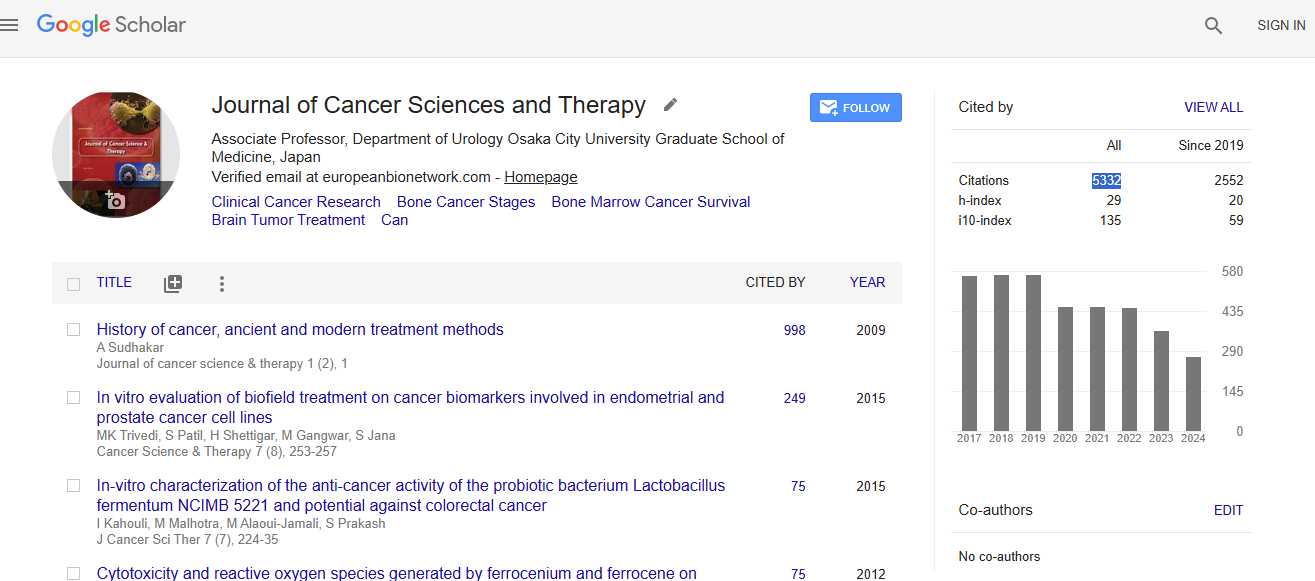
Cancer Science & Therapy received 5332 citations as per Google Scholar report