Opinion - (2025) Volume 11, Issue 4
Received: 01-Aug-2025, Manuscript No. icoa-25-173597;
Editor assigned: 04-Aug-2025, Pre QC No. P-173597;
Reviewed: 18-Aug-2025, QC No. Q-173597;
Revised: 22-Aug-2025, Manuscript No. R-173597;
Published:
29-Aug-2025
, DOI: 10.37421/2469-9756.2025.11.312
Citation: Rossi, Daniela.” Next- gen Antibody Therapies: Engineering Precision Medicine.” Immunochem Immunopathol 11 (2025):312.
Copyright: © 2025 Rossi D. This is an open-access article distributed under the terms of the Creative Commons Attribution License, which permits unrestricted use, distribution
and reproduction in any medium, provided the original author and source are credited.
Antibody engineering has truly come into its own, pushing the boundaries of what these amazing molecules can do therapeutically. We're seeing major advancements not just in making existing antibodies better, but also in developing entirely new formats. This includes everything from improving their binding strength and specificity to optimizing their effector functions, which is how they trigger the immune system to fight disease. These innovations are crucial for creating more effective and safer treatments, especially in areas like cancer and autoimmune disorders. The field is constantly evolving, bringing us closer to highly tailored, next-generation antibody therapies [1].
Bispecific antibodies are a fascinating area in antibody engineering because they can bind to two different targets simultaneously. What this really means is they can bring two types of cells or molecules together, which is incredibly useful for things like redirecting immune cells to tumor cells. The global market for these innovative molecules is expanding rapidly, reflecting their potential across various diseases. Understanding their design principles and clinical applications is key, as they represent a significant leap forward in targeted therapy, offering a different approach compared to traditional monoclonal antibodies [2].
Antibody-drug conjugates, or ADCs, are a powerful example of precision medicine in cancer therapy. The idea here is simple: link a potent cytotoxic drug to an antibody that specifically targets cancer cells. This allows the drug to be delivered directly to the tumor while minimizing harm to healthy tissues, which is a major advantage over conventional chemotherapy. We're seeing ADCs emerge as a new generation of anti-cancer therapeutics, with ongoing engineering efforts focused on improving the linker technology, drug payload, and antibody specificity to enhance their effectiveness and safety profiles [3].
Computational tools are radically changing how we approach antibody design and engineering. Instead of relying purely on experimental screening, we can now use sophisticated algorithms and simulations to predict antibody structures, binding affinities, and even design new antibodies from scratch. This speeds up the discovery process significantly and allows for the optimization of antibody properties in a way that wasn't possible before. From virtual screening to predicting complex protein interactions, computational methods are becoming indispensable in developing more effective and targeted antibody therapeutics [4].
Therapeutic antibody discovery is a dynamic field, with new approaches constantly emerging. The challenges often lie in finding the right target, achieving high specificity and affinity, and then making sure the antibody performs well in a biological system without unwanted side effects. Recent progress highlights innovations in everything from high-throughput screening platforms to sophisticated engineering techniques that modify antibody structures for better stability or effector functions. The goal is always to translate these discoveries into safe and effective treatments for a wide range of human diseases [5].
Antibody engineering plays a critical role in advancing cancer immunotherapy, constantly evolving to overcome resistance mechanisms and improve treatment outcomes. We're seeing exciting new developments, like engineering antibodies to enhance their ability to activate immune cells, or modifying them to target multiple cancer pathways at once. While there's incredible potential, challenges remain in making these therapies universally effective and managing potential side effects. The focus is on designing antibodies that not only kill cancer cells directly but also stimulate a robust, long-lasting anti-tumor immune response [6].
Single-domain antibodies, often called nanobodies, are a really intriguing class of antibody fragments. They are much smaller than conventional antibodies but still retain high binding affinity and specificity, which opens up a lot of possibilities. Their small size makes them easier to engineer, allows them to penetrate tissues more effectively, and they can be produced more simply. We're seeing them developed for a wide array of applications, from diagnostics to therapeutics, especially where conventional antibodies might be too large or complex to be practical. They are truly a testament to the power of minimalist antibody design [7].
Engineering the Fc region of an antibody is a major focus for boosting its therapeutic power. This part of the antibody doesn't directly bind to targets but interacts with immune cells and molecules, influencing how the antibody clears pathogens or tumor cells. By making specific modifications to the Fc region, we can enhance or reduce its effector functions, like antibody-dependent cellular cytotoxicity or complement-dependent cytotoxicity. This fine-tuning is vital for developing antibodies that are more potent, have a longer half-life, or possess altered immune activation properties, ultimately leading to better clinical outcomes [8].
Recombinant antibodies, which are produced using genetic engineering techniques, have transformed modern medicine. What's important here is the ability to produce large quantities of highly specific antibodies with consistent quality. Recent advances have focused on improving expression systems, refining design principles for better stability and function, and exploring novel formats beyond traditional IgG antibodies. These breakthroughs are making recombinant antibodies more versatile and accessible, expanding their utility in diagnostics, research, and as powerful therapeutic agents for a growing list of diseases [9].
Antibody glycoengineering focuses on modifying the sugar structures attached to antibodies, which can significantly impact their therapeutic function. These glycosylation patterns aren't just decorative; they play a crucial role in how antibodies interact with the immune system and how long they last in the body. By precisely engineering these glycans, we can fine-tune an antibody's effector functions, enhance its stability, or even reduce immunogenicity. This level of control allows for the creation of 'smarter' antibodies that can be tailored for specific therapeutic goals, from stronger cancer cell killing to reduced inflammation [10].
Antibody engineering has truly propelled the therapeutic potential of these vital molecules. The field constantly evolves, pushing boundaries to refine existing antibodies and develop entirely novel formats [1]. This involves enhancing critical properties like binding strength, specificity, and optimizing effector functionsâ??the mechanisms by which antibodies trigger the immune system to fight disease. The ultimate goal is to create more effective and safer treatments for a range of human diseases, particularly challenging conditions like cancer and autoimmune disorders [1, 5]. Challenges in therapeutic antibody discovery often revolve around identifying the right targets, achieving high specificity and affinity, and ensuring optimal performance within a biological system without unwanted side effects [5].
Significant innovations include the development of specialized antibody formats. Bispecific antibodies, for example, can simultaneously engage two distinct targets. This unique ability means they can bring together two different cell types or molecules, proving incredibly useful for tasks like redirecting immune cells to tumor cells [2]. Another powerful example in precision medicine for cancer therapy is Antibody-Drug Conjugates (ADCs). These innovative molecules link a potent cytotoxic drug directly to an antibody that specifically targets cancer cells. This strategy delivers the drug precisely to the tumor, minimizing harm to healthy tissues, a substantial advantage over conventional chemotherapy [3].
We also see single-domain antibodies, or nanobodies, emerging as an intriguing class. These antibody fragments are significantly smaller than conventional antibodies yet maintain high binding affinity and specificity, offering advantages in engineering ease, tissue penetration, and simpler production for diverse diagnostic and therapeutic applications [7]. Furthermore, recombinant antibodies, produced using advanced genetic engineering techniques, have revolutionized modern medicine by enabling the consistent, large-scale production of highly specific antibodies. Ongoing research focuses on improving expression systems, refining design for better stability and function, and exploring novel formats beyond traditional IgG, expanding their utility across diagnostics, research, and therapeutic agents for a growing array of diseases [9].
The engineering efforts extend to various parts of the antibody structure to enhance its therapeutic efficacy. A major focus lies in engineering the Fc region, the part of the antibody that interacts with immune cells and molecules, influencing how pathogens or tumor cells are cleared. Specific modifications to the Fc region can either amplify or reduce its effector functions, such as antibody-dependent cellular cytotoxicity or complement-dependent cytotoxicity. This fine-tuning is essential for developing antibodies with increased potency, extended half-life, or altered immune activation profiles, leading to better clinical outcomes [8]. Moreover, antibody glycoengineering specifically modifies the sugar structures attached to antibodies. These glycosylation patterns are not merely structural; they crucially impact how antibodies interact with the immune system and their persistence in the body. By precisely engineering these glycans, scientists can fine-tune an antibody's effector functions, enhance stability, or even reduce its immunogenicity, leading to "smarter" antibodies tailored for specific therapeutic objectives [10].
Technological advancements, especially in computational tools, are radically transforming antibody design. Instead of relying solely on laborious experimental screening, sophisticated algorithms and simulations now predict antibody structures, binding affinities, and even facilitate the de novo design of new antibodies. This accelerates the discovery process considerably and enables the optimization of antibody properties in previously unattainable ways. From virtual screening to predicting complex protein interactions, computational methods are becoming indispensable for developing more effective and targeted antibody therapeutics [4]. These engineering advancements are particularly critical in cancer immunotherapy, continually evolving to overcome resistance mechanisms and improve treatment outcomes. New developments involve engineering antibodies to enhance immune cell activation or to target multiple cancer pathways simultaneously, aiming to design therapies that not only directly eliminate cancer cells but also stimulate a strong, lasting anti-tumor immune response [6].
Antibody engineering has truly evolved, significantly expanding therapeutic possibilities by enhancing existing molecules and creating innovative new formats. This progress focuses on refining binding strength, specificity, and optimizing how antibodies activate the immune system to combat disease. We're seeing major strides with bispecific antibodies, which expertly link two distinct targets, often redirecting immune cells to tumor sites. Antibody-Drug Conjugates (ADCs) represent a precision approach, delivering potent cytotoxic drugs directly to cancer cells and minimizing harm elsewhere. Computational tools are now indispensable, speeding up discovery and allowing for predictive design and optimization of antibody characteristics. Further refining therapeutic potential involves engineering the Fc region to modulate immune cell interactions and precisely altering antibody glycan structures to enhance stability and effector functions. Single-domain antibodies, or nanobodies, offer unique advantages due to their small size and effective tissue penetration. These collective advancements are critical for developing safer, more effective treatments, particularly for challenging conditions such as cancer and autoimmune disorders, paving the way for highly tailored, next-generation antibody therapies.
None
None
1. Xin-Li S, Yuan-Yuan Z, Yu-Lin L. "Advances in antibody engineering for therapeutic applications".Signal Transduct Target Ther 8 (2023):244.
Indexed at, Google Scholar, Crossref
2. Kai-Rui Y, Yu-Wen S, Jun-Bo L. "Bispecific Antibodies: A Global Market Review and Future Outlook".Front Pharmacol 13 (2022):821322.
Indexed at, Google Scholar, Crossref
3. Chun-Guang L, Lei L, Yan-Bo L. "Antibody-drug conjugates (ADCs) as a new generation of targeted anti-cancer therapeutics".Cancer Biol Med 18 (2021):1045-1058.
Indexed at, Google Scholar, Crossref
4. Jie Z, Yujie Q, Mingda Z. "Computational antibody design and engineering: From screening to structure prediction".Comput Struct Biotechnol J 21 (2023):3371-3382.
Indexed at, Google Scholar, Crossref
5. Min-Kyung O, Seul-Ki L, Dong-Sung L. "Therapeutic Antibody Discovery and Engineering: Recent Progress and Future Challenges".Biomol Ther (Seoul) 29 (2021):1-14.
Indexed at, Google Scholar, Crossref
6. Meng-Xin T, Jin-Guo L, Wen-Jie Z. "Antibody engineering in cancer immunotherapy: new developments and challenges".Cancer Commun (Lond) 42 (2022):1251-1270.
Indexed at, Google Scholar, Crossref
7. Pei-Yan W, Lei Z, Si-Yan L. "Single-domain antibodies: Current development and their applications".Drug Discov Today 26 (2021):1373-1383.
Indexed at, Google Scholar, Crossref
8. Meng W, Lu Y, Xiao-Mei L. "Advancements in Antibody Fc Engineering for Enhanced Therapeutic Efficacy".Front Immunol 12 (2021):729198.
Indexed at, Google Scholar, Crossref
9. Lei C, Hong-Bo G, Yu-Jiao H. "Recombinant Antibodies: Recent Advances and Future Perspectives".Front Mol Biosci 9 (2022):897987.
Indexed at, Google Scholar, Crossref
10. Yun-Han L, Seung-Min N, Su-Ji O. "Antibody Glycoengineering for Improved Therapeutic Function".Biomolecules 10 (2020):1530.
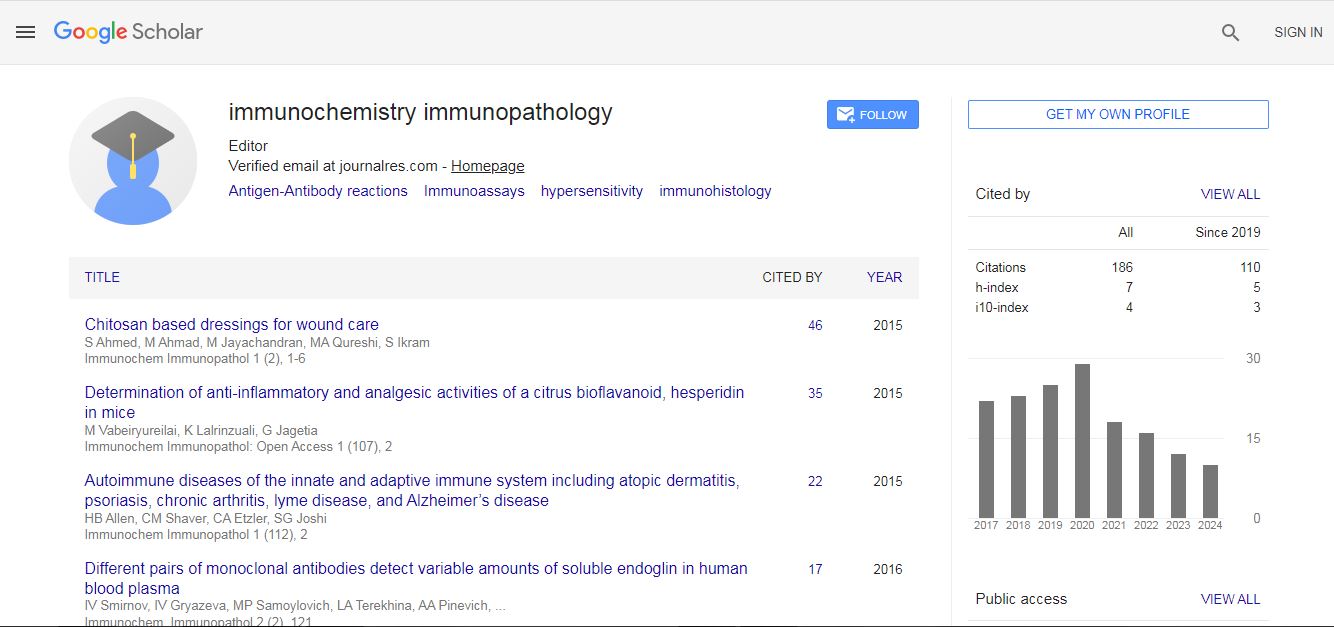
Immunochemistry & Immunopathology received 174 citations as per Google Scholar report