Commentary - (2025) Volume 11, Issue 3
Received: 02-Jun-2025, Manuscript No. cdp-26-185450;
Editor assigned: 04-Jun-2025, Pre QC No. P-185450;
Reviewed: 18-Jun-2025, QC No. Q-185450;
Revised: 23-Jun-2025, Manuscript No. R-185450;
Published:
30-Jun-2025
, DOI: 10.37421/2572-0791.2025.11.178
Citation: Johnson, Amelia. ”Neurotransmitter Systems: A Deep Dive into Depression.” Clin Depress 11 (2025):178.
Copyright: © 2025 Johnson A. This is an open-access article distributed under the terms of the Creative Commons Attribution License, which permits unrestricted use, distribution and reproduction in any medium, provided the original author and source are credited.
The intricate relationship between neurotransmitters and mood disorders, particularly depression, has been a central focus of psychiatric research for decades. Early theories proposed that imbalances in key neurotransmitter systems were the primary drivers of depressive states, and this perspective continues to inform our understanding and treatment approaches [1].
Among the monoamines, serotonin has been extensively studied for its role in mood regulation. Alterations in serotonin synthesis, release, and reuptake mechanisms are strongly implicated in the pathophysiology of depression, leading to the development of widely used antidepressant medications targeting this system [2].
Norepinephrine, another crucial monoamine neurotransmitter, also plays a significant role in depression. Dysregulation of noradrenergic pathways can affect core symptoms like stress response, attention, and motivation, highlighting its importance in the neurobiological underpinnings of the disorder [3].
Dopamine's involvement in depression is primarily linked to its functions in reward processing, motivation, and pleasure. Deficits in dopaminergic signaling can manifest as anhedonia and psychomotor retardation, common and debilitating symptoms of major depressive disorder [4].
Beyond the traditional monoamine hypothesis, emerging research points to the involvement of other neurochemical systems in depression. Glutamate and GABAergic systems are increasingly recognized for their roles in mood regulation, with imbalances potentially contributing to excitotoxicity and impaired inhibitory signaling [5].
The complexity of depression is further underscored by the phenomenon of treatment resistance. Understanding why certain individuals do not respond to standard neurotransmitter-modulating therapies is crucial, with potential explanations involving genetic, epigenetic, and neuroinflammatory factors [6].
The neurobiological basis of suicidal behavior, a severe complication of depression, is also intricately linked to neurotransmitter systems. Imbalances in serotonin, norepinephrine, and dopamine have been associated with increased impulsivity and aggression, thereby elevating suicide risk [7].
The profound impact of stress on mood disorders is mediated, in part, through its effects on neurotransmitter systems. The hypothalamic-pituitary-adrenal (HPA) axis interacts with serotonin and norepinephrine pathways, and chronic stress can lead to persistent neurochemical changes contributing to depression [8].
Furthermore, neurotrophic factors, such as brain-derived neurotrophic factor (BDNF), are thought to play a critical role in depression by influencing neurotransmitter function. Impaired neurogenesis and synaptic plasticity, potentially mediated by altered neurotransmitter levels, are increasingly seen as contributors to depressive symptoms [9].
Interestingly, the efficacy of psychotherapies in treating depression may also have a neurobiological basis, potentially influencing neurotransmitter systems like serotonin, norepinephrine, and dopamine. This suggests a complex interplay between psychological interventions and neurochemical processes [10].
The article meticulously examines the multifaceted relationship between neurotransmitters and depression, emphasizing foundational scientific discoveries. It elucidates how disruptions in the balance of key neurotransmitters, including serotonin, norepinephrine, and dopamine, can profoundly affect mood regulation and contribute to the etiology of depressive disorders. The discussion extends to the underlying neurobiological mechanisms driving these alterations and their implications for therapeutic interventions [1].
This paper delves into the specific role of serotonin in depression, detailing how modifications in its synthesis, release, and reuptake processes can result in persistent low mood. It presents evidence linking variations in the serotonin transporter gene to an increased susceptibility to depression and evaluates the effectiveness of Selective Serotonin Reuptake Inhibitors (SSRIs) in managing depressive symptomatology [2].
A comprehensive review of norepinephrine's involvement in the pathophysiology of depression is undertaken. This study investigates how the dysregulation of noradrenergic pathways impacts crucial elements of depression, such as stress response, attention, and motivation, and explores the mechanisms of action for pharmacological agents targeting the norepinephrine system [3].
The contribution of dopamine to the depressive state is explored through its essential role in reward processing, pleasure, and motivation. The article discusses how deficiencies in dopaminergic signaling can lead to anhedonia and psychomotor retardation, characteristic symptoms of major depressive disorder, and reviews therapeutic strategies aimed at modulating dopamine activity [4].
This scholarly work investigates the emerging research focusing on glutamate and GABAergic systems in the context of depression. It highlights the limitations of traditional monoamine-based theories and introduces novel perspectives that consider excitotoxicity and impaired inhibitory signaling as contributing factors to mood disorders, while also discussing potential therapeutic targets within these systems [5].
An in-depth investigation into the neurochemical underpinnings of treatment resistance in depression is presented. This article explores why specific patient groups may not respond to conventional therapies that modulate neurotransmitters and discusses potential genetic, epigenetic, and neuroinflammatory factors that can influence treatment outcomes [6].
The neurobiological basis of suicidal behavior within the framework of depression is critically examined. This review analyzes the specific roles of serotonin, norepinephrine, and dopamine in modulating impulsivity and aggression, discussing how dysfunctions in these neurotransmitter systems can heighten the risk of suicide [7].
This article offers an integrated perspective on the interaction between stress, neurotransmitter systems, and depression. It explores the functionality of the hypothalamic-pituitary-adrenal (HPA) axis and its complex interplay with serotonin and norepinephrine pathways, emphasizing how chronic stress can induce lasting neurochemical changes associated with depression [8].
The research presented here investigates the role of neurotrophic factors, notably BDNF, in conjunction with neurotransmitter function in depression. It proposes that compromised neurogenesis and synaptic plasticity, potentially driven by altered neurotransmitter levels, contribute significantly to the manifestation of depressive symptoms [9].
A meta-analysis is conducted to evaluate the efficacy of psychotherapies in influencing neurotransmitter systems within individuals diagnosed with depression. This study examines how diverse therapeutic approaches may modulate serotonin, norepinephrine, and dopamine pathways, suggesting a neurobiological foundation for their antidepressant effects [10].
This collection of research explores the intricate neurobiological underpinnings of depression, focusing on the critical roles of various neurotransmitter systems. It highlights how imbalances in serotonin, norepinephrine, and dopamine contribute to mood dysregulation, anhedonia, and other core depressive symptoms. The papers also delve into the involvement of glutamate and GABAergic systems, the impact of stress on neurochemistry, and the influence of neurotrophic factors like BDNF. Furthermore, the research addresses treatment resistance and the neurochemical correlates of suicidal behavior in depression. Finally, it investigates the potential for psychotherapies to modulate neurotransmitter systems, suggesting a complex interplay between psychological and biological factors in depression.
None
None
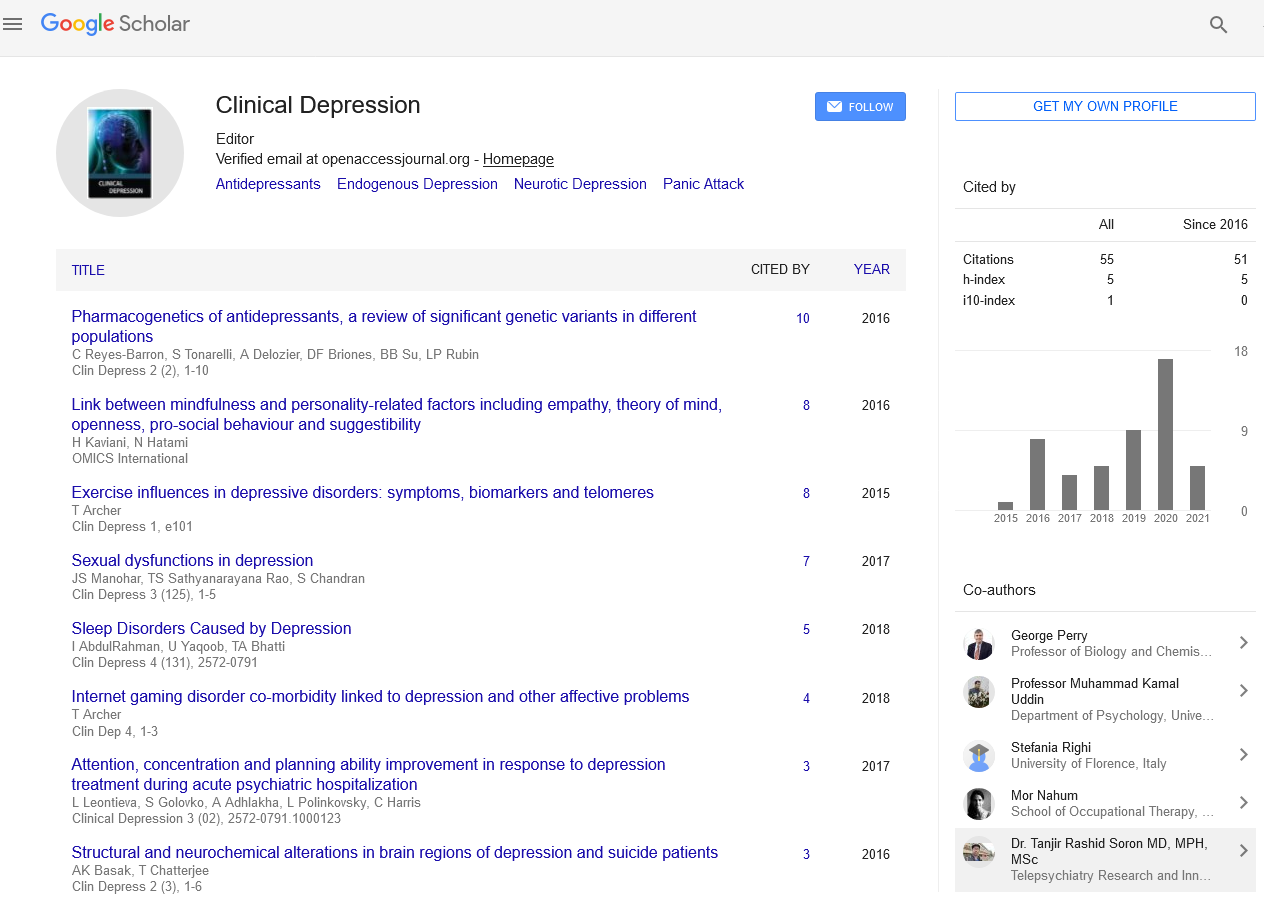
Clinical Depression received 89 citations as per Google Scholar report