Opinion - (2025) Volume 10, Issue 3
Received: 01-May-2025, Manuscript No. JPNM-26-185778;
Editor assigned: 03-May-2025, Pre QC No. P-185778;
Reviewed: 19-May-2025, QC No. Q-185778;
Revised: 22-May-2025, Manuscript No. R-185778;
Published:
29-May-2025
, DOI: 10.37421/2472-100X.2025.10.344
Citation: Tanaka, Keiko. "Neurodevelopmental Disorders: Assessment, Interventions, and Outcomes." J Pediatr Neurol Med 10 (2025):344.
Copyright: © 2025 Tanaka K. This is an open-access article distributed under the terms of the Creative Commons Attribution License, which permits unrestricted use, distribution and reproduction in any medium, provided the original author and source are credited.
Neurodevelopmental disorders (NDDs) represent a broad category of conditions that affect the development of the brain, leading to challenges in learning, behavior, social interaction, and communication. Early identification and intervention are paramount for optimizing outcomes for affected children, underscoring the importance of a comprehensive understanding of these disorders and the strategies available for their management. This collection of research synthesizes current knowledge on NDDs, offering insights into their assessment, intervention, genetic basis, and broader impact on individuals and families. Recent advancements in the assessment of NDDs in children have refined diagnostic accuracy and highlighted the need for evidence-based intervention strategies. These approaches are crucial for supporting children with conditions such as autism spectrum disorder, attention-deficit/hyperactivity disorder, and intellectual disability, emphasizing the role of early recognition and tailored support systems. A multidisciplinary team approach is increasingly recognized as essential for achieving the best possible outcomes, integrating various professional perspectives to address the complex needs of these children [1].
The genetic underpinnings of autism spectrum disorder (ASD) are a significant area of ongoing research, with studies exploring the complex genetic architecture of the condition. Large-scale genomic studies have identified recurrent de novo mutations and rare variants associated with increased ASD risk. These discoveries hold promise for advancing diagnostic approaches and the development of targeted therapies, although the significant role of environmental factors and gene-environment interactions must also be acknowledged and integrated into our understanding [2].
Attention-deficit/hyperactivity disorder (ADHD) is frequently managed through behavioral interventions, with systematic reviews evaluating the efficacy of various approaches. Parent-training programs, classroom-based interventions, and therapies targeting executive functions have demonstrated effectiveness in managing core ADHD symptoms and improving adaptive functioning. The synergistic effect of combining behavioral interventions with medication is also a key consideration in clinical practice, alongside understanding moderators of treatment response [3].
Diagnosing intellectual disability (ID) presents unique challenges, particularly within diverse populations where cultural considerations and language barriers can complicate assessment. The development and utilization of culturally sensitive tools are critical for accurate diagnosis. Reviewing diagnostic criteria from major classification systems like the DSM-5 and ICD-11, alongside emerging biomarkers and neuroimaging techniques, offers potential for earlier and more precise identification of ID, emphasizing a holistic assessment approach [4].
Early intervention services for infants and toddlers identified as having or being at risk for neurodevelopmental disorders are vital. Evidence supports the effectiveness of these services in improving developmental trajectories and mitigating the severity of disabilities. Various intervention models, including home-visiting and center-based programs, are discussed, highlighting the critical developmental window within the first three years of life for maximizing impact on long-term outcomes and family well-being [5].
Learning disabilities, such as dyslexia, dyscalculia, and dysgraphia, are being increasingly understood through their neurobiological correlates. Current research synthesizes findings from neuroimaging, electrophysiology, and genetic studies to elucidate the affected brain mechanisms, neural pathways, and cognitive processes. This deeper understanding is essential for informing the development of more targeted and effective educational and therapeutic interventions for children experiencing these challenges [6].
The critical role of multidisciplinary teams in the assessment and management of pediatric neurodevelopmental disorders cannot be overstated. Collaboration among a range of specialists, including pediatricians, neurologists, psychologists, speech-language pathologists, occupational therapists, and educators, ensures a comprehensive evaluation and the development of individualized treatment plans. This coordinated approach fosters ongoing support and leads to improved outcomes for both children and their families [7].
Technological innovations are increasingly being leveraged in the assessment and intervention of NDDs, with digital tools such as mobile applications, virtual reality, and telehealth offering new possibilities. These technologies have the potential to enhance diagnostic accuracy, provide engaging therapeutic experiences, and improve service accessibility. Ongoing examination of the evidence base for technology-assisted interventions and their ethical considerations is crucial for their responsible implementation [8].
Understanding the long-term outcomes for individuals diagnosed with NDDs in childhood is essential for providing lifelong support. Longitudinal studies track developmental trajectories, educational attainment, social integration, and mental health across adolescence and into adulthood. The findings underscore the necessity of continued, tailored interventions to optimize functional independence and quality of life throughout the lifespan for individuals with NDDs [9].
Finally, the impact of NDDs on families necessitates comprehensive support strategies. Addressing the emotional, social, and financial challenges faced by parents and siblings requires evidence-based approaches to enhance resilience and coping mechanisms. Psychoeducation, parent training, and access to robust support networks are key components in promoting family well-being amidst the complexities of raising a child with an NDD [10].
Neurodevelopmental disorders (NDDs) encompass a range of conditions affecting childhood development, necessitating specialized assessment and intervention strategies. The comprehensive overview of NDDs highlights current methodologies for assessment and evidence-based interventions, emphasizing early identification and tailored approaches. The importance of a multidisciplinary team in optimizing outcomes for children with NDDs is consistently stressed, covering common disorders like autism spectrum disorder (ASD), attention-deficit/hyperactivity disorder (ADHD), and intellectual disability (ID), along with diagnostic criteria, assessment tools, and therapeutic options, including behavioral, educational, and pharmacological approaches. Family involvement and community resources are also underscored as critical components of care [1].
Research into the genetic basis of autism spectrum disorder (ASD) is rapidly advancing, aiming to unravel its complex genetic architecture. Studies employing large-scale genomic techniques such as whole-exome and whole-genome sequencing have identified recurrent de novo mutations and rare variants linked to increased ASD risk. These genetic insights are pivotal for refining diagnostic methods and paving the way for the development of targeted therapies, while also acknowledging the crucial interplay of environmental factors and gene-environment interactions in the etiology of ASD [2].
The efficacy of behavioral interventions for children diagnosed with attention-deficit/hyperactivity disorder (ADHD) has been thoroughly evaluated through systematic reviews of randomized controlled trials. Findings consistently support the effectiveness of parent-training programs, classroom-based interventions, and behavioral therapies focused on executive functions. These interventions are shown to be beneficial in managing core ADHD symptoms and enhancing adaptive functioning, often with augmented benefits when used in conjunction with pharmacological treatments. The review also delineates moderators of treatment response and provides recommendations for clinical practice [3].
Diagnosing intellectual disability (ID) presents distinct challenges, particularly when considering diverse populations. Issues such as cultural context, language barriers, and the availability of culturally appropriate assessment tools are critical factors. The review examines diagnostic criteria from established systems like the DSM-5 and ICD-11, alongside promising advancements in biomarkers and neuroimaging techniques that could facilitate earlier and more accurate diagnoses. The emphasis remains on comprehensive assessments that capture individual strengths and challenges [4].
Early intervention services for infants and toddlers identified with or at risk for neurodevelopmental disorders are crucial for fostering positive developmental trajectories. Evidence consistently demonstrates the effectiveness of these early interventions in improving developmental outcomes and reducing the severity of disabilities. Various intervention models, including home-visiting programs and center-based services, are discussed, highlighting the critical developmental window within the first three years of life for maximizing long-term benefits for both the child and their family [5].
The neurobiological underpinnings of learning disabilities, including dyslexia, dyscalculia, and dysgraphia, are a focus of current research. This field synthesizes findings from neuroimaging studies, electrophysiology, and genetic research to delineate the brain mechanisms, neural pathways, and cognitive processes affected in these conditions. A deeper understanding of these biological bases is essential for guiding the development of more effective and targeted educational and therapeutic interventions for children with learning disabilities [6].
Multidisciplinary teams play an indispensable role in the comprehensive assessment and management of children with neurodevelopmental disorders. Effective collaboration among various specialists, such as pediatricians, neurologists, psychologists, speech-language pathologists, occupational therapists, and educators, is vital. This coordinated, team-based approach ensures thorough evaluations, facilitates individualized treatment planning, and provides continuous support, ultimately leading to improved outcomes for children and their families [7].
Technological innovations are increasingly being integrated into the assessment and intervention of neurodevelopmental disorders. Digital tools, including mobile applications, virtual reality, and telehealth platforms, offer significant potential to enhance diagnostic accuracy, deliver engaging therapeutic experiences, and improve the accessibility of services. The evidence base supporting technology-assisted interventions is growing, alongside important discussions regarding ethical considerations and implementation [8].
Investigating the long-term outcomes for individuals diagnosed with neurodevelopmental disorders in childhood is essential for understanding lifelong needs and support requirements. Longitudinal studies track developmental paths, educational achievements, social integration, and mental health across adolescence and into adulthood. These studies underscore the critical importance of sustained, tailored support and interventions throughout the lifespan to optimize functional independence and enhance the quality of life for individuals with NDDs [9].
Families of children with neurodevelopmental disorders face unique challenges, and effective support strategies are paramount. Research addresses the emotional, social, and financial burdens often experienced by parents and siblings, reviewing evidence-based approaches designed to bolster family resilience, coping mechanisms, and overall well-being. Key strategies include psychoeducation, parent training programs, and facilitating access to supportive networks [10].
This compilation of research provides a comprehensive overview of neurodevelopmental disorders (NDDs) in children, focusing on assessment methodologies and evidence-based interventions. It covers common NDDs such as autism spectrum disorder, ADHD, and intellectual disability, discussing their genetic underpinnings, behavioral and technological interventions, and diagnostic challenges. The importance of early intervention, multidisciplinary teams, family support, and long-term outcomes is consistently highlighted. The research emphasizes tailored approaches to optimize development and quality of life for affected individuals.
None
None
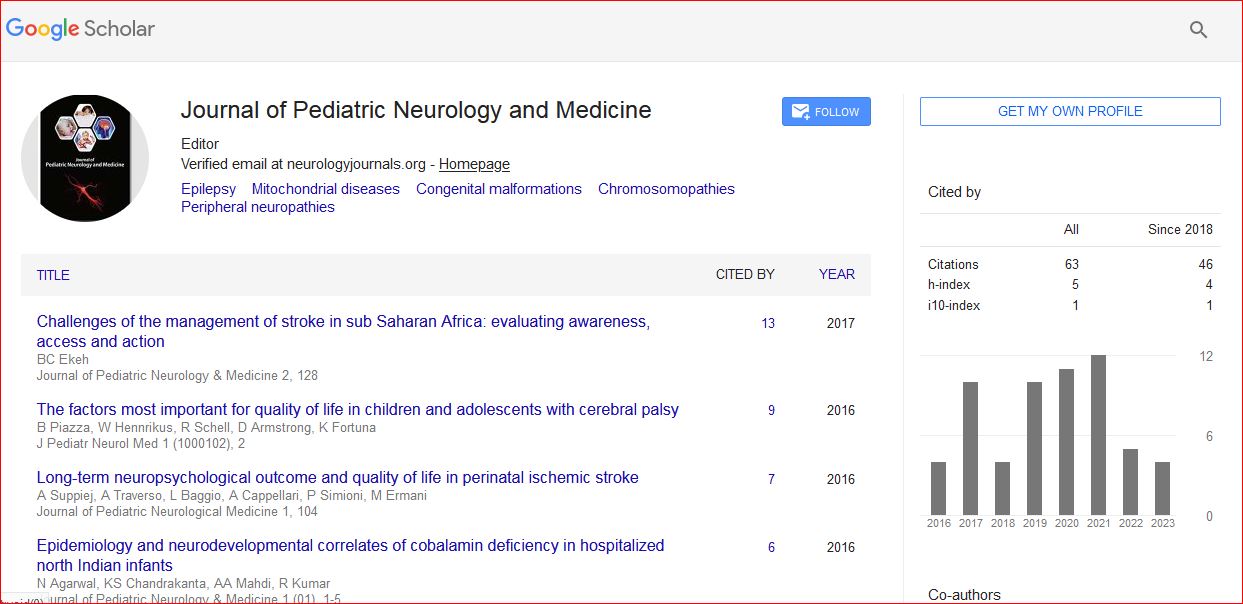
Journal of Pediatric Neurology and Medicine received 68 citations as per Google Scholar report