Commentary - (2025) Volume 9, Issue 4
Received: 01-Aug-2025, Manuscript No. cmcr-25-178305;
Editor assigned: 04-Aug-2025, Pre QC No. P-178305;
Reviewed: 18-Aug-2025, QC No. Q-178305;
Revised: 22-Aug-2025, Manuscript No. R-178305;
Published:
29-Aug-2025
, DOI: 10.37421/2684-4915.2025.9. 384
Citation: Greco, Lucia. ”Navigating Therapeutic Dilemmas in Modern Medicine.” Clin Med Case Rep 09 (2025):384.
Copyright: © 2025 Greco L. This is an open-access article distributed under the terms of the Creative Commons Attribution License, which permits unrestricted use, distribution and reproduction in any medium, provided the original author and source are credited.
Modern medicine constantly grapples with complex therapeutic dilemmas, pushing the boundaries of scientific knowledge and ethical considerations. The landscape of patient care is rarely straightforward, often requiring clinicians to weigh competing priorities, potential benefits, and inherent risks. These challenges span various specialties, from chronic disease management to acute critical care, and from emerging genetic therapies to long-standing issues like antimicrobial resistance. Understanding these intricate balancing acts is fundamental to advancing healthcare and ensuring optimal, patient-centered outcomes. This paper explores the complex choices in oncology, highlighting how precision medicine offers tailored treatments while also presenting significant challenges like drug resistance. It advocates for patient-centered care to navigate these difficult decisions, ensuring treatments align with individual needs and preferences[1].
Here's the thing about antimicrobial resistance: it creates a significant problem for treating infections globally, threatening the effectiveness of current antibiotics. This article discusses the difficult balance healthcare providers face between prescribing effective antibiotics for immediate patient needs and promoting responsible use to preserve their efficacy for future generations, emphasizing the critical importance of stewardship[2].
This piece delves into the tough choices faced when managing rare neurological disorders. It emphasizes the need for innovative approaches and personalized care plans, given the limited treatment options and varied disease presentations, making each case a unique therapeutic puzzle requiring careful consideration and specialized expertise[3].
When dealing with complex coronary artery disease, doctors often face a dilemma: which revascularization strategy is best? This article examines the ongoing debate between different surgical and interventional techniques, considering patient risk factors and long-term outcomes to guide treatment decisions and optimize cardiac health[4].
For patients with autoimmune conditions, physicians must delicately balance the benefits of immunosuppression with the heightened risk of infection. This review offers insights into managing this therapeutic dilemma, proposing tailored strategies to optimize treatment while minimizing adverse effects and improving patient quality of life[5].
Polypharmacy in mental health presents a tricky situation. This article addresses the therapeutic dilemma in complex psychiatric cases, where multiple medications are often prescribed, exploring the benefits, risks, and strategies for rationalizing prescriptions to improve patient outcomes without over-medicating, thereby enhancing safety and effectiveness[6].
What this really means is, the opioid crisis continues to pose a persistent therapeutic dilemma in chronic pain management. This paper examines the challenges of providing effective pain relief while mitigating the risks of addiction and misuse, advocating for integrated, multidisciplinary approaches to address this multifaceted public health issue[7].
In pediatric critical care, medical teams frequently confront profound ethical and therapeutic dilemmas. This article discusses cases where treatment decisions involve complex moral considerations, balancing life-sustaining interventions with patient quality of life and family wishes, requiring sensitive communication and shared decision-making[8].
Gene therapy holds immense promise for rare genetic disorders, yet it presents unique therapeutic dilemmas and challenges in access. This paper reviews the progress and obstacles, emphasizing the need for equitable distribution and careful ethical consideration as these innovative treatments become available to a broader population, ensuring fairness and responsible implementation[9].
Geriatric patients often experience multimorbidity and polypharmacy, creating a significant therapeutic dilemma. This article discusses optimizing medication regimens for older adults, aiming to reduce adverse drug reactions while effectively managing multiple chronic conditions, thereby improving overall health and functional independence in this vulnerable population[10].
These diverse yet interconnected challenges highlight the constant evolution of medical practice, where scientific advancements must be harmonized with patient needs, ethical responsibilities, and resource constraints. The articles collectively underscore the human element at the heart of healthcare, where difficult decisions are made daily with profound implications for individuals and society. Addressing these dilemmas requires continuous research, interdisciplinary collaboration, and a steadfast commitment to patient advocacy and well-being.
The challenges in modern medicine are multifaceted, often presenting clinicians with complex choices that balance immediate patient needs with long-term implications and societal responsibilities. One such critical area involves the complexities of treating life-threatening diseases and ensuring the responsible use of medical interventions. For example, in oncology, precision medicine offers personalized treatments but requires careful navigation of issues like drug resistance, emphasizing patient-centered care to align treatment with individual preferences [1]. Similarly, the advent of gene therapy, while holding immense promise for rare genetic disorders, introduces dilemmas regarding access, equitable distribution, and essential ethical considerations as these groundbreaking treatments become more widely available [9].
Another significant domain of therapeutic dilemmas revolves around managing infectious diseases and chronic conditions that demand careful immune modulation. Here's the thing about antimicrobial resistance: it creates a substantial problem for effectively treating infections, prompting a difficult balance for healthcare providers between immediate antibiotic efficacy and the stewardship required to preserve these vital drugs for future generations [2]. In a related vein, patients with autoimmune conditions require a delicate balance of immunosuppression to manage their disease, which inherently heightens their risk of infection. Physicians must therefore devise tailored strategies that optimize treatment benefits while minimizing these adverse effects [5].
The intricate management of chronic pain and neurological disorders also presents ongoing therapeutic puzzles. The opioid crisis, for instance, continues to pose a persistent dilemma in chronic pain management. What this really means is, healthcare professionals must navigate the challenge of providing effective pain relief while actively mitigating the significant risks of addiction and misuse, advocating for integrated, multidisciplinary approaches [7]. Parallel to this, managing rare neurological disorders often involves tough choices due to limited treatment options and varied disease presentations, underscoring the need for innovative strategies and highly personalized care plans for each unique case [3].
Furthermore, the complexities of polypharmacy and critical care decision-making highlight the need for nuanced patient management. Polypharmacy in mental health presents a tricky situation, especially in complex psychiatric cases where multiple medications are frequently prescribed. Addressing this dilemma involves carefully exploring the benefits and risks to rationalize prescriptions, ultimately aiming to improve patient outcomes without over-medicating [6]. This issue is further amplified in geriatric patients, who often experience multimorbidity alongside polypharmacy. Optimizing medication regimens for older adults is paramount to reduce adverse drug reactions while effectively managing their numerous chronic conditions, improving their quality of life [10].
Finally, the ethical landscape of medical treatment, particularly in vulnerable populations, adds another layer of complexity. In pediatric critical care, medical teams frequently confront profound ethical and therapeutic dilemmas. Treatment decisions often involve intricate moral considerations, necessitating a balance between life-sustaining interventions and the child's quality of life, alongside respecting family wishes [8]. Moreover, complex coronary artery disease creates an ongoing therapeutic dilemma concerning revascularization strategies. Doctors continuously debate between different surgical and interventional techniques, carefully considering individual patient risk factors and long-term outcomes to guide optimal treatment decisions [4]. These diverse scenarios collectively emphasize the critical role of informed, empathetic, and adaptable medical practice in facing the evolving challenges of healthcare.
Therapeutic dilemmas are a pervasive challenge across diverse medical fields, requiring complex decision-making to balance treatment efficacy with patient safety and quality of life. In oncology, precision medicine offers tailored treatments, yet physicians must navigate drug resistance and ensure care aligns with individual patient needs. Antimicrobial resistance poses a significant threat, demanding a delicate balance between effective antibiotic use and responsible stewardship to preserve future efficacy. Rare neurological disorders necessitate innovative and personalized care due to limited options, while complex coronary artery disease involves ongoing debates on optimal revascularization strategies. Autoimmune conditions present the dilemma of balancing immunosuppression benefits against increased infection risk, requiring tailored strategies. Polypharmacy creates intricate challenges in both mental health, where rationalizing multiple prescriptions is crucial, and geriatric care, where optimizing medication regimens for multimorbid patients is vital to reduce adverse drug reactions. The opioid crisis presents a persistent dilemma in chronic pain management, requiring integrated approaches to balance pain relief with addiction mitigation. Ethical and therapeutic dilemmas frequently arise in pediatric critical care, involving complex moral considerations to balance life support with quality of life and family wishes. Gene therapy, while promising for rare genetic disorders, confronts unique dilemmas related to access challenges and the need for equitable distribution alongside ethical considerations. Collectively, these challenges underscore the critical need for patient-centered approaches, informed decision-making, and innovative strategies to navigate the intricate landscape of modern medical treatment.
None
None
Indexed at, Google Scholar, Crossref
Indexed at, Google Scholar, Crossref
Indexed at, Google Scholar, Crossref
Indexed at, Google Scholar, Crossref
Indexed at, Google Scholar, Crossref
Indexed at, Google Scholar, Crossref
Indexed at, Google Scholar, Crossref
Indexed at, Google Scholar, Crossref
Indexed at, Google Scholar, Crossref
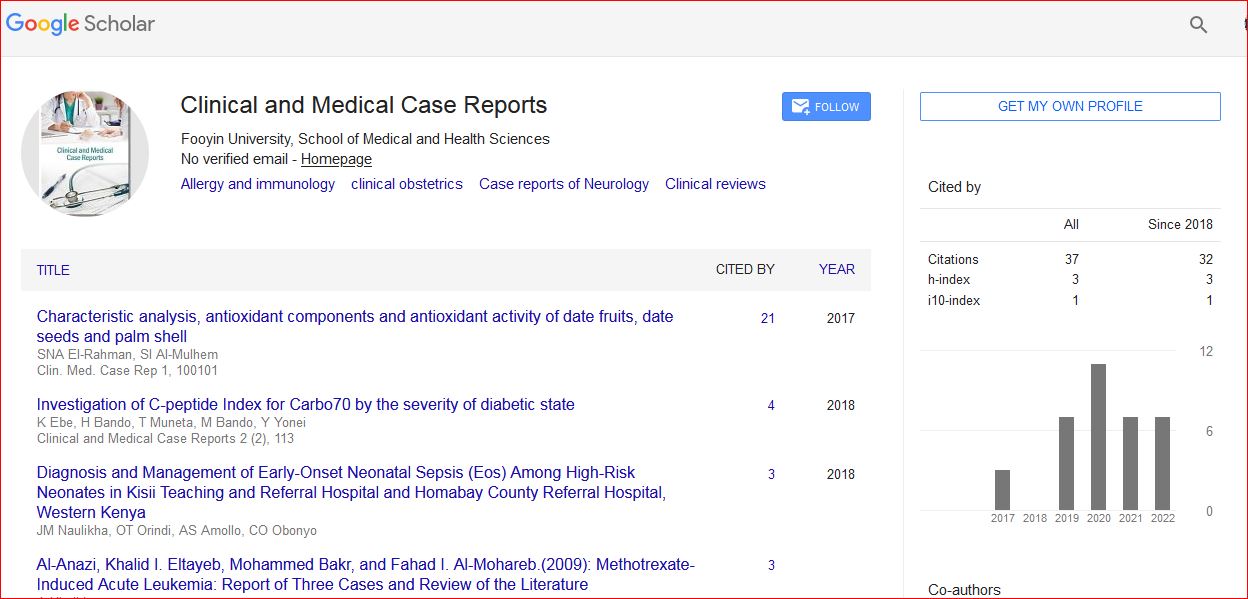
Clinical and Medical Case Reports received 53 citations as per Google Scholar report