Brief Report - (2025) Volume 14, Issue 3
Received: 02-Jun-2025, Manuscript No. jeom-26-188173;
Editor assigned: 04-Jun-2025, Pre QC No. P-188173;
Reviewed: 18-Jun-2025, QC No. Q-188173;
Revised: 23-Jun-2025, Manuscript No. R-188173;
Published:
30-Jun-2025
, DOI: 10.37421/2169-026X.2025.14.536
Citation: Kim, Daniel. ”Navigating Organizational Change: Leadership, Culture, and Engagement.” J Entrepren Organiz Manag 14 (2025):536.
Copyright: © 2025 Kim D. This is an open-access article distributed under the terms of the Creative Commons Attribution License, which permits unrestricted use, distribution and reproduction in any medium, provided the original author and source are credited.
Effective communication stands as a cornerstone for successfully navigating the complexities of organizational change. Transparent and consistent messaging from leadership is paramount in mitigating employee resistance and fostering a sense of buy-in, which are critical for the successful implementation of any change initiative. Understanding the diverse perspectives of various stakeholders is essential for tailoring communication strategies that resonate and achieve desired outcomes [1].
In the realm of entrepreneurial organizations, leadership styles significantly influence the success of change initiatives. Transformational leadership, in particular, emerges as a vital enabler, cultivating an environment conducive to innovation and adaptability. The mediating effect of employee engagement in this leadership-driven change process is also a crucial area of exploration [2].
Digital transformation presents unique challenges and opportunities for organizational structures and change management. The imperative for agile organizational designs and flexible strategies is amplified in rapidly evolving digital landscapes, necessitating a close examination of how new technologies are integrated and the associated hurdles and advantages [3].
Employee involvement and participation are powerful drivers of success in organizational change efforts. Empowering employees and including them in decision-making processes related to change fosters greater acceptance and commitment, effectively reducing resistance to new directions [4].
The strategic application of technology and data analytics offers potent tools for managing organizational change. Insights derived from data can profoundly inform change strategies, allow for real-time progress monitoring, and facilitate adaptive adjustments to ensure that change initiatives achieve their intended objectives [5].
Organizational culture plays a pivotal role, acting as either a facilitator or a hindrance to change. Cultivating a culture characterized by adaptability, a commitment to learning, and inherent resilience is fundamental for the sustained success of change initiatives. Frameworks for assessing and transforming such cultures are thus invaluable [6].
Stakeholder engagement is a critical determinant in the successful implementation of organizational change. Identifying, analyzing, and actively involving key stakeholders throughout the change process is essential for ensuring alignment, managing expectations, and mitigating potential conflicts, with tailored communication strategies being key for different groups [7].
Mergers and acquisitions present a distinct set of challenges for change management. Strategies focused on integrating organizational cultures, systems, and processes are vital for realizing synergistic benefits and minimizing disruption, underscoring the importance of a structured and clearly communicated integration plan [8].
Change agents and champions are instrumental in propelling organizational change forward. Identifying, empowering, and supporting individuals who can effectively influence and mobilize others is critical for overcoming resistance and ensuring the successful adoption of new initiatives within an organization [9].
Understanding and effectively managing resistance to change is a perennial challenge. Recognizing the underlying causes of resistance, such as fear of the unknown or a perceived loss of control, and implementing practical approaches like enhanced communication, increased involvement, and robust support systems are vital for navigating these hurdles [10].
The critical role of effective communication in navigating organizational change is well-established, with transparent and consistent messaging from leadership being a key factor in reducing resistance and securing employee buy-in for successful implementation. A deep understanding of diverse stakeholder perspectives is also crucial for tailoring communication strategies effectively [1].
In entrepreneurial contexts, leadership styles profoundly impact the success of change initiatives, with transformational leadership identified as a significant enabler that fosters innovation and adaptability. The mediating influence of employee engagement in this process further highlights the interconnectedness of leadership and workforce commitment [2].
The landscape of organizational change is being reshaped by digital transformation, which necessitates agile structures and flexible strategies to adapt to the rapid evolution of digital environments. Navigating the challenges and capitalizing on the opportunities presented by new technologies is central to this paradigm shift [3].
When employees are actively involved and participate in decision-making processes related to organizational change, there is a marked increase in their acceptance and commitment. This empowerment directly contributes to reducing resistance and fostering a more positive reception to new initiatives [4].
Leveraging data analytics and strategic technology implementation provides powerful mechanisms for managing organizational change. Data-driven insights can inform strategic planning, enable real-time monitoring of progress, and facilitate the adaptive adjustments needed to ensure successful outcomes [5].
Organizational culture serves as a crucial determinant in the success or failure of change initiatives. Building a culture that embraces adaptability, continuous learning, and resilience is fundamental for achieving sustainable change, with specific frameworks aiding in culture assessment and transformation [6].
Effective stakeholder engagement is paramount for the successful implementation of organizational change. Identifying, analyzing, and involving key stakeholders throughout the process is essential for achieving alignment, managing expectations, and mitigating potential conflicts, supported by tailored communication approaches for different groups [7].
Mergers and acquisitions present complex change management scenarios, requiring strategies for integrating diverse organizational cultures, systems, and processes. A well-communicated and structured integration plan is vital for achieving desired synergies and minimizing disruption during these critical transitions [8].
The influence of change agents and champions cannot be overstated in facilitating organizational change. Their ability to effectively mobilize and influence others is critical for overcoming resistance and ensuring the successful adoption of new initiatives within an organization [9].
Resistance to change, often rooted in fears or perceived loss of control, requires deliberate management strategies. Addressing these underlying causes through enhanced communication, increased employee involvement, and comprehensive support systems is key to navigating and mitigating resistance effectively [10].
This collection of research highlights the multifaceted nature of organizational change. Effective communication, particularly from leadership, is crucial for mitigating resistance and fostering employee buy-in. Leadership styles, especially transformational leadership, play a significant role in driving change, with employee engagement acting as a mediator. Digital transformation necessitates agile organizational designs and flexible strategies. Employee involvement and participation increase acceptance and commitment. Data analytics and technology offer powerful tools for managing change. Organizational culture, adaptability, and resilience are key to sustainable change. Stakeholder engagement is vital for alignment and conflict mitigation. Mergers and acquisitions require careful integration strategies. Change agents and champions are essential for driving adoption. Understanding and managing resistance through communication, involvement, and support are critical for successful change implementation.
None
None
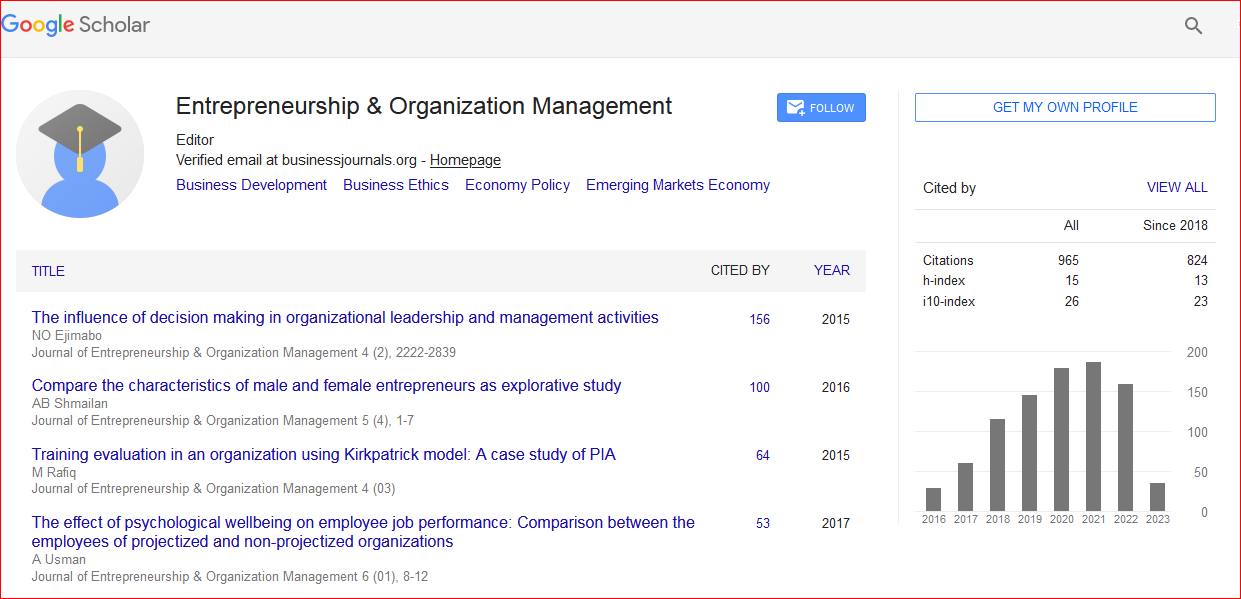
Entrepreneurship & Organization Management received 1115 citations as per Google Scholar report