Opinion - (2025) Volume 16, Issue 6
Received: 01-Nov-2025, Manuscript No. assj-25-174907;
Editor assigned: 03-Nov-2025, Pre QC No. P-174907;
Reviewed: 17-Nov-2025, QC No. Q-174907;
Revised: 24-Nov-2025, Manuscript No. R-174907;
Published:
01-Dec-2025
, DOI: 10.37421/2151-6200.2025.16.695
Citation: O Rourke, Liam. "Narrative: Shaping Memory, Identity, and Healing." Arts Social Sci J 16 (2025):695
Copyright: © 2025 O Rourke L. This is an open-access article distributed under the terms of the Creative Commons Attribution License, which permits unrestricted use, distribution and reproduction in any medium, provided the original author and source are credited
Understanding the intricate relationship between narrative, memory, and Alzheimer's Disease involves a clinical-literary approach. This perspective highlights how dissecting memory's disintegration through stories can enhance clinical practice and humanistic comprehension, underscoring identity's reliance on narratives even when factual recall diminishes[1].
Reading literary fiction significantly develops theory of mind (ToM), a key cognitive skill for attributing mental states. A meta-analysis reveals that engaging with literary narratives positively improves ToM abilities, suggesting stories help readers simulate complex social realities, which directly boosts memory for social interactions and understanding[2].
Autobiographical memory is deeply shaped by social and cultural factors, not merely individual cognitive processes. Shared narratives, cultural practices, and interpersonal interactions fundamentally influence how personal pasts are constructed, recalled, and recounted. This view is crucial for recognizing how literary works like memoirs actively participate in memory's social construction[3].
Narrative exerts a profound influence on forming and preserving individual and collective memories, as well as identity across cultures. Storytelling traditions serve as primary mechanisms for organizing and transmitting past experiences, shaping not just what is remembered, but also its interpretation and integration into one's sense of self and community, impacting literary memory representations[4].
Collective memory finds powerful expression through cultural narratives, as shown by multidisciplinary research encompassing psychology, sociology, and humanities. Literature, among other cultural forms, is a key medium for constructing, transmitting, and challenging these collective memories, thereby influencing societal recall of historical events and shared experiences. These narratives are dynamic and often contested in shaping a group's understanding of its past[5].
Reading fiction has specific cognitive and emotional effects, particularly on empathy and social cognition. Systematic reviews confirm that engaging with fictional narratives enhances readers' capacity to understand and share others' feelings, alongside improving their processing of complex social information. This suggests literary texts can shape and train cognitive mechanisms vital for remembering and interpreting human experiences[6].
The therapeutic potential of narrative and memory in mental health recovery is significant. Structuring personal experiences into coherent narratives aids healing, self-understanding, and resilience. Engaging with both personal and fictional stories helps individuals process trauma, reconstruct identity, and manage psychological distress, demonstrating literature's intrinsic link to memory and well-being[7].
Historical memory, particularly concerning conflicts, is constructed and interpreted through literary representations, viewed from a psychological standpoint. Fictional narratives play a crucial role in shaping public understanding of past events, influencing collective identity, and contributing to post-conflict reconciliation or ongoing tensions. The interplay between history, literary imagination, and memory mechanisms profoundly shapes societal perceptions[8].
Reading fiction simulates social worlds, significantly enhancing memory and understanding. Narratives allow individuals to mentally rehearse complex social scenarios, improving their ability to recall and apply social knowledge. This mechanism suggests literature is crucial for consolidating and organizing memory related to human behavior and relational dynamics, extending beyond simple factual recall[9].
Narrative therapy and memory reconsolidation offer insights into how storytelling can alter and integrate challenging memories. Therapeutic narratives facilitate restructuring individuals' understanding of past events, leading to a more adaptive and coherent personal history. This framework highlights how literary narratives, by restructuring memory, provide profound insights into psychological resilience and healing[10].
Narrative fundamentally shapes the construction and preservation of both individual and collective memories, thereby deeply influencing personal identity. Research indicates that the way individuals structure their personal experiences into coherent narratives is critical for fostering self-understanding, resilience, and overall well-being in mental health recovery [C007]. This process of constructing, recalling, and recounting personal pasts is not purely an individual cognitive function but is significantly molded by social and cultural factors. Shared narratives, cultural practices, and interpersonal interactions are integral to this dynamic, highlighting literature's active participation in the social construction of memory [C003]. Furthermore, from a cross-cultural perspective, storytelling traditions and shared narratives within diverse contexts serve as primary mechanisms for organizing and transmitting past experiences, dictating not only what is remembered but also how it is understood and integrated into one's sense of self and community [C004].
A significant body of evidence underscores the powerful impact of engaging with literary fiction on cognitive and emotional development, particularly in enhancing empathy and social cognition. Engaging with literary narratives has been shown to positively contribute to improved Theory of Mind (ToM) abilities, which is a crucial cognitive skill involving the capacity to attribute mental states to oneself and others [C002]. This immersive experience allows readers to mentally rehearse and process complex social scenarios, thereby enhancing their ability to understand and share the feelings of others [C006, C009]. Consequently, reading fiction acts as a powerful simulator for social worlds, improving the recall and application of social knowledge. This mechanism implies that literature contributes profoundly to the consolidation and organization of memory, especially concerning human behavior and complex relational dynamics, extending far beyond simple factual recall [C009].
Beyond individual recollection, the influence of narrative extends to the realm of collective and historical memory. Multidisciplinary reviews synthesize insights from psychology, sociology, and humanities, confirming that cultural narratives and literature serve as potent mediums for constructing, transmitting, and even challenging collective memories [C005]. These narratives influence how societies collectively remember significant historical events and shared experiences. Specifically, the construction and interpretation of historical memory, especially concerning conflicts, are critically shaped through literary representations. These fictional accounts can profoundly influence public understanding of past events, impacting collective identity formation, and either fostering post-conflict reconciliation or exacerbating ongoing tensions. This highlights the powerful interplay between historical accounts, literary imagination, and the psychological mechanisms of memory formation and retrieval in shaping societal perceptions of history [C008].
The therapeutic potential of narrative is increasingly acknowledged in mental health recovery and in addressing challenges associated with cognitive decline. Structuring personal experiences into coherent narratives facilitates healing, promotes self-understanding, and builds resilience for individuals navigating psychological distress [C007]. Moreover, the convergence of narrative therapy and memory reconsolidation offers compelling insights into mechanisms by which storytelling can effectively alter and integrate challenging memories. This therapeutic approach helps individuals to restructure their understanding of past events, leading to a more adaptive and coherent personal history and fostering psychological resilience [C010]. Even in the context of neurodegenerative conditions like Alzheimer's Disease, adopting a clinical-literary approach to understand memory's disintegration through a narrative lens can profoundly inform clinical practice, emphasizing the irreplaceable importance of stories in maintaining identity despite diminishing factual recall [C001].
Collectively, these investigations emphasize that narrative, particularly in its literary forms, transcends mere documentation of events; it actively participates in the formation, maintenance, and transformation of memory across various levels. From shaping deeply personal autobiographical accounts to influencing broad collective historical understanding, and from enhancing social-emotional intelligence to facilitating profound therapeutic processes, narratives provide a dynamic framework for processing, retaining, and communicating the richness of human experience. This interdisciplinary body of work underscores the intricate and fundamental connection between storytelling and memory, revealing its essential role in human cognition, social interaction, and cultural legacy.
Narrative and memory are intrinsically linked, influencing identity, social cognition, and mental well-being. Studies highlight that engaging with literary fiction enhances empathy and Theory of Mind, enabling better understanding of complex social realities and human behavior [C002, C006, C009]. Narratives are crucial for constructing individual autobiographical memories, shaped significantly by social and cultural factors [C003]. Beyond personal recollections, storytelling traditions and cultural narratives are vital for forming and transmitting collective and historical memories, impacting how societies perceive past events and shape collective identity [C004, C005, C008]. The therapeutic potential of narrative is also evident in mental health recovery, where structuring personal experiences into coherent stories aids healing, self-understanding, and resilience [C007]. Narrative therapy and memory reconsolidation demonstrate how storytelling can alter and integrate challenging memories, fostering adaptive personal histories [C010]. Even in neurodegenerative diseases like Alzheimer's, a narrative lens helps understand memory disintegration, emphasizing stories' role in maintaining identity despite factual recall loss [C001]. This collective research underscores the profound and multifaceted ways narratives shape, preserve, and heal memory across cognitive, social, and cultural dimensions.
None
None
Indexed at, Google Scholar, Crossref
Indexed at, Google Scholar, Crossref
Indexed at, Google Scholar, Crossref
Indexed at, Google Scholar, Crossref
Indexed at, Google Scholar, Crossref
Indexed at, Google Scholar, Crossref
Indexed at, Google Scholar, Crossref
Indexed at, Google Scholar, Crossref
Indexed at, Google Scholar, Crossref
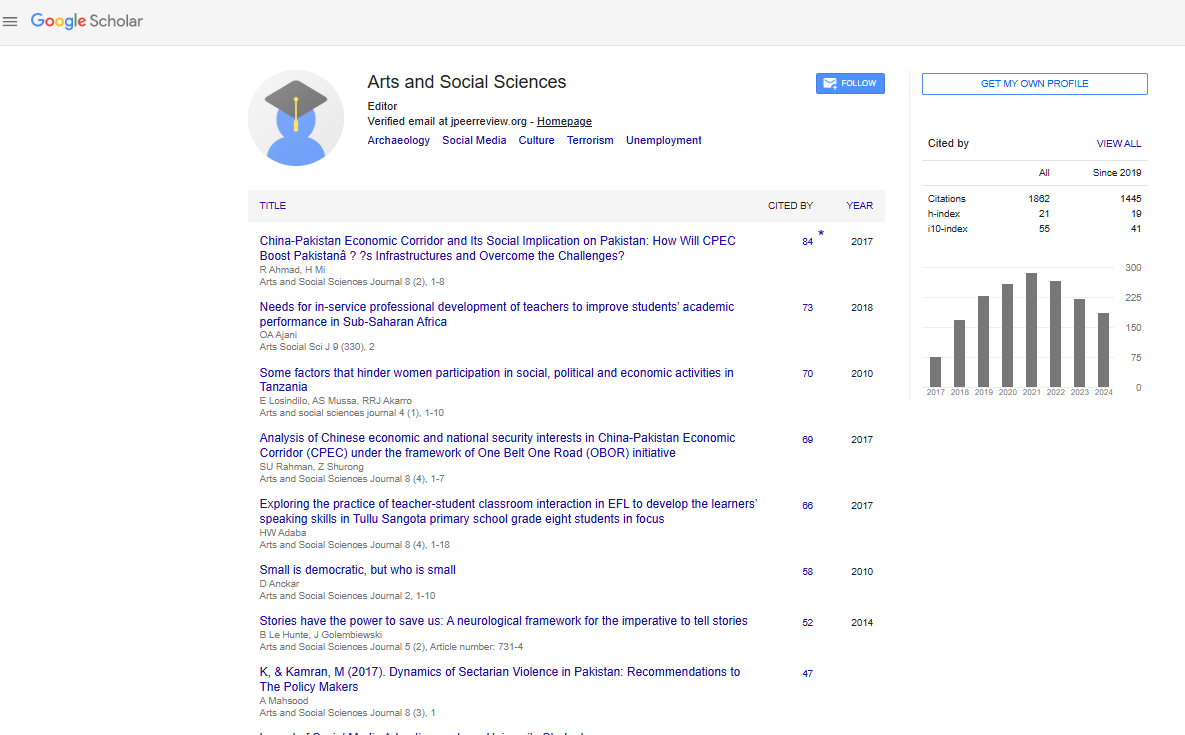
Arts and Social Sciences Journal received 1413 citations as per Google Scholar report