Commentary - (2025) Volume 11, Issue 2
Received: 01-Apr-2025, Manuscript No. elj-25-172492;
Editor assigned: 03-Apr-2025, Pre QC No. P-172492;
Reviewed: 17-Apr-2025, QC No. Q-172492;
Revised: 22-Apr-2025, Manuscript No. R-172492;
Published:
29-Apr-2025
, DOI: 10.37421/2472-0895.2025.11.308
Citation: Marchand, Selina. ”Multifaceted Epilepsy Management for Diverse Populations.” Epilepsy J 11 (2025):308.
Copyright: © 2025 Marchand S. This is an open-access article distributed under the terms of the Creative Commons Attribution License, which permits unrestricted use, distribution and reproduction in any medium, provided the original author and source are credited.
Epilepsy and seizures represent a complex neurological condition requiring detailed understanding and tailored management across diverse patient groups and clinical scenarios. A foundational aspect involves addressing new-onset seizures, where articles emphasize the initial steps in evaluating and managing patients. This includes focusing on precise diagnostic criteria, conducting essential investigations, and implementing early treatment strategies designed to prevent recurrence and enhance overall patient outcomes [1].
The pharmacological landscape for seizure control is continually evolving. Papers provide an overview of current pharmacological approaches for seizure management, meticulously discussing the efficacy and safety profiles of various anti-seizure medications. This further extends to important considerations for personalized treatment, which must be thoughtfully based on the specific seizure type and any co-existing patient comorbidities [2].
Beyond pharmaceutical interventions, a holistic approach recognizes the impact of lifestyle. Evidence reviews examine various lifestyle modifications, such as specific diets, regular exercise, and maintaining proper sleep hygiene, and how these factors influence seizure control and the general well-being of individuals with epilepsy, suggesting practical recommendations for integrated patient care [8].
Critical acute presentations, such as status epilepticus, demand immediate and structured responses. Practical guides offer a pragmatic, step-by-step approach for the acute management of status epilepticus in adult patients. These guides detail robust diagnostic procedures, initial stabilization methods, and subsequent pharmacological interventions essential to effectively terminate prolonged seizure activity [4].
Complementing this, prehospital care for convulsive seizures and status epilepticus is paramount. Articles review critical aspects of prehospital care, underscoring the importance of rapid recognition, timely administration of first-line treatments, and safe patient transport, all aimed at significantly improving outcomes in emergency settings [10].
Specialized populations, particularly children, require distinct diagnostic and management frameworks. Discussions revolve around pediatric epilepsy syndromes within the structure of the updated International League Against Epilepsy (ILAE) classification. This offers a clinical pathway for diagnosis, clarifies differential considerations, and outlines management strategies specifically tailored for unique childhood epilepsy types [5].
Furthermore, the early recognition and accurate diagnosis of genetic epilepsies in children are highlighted as crucial. This involves detailing specific clinical clues, outlining diagnostic pathwaysâ??including genetic testingâ??and exploring the profound implications these diagnoses have for implementing timely, targeted interventions and providing essential family counseling [7].
Other unique clinical situations also necessitate specialized protocols. For instance, the management of epilepsy during pregnancy is reviewed, focusing on key considerations and best practices. The aim here is to carefully balance effective seizure control with minimizing potential risks to both the mother and the developing fetus, which includes appropriate anti-seizure medication selection and comprehensive prenatal counseling [9].
Identifying predisposing factors is also crucial; systematic reviews and meta-analyses work to identify critical demographic, clinical, and radiological risk factors that contribute to seizure development in patients who experience ischemic stroke, thereby informing more effective preventative strategies [3].
For individuals experiencing drug-resistant epilepsy, advanced neuroimaging techniques are instrumental. These techniques play a crucial role in identifying the epileptogenic zone, which is vital for precise surgical planning and ultimately leads to improved patient outcomes [6].
This extensive body of research collectively illuminates the complexity of epilepsy, covering a broad spectrum from acute care and specialized population management to advanced diagnostics and preventative measures.
The current understanding and management of epilepsy are multifaceted, addressing various clinical presentations, patient populations, and underlying etiologies. A key area of focus is the initial approach to new-onset seizures, where emphasis is placed on diagnostic criteria, essential investigations, and early treatment strategies to prevent recurrence and improve patient outcomes [1]. Pharmacological treatment remains a cornerstone, with ongoing discussions on the efficacy and safety profiles of various anti-seizure medications. Here, personalized treatment is crucial, considering both seizure type and patient comorbidities [2]. Beyond medication, lifestyle modifications like diet, exercise, and sleep hygiene are increasingly recognized for their role in impacting seizure control and overall well-being, offering practical recommendations for integrated patient care [8].
Acute epileptic events, particularly status epilepticus, require immediate and structured management. A practical guide outlines a step-by-step approach for managing status epilepticus in adults, covering diagnosis, initial stabilization, and subsequent pharmacological interventions to effectively terminate prolonged seizure activity [4]. The importance of prehospital care for convulsive seizures and status epilepticus cannot be overstated. This involves rapid recognition, timely administration of first-line treatments, and safe transport, all of which are critical for improving patient outcomes in emergency settings [10]. Identifying and understanding risk factors for seizure development is also a significant aspect of preventative care. For instance, critical demographic, clinical, and radiological risk factors contributing to seizures in patients with ischemic stroke have been identified through systematic reviews and meta-analyses, informing targeted preventative strategies [3].
Pediatric populations present unique challenges and considerations in epilepsy management. Pediatric epilepsy syndromes are discussed within the framework of the updated International League Against Epilepsy (ILAE) classification, providing a clinical approach to diagnosis, differential considerations, and management strategies specifically tailored for various childhood epilepsy types [5]. The early recognition and accurate diagnosis of genetic epilepsies in childhood are emphasized as crucial, detailing clinical clues, diagnostic pathways including genetic testing, and the profound implications these findings have for timely, targeted interventions and family counseling [7]. This specialized focus ensures that interventions are appropriate for the developmental stage and genetic predispositions of younger patients.
Managing epilepsy in specific physiological states, such as pregnancy, also demands careful planning. Reviews discuss key considerations and best practices for managing epilepsy during pregnancy, focusing on balancing effective seizure control with minimizing risks to both the mother and the fetus. This often involves careful anti-seizure medication selection and comprehensive prenatal counseling [9]. For patients experiencing drug-resistant epilepsy, advanced neuroimaging techniques have become indispensable. These techniques play a vital role in identifying the epileptogenic zone, which is essential for successful surgical planning and ultimately leads to improved outcomes for these challenging cases [6].
Collectively, this body of knowledge highlights the dynamic and evolving nature of epilepsy care. It spans from foundational diagnostic principles and acute interventional strategies to chronic management, lifestyle integration, and specialized care for vulnerable populations. The continuous advancements in diagnostics, pharmacology, and understanding of risk factors underpin the effort to provide comprehensive, individualized care, ultimately aiming to enhance the quality of life for individuals affected by epilepsy.
None
None
Indexed at, Google Scholar, Crossref
Indexed at, Google Scholar, Crossref
Indexed at, Google Scholar, Crossref
Indexed at, Google Scholar, Crossref
Indexed at, Google Scholar, Crossref
Indexed at, Google Scholar, Crossref
Indexed at, Google Scholar, Crossref
Indexed at, Google Scholar, Crossref
Indexed at, Google Scholar, Crossref
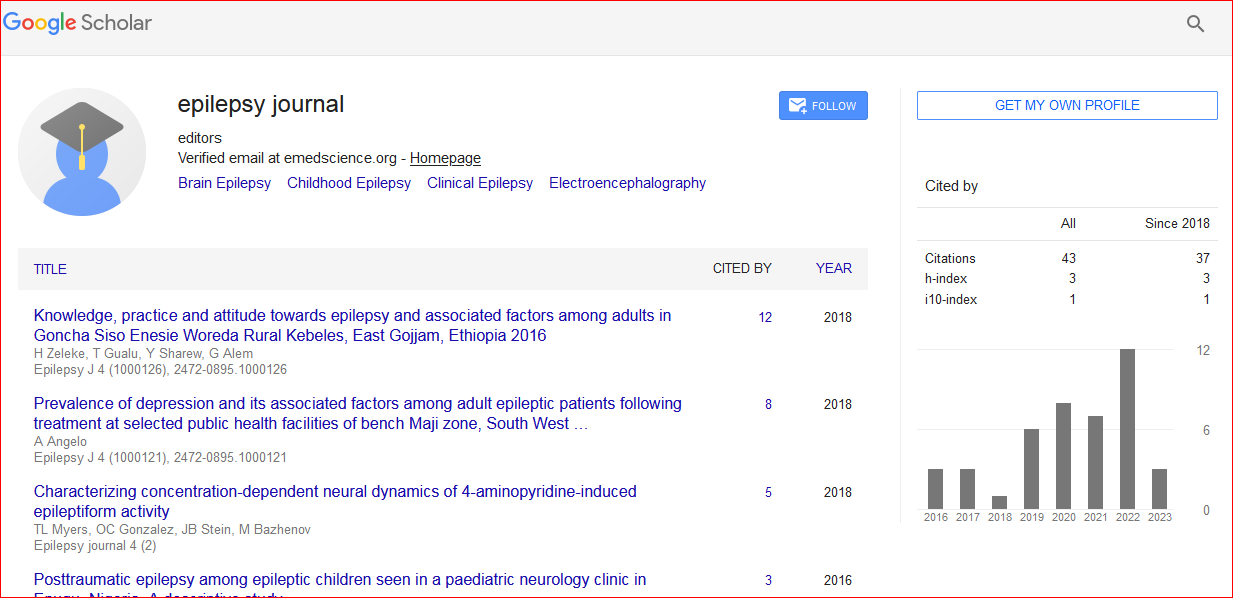
Epilepsy Journal received 41 citations as per Google Scholar report