Perspective - (2025) Volume 13, Issue 5
Received: 01-Oct-2025, Manuscript No. jcdd-25-177669;
Editor assigned: 03-Oct-2025, Pre QC No. P-177669;
Reviewed: 17-Oct-2025, QC No. Q-177669;
Revised: 22-Oct-2025, Manuscript No. R-177669;
Published:
29-Oct-2025
, DOI: 10.37421/2329-9517.2025.13.695
Citation: Arif Chowdhury. ”Modern Stroke Care: Advancements,
Challenges, Disparities.” J Cardiovasc Dis Diagn 13 (2025):695.
Copyright: © 2025 C. Arif This is an open-access article distributed under the terms of the Creative Commons Attribution License, which permits unrestricted use, distribution
and reproduction in any medium, provided the original author and source are credited.
Recent advancements have significantly transformed the landscape of stroke management and prevention. One pivotal area is endovascular thrombectomy, which has emerged as a standard, highly effective, and safe treatment for acute ischemic stroke, particularly in cases of large vessel occlusions. This procedure demands careful patient selection and timely intervention to maximize improvements in neurological outcomes [1].
Post-stroke recovery relies heavily on effective physical rehabilitation strategies. Emphasizing early and intensive therapy is crucial for restoring motor function, improving walking ability, and enhancing daily activities. Despite established evidence-based approaches, challenges persist in implementing these effective programs universally, highlighting the need for wider accessibility and standardized care [2].
Preventing recurrent stroke and transient ischemic attack (TIA) is a cornerstone of long-term patient management. Comprehensive guidelines underscore the importance of meticulously managing key risk factors such as hypertension, diabetes, dyslipidemia, and atrial fibrillation. These efforts must be coupled with sustained lifestyle modifications and appropriate antiplatelet or anticoagulation therapies, tailored to individual patient profiles for optimal secondary prevention [3].
Advanced neuroimaging techniques are revolutionizing acute ischemic stroke care by providing critical insights for treatment decisions. State-of-the-art imaging plays an indispensable role in selecting suitable patients for reperfusion therapies and predicting outcomes. The utility of perfusion imaging and thorough collateral status assessment is particularly emphasized, guiding rapid and informed clinical judgments [4].
Managing acute intracerebral hemorrhage (ICH) presents unique challenges, requiring a multifaceted approach. Current scientific statements provide updated recommendations covering immediate stabilization, meticulous blood pressure control, prompt reversal of anticoagulation when indicated, and careful consideration of surgical interventions. The focus remains on personalized care strategies to significantly improve outcomes in this severe stroke subtype [5].
Post-stroke cognitive impairment (PSCI) is a complex and often debilitating consequence of stroke. Understanding its diverse mechanisms, improving early diagnostic methods, and developing effective treatments are ongoing priorities. The heterogeneous nature of PSCI necessitates varied therapeutic strategies, including both pharmacological and non-pharmacological interventions, all aimed at enhancing cognitive function and quality of life for survivors [6].
The genetic underpinnings of stroke are increasingly being elucidated, revealing both monogenic forms and the polygenic risk associated with common stroke subtypes. Advances in identifying specific genetic variants linked to stroke risk hold significant promise. These discoveries open doors for more personalized prevention and treatment strategies, moving towards precision medicine in stroke care [7].
Addressing racial and ethnic disparities in stroke care and outcomes is a critical public health imperative. Systemic factors, including unequal access to high-quality care, variations in treatment efficacy, and inequities in post-stroke rehabilitation, contribute significantly to these disparities. Advocating for targeted strategies to achieve genuine health equity in stroke management is paramount to ensure fair and optimal care for all populations [8].
Research into neuroprotective strategies for ischemic stroke continues to explore various targets and compounds designed to mitigate neuronal damage following an ischemic event. Despite numerous promising experimental therapies, translating these into clinically effective treatments remains a significant challenge. Both successes and failures in clinical trials provide valuable lessons for future drug development in this complex field [9].
Finally, effective anticoagulation in atrial fibrillation (AF) is fundamental for stroke prevention. Modern strategies focus on the judicious use of direct oral anticoagulants (DOACs) as alternatives to warfarin. Patient selection, comprehensive risk assessment, and skilled management of potential bleeding complications are all crucial elements. This requires highly individualized treatment approaches to balance efficacy with safety, ultimately reducing the incidence of AF-related stroke [10].
The field of stroke care has seen remarkable progress, particularly in acute interventions and long-term management. Endovascular thrombectomy, for example, has become a cornerstone therapy for acute ischemic stroke with large vessel occlusions. This procedure, which involves mechanically removing blood clots, has demonstrated compelling efficacy and safety, fundamentally altering treatment paradigms and significantly improving neurological outcomes when performed promptly and on carefully selected patients [1].
Beyond acute interventions, the journey of stroke recovery critically relies on comprehensive physical rehabilitation. Early initiation and intensive engagement in therapy are vital to regain motor function, improve ambulation, and enhance independence in daily activities. While evidence-based protocols exist, the global implementation of these effective rehabilitation programs faces considerable hurdles, including resource limitations and access disparities, which must be addressed to ensure broader patient benefit [2]. Prevention is also a key area of focus. Guidelines for preventing recurrent stroke and transient ischemic attack emphasize a holistic approach. This includes diligent management of modifiable risk factors such as hypertension, diabetes, dyslipidemia, and atrial fibrillation. Alongside pharmacological interventions like antiplatelets and anticoagulants, lifestyle modifications are crucial for sustained risk reduction and better long-term prognosis [3].
Diagnostic imaging forms the bedrock of modern acute ischemic stroke management. Sophisticated neuroimaging techniques offer unparalleled insights, guiding critical decisions regarding reperfusion therapies and providing valuable prognostic information. The precise assessment of brain perfusion and collateral blood flow status is particularly emphasized, enabling clinicians to make rapid and informed choices that directly impact patient outcomes and help tailor individual treatment plans [4]. Similarly, the management of acute intracerebral hemorrhage (ICH), a distinct and severe form of stroke, demands specialized protocols. Current scientific statements outline critical steps, from immediate patient stabilization and stringent blood pressure control to the reversal of anticoagulant effects and, when appropriate, surgical intervention. Personalized care, recognizing the heterogeneity of ICH, is paramount to optimizing patient recovery and minimizing mortality [5].
Stroke often leads to complex neurological sequelae, including post-stroke cognitive impairment (PSCI). This condition is characterized by diverse underlying mechanisms, making early and accurate diagnosis challenging. Research continues to explore its pathophysiology and develop effective therapeutic strategies. Both pharmacological and non-pharmacological interventions are being investigated to mitigate cognitive decline and improve the overall quality of life for stroke survivors experiencing these challenges [6]. Understanding the genetic predisposition to stroke is another rapidly evolving area. Studies have identified both rare monogenic forms and numerous polygenic risk factors contributing to common stroke subtypes. Identifying these genetic variants holds the potential for revolutionary advancements in personalized prevention strategies and tailored therapeutic approaches, paving the way for more precise and effective interventions based on an individual's genetic profile [7].
A significant concern in healthcare is the presence of racial and ethnic disparities in stroke care and its resulting outcomes. Systemic factors, such as differential access to quality medical care, variations in the effectiveness of treatments received, and inequalities in post-stroke rehabilitation services, collectively contribute to these inequities. Addressing these deeply ingrained issues requires concerted efforts and targeted strategies aimed at achieving true health equity in stroke management for all individuals, irrespective of their background [8]. Simultaneously, the quest for effective neuroprotective strategies for ischemic stroke remains an active area of research. Scientists are exploring various molecular targets and compounds to protect brain tissue from damage during and after an ischemic event. Despite many promising preclinical findings, the translation of these experimental therapies into successful clinical treatments has proven to be a formidable challenge, underscoring the complexity of neuroprotection [9]. Finally, preventing stroke in patients with atrial fibrillation (AF) is a critical component of cardiovascular health. Current guidelines advocate for tailored anticoagulation regimens, often favoring direct oral anticoagulants (DOACs) over warfarin for many patients. This involves careful patient selection, thorough risk assessment for both stroke and bleeding, and meticulous management of potential complications, ensuring an individualized approach that maximizes benefits while minimizing risks [10].
This collection of articles provides a comprehensive overview of critical advancements and ongoing challenges in stroke care. Key developments include the establishment of endovascular thrombectomy as a standard, effective treatment for acute ischemic stroke, particularly for large vessel occlusions, emphasizing timely intervention for optimal neurological outcomes. The importance of early and intensive physical rehabilitation is highlighted for improving motor function and daily activities post-stroke, alongside the persistent global challenges in implementing these programs effectively. Preventative strategies are extensively discussed, focusing on managing risk factors like hypertension, diabetes, dyslipidemia, and atrial fibrillation, coupled with lifestyle changes and appropriate antiplatelet/anticoagulation therapies to prevent recurrent strokes. Advanced neuroimaging techniques are shown to be crucial in guiding treatment decisions for acute ischemic stroke, especially for patient selection in reperfusion therapies. Management guidelines for acute intracerebral hemorrhage are updated, advocating for personalized care in immediate stabilization, blood pressure control, and surgical considerations. The reviews also delve into post-stroke cognitive impairment, exploring its mechanisms, diagnosis, and treatment, acknowledging its heterogeneous nature. Genetic research in stroke is moving towards personalized prevention and treatment by identifying monogenic forms and polygenic risks. Significant attention is given to addressing racial and ethnic disparities in stroke care, underscoring systemic factors impacting access, treatment quality, and rehabilitation outcomes. Efforts in neuroprotection for ischemic stroke continue to face translation challenges despite promising experimental therapies. Additionally, modern anticoagulation strategies for atrial fibrillation, particularly the use of direct oral anticoagulants, are discussed for their role in stroke prevention, emphasizing individualized treatment approaches.
Indexed at, Google Scholar, Crossref
Indexed at, Google Scholar, Crossref
Indexed at, Google Scholar, Crossref
Indexed at, Google Scholar, Crossref
Indexed at, Google Scholar, Crossref
Indexed at, Google Scholar, Crossref
Indexed at, Google Scholar, Crossref
Indexed at, Google Scholar, Crossref
Indexed at, Google Scholar, Crossref
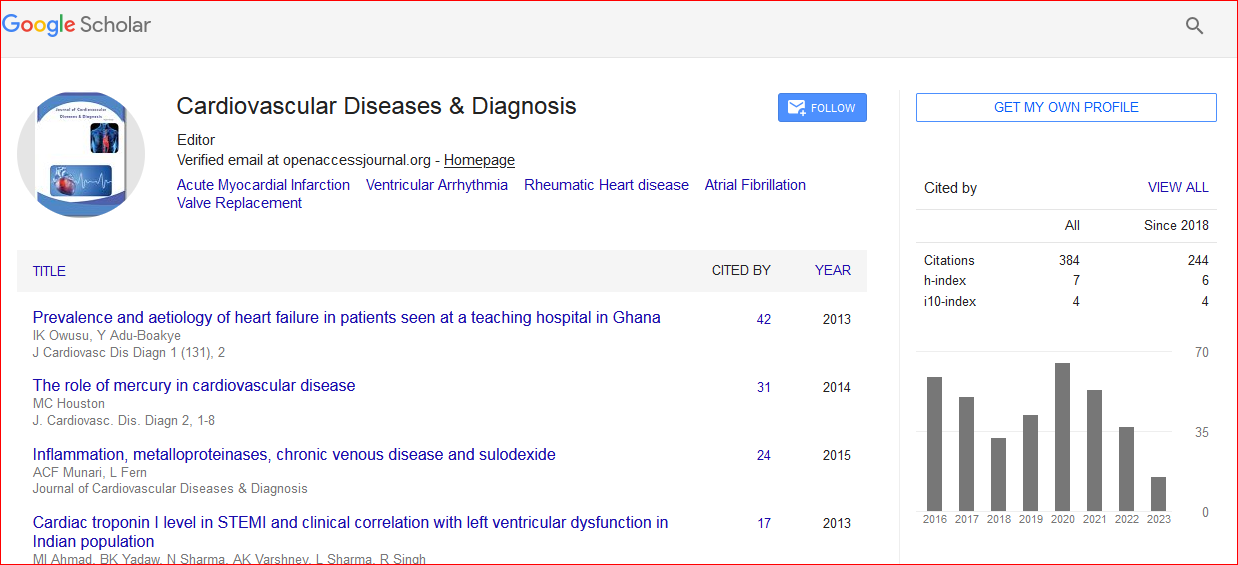
Cardiovascular Diseases & Diagnosis received 427 citations as per Google Scholar report