Commentary - (2025) Volume 11, Issue 6
Received: 01-Dec-2025, Manuscript No. icoa-25-178175;
Editor assigned: 03-Dec-2025, Pre QC No. P-178175;
Reviewed: 17-Dec-2025, QC No. Q-178175;
Revised: 22-Dec-2025, Manuscript No. R-178175;
Published:
29-Dec-2025
, DOI: 10.37421/2469-9756.2025.11.328
Citation: Fernández, Maria L.. ”Modern Antibody Therapeutics: Engineering, Applications, and Challenges.” Immunochem Immunopathol 11 (2025):328.
Copyright: © 2025 Fernández L. Maria This is an open-access article distributed under the terms of the Creative Commons Attribution License, which permits unrestricted use, distribution and reproduction in any medium, provided the original author and source are credited.
Monoclonal antibodies (mAbs) represent a pivotal advancement in modern medicine, revolutionizing both therapeutic interventions and diagnostic methodologies due to their remarkable specificity in targeting biological entities. The continuous evolution of mAb technology has led to significant breakthroughs in engineering these proteins for superior effector functions, minimizing immunogenic responses, and optimizing their pharmacokinetic profiles for enhanced clinical utility. Bispecific antibodies, a sophisticated development in this field, are designed to simultaneously engage two distinct molecular targets, thereby expanding their therapeutic reach into complex disease areas such as oncology and autoimmune disorders. Furthermore, the integration of antibody-drug conjugates (ADCs) has fundamentally transformed the landscape of targeted cancer therapy, enabling the precise delivery of potent cytotoxic agents directly to tumor cells, consequently mitigating systemic toxicity and improving patient outcomes. Ongoing scientific endeavors are dedicated to exploring novel antibody formats and innovative delivery systems to further refine their clinical efficacy and enhance patient well-being. C001 The engineering of bispecific monoclonal antibodies has unlocked novel therapeutic avenues, particularly in the management of cancers characterized by intricate signaling pathways. These engineered molecules possess the unique ability to bind concurrently to a tumor-associated antigen and a receptor on immune cells, effectively redirecting cytotoxic T lymphocytes to eliminate malignant cells. This strategic approach has demonstrated substantial promise in the treatment of hematological malignancies and is currently undergoing rigorous investigation for its potential application in solid tumors. Such advancements underscore the dynamic nature of antibody engineering in addressing multifaceted disease challenges. C002 Antibody-drug conjugates (ADCs) represent a sophisticated class of therapeutic agents that artfully combine the exquisite specificity of monoclonal antibodies with the potent cytotoxic activity of small molecule drugs. The critical element in the functionality of ADCs lies in the linker technology that covalently attaches the antibody to the drug payload, ensuring stability within the circulatory system and facilitating efficient drug release specifically within the tumor microenvironment. Recent innovations in linker chemistry have significantly improved the therapeutic window of ADCs, paving the way for their successful deployment in the treatment of a wide array of cancers. C003 The immune system's reaction to therapeutic monoclonal antibodies, notably the emergence of anti-drug antibodies (ADAs), can substantially compromise their therapeutic efficacy and safety profiles. A comprehensive understanding of the underlying mechanisms of immunogenicity, coupled with the development of effective mitigation strategies, such as protein engineering and precisely calibrated dosing regimens, is paramount for the successful clinical translation of these vital therapeutics. This review critically examines the current methodologies employed for predicting, monitoring, and managing the immunogenicity associated with therapeutic mAbs. C004 Key cellular processes, including affinity maturation and germinal center selection, are fundamental to the generation of high-affinity antibodies during an adaptive immune response. Within the realm of monoclonal antibody development, an in-depth comprehension of these intricate mechanisms offers valuable insights for designing strategies to produce antibodies with optimized binding characteristics. Contemporary research employs advanced experimental techniques to meticulously dissect these complex cellular events, thereby enhancing our understanding and control over antibody generation. C005 The Fc region of monoclonal antibodies plays an indispensable role in mediating critical effector functions, such as antibody-dependent cellular cytotoxicity (ADCC) and complement-dependent cytotoxicity (CDC). Through strategic engineering of the Fc domain, it is possible to modulate these effector functions, thereby tailoring them for specific therapeutic indications and optimizing their clinical impact. Common strategies employed in Fc engineering include glycoengineering and the introduction of specific point mutations to enhance or attenuate Fc-mediated effector mechanisms, providing a powerful tool for therapeutic optimization. C006 Single-domain antibodies (VHHs), which are derived from the heavy chains of certain antibodies found in camelids, present a unique set of advantages that include their diminutive size, exceptional stability, and remarkable tissue penetration capabilities. These inherent properties render them highly attractive for a diverse range of therapeutic and diagnostic applications, including their use as imaging agents and in sophisticated targeted drug delivery systems, often employing formats that diverge from conventional mAbs. C007 The increasing emphasis on personalized medicine necessitates the utilization of specific biomarkers to guide treatment decisions. Monoclonal antibodies are actively being developed not only as therapeutic agents but also as companion diagnostics, designed to target particular molecular alterations identified within individual patient tumors, thus heralding a transformative era in precision oncology. C008 The manufacturing of monoclonal antibodies for therapeutic purposes involves intricate bioprocessing workflows, encompassing critical stages such as cell line development, upstream cultivation, and downstream purification. Rigorous optimization of these processes is essential for achieving high yields, ensuring exceptional purity, and maintaining cost-effectiveness throughout production. Significant advancements in process analytical technology (PAT) and the implementation of continuous manufacturing methodologies are currently reshaping the paradigm of antibody production. C009 Antibody fragments, including entities such as Fab and single-chain variable fragments (scFv), are specifically engineered for applications where the full-length immunoglobulin G (IgG) molecule might prove less than optimal. Their reduced molecular size can facilitate enhanced tissue penetration and a diminished potential for immunogenicity. These antibody fragments serve as invaluable tools in diagnostic assays and are integral to the development of targeted therapies and advanced imaging agents. C010
Monoclonal antibodies (mAbs) have emerged as a cornerstone of contemporary therapeutics and diagnostics, offering unparalleled specificity in targeting various biological molecules. Significant research efforts are currently directed towards engineering mAbs to enhance their effector functions, reduce their immunogenicity, and improve their pharmacokinetic properties, thereby optimizing their clinical performance. The development of bispecific antibodies, capable of binding to two distinct targets simultaneously, represents a major advancement, broadening their application in areas like oncology and autoimmune diseases. Moreover, the integration of antibody-drug conjugates (ADCs) has revolutionized targeted cancer therapy by enabling the direct delivery of potent cytotoxic payloads to tumor cells, thereby minimizing systemic toxicity and improving patient safety. C001 Bispecific monoclonal antibody engineering has opened up new frontiers in targeted therapy, especially for cancers involving multiple signaling pathways. These engineered molecules can bind to both a tumor antigen and an immune cell receptor, thereby enabling the redirection of cytotoxic T cells to eradicate cancer cells. This strategy has shown considerable promise in hematological malignancies and is being actively investigated for its potential in treating solid tumors. C002 Antibody-drug conjugates (ADCs) are sophisticated therapeutic agents that synergistically combine the targeting precision of monoclonal antibodies with the cytotoxic power of small molecule drugs. The linker technology that connects the antibody to the drug payload is a critical determinant of ADC stability in circulation and the efficiency of drug release within the tumor microenvironment. Recent advancements in linker chemistry have led to improved therapeutic windows for ADCs, resulting in their successful application across various cancer types. C003 The immune response directed against therapeutic monoclonal antibodies, manifested as anti-drug antibodies (ADAs), can significantly impact their clinical efficacy and safety. Understanding the mechanisms driving immunogenicity and developing strategies to mitigate it, such as through protein engineering and optimized dosing, are crucial steps for successful clinical translation. This review discusses current approaches for predicting, monitoring, and managing the immunogenicity of therapeutic mAbs. C004 Affinity maturation and germinal center selection are fundamental processes that drive the generation of high-affinity antibodies during an immune response. In the context of developing monoclonal antibodies, insights into these mechanisms can inform strategies for producing antibodies with desired binding characteristics. Recent studies have utilized advanced techniques to meticulously analyze these complex cellular events. C005 The Fc region of monoclonal antibodies plays a critical role in mediating essential effector functions, including antibody-dependent cellular cytotoxicity (ADCC) and complement-dependent cytotoxicity (CDC). Engineering the Fc domain allows for the modulation of these functions, tailoring them for specific therapeutic applications. Techniques such as glycoengineering and the introduction of specific point mutations are commonly employed to enhance or reduce Fc-mediated effector mechanisms. C006 Single-domain antibodies (VHHs), derived from the heavy chains of antibodies found in camelids, possess advantageous characteristics such as small size, high stability, and excellent tissue penetration. These attributes make them highly suitable for a variety of therapeutic and diagnostic applications, including use as imaging agents and in targeted drug delivery systems, often in formats that differ from conventional mAbs. C007 The growing trend towards personalized medicine increasingly relies on the identification of biomarkers to guide therapeutic decisions. Monoclonal antibodies are being developed as both companion diagnostics and therapeutic agents that specifically target molecular alterations found in individual patient tumors, marking the dawn of a new era in precision oncology. C008 The production of monoclonal antibodies for therapeutic use involves complex bioprocessing steps, including cell line development, upstream cultivation, and downstream purification. Optimizing these processes is essential for achieving high yields, purity, and cost-effectiveness. Advances in process analytical technology (PAT) and continuous manufacturing are significantly transforming antibody production methods. C009 Antibody fragments, such as Fab and scFv, are engineered for specific applications where a full-length IgG antibody may not be ideal. Their smaller size can lead to better tissue penetration and reduced immunogenicity. These fragments are valuable tools in diagnostic applications, as well as in the development of targeted therapies and imaging agents. C010
Monoclonal antibodies (mAbs) are vital in modern therapeutics and diagnostics, with ongoing engineering efforts focusing on enhanced effector functions, reduced immunogenicity, and improved pharmacokinetics. Bispecific antibodies offer broader applications by engaging two targets, while antibody-drug conjugates (ADCs) revolutionize cancer therapy through targeted cytotoxic payload delivery. Research continues to explore novel antibody formats and delivery systems. Bispecific antibodies are particularly promising in oncology for redirecting immune cells to target cancer. ADCs leverage antibody specificity with drug potency, with linker technology being crucial for their efficacy. Immunogenicity, or the immune response to therapeutic mAbs, is a key concern, necessitating strategies to predict, monitor, and manage it. Understanding antibody affinity maturation and germinal center selection informs the development of high-affinity antibodies. The Fc region's engineering is critical for modulating effector functions like ADCC and CDC. Single-domain antibodies (VHHs) offer advantages in size, stability, and penetration for various applications. Biomarkers are increasingly used with mAbs in precision oncology. Bioprocessing of mAbs involves complex stages requiring optimization for yield and purity. Antibody fragments, like Fab and scFv, are engineered for specific applications requiring smaller size and better penetration.
None
None
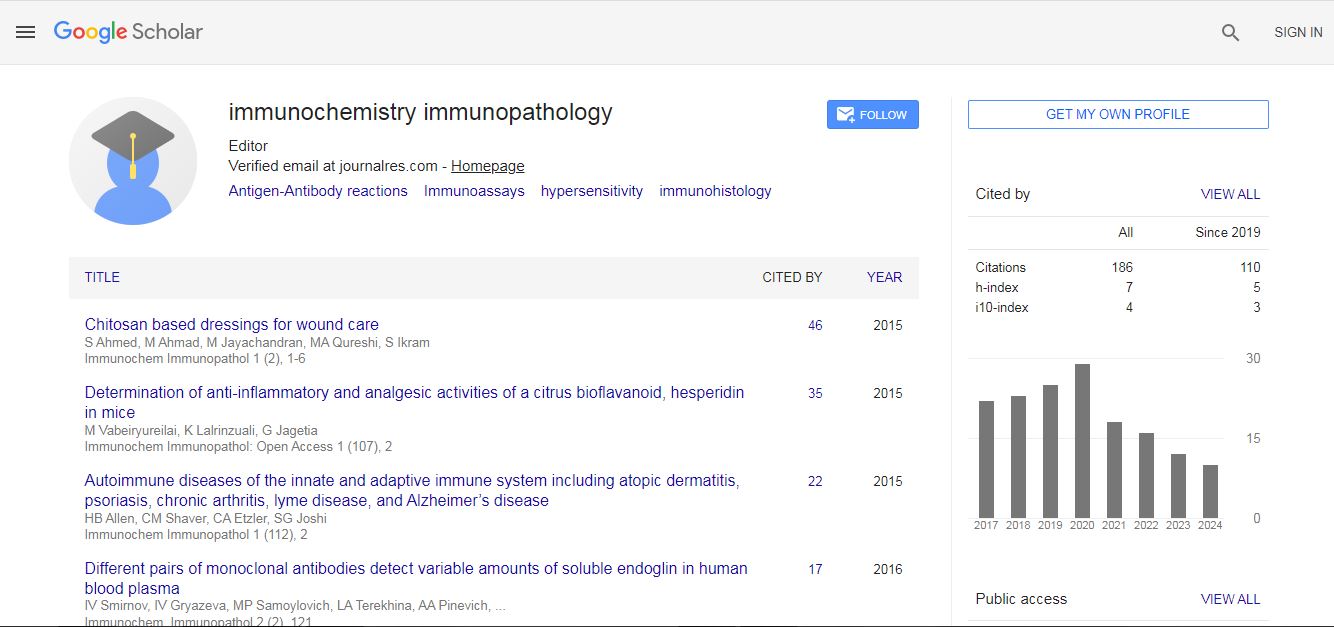
Immunochemistry & Immunopathology received 174 citations as per Google Scholar report