Opinion - (2025) Volume 12, Issue 3
Received: 01-Jun-2025, Manuscript No. jreac-26-185783;
Editor assigned: 03-Jun-2025, Pre QC No. P-185783;
Reviewed: 17-Jun-2025, QC No. Q-185783;
Revised: 23-Jun-2025, Manuscript No. R-185783;
Published:
30-Jun-2025
, DOI: 10.37421/2380-2391.2025.12.434
Citation: Rossi, Valentina. ”Microwave Digestion: Efficient Sediment Heavy Metal Analysis.” J Environ Anal Chem 12 (2025):434.
Copyright: © 2025 Rossi V. This is an open-access article distributed under the terms of the Creative Commons Attribution License, which permits unrestricted use, distribution and reproduction in any medium, provided the original author and source are credited.
Microwave-assisted digestion has emerged as a highly efficient and robust methodology for the intricate preparation of environmental samples, particularly sediments, prior to their analysis for heavy metal content. This advanced technique offers substantial advantages over traditional digestion methods, including a significant reduction in the time required for sample processing and a marked decrease in the volume of chemical reagents necessitated. Such optimizations not only streamline laboratory workflows but also contribute to enhanced analytical accuracy by minimizing the potential for contamination and improving the overall reliability of the obtained data. The precise selection of the acid mixture, the judicious control of microwave power, and the careful calibration of digestion times are paramount parameters that demand meticulous optimization. This optimization process must be tailored to the specific characteristics of the sediment matrix and the nature of the target analytes, ensuring complete dissolution of metals and their subsequent availability for sensitive spectroscopic analysis [1].
The effective implementation of microwave digestion protocols hinges on the precise optimization of various parameters, including the choice of acid combinations and the specific digestion conditions employed. For complex matrices like sediments, achieving complete analyte recovery is a critical objective, often necessitating the careful selection of reagents such as sulfuric acid, nitric acid, and hydrogen peroxide. These acids are frequently used in specific ratios, strategically designed to effectively address the challenges posed by organic matter and refractory components present within the sample. Furthermore, rigorous control over temperature and pressure within the sealed microwave vessel is indispensable to prevent any potential loss of analytes or the introduction of interfering substances that could compromise the accuracy of the subsequent analytical measurements [2].
When considering the efficacy of microwave digestion for heavy metal analysis in sediment samples, the instrumentation and the materials used for the digestion vessels play a pivotal role. The adoption of closed-vessel systems is generally preferred due to their capacity to achieve higher temperatures and pressures. These elevated conditions significantly promote the more effective decomposition of complex organic matter and facilitate the thorough dissolution of metal-bearing minerals, which are often resistant to less aggressive digestion methods. Crucially, the selection of inert vessel materials, such as polytetrafluoroethylene (PTFE) or perfluoroalkoxy alkane (PFA), is essential to prevent any inadvertent contamination of the sample or degradation of the vessel itself during the demanding digestion process, thereby safeguarding the integrity of the analytical results [3].
A fundamental aspect of employing microwave digestion for heavy metal analysis in sediments is the rigorous validation of the developed methods. This validation process is paramount to ensure the reliability and accuracy of the analytical data generated. Key components of this validation include assessing the method's accuracy by analyzing certified reference materials, meticulously establishing method detection limits to define the sensitivity of the technique, and ensuring robust reproducibility across multiple analyses. Comparative studies with established digestion protocols, such as conventional hot plate digestion, are often conducted. These comparisons typically underscore the significant speed and enhanced effectiveness of microwave techniques, provided that optimal digestion parameters have been carefully established and implemented [4].
The presence of substantial amounts of organic matter within sediment samples can present a significant challenge to the efficiency of microwave digestion protocols. To ensure the complete release of target metals, pre-treatment steps or the utilization of carefully adjusted acid mixtures are often necessary. These adjustments are specifically designed to enhance the oxidative capacity of the digestion mixture, thereby promoting the effective breakdown of organic components. The incorporation of oxidizing agents, such as hydrogen peroxide, in conjunction with strong mineral acids, represents a common and effective strategy for overcoming the inherent difficulties posed by high organic matter content, leading to improved metal recovery [5].
From an environmental perspective, microwave digestion stands out as a greener and more sustainable alternative for sample preparation in the context of heavy metal analysis. This technique typically demands considerably smaller quantities of chemical reagents compared to traditional digestion methods. Consequently, it generates a reduced volume of hazardous waste, which aligns seamlessly with the fundamental principles of green chemistry and sustainable laboratory practices. The adoption of microwave digestion therefore contributes to minimizing the environmental footprint of analytical procedures, making it a more ecologically conscious choice for laboratories involved in environmental monitoring and research [6].
The successful execution of microwave digestion for sediment samples critically relies on the appropriate selection and programming of the microwave digestion system's parameters. This includes the precise control of ramp times (the time taken to reach the target temperature), hold times (the duration at the target temperature), and power levels. Meticulous adjustment of these parameters is crucial for achieving complete sample digestion and for effectively circumventing potential matrix effects that can arise from the complex composition of sediment samples. The advent of programmable microwave digestion systems offers unparalleled precision and control over these critical parameters, thereby significantly enhancing the reproducibility and overall accuracy of the analytical results obtained [7].
Interferences stemming from the intricate sample matrix, particularly the complex mineralogical compositions often encountered in sediments, can exert a considerable influence on the accuracy of heavy metal analysis following microwave digestion. To effectively mitigate these potential matrix effects and ensure reliable quantification of target analytes, various strategies can be employed. These include matrix matching, where the composition of calibration standards closely resembles that of the sample matrix, or the judicious use of internal standards within the instrumental analytical technique itself, such as inductively coupled plasma mass spectrometry (ICP-MS). The application of these methods helps to correct for variations in signal intensity caused by the matrix, thereby improving the accuracy of the results [8].
Microwave digestion is exceptionally well-suited for facilitating the simultaneous analysis of a wide spectrum of heavy metals present in sediment samples. The high degree of efficient dissolution achieved by this technique renders it highly compatible with multi-element analytical methodologies. Techniques such as inductively coupled plasma atomic emission spectrometry (ICP-AES) and inductively coupled plasma mass spectrometry (ICP-MS) can be readily employed following microwave digestion. This compatibility enables comprehensive environmental monitoring by allowing for the simultaneous determination of numerous heavy metals from a single sample preparation procedure, thereby enhancing the efficiency and scope of analytical investigations [9].
The physical characteristics inherent to sediment particles, such as their grain size distribution and the overall surface area, can significantly influence the effectiveness and efficiency of the microwave digestion process. Generally, finer sediment particles tend to digest more readily. This increased ease of digestion is attributed to their larger surface area, which provides a greater area for acid attack and facilitates more rapid dissolution of the target analytes. In cases of highly heterogeneous sediment samples, pre-treatment steps, such as sieving to achieve a uniform particle size or grinding to reduce particle size, might be thoughtfully considered to enhance overall digestion efficiency and ensure more consistent results [10].
Microwave-assisted digestion stands as a cornerstone technique in the modern analytical laboratory for the preparation of sediment samples prior to heavy metal analysis. Its primary advantage lies in its remarkable efficiency, dramatically reducing digestion times and the volumes of chemical reagents required compared to conventional methods. This not only optimizes laboratory throughput but also minimizes the risk of contamination, thereby enhancing analytical accuracy. Critical to its success is the careful optimization of parameters such as acid mixtures, microwave power, and digestion duration, which must be precisely tailored to the specific sediment matrix and the analytes of interest. This meticulous approach ensures complete metal dissolution, making them readily accessible for subsequent spectroscopic analysis [1].
The effectiveness of microwave digestion protocols is significantly influenced by the judicious selection of acid combinations and the fine-tuning of digestion parameters to achieve complete analyte recovery from challenging matrices like sediments. Commonly employed reagents include a synergistic blend of sulfuric acid, nitric acid, and hydrogen peroxide, often applied in specific ratios designed to tackle the complex interplay of organic matter and refractory components. Maintaining stringent control over temperature and pressure within the microwave vessel is paramount to avert any loss of analytes or the introduction of spectral or chemical interferences that could compromise the integrity of the analytical data [2].
Within the realm of microwave digestion for heavy metal analysis in sediments, the choice of instrumentation and the materials constituting the digestion vessels are of paramount importance. Closed-vessel systems are predominantly favored due to their capability to attain higher temperatures and pressures, conditions that are conducive to more effective decomposition of recalcitrant organic matter and the thorough dissolution of metal-bearing mineral phases. The strategic use of inert vessel materials, such as polytetrafluoroethylene (PTFE) or perfluoroalkoxy alkane (PFA), is essential to preclude any contamination from the vessel walls and to prevent degradation of the vessel material under the harsh digestion conditions, thereby preserving the purity of the sample [3].
A critical step in the application of microwave digestion for heavy metal analysis in sediments involves the comprehensive validation of the employed methods. This validation process is indispensable for confirming the accuracy, precision, and reliability of the analytical results. Key validation activities include assessing accuracy through the analysis of certified reference materials, meticulously determining method detection limits to establish the sensitivity of the technique, and ensuring consistent reproducibility across multiple sample preparations and analyses. Comparisons with established digestion protocols, such as traditional hot plate digestion, are frequently undertaken to highlight the speed and effectiveness of microwave digestion when parameters are appropriately optimized [4].
The presence of significant organic matter content in sediment samples can pose a considerable obstacle to achieving complete metal release during microwave digestion. To surmount this challenge, pre-treatment steps or specifically adjusted acid mixtures that enhance the oxidative capacity of the digestion solution are often employed. A common and effective strategy involves the use of potent oxidizing agents, such as hydrogen peroxide, in combination with strong mineral acids. This synergistic approach facilitates the efficient breakdown and removal of organic matter, thereby ensuring that metals are fully liberated and available for analysis [5].
From an environmental sustainability standpoint, microwave digestion represents a significantly greener alternative for sample preparation in heavy metal analysis. This method typically necessitates the use of smaller quantities of chemical reagents, consequently generating a reduced volume of hazardous waste compared to conventional digestion techniques. This inherent characteristic aligns perfectly with the principles of green chemistry, promoting more environmentally conscious laboratory practices. The adoption of microwave digestion therefore contributes to minimizing the ecological impact of analytical procedures in environmental science [6].
The accurate and reproducible execution of microwave digestion for sediment samples is heavily reliant on the meticulous selection and programming of specific microwave digestion parameters. These include the ramp time (the period over which the temperature rises), the hold time (the duration at the maximum temperature), and the power levels utilized. Careful control over these parameters is essential for achieving complete digestion and for mitigating potential matrix effects that can influence the accuracy of the subsequent analytical measurements. Programmable microwave digestion systems provide the necessary precision for optimizing these parameters, thereby enhancing both reproducibility and accuracy [7].
Interferences originating from the sample matrix, particularly the complex mineralogical compositions characteristic of sediments, can adversely affect the accuracy of heavy metal analysis following microwave digestion. To effectively address and mitigate these matrix effects, thereby ensuring reliable quantification, several strategies can be implemented. These include employing matrix matching, where calibration standards closely mimic the matrix of the samples, or incorporating internal standards within the analytical instrumentation, such as inductively coupled plasma mass spectrometry (ICP-MS). These approaches help to correct for signal variations caused by the matrix, leading to more accurate results [8].
Microwave digestion offers a distinct advantage in its capability to facilitate the simultaneous analysis of a broad range of heavy metals within sediment samples. The highly efficient dissolution process achieved through microwave heating is perfectly compatible with multi-element analytical techniques, including inductively coupled plasma atomic emission spectrometry (ICP-AES) and inductively coupled plasma mass spectrometry (ICP-MS). This allows for comprehensive environmental monitoring from a single digestion procedure, enabling the efficient determination of numerous metals and providing a more holistic understanding of metal contamination [9].
The physical attributes of sediment particles, such as their size and surface area, play a notable role in determining the efficiency of the microwave digestion process. Sediments composed of finer particles generally undergo digestion more readily due to their increased surface area, which enhances the contact with the digestion reagents. For heterogeneous sediment samples, it may be beneficial to implement pre-treatment steps, such as sieving to standardize particle size or grinding to reduce particle size, thereby improving the overall digestion efficiency and promoting more consistent analytical outcomes [10].
Microwave-assisted digestion is a highly efficient method for preparing sediment samples for heavy metal analysis, offering reduced digestion times and reagent volumes compared to conventional techniques, leading to improved accuracy and reduced contamination risks. Key parameters like acid mixture, microwave power, and digestion time require careful optimization based on the sediment matrix and target analytes to ensure complete metal dissolution. The choice of acid combinations and digestion parameters is crucial for complete analyte recovery, often involving sulfuric acid, nitric acid, and hydrogen peroxide, with careful temperature and pressure control being essential. Instrumentation and vessel materials, particularly closed-vessel systems made of inert materials like PTFE or PFA, are vital for effective digestion. Rigorous method validation, including the use of certified reference materials and establishing detection limits, is paramount. High organic matter content in sediments can be addressed with pre-treatment or adjusted acid mixtures, often including hydrogen peroxide. Microwave digestion offers a greener alternative with reduced reagent use and hazardous waste generation. Proper programming of microwave digestion systems, including ramp, hold times, and power levels, is critical for complete digestion and avoiding matrix effects. Matrix effects from complex mineral compositions can be mitigated through matrix matching or internal standards. The technique allows for simultaneous analysis of multiple heavy metals, compatible with ICP-AES and ICP-MS for comprehensive monitoring. Sediment particle characteristics, such as grain size, influence digestion efficiency, with finer particles digesting more readily, and pre-treatment may be necessary for heterogeneous samples.
None
None
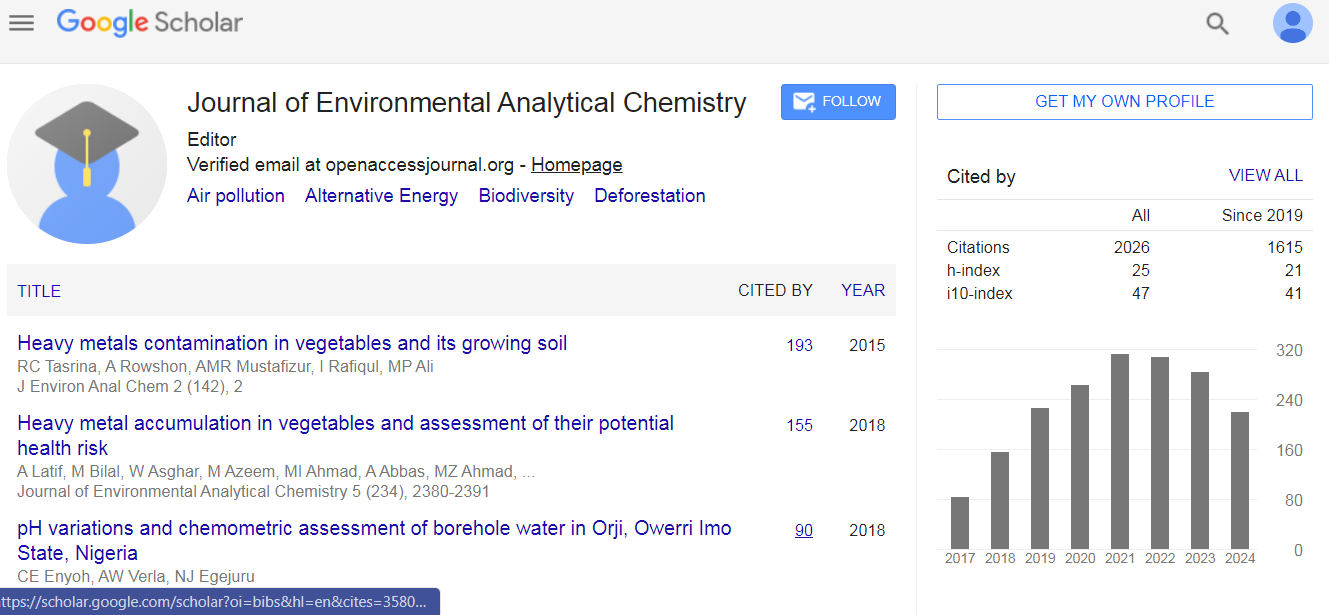
Journal of Environmental Analytical Chemistry received 1781 citations as per Google Scholar report