Opinion - (2025) Volume 9, Issue 3
Received: 01-May-2025, Manuscript No. hps-26-184443;
Editor assigned: 05-May-2025, Pre QC No. P-184443;
Reviewed: 19-May-2025, QC No. Q-184443;
Revised: 22-May-2025, Manuscript No. R-184443;
Published:
29-May-2025
, DOI: 10.37421/2573-4563.2025.9.348
Citation: AlSayeed, Fatima S.. ”MicroRNAs: Biomarkers And Therapeutics For Liver Diseases.” J Hepatol Pancreat Sci 09 (2025):348.
Copyright: © 2025 AlSayeed S. Fatima This is an open-access article distributed under the terms of the Creative Commons Attribution License, which permits unrestricted use, distribution and reproduction in any medium, provided the original author and source are credited.
MicroRNAs (miRNAs) have emerged as critical players in the landscape of liver disease, offering novel avenues for both diagnosis and therapy. Their remarkable stability in biofluids such as serum and plasma, combined with their distinct expression profiles across various hepatic conditions, positions them as invaluable diagnostic tools for diseases including hepatocellular carcinoma (HCC), viral hepatitis, and non-alcoholic fatty liver disease (NAFLD) [1].
Beyond their diagnostic utility, miRNAs hold substantial therapeutic promise. The ability to modulate miRNA levels through the use of mimics or antagomirs presents a sophisticated strategy for correcting aberrant gene expression that drives liver pathology, thereby introducing innovative treatment modalities for conditions such as fibrosis, inflammation, and cancer [1].
This review delves into the multifaceted roles of microRNAs in the pathogenesis of hepatocellular carcinoma (HCC), highlighting how specific miRNAs can function as either oncogenes or tumor suppressors, thereby influencing fundamental cellular processes such as proliferation, apoptosis, invasion, and metastasis [2].
Furthermore, the article critically examines the potential of circulating miRNAs as non-invasive biomarkers for the early diagnosis and prognosis of HCC, alongside a discussion of their therapeutic implications, including the development of miRNA-based therapies aimed at inhibiting tumor growth [2].
The intricate relationship between gut microbiota and liver diseases, particularly non-alcoholic fatty liver disease (NAFLD), is thoroughly investigated, with a specific emphasis on the mediating role of microRNAs in these interactions [3].
The research elucidates how microbial metabolites can impact host miRNA expression, consequently influencing liver inflammation and fibrogenesis, and explores the therapeutic potential of targeting these miRNA-mediated pathways in the context of NAFLD [3].
This study specifically investigates the diagnostic capabilities of serum exosomal microRNAs in individuals diagnosed with chronic hepatitis B (CHB), successfully identifying distinct miRNA signatures capable of differentiating CHB patients from healthy controls and even predicting the likelihood of progression to liver cirrhosis [4].
This evidence strongly suggests that circulating exosomal miRNAs represent promising non-invasive biomarkers for early detection and risk stratification in CHB patients [4].
The therapeutic effectiveness of miRNA-based interventions for liver fibrosis is thoroughly explored, underscoring how targeting specific pro-fibrotic miRNAs or restoring tumor-suppressive miRNAs can significantly ameliorate hepatic stellate cell activation and reduce extracellular matrix deposition [5].
The article also thoughtfully discusses the existing challenges and outlines future directions essential for the successful development of miRNA therapeutics to combat liver fibrosis effectively [5].
This review keenly focuses on the involvement of microRNAs in the development of drug resistance in liver cancers, with a particular emphasis on HCC [6].
It elucidates the mechanisms through which dysregulated miRNAs contribute to resistance against conventional therapeutic agents, including chemotherapy and targeted therapies, and further discusses the potential of miRNA profiling for predicting treatment response and developing miRNA-based strategies to overcome drug resistance [6].
The intricate role of microRNAs within the immune microenvironment of liver diseases is meticulously investigated, emphasizing how miRNAs exert regulatory control over immune cell function, cytokine production, and inflammatory responses in conditions such as viral hepatitis and HCC [7].
The findings suggest that targeted modulation of these miRNA-mediated immune pathways could unlock novel therapeutic avenues for the effective management of inflammatory liver disorders [7].
This research critically explores the application of specific microRNAs as reliable biomarkers for the diagnosis and prediction of liver cirrhosis progression [8].
The study successfully identifies a panel of circulating miRNAs whose expression levels exhibit a strong correlation with the severity of liver fibrosis and the overall risk of developing complications, thereby reinforcing their potential as non-invasive tools for patient management [8].
The therapeutic potential of targeting aberrant miRNA expression in the context of viral hepatitis is meticulously investigated [9].
This article comprehensively discusses how the strategic manipulation of specific miRNAs can effectively suppress viral replication, mitigate liver inflammation, and ultimately prevent disease progression in conditions like hepatitis C and hepatitis B, highlighting the significant promise of miRNA-based therapies as valuable adjuncts to existing antiviral treatments [9].
This study systematically evaluates the therapeutic efficacy of novel drug delivery systems designed for miRNA therapeutics within established liver disease models [10].
The research centers on engineered nanoparticles specifically designed to deliver miRNA mimics or inhibitors directly to damaged liver cells, thereby optimizing therapeutic outcomes and minimizing the occurrence of off-target effects [10].
The findings strongly indicate that advanced delivery platforms are indispensable for the successful clinical translation of miRNA-based therapeutic strategies [10].
MicroRNAs (miRNAs) have garnered significant attention as potent biomarkers for the early identification and monitoring of a spectrum of liver diseases, including hepatocellular carcinoma (HCC), viral hepatitis, and non-alcoholic fatty liver disease (NAFLD) [1].
Their inherent stability within biological fluids like serum and plasma, coupled with their distinct expression patterns in different liver conditions, renders them ideal diagnostic agents [1].
Beyond their diagnostic utility, miRNAs exhibit considerable therapeutic potential. The strategic manipulation of miRNA levels through the administration of miRNA mimics or antagomirs offers a promising approach to rectify aberrant gene expression that drives liver pathology, thus paving the way for novel treatment strategies for conditions such as fibrosis, inflammation, and cancer [1].
This review provides an in-depth exploration of the diverse roles microRNAs play in the pathogenesis of hepatocellular carcinoma (HCC), emphasizing how specific miRNAs can function as either oncogenes or tumor suppressors, thereby influencing critical cellular processes like proliferation, apoptosis, invasion, and metastasis [2].
The article further investigates the potential of circulating miRNAs as non-invasive biomarkers for the early diagnosis and prognosis of HCC, and critically assesses their therapeutic implications, including the advancement of miRNA-based therapies designed to inhibit tumor growth [2].
The complex interplay between the gut microbiota and liver diseases, with a particular focus on non-alcoholic fatty liver disease (NAFLD), is comprehensively examined, highlighting the mediating role of microRNAs in these interactions [3].
The research elaborates on how microbial metabolites can influence host miRNA expression, thereby impacting liver inflammation and fibrogenesis, and explores the therapeutic promise of targeting these miRNA-mediated pathways for intervention in NAFLD [3].
This study specifically focuses on the diagnostic potential of serum exosomal microRNAs in patients diagnosed with chronic hepatitis B (CHB), identifying specific miRNA signatures that can differentiate CHB patients from healthy controls and even predict the progression to liver cirrhosis [4].
This underscores the promise of circulating exosomal miRNAs as valuable non-invasive biomarkers for early detection and risk stratification in CHB [4].
The therapeutic efficacy of miRNA-based interventions for liver fibrosis is thoroughly investigated, demonstrating how targeting specific pro-fibrotic miRNAs or restoring tumor-suppressive miRNAs can effectively ameliorate hepatic stellate cell activation and reduce extracellular matrix deposition [5].
The article also addresses the challenges and future prospects crucial for developing effective miRNA therapeutics to combat liver fibrosis [5].
This review meticulously examines the involvement of microRNAs in the development of drug resistance in liver cancers, with a specific focus on HCC [6].
It elucidates how dysregulated miRNAs contribute to resistance mechanisms against established therapies such as chemotherapy and targeted agents, and discusses the potential of miRNA profiling for predicting treatment response and developing miRNA-based strategies to overcome drug resistance [6].
The role of microRNAs within the liver immune microenvironment is thoroughly investigated, highlighting their regulatory influence on immune cell function, cytokine production, and inflammatory responses in conditions like viral hepatitis and HCC [7].
The findings suggest that modulating these miRNA-mediated immune pathways could present new therapeutic avenues for managing inflammatory liver disorders [7].
This research critically assesses the application of specific microRNAs as biomarkers for diagnosing and predicting the progression of liver cirrhosis [8].
The study identifies a panel of circulating miRNAs whose levels correlate with the severity of liver fibrosis and the risk of complications, reinforcing their potential as non-invasive tools for patient management [8].
The therapeutic potential of targeting aberrant miRNA expression in viral hepatitis is explored, detailing how manipulating specific miRNAs can suppress viral replication, reduce liver inflammation, and prevent disease progression in conditions such as hepatitis C and hepatitis B [9].
The article emphasizes the promise of miRNA-based therapies as adjuncts to existing antiviral treatments [9].
This study evaluates the efficacy of novel drug delivery systems for miRNA therapeutics in liver disease models, focusing on engineered nanoparticles designed to deliver miRNA mimics or inhibitors specifically to damaged liver cells [10].
This approach aims to enhance therapeutic outcomes and minimize off-target effects, with findings suggesting that advanced delivery platforms are vital for the successful clinical translation of miRNA-based therapies [10].
MicroRNAs (miRNAs) are emerging as significant biomarkers for the early detection and monitoring of various liver diseases, including hepatocellular carcinoma (HCC), viral hepatitis, and non-alcoholic fatty liver disease (NAFLD). Their stability in biological fluids and specific expression patterns make them valuable diagnostic tools. miRNAs also hold considerable therapeutic promise, with strategies to manipulate their levels offering novel treatment approaches for liver pathology, fibrosis, inflammation, and cancer. Specific miRNAs have been identified as oncogenes or tumor suppressors in HCC, influencing key cellular processes and serving as potential non-invasive biomarkers for diagnosis and prognosis. The interplay between gut microbiota and liver diseases, mediated by miRNAs, is being explored for therapeutic interventions in NAFLD. Circulating miRNAs, particularly exosomal miRNAs, show potential for early diagnosis and risk stratification in conditions like chronic hepatitis B and liver cirrhosis. miRNA-based therapies are being developed to combat liver fibrosis by targeting pro-fibrotic or tumor-suppressive miRNAs. Furthermore, dysregulated miRNAs contribute to drug resistance in liver cancers, and miRNA profiling may help predict treatment response. MicroRNAs also play a crucial role in the liver immune microenvironment, offering therapeutic targets for inflammatory liver disorders. Finally, advanced drug delivery systems, such as engineered nanoparticles, are essential for the effective therapeutic application of miRNAs in liver diseases.
None
None
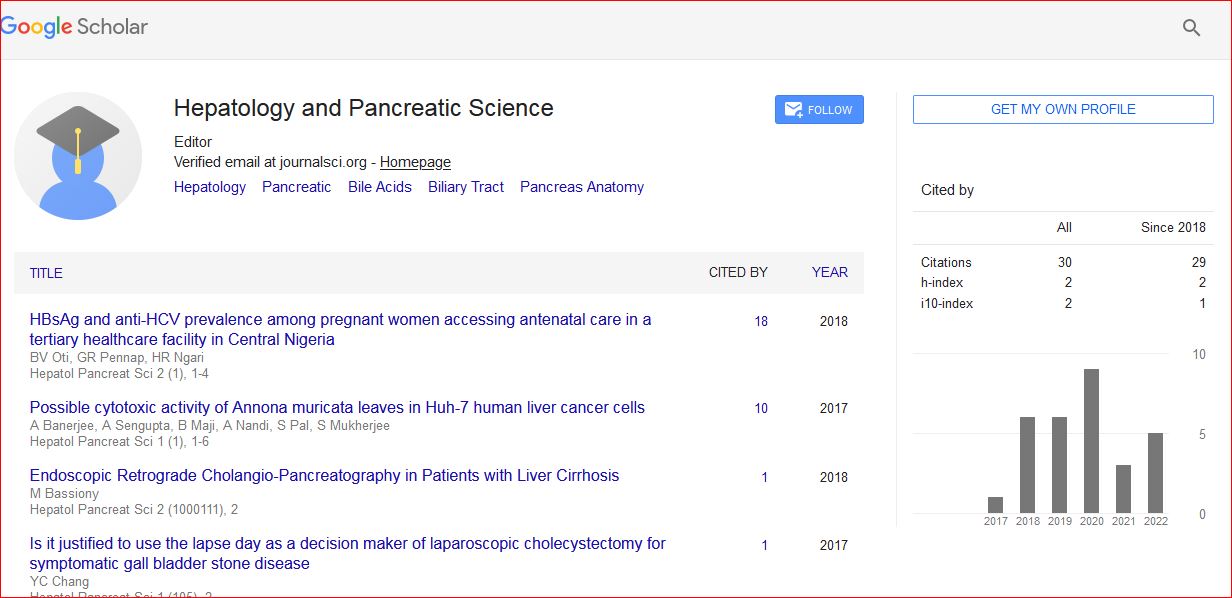
Hepatology and Pancreatic Science received 34 citations as per Google Scholar report