Short Communication - (2025) Volume 14, Issue 6
Received: 01-Dec-2025, Manuscript No. jsp-26-182293;
Editor assigned: 03-Dec-2025, Pre QC No. P-182293;
Reviewed: 17-Dec-2025, QC No. Q-182293;
Revised: 22-Dec-2025, Manuscript No. R-182293;
Published:
29-Dec-2025
, DOI: 10.37421/2165-7939.2025.14.759
Citation: Matos, João P.. ”Metabolic and Endocrine Disorders Affect Spinal Health.” J Spine 14 (2025):759.
Copyright: © 2025 Matos P. João This is an open-access article distributed under the terms of the Creative Commons Attribution License, which permits unrestricted use, distribution and reproduction in any medium, provided the original author and source are credited.
Metabolic and endocrine disorders represent a significant nexus of influence on spinal health, frequently manifesting as an elevated risk of fractures, the development of vertebral deformities, and considerable alterations in bone metabolism. These complex physiological disturbances necessitate a thorough understanding to effectively diagnose and manage associated spinal pathologies. Among these conditions, osteoporosis stands out as a primary contributor to compromised bone density and structural integrity, directly impacting spinal stability and increasing susceptibility to injury [1].
Diabetes mellitus, despite often being characterized by normal or even increased bone mineral density, is consistently associated with an augmented risk of vertebral fractures and impaired bone healing. This paradoxical presentation is largely attributed to qualitative changes in bone structure, including the accumulation of advanced glycation end products, heightened oxidative stress, and microvascular dysfunctions, all of which collectively undermine the biomechanical resilience of the spine [2].
Hyperparathyroidism, encompassing both its primary and secondary forms, exerts a profound and often detrimental effect on bone metabolism. This endocrine disorder is a well-established precursor to osteopenia and osteitis fibrosa cystica, significantly increasing the propensity for vertebral compression fractures due to excessive parathyroid hormone-driven bone resorption, which weakens the skeletal framework, particularly the axial skeleton [3].
Corticosteroid-induced osteoporosis remains a pervasive clinical concern, stemming from the prolonged use of glucocorticoid medications. This therapeutic intervention can precipitate accelerated bone loss, diminished bone formation rates, and a marked increase in skeletal fragility, with spinal fractures emerging as a common and debilitating complication requiring vigilant monitoring and proactive management strategies [4].
Thyroid hormones are integral to the regulation of bone metabolism, and their dysregulation can precipitate adverse skeletal consequences. Both hyperthyroidism, characterized by accelerated bone turnover and a favorability towards resorption, and hypothyroidism, which can impede bone formation and remodeling processes, contribute to an increased fracture risk and compromised bone health [5].
Acromegaly, a condition arising from excessive growth hormone secretion, can induce a spectrum of significant spinal alterations. These changes may include vertebral enlargement, an accumulation of bone mass, and modifications in spinal alignment, potentially elevating the predisposition to degenerative spinal disorders over time [6].
Renal osteodystrophy, a multifaceted skeletal disorder intrinsically linked to chronic kidney disease, involves profound abnormalities in bone mineralization, turnover, and overall strength. These metabolic derangements can manifest as vertebral fractures, deformities, and persistent spinal pain, thereby complicating the therapeutic approach for individuals suffering from renal failure [7].
Rheumatoid arthritis, an autoimmune inflammatory condition, can directly affect the spinal column through inflammatory arthropathy. This process may lead to joint destruction, increased stiffness, and potential spinal instability, while the systemic inflammation and often necessary corticosteroid treatment contribute to secondary osteoporosis and a heightened risk of vertebral fractures [8].
Metabolic syndrome, a constellation of interconnected metabolic abnormalities including obesity, hypertension, dyslipidemia, and insulin resistance, is increasingly implicated in adverse spinal health outcomes. Emerging research suggests a significant role for this syndrome in fostering chronic inflammation and oxidative stress, which in turn can promote degenerative disc disease and diminish overall bone quality [9].
Disorders affecting calcium and phosphate metabolism, such as hypophosphatasia, can precipitate severe skeletal abnormalities, including rickets and osteomalacia, which have a direct and detrimental impact on spinal development and structural integrity. These conditions vividly underscore the indispensable role of mineral homeostasis in preserving spinal health across the lifespan [10].
The intricate relationship between metabolic and endocrine disorders and spinal health is multifaceted, frequently presenting with elevated fracture risks, vertebral deformities, and altered bone metabolism. Understanding these complex interactions is paramount for effective diagnosis and management of spinal pathologies. Conditions such as osteoporosis, diabetes mellitus, and hyperparathyroidism are key examples that compromise bone density and strength, necessitating a comprehensive approach to patient care [1].
Diabetes mellitus, while sometimes associated with normal or increased bone mineral density, is intrinsically linked to an increased incidence of vertebral fractures and a deficit in bone healing capabilities. This discrepancy arises from qualitative changes in bone quality, including the formation of advanced glycation end products, elevated oxidative stress, and microvascular alterations, all of which collectively compromise the spine's biomechanical integrity [2].
Hyperparathyroidism, in both its primary and secondary manifestations, exerts a significant impact on bone metabolism. It is a well-recognized cause of osteopenia and osteitis fibrosa cystica, leading to a markedly elevated risk of vertebral compression fractures. The excess parathyroid hormone actively promotes bone resorption, thereby weakening the skeletal structure, particularly within the axial skeleton [3].
Corticosteroid-induced osteoporosis represents a persistent clinical challenge. Prolonged administration of glucocorticoids leads to accelerated bone loss, a reduction in bone formation, and increased skeletal fragility. Spinal fractures are a common and often debilitating consequence, highlighting the critical need for diligent monitoring and prophylactic interventions in patients undergoing long-term glucocorticoid therapy [4].
Thyroid hormones play a pivotal role in regulating bone metabolism. Deviations from normal thyroid function, whether in the form of hyperthyroidism or hypothyroidism, can adversely affect bone health and heighten fracture risk. Hyperthyroidism accelerates bone turnover, favoring resorption, while hypothyroidism can impair bone formation and the complex process of bone remodeling [5].
Acromegaly, a condition characterized by the overproduction of growth hormone, can result in substantial spinal modifications. These may include vertebral enlargement, increased bone mass, and alterations in spinal alignment, which collectively may increase the likelihood of developing degenerative spinal disorders [6].
Renal osteodystrophy, a complex skeletal disorder associated with chronic kidney disease, is characterized by abnormalities in bone mineralization, turnover rates, and skeletal strength. These metabolic derangements can contribute to vertebral fractures, spinal deformities, and persistent pain, significantly complicating the management of individuals with kidney failure [7].
Rheumatoid arthritis, an autoimmune disorder, can lead to inflammatory arthropathy affecting the spine. This condition can cause joint destruction, stiffness, and potential instability. Concurrently, systemic inflammation and treatments like corticosteroids contribute to secondary osteoporosis, further increasing the risk of vertebral fractures [8].
Metabolic syndrome, a cluster of conditions encompassing obesity, hypertension, dyslipidemia, and insulin resistance, is increasingly recognized for its detrimental effects on spinal health. Evidence suggests its involvement in promoting inflammation and oxidative stress, contributing to degenerative disc disease and a decline in bone quality [9].
Disorders impacting calcium and phosphate metabolism, such as hypophosphatasia, can induce severe skeletal abnormalities like rickets and osteomalacia. These conditions directly affect spinal development and integrity, emphasizing the critical importance of mineral homeostasis for maintaining robust spinal health throughout life [10].
Metabolic and endocrine disorders significantly impact spinal health, leading to increased fracture risk, vertebral deformities, and altered bone metabolism. Conditions like osteoporosis, diabetes mellitus, hyperparathyroidism, and corticosteroid use compromise bone density and strength. Thyroid hormone imbalances, acromegaly, and renal osteodystrophy also contribute to spinal pathologies. Autoimmune diseases such as rheumatoid arthritis and systemic conditions like metabolic syndrome further exacerbate spinal issues by promoting inflammation and affecting bone quality. Disruptions in calcium and phosphate metabolism, as seen in hypophosphatasia, directly affect spinal development and integrity. Effective management requires understanding these complex interactions to preserve spinal health.
None
None
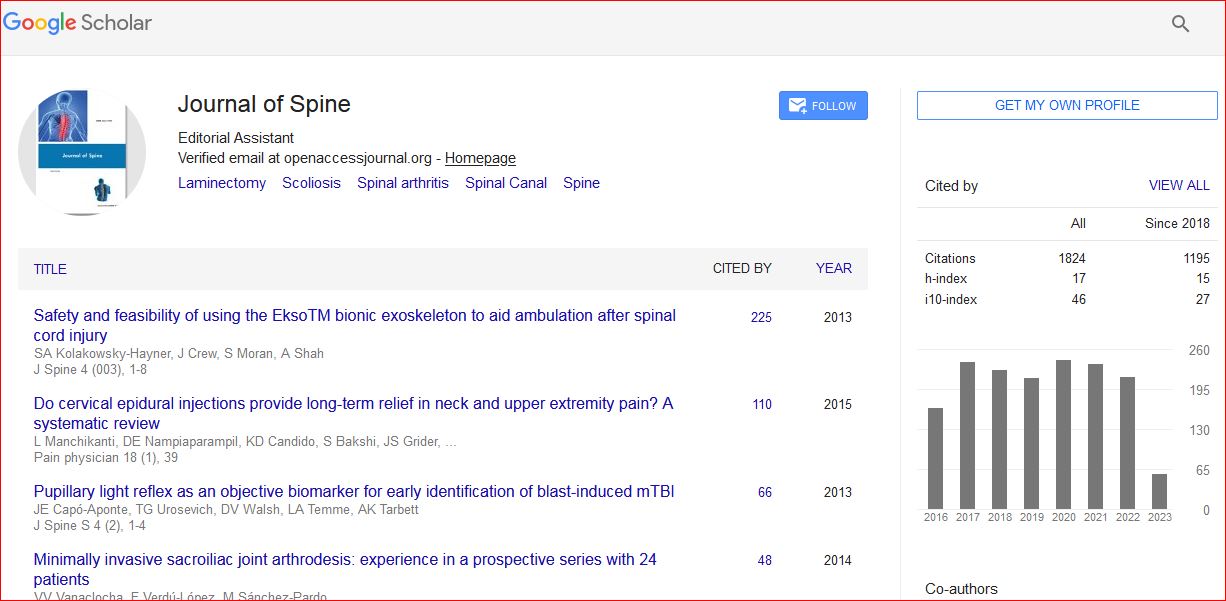
Journal of Spine received 2022 citations as per Google Scholar report