Brief Report - (2025) Volume 10, Issue 4
Received: 01-Jul-2025, Manuscript No. PE-26-179287;
Editor assigned: 03-Jul-2025, Pre QC No. P-179287;
Reviewed: 17-Jul-2025, QC No. Q-179287;
Revised: 22-Jul-2025, Manuscript No. R-179287;
Published:
29-Jul-2025
, DOI: 10.37421/2472-1042.2025.10.291
Citation: Cole, Andrew. ”Medication Adherence: A Key to Healthcare Savings.” Pharmacoeconomics 10 (2025):291.
Copyright: © 2025 Cole A. This is an open-access article distributed under the terms of the Creative Commons Attribution License, which permits unrestricted use, distribution and reproduction in any medium, provided the original author and source are credited.
Medication adherence and persistence are critical factors that significantly influence healthcare costs by impacting treatment outcomes, hospitalization rates, and the utilization of more expensive interventions. Poor adherence can lead to a deterioration in health status, an increase in disease complications, and consequently, higher overall healthcare expenditures. Conversely, the implementation of effective adherence strategies can optimize drug utilization, minimize adverse events, and enhance patients' quality of life, thereby generating substantial economic benefits. This underscores the importance of understanding the multifaceted economic implications of medication adherence across various disease states and treatment modalities. Recent research has explored the financial impact of patient persistence with biologic therapies, particularly for conditions like rheumatoid arthritis. These studies highlight that while biologic drugs may have a high initial cost, sustained use often results in fewer disease-related complications and a reduced need for other healthcare services. This suggests that maintaining adherence to these advanced therapies can lead to net cost savings over time, challenging the initial perception of their expense. The economic implications of medication non-adherence in cardiovascular disease are also substantial and have been quantified by numerous studies. Research in this area focuses on the excess costs associated with uncontrolled hypertension and hyperlipidemia due to poor adherence. These costs often manifest as increased emergency department visits, hospitalizations, and the progression of cardiovascular events, thereby reinforcing the economic rationale for robust adherence interventions. Furthermore, economic evaluations have explored the cost-effectiveness of interventions designed to improve medication adherence in patients with chronic diseases. Pharmacist-led medication therapy management (MTM) programs, for instance, have demonstrated the potential to reduce overall healthcare costs by preventing hospitalizations and emergency room visits. Such programs often yield a positive return on investment by addressing adherence-related issues proactively. The economic burden associated with non-persistence with diabetes medications is another area of significant concern. Studies indicate that patients who discontinue their diabetes treatment regimens are more likely to experience costly complications such as neuropathy, retinopathy, and nephropathy. These complications not only lead to higher medical expenses but also contribute to reduced patient productivity and overall well-being. In the realm of respiratory health, the economic benefits of improving adherence to inhaled corticosteroids (ICS) in asthma management have been well-documented. Consistent ICS use is associated with a reduction in asthma exacerbations, emergency room visits, and hospitalizations. This reduction directly contributes to a decrease in the overall economic burden associated with uncontrolled asthma, benefiting both patients and the healthcare system. The financial implications of medication adherence extend to mental health conditions, including schizophrenia and bipolar disorder. Research in this area emphasizes that continuous treatment adherence is crucial for preventing relapses, reducing hospitalization rates, and minimizing the need for crisis interventions. These outcomes result in significant cost savings for individuals and the broader healthcare system, highlighting the economic value of consistent psychiatric medication use. An investigation into the economic impact of adherence to antiretroviral therapy (ART) in HIV-positive individuals reveals significant benefits. Maintaining high adherence to ART is instrumental in reducing viral load, preventing disease progression, and lowering the incidence of opportunistic infections. Consequently, this leads to decreased long-term healthcare costs and an improvement in patient survival rates, underscoring the critical role of adherence in HIV management. The economic rationale for interventions aimed at promoting medication adherence in oncology is also being increasingly examined. Improved adherence to oral chemotherapy agents and supportive care medications can enhance treatment efficacy, reduce treatment interruptions, and lower supportive care costs. Ultimately, these improvements contribute to better patient outcomes and may lead to a reduction in overall cancer care expenditures. Finally, studies assessing the economic benefits of medication adherence programs for individuals with chronic obstructive pulmonary disease (COPD) provide further evidence of adherence's financial impact. Improved adherence to therapies such as bronchodilators and inhaled corticosteroids can decrease the frequency and severity of exacerbations, leading to fewer hospitalizations and reduced utilization of healthcare resources.
The economic impact of medication adherence and persistence on healthcare systems is a multifaceted issue with far-reaching consequences, influencing treatment outcomes, hospitalization rates, and the need for more expensive interventions. Poor adherence can result in poorer health status, increased disease complications, and ultimately, higher overall healthcare expenditures. In contrast, effective adherence strategies can optimize drug use, reduce adverse events, and improve patient quality of life, leading to significant economic benefits. The following review details various aspects of this economic burden across different therapeutic areas. Studies examining the financial impact of patient persistence with biologic therapies for rheumatoid arthritis reveal that sustained use of these medications, despite their initial high cost, often leads to fewer disease-related complications and a reduced demand for other healthcare services. This pattern suggests that maintaining adherence to biologics can result in net cost savings over an extended period. The economic implications of medication non-adherence in cardiovascular disease are profound. Research quantifies the excess costs associated with uncontrolled hypertension and hyperlipidemia that arise from poor adherence, including an increase in emergency department visits, hospitalizations, and the progression of cardiovascular events, thereby underscoring the financial imperative for adherence interventions. Economic evaluations of interventions designed to enhance medication adherence in patients with chronic diseases have shown promising results. Pharmacist-led medication therapy management (MTM) programs, for example, have demonstrated an ability to lower overall healthcare costs by averting hospitalizations and emergency room visits, thus providing a positive return on investment. The economic burden associated with non-persistence with diabetes medications is substantial. Research indicates that patients who cease their diabetes treatment regimens are more prone to developing costly complications such as neuropathy, retinopathy, and nephropathy, which in turn escalate medical expenses and diminish productivity. In the context of asthma management, the economic advantages of improving adherence to inhaled corticosteroids (ICS) are evident. Consistent ICS use is linked to a reduction in exacerbations, emergency room visits, and hospitalizations, which collectively decrease the overall economic burden associated with poorly controlled asthma. The financial ramifications of medication adherence in serious mental health conditions, such as schizophrenia and bipolar disorder, are considerable. Continuous adherence to treatment can prevent relapses, lower hospitalization rates, and minimize the need for acute care interventions, thereby generating significant cost savings for both individuals and the healthcare system. Research into the economic impact of adherence to antiretroviral therapy (ART) among HIV-positive individuals demonstrates that high adherence significantly reduces viral load, halts disease progression, and decreases the incidence of opportunistic infections. This translates into lower long-term healthcare costs and improved patient survival. An examination of the economic rationale for interventions promoting medication adherence in oncology highlights the benefits of improved adherence to oral chemotherapy and supportive care medications. This can lead to enhanced treatment efficacy, fewer interruptions, and reduced supportive care costs, ultimately improving patient outcomes and potentially lowering overall cancer care expenditures. Finally, assessments of the economic benefits derived from medication adherence programs for individuals managing chronic obstructive pulmonary disease (COPD) indicate that improved adherence to therapies like bronchodilators and ICS can reduce the frequency and severity of exacerbations, leading to fewer hospitalizations and decreased healthcare resource utilization.
Medication adherence and persistence significantly influence healthcare costs by affecting treatment outcomes, hospitalizations, and the use of advanced interventions. Poor adherence leads to worse health status and increased expenditures, while effective strategies optimize drug use, reduce adverse events, and improve quality of life, yielding economic benefits. Studies across various conditions like rheumatoid arthritis, cardiovascular disease, diabetes, asthma, mental health disorders, HIV, and oncology demonstrate that consistent medication use reduces complications, hospitalizations, and overall healthcare costs. Interventions such as pharmacist-led medication therapy management have proven cost-effective in improving adherence and preventing adverse health events.
None
None
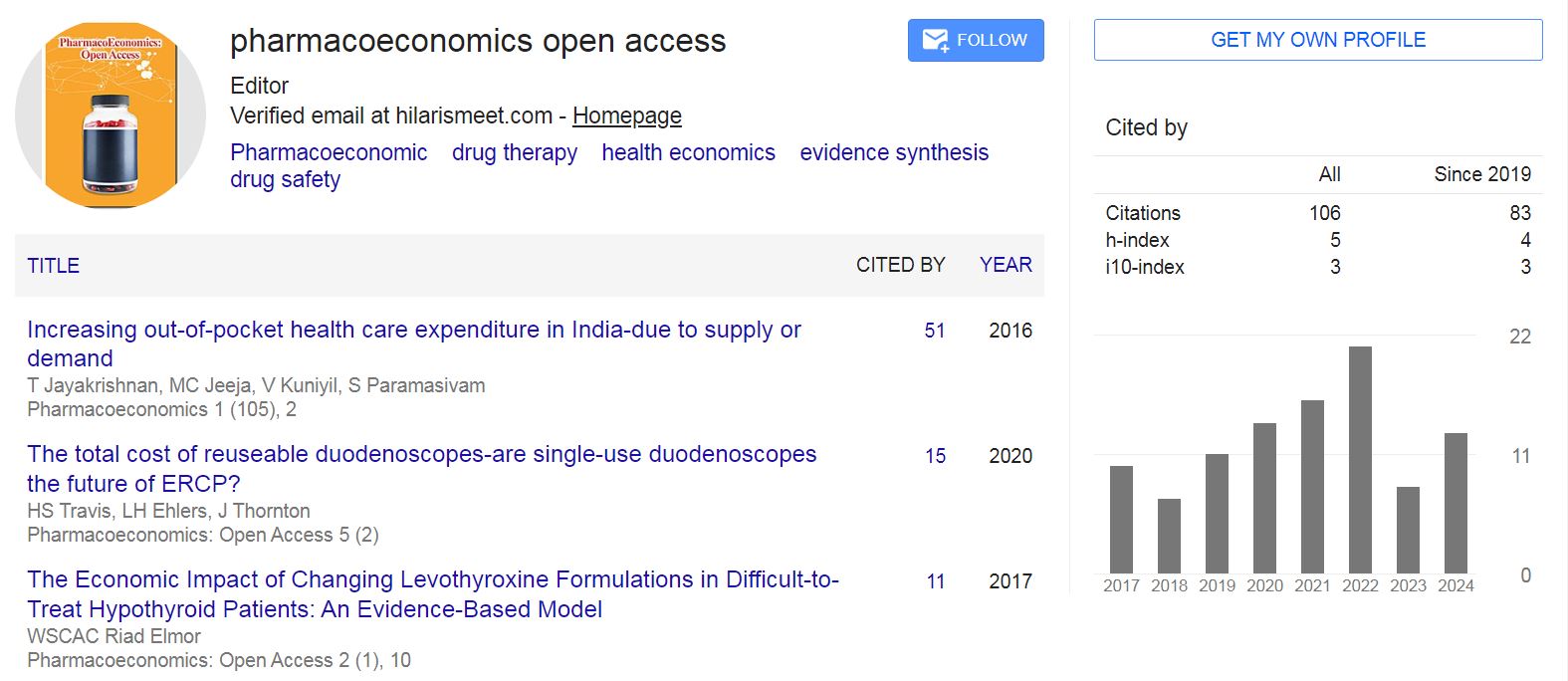
Pharmacoeconomics: Open Access received 106 citations as per Google Scholar report