Perspective - (2025) Volume 9, Issue 5
Received: 01-Sep-2025, Manuscript No. hps-26-184486;
Editor assigned: 03-Sep-2025, Pre QC No. P-184486;
Reviewed: 17-Sep-2025, QC No. Q-184486;
Revised: 22-Sep-2025, Manuscript No. R-184486;
Published:
29-Sep-2025
, DOI: 10.37421/2573-4563.2025.9.368
Citation: Khumalo, Zanele N.. ”Mechanisms Driving Chronic Pancreatitis: Inflammation and Fibrosis.” J Hepatol Pancreat Sci 09 (2025):368.
Copyright: © 2025 Khumalo N. Zanele This is an open-access article distributed under the terms of the Creative Commons Attribution License, which permits unrestricted use, distribution and reproduction in any medium, provided the original author and source are credited.
Chronic pancreatitis (CP) is a debilitating condition characterized by persistent inflammation and progressive fibrosis, ultimately leading to irreversible pancreatic damage. This review delves into the intricate inflammatory and fibrotic pathways implicated in the pathogenesis of CP. Key insights highlight the pivotal role of activated pancreatic stellate cells (PSCs) as central mediators of fibrosis, driven by inflammatory cytokines such as transforming growth factor-beta (TGF-β) and interleukin-1 beta (IL-1β). Understanding these molecular mechanisms offers potential therapeutic targets to halt or even reverse disease progression. This study underscores the significant contribution of oxidative stress to the inflammatory cascade observed in chronic pancreatitis. It effectively demonstrates how reactive oxygen species (ROS) can activate nuclear factor-kappa B (NF-κB) signaling pathways, thereby perpetuating inflammation and actively promoting fibrotic responses. The findings from this research strongly suggest that antioxidant strategies could prove beneficial in the management of CP. The intricate role of matrix metalloproteinases (MMPs) and their inhibitors (TIMPs) in the context of pancreatic fibrosis is thoroughly explored within this research. This investigation indicates that the dysregulation of MMPs and TIMPs significantly contributes to the excessive deposition of extracellular matrix (ECM), a hallmark characteristic of CP-related fibrosis. Therefore, targeting this specific imbalance holds promise as a novel approach for fibrotic remodeling. This paper meticulously investigates the involvement of autophagy, a cellular self-degradation process, in the pathogenesis and progression of chronic pancreatitis. It posits that impaired autophagy can lead to the detrimental accumulation of damaged organelles and misfolded proteins within pancreatic cells, thereby exacerbating inflammation and actively promoting fibrotic tissue development. Consequently, modulating autophagy presents itself as a potential therapeutic strategy for this condition. The role of microRNAs (miRNAs), small non-coding RNA molecules, in the intricate regulation of inflammatory and fibrotic pathways within chronic pancreatitis is comprehensively examined. The findings reveal that specific miRNAs exhibit significant alterations in CP patients and possess the capability to target key genes directly involved in fibrogenesis, thus opening promising avenues for miRNA-based diagnostics and therapeutics. This review specifically focuses on the considerable therapeutic potential inherent in targeting pancreatic stellate cells (PSCs) as a strategy to combat the fibrotic processes that define chronic pancreatitis. It thoroughly discusses a diverse range of therapeutic strategies, encompassing both the pharmacological inhibition of PSC activation and differentiation, as well as promising emerging cell-based therapies. The complex and dynamic crosstalk that occurs between immune cells and pancreatic stellate cells in driving the inflammatory and fibrotic processes characteristic of chronic pancreatitis is meticulously dissected in this study. It effectively highlights how inflammatory mediators, which are released by activated immune cells, can trigger the activation of PSCs, thereby establishing a detrimental feedback loop that perpetuates pancreatic tissue damage. This study extensively explores the crucial role of the Janus Kinase/Signal Transducer and Activator of Transcription (JAK/STAT) signaling pathway in promoting both inflammation and fibrosis in the context of chronic pancreatitis. The research demonstrates that aberrant activation of the JAK/STAT pathway actively contributes to the pro-inflammatory and pro-fibrotic milieu within the pancreas, strongly suggesting its potential as a therapeutic target. The contribution of endoplasmic reticulum (ER) stress, a cellular response to the accumulation of unfolded proteins, to the pathogenesis of chronic pancreatitis is thoroughly investigated. The findings strongly suggest that ER stress acts as a significant trigger for inflammatory responses and subsequently activates fibrotic pathways, ultimately leading to pancreatic damage. Therefore, strategies aimed at alleviating ER stress may prove beneficial in managing CP. This comprehensive review consolidates the current understanding of the molecular mechanisms that underpin the activation of pancreatic stellate cells (PSCs) in the context of chronic pancreatitis. It places a particular emphasis on the intricate signaling pathways that are responsible for driving PSC proliferation, the excessive production of collagen, and the secretion of pro-inflammatory mediators, thereby underscoring their critical and central role in the fibrotic process.
Chronic pancreatitis (CP) is defined by persistent inflammation and progressive fibrosis, leading to irreversible pancreatic damage. This review explores the complex inflammatory and fibrotic pathways involved in CP pathogenesis. A key finding is the central role of activated pancreatic stellate cells (PSCs) in mediating fibrosis, influenced by inflammatory cytokines like TGF-β and IL-1β. Understanding these molecular pathways is crucial for identifying therapeutic targets to halt or reverse disease progression. This study highlights the significant involvement of oxidative stress in the inflammatory cascade of chronic pancreatitis. It demonstrates how reactive oxygen species (ROS) can activate NF-κB signaling, perpetuating inflammation and fostering fibrotic responses. The research suggests that employing antioxidant strategies could be a valuable approach in managing CP. The research delves into the function of matrix metalloproteinases (MMPs) and their inhibitors (TIMPs) concerning pancreatic fibrosis. The findings indicate that a dysregulation in MMPs and TIMPs contributes to the deposition of extracellular matrix (ECM), a characteristic feature of CP fibrosis. Targeting this imbalance could represent a novel strategy for fibrotic remodeling. This paper examines the role of autophagy, a cellular process for waste removal and recycling, in the development of chronic pancreatitis. It suggests that compromised autophagy can result in the accumulation of damaged cellular components, thereby intensifying inflammation and promoting fibrosis. Modulating autophagy might thus serve as a therapeutic intervention. The influence of microRNAs (miRNAs) on regulating inflammatory and fibrotic pathways in chronic pancreatitis is investigated. The study reveals that specific miRNAs are significantly altered in CP and can target crucial genes involved in fibrogenesis. This discovery opens up possibilities for developing miRNA-based diagnostics and therapies. This review centers on the therapeutic potential of targeting pancreatic stellate cells (PSCs) to counteract fibrosis in chronic pancreatitis. It elaborates on various therapeutic approaches, including the use of drugs to inhibit PSC activation and differentiation, as well as novel cell-based therapies. This study dissects the intricate interplay between immune cells and pancreatic stellate cells in driving the inflammation and fibrosis associated with chronic pancreatitis. It emphasizes how inflammatory signals released by immune cells activate PSCs, creating a cycle that exacerbates tissue damage. The role of the JAK/STAT signaling pathway in promoting inflammation and fibrosis in chronic pancreatitis is explored. The findings indicate that abnormal JAK/STAT activation contributes to the pro-inflammatory and pro-fibrotic environment in the pancreas, suggesting it as a potential therapeutic target. This research investigates the connection between endoplasmic reticulum (ER) stress and the pathogenesis of chronic pancreatitis. The results imply that ER stress triggers inflammatory responses and activates fibrotic pathways, leading to pancreatic damage. Interventions aimed at alleviating ER stress could therefore be beneficial. This paper reviews the current understanding of the molecular mechanisms behind pancreatic stellate cell (PSC) activation in chronic pancreatitis. It concentrates on the signaling pathways that stimulate PSC proliferation, collagen production, and the secretion of pro-inflammatory factors, highlighting their critical role in fibrosis.
Chronic pancreatitis (CP) is characterized by persistent inflammation and progressive fibrosis leading to irreversible pancreatic damage. Key mechanisms involve activated pancreatic stellate cells (PSCs) mediated by inflammatory cytokines like TGF-β and IL-1β. Oxidative stress via ROS and NF-κB signaling also contributes to inflammation and fibrosis, suggesting antioxidant therapies. Dysregulation of matrix metalloproteinases (MMPs) and tissue inhibitors of metalloproteinases (TIMPs) leads to extracellular matrix deposition. Impaired autophagy exacerbates inflammation and fibrosis. MicroRNAs (miRNAs) play regulatory roles in these pathways. Targeting PSCs presents therapeutic potential. The crosstalk between immune cells and PSCs fuels the disease. The JAK/STAT signaling pathway and endoplasmic reticulum (ER) stress are identified as drivers of inflammation and fibrosis. Understanding these molecular pathways is crucial for developing effective treatments.
None
None
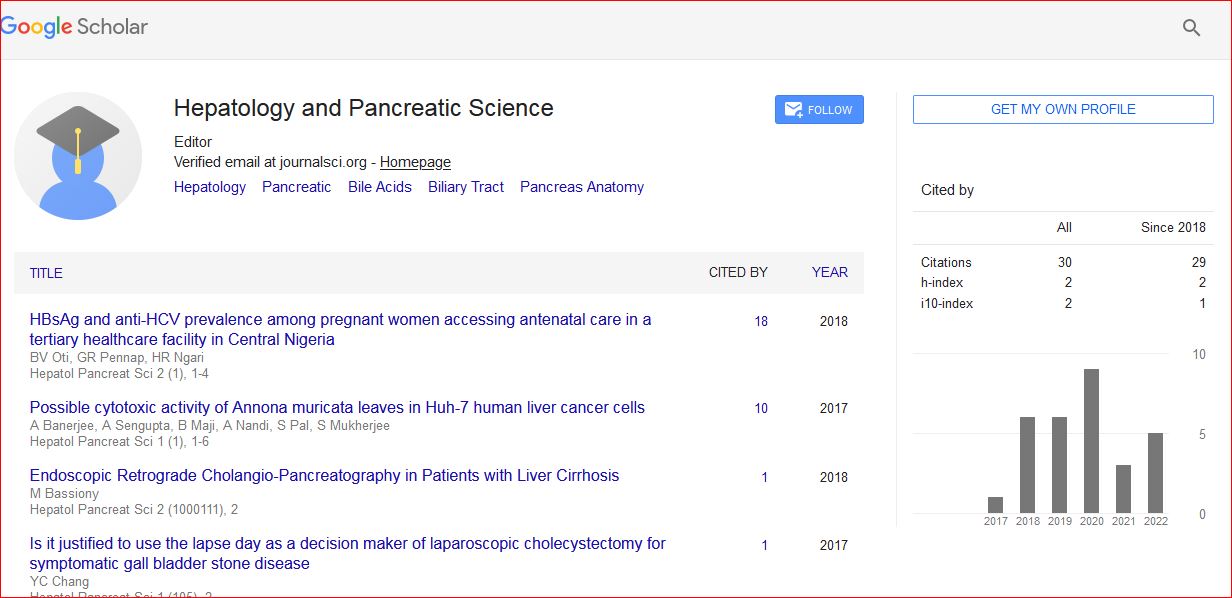
Hepatology and Pancreatic Science received 34 citations as per Google Scholar report