Perspective - (2025) Volume 14, Issue 6
Received: 01-Nov-2025, Manuscript No. jtsm-26-179601;
Editor assigned: 03-Nov-2025, Pre QC No. P-179601;
Reviewed: 17-Nov-2025, QC No. Q-179601;
Revised: 24-Nov-2025, Manuscript No. R-179601;
Published:
29-Nov-2025
, DOI: 10.37421/2167-0919.2025.14.531
Citation: Aziz, Abdul Rahman. ”Managing Virtual Network Functions: Challenges and Solutions.” J Telecommun Syst Manage 14 (2025):531.
Copyright: © 2025 Aziz R. Abdul This is an open-access article distributed under the terms of the Creative Commons Attribution License, which permits unrestricted use,
distribution and reproduction in any medium, provided the original author and source are credited.
The management and orchestration of virtualized network functions (VNFs) represent a critical area of research and development in modern telecommunications, driven by the need for agility, scalability, and efficiency in network operations. This field is underpinned by Network Functions Virtualization (NFV) technology, which decouples network functions from dedicated hardware, allowing them to run as software on general-purpose servers [1].
The dynamic nature of VNF deployment, resource orchestration, and performance monitoring introduces significant complexities that necessitate innovative solutions. Advanced techniques, including AI/ML-driven automation and novel orchestration frameworks, are becoming indispensable for optimizing VNF lifecycle management, ensuring service reliability, and achieving operational efficiency [1].
Another crucial aspect is performance assurance for VNFs, as virtualization can lead to performance degradation issues. Research is focusing on robust strategies for performance monitoring, fault detection, and service healing to maintain service quality [2].
The application of artificial intelligence (AI) and machine learning (ML) is increasingly explored to automate VNF lifecycle management, optimize resource allocation, predict failures, and enhance security within NFV environments [3].
In the context of 5G and beyond, network slice management heavily relies on VNFs, requiring sophisticated orchestration and management to ensure dedicated resources and quality of service for diverse applications [4].
Security in VNF management is paramount, with research addressing vulnerabilities and proposing frameworks for enhancing security through isolation, attestation, and secure orchestration mechanisms [5].
Energy efficiency is also a growing concern, with studies investigating intelligent VNF placement and resource scaling to reduce energy consumption and the environmental impact of telecommunication infrastructure [6].
A key component of VNF management is onboarding and lifecycle management, which involves standardized interfaces and processes for efficient deployment, scaling, and termination, facilitated by robust orchestration frameworks [7].
Dynamic placement of VNFs is another area of active research, aiming to optimize resource utilization and minimize service latency through intelligent algorithms that consider various network factors [8].
Service function chaining (SFC) plays a vital role by enabling the flexible composition of network services through ordered chaining of VNFs, presenting challenges and solutions related to deployment and dynamic reconfiguration [9].
Overall, the evolving landscape of NFV and its management encompasses benefits like agility and cost reduction, alongside complexities in managing virtual resources, driving ongoing advancements in orchestration, automation, and AI/ML for efficient VNF management [10].
The foundation of modern telecommunication networks is undergoing a profound transformation with the advent of Network Functions Virtualization (NFV). This paradigm shift enables the decoupling of network functions from proprietary hardware, allowing them to be deployed as software on commodity infrastructure. Consequently, the management and orchestration of these virtualized network functions (VNFs) have emerged as a central challenge, demanding sophisticated solutions to harness the full potential of NFV [1].
The dynamic nature of service deployment, coupled with intricate resource orchestration and continuous performance monitoring, presents a complex operational landscape. To navigate these challenges, advanced techniques, including AI/ML-driven automation and novel orchestration frameworks, are being developed to optimize VNF lifecycle management, ensure unwavering service reliability, and attain significant operational efficiencies within contemporary telecommunication networks [1].
Performance assurance for VNFs is a critical area that demands careful attention, as the virtualization process can inherently introduce performance degradation. Research efforts are actively pursuing strategies for comprehensive performance monitoring, proactive fault detection, and effective service healing mechanisms to uphold the desired service quality for VNFs [2].
The integration of artificial intelligence (AI) and machine learning (ML) is proving to be a transformative force in VNF management. These technologies offer pathways to automate complex VNF lifecycle operations, optimize resource allocation dynamically, predict potential failures before they impact services, and bolster overall security within NFV environments [3].
In the evolving ecosystem of 5G and future networks, the management of network slices, which are fundamentally built upon VNFs, requires meticulous orchestration to guarantee dedicated resources and the stringent quality of service demanded by a diverse array of applications [4].
The security of VNF management is an indispensable consideration, with ongoing research dedicated to identifying vulnerabilities inherent in virtualization and proposing robust frameworks to enhance security through isolation, attestation, and secure orchestration practices, thereby safeguarding sensitive network data and operations [5].
Furthermore, the increasing focus on sustainability in network operations has brought energy efficiency to the forefront. Studies are exploring intelligent VNF placement and dynamic resource scaling techniques that can significantly reduce energy consumption and mitigate the environmental footprint of telecommunication infrastructure [6].
The onboarding and lifecycle management of VNFs constitute a fundamental aspect of effective VNF operations. This involves defining standardized interfaces and streamlined processes for the efficient deployment, scaling, and eventual termination of VNFs, all of which are heavily reliant on robust orchestration frameworks to enable automation and ensure interoperability [7].
The dynamic placement of VNFs is another active research frontier, with the primary objective of optimizing network resource utilization and minimizing service latency. This involves the development of intelligent algorithms capable of making placement decisions based on a multitude of factors, including bandwidth availability, processing power, and the underlying network topology, to enhance the efficiency and performance of VNF deployments in agile network settings [8].
The intricate interplay between service function chaining (SFC) and VNF management is crucial for enabling the flexible composition of network services. SFC allows for the dynamic chaining of VNFs in specific sequences, and research is actively addressing the challenges associated with its deployment, optimization, and dynamic reconfiguration within NFV architectures [9].
In summation, the broad landscape of Network Function Virtualization (NFV) and its management is characterized by a compelling set of benefits, such as enhanced agility and reduced costs, alongside inherent complexities in managing virtualized resources and services. This dynamic environment is continuously shaped by ongoing advancements in orchestration, automation, and the application of AI/ML technologies, all converging towards more efficient and effective VNF management [10].
The advent of Network Functions Virtualization (NFV) has ushered in a new era for telecommunications, fundamentally altering how network services are designed, deployed, and managed. At its core, NFV decouples network functions from physical hardware, enabling them to operate as software instances, known as Virtualized Network Functions (VNFs), on standard computing platforms. This transformation introduces significant opportunities for increased agility, scalability, and cost-effectiveness, but it also presents a host of new challenges, particularly in the realm of management and orchestration (MANO). The dynamic nature of VNFs, their lifecycle management, and the underlying infrastructure demand sophisticated control and automation mechanisms. Consequently, research into innovative solutions for managing VNFs has become a critical endeavor. Advanced techniques, including the application of artificial intelligence (AI) and machine learning (ML) for automation, alongside novel orchestration frameworks, are increasingly recognized as essential for optimizing the entire VNF lifecycle, from deployment to retirement. These advancements are crucial for ensuring the high levels of service reliability and operational efficiency that are expected in modern, high-performance telecommunication networks [1].
A pivotal concern within this virtualized environment is the assurance of VNF performance. Virtualization, while beneficial, can sometimes lead to performance degradation compared to traditional hardware-based network functions. Therefore, robust strategies for continuous performance monitoring, early fault detection, and effective service healing are being actively developed to maintain the desired quality of service for VNFs [2].
The integration of AI and ML is profoundly impacting VNF management by offering sophisticated tools for automating complex processes. These technologies facilitate the automation of VNF lifecycle management, enable intelligent resource allocation, predict potential failures, and significantly enhance the security posture of NFV deployments [3].
As the telecommunications industry moves towards 5G and beyond, the concept of network slicing becomes increasingly important. Network slices, which provide customized network capabilities for different services, are heavily reliant on VNFs. Effective management of these slices requires advanced orchestration to ensure the allocation of dedicated resources and the fulfillment of stringent quality of service (QoS) requirements for a diverse range of applications [4].
Security is an overarching concern in any virtualized environment, and VNF management is no exception. Research is actively exploring the vulnerabilities inherent in NFV architectures and proposing comprehensive security frameworks. These frameworks often involve mechanisms for isolation, attestation, and secure orchestration to protect sensitive network data and critical operational processes from potential threats [5].
With the growing emphasis on environmental sustainability, energy efficiency in VNF management has become a key research area. Studies are investigating intelligent VNF placement strategies and dynamic resource scaling techniques aimed at minimizing energy consumption and reducing the overall environmental impact of telecommunication infrastructure [6].
The seamless integration of VNFs into the network relies on efficient onboarding and lifecycle management processes. This entails the definition and standardization of interfaces and workflows that govern the deployment, scaling, and termination of VNFs, with robust orchestration frameworks playing a pivotal role in automating these operations and ensuring interoperability across different vendors and platforms [7].
Optimizing the placement of VNFs within the underlying infrastructure is another critical aspect of efficient VNF management. Dynamic VNF placement algorithms are being developed to maximize network resource utilization and minimize service latency by considering factors such as bandwidth availability, processing power, and the network topology [8].
The concept of Service Function Chaining (SFC) is integral to the flexible composition of network services in NFV environments. SFC allows for the dynamic ordering and chaining of VNFs to create complex service paths, and research is focused on addressing the challenges associated with its deployment, optimization, and dynamic reconfiguration [9].
In summary, the domain of Network Function Virtualization (NFV) and its associated management and orchestration is a rapidly evolving field. While NFV offers substantial benefits, including increased agility and reduced operational costs, it also presents inherent complexities in managing virtualized resources and services. Ongoing advancements in orchestration technologies, automation techniques, and the application of AI/ML are continuously shaping the future of efficient VNF management [10].
The telecommunications landscape is undergoing a significant transformation driven by Network Functions Virtualization (NFV), which allows network functions to be deployed as software on commodity hardware. This shift necessitates robust mechanisms for managing and orchestrating these Virtualized Network Functions (VNFs) to realize their full potential. The dynamic nature of VNF deployment, resource allocation, and performance monitoring introduces considerable complexity. To address these challenges, innovative solutions are being developed, including AI/ML-driven automation and advanced orchestration frameworks. These technologies are crucial for optimizing VNF lifecycle management, ensuring service reliability, and enhancing operational efficiency in modern networks [1].
A critical aspect of VNF management is performance assurance. Virtualization can sometimes lead to performance degradation, making effective performance monitoring, fault detection, and service healing essential to maintain the quality of service [2].
The integration of artificial intelligence (AI) and machine learning (ML) is proving vital for automating VNF lifecycle management, optimizing resource utilization, predicting failures, and improving security [3].
In the context of 5G networks, the management of network slices, which are built upon VNFs, requires sophisticated orchestration to guarantee dedicated resources and quality of service for diverse applications [4].
Security remains a paramount concern in VNF management, with ongoing research focused on identifying vulnerabilities and developing frameworks to enhance security through isolation, attestation, and secure orchestration [5].
Energy efficiency is another important consideration, with studies exploring intelligent VNF placement and resource scaling to reduce energy consumption [6].
Efficient VNF onboarding and lifecycle management, facilitated by standardized interfaces and robust orchestration frameworks, are key to seamless VNF operations [7].
Dynamic VNF placement algorithms are being developed to optimize resource utilization and minimize service latency, taking into account various network factors [8].
Service Function Chaining (SFC) enables the flexible composition of network services by chaining VNFs, and research addresses the challenges associated with its deployment and optimization [9].
In essence, NFV offers benefits such as agility and cost reduction, but managing virtualized resources and services presents complexities that are being addressed by advancements in orchestration, automation, and AI/ML [10].
The evolution of telecommunication networks hinges on the effective management of Virtualized Network Functions (VNFs), a cornerstone of Network Functions Virtualization (NFV). The inherent complexities arising from dynamic service deployment, intricate resource orchestration, and continuous performance monitoring demand sophisticated solutions. Advanced techniques, particularly AI/ML-driven automation and novel orchestration frameworks, are paramount for optimizing VNF lifecycle management, thereby ensuring service reliability and operational efficiency in contemporary network infrastructures [1].
A significant challenge in this domain is performance assurance for VNFs. The virtualization process can introduce performance degradations, making robust strategies for monitoring, fault detection, and service healing indispensable for maintaining service quality [2].
The application of artificial intelligence (AI) and machine learning (ML) is revolutionizing VNF management by enabling automation of lifecycle operations, optimization of resource allocation, predictive failure analysis, and enhancement of security measures [3].
In the context of 5G and future network architectures, network slice management, which heavily relies on VNFs, requires advanced orchestration to guarantee dedicated resources and the requisite quality of service for a diverse array of applications [4].
Security considerations are of utmost importance, with ongoing research dedicated to identifying vulnerabilities and proposing comprehensive security frameworks for VNFs, employing mechanisms like isolation, attestation, and secure orchestration [5].
The pursuit of energy efficiency in telecommunications is driving research into intelligent VNF placement and resource scaling techniques to minimize energy consumption and environmental impact [6].
Efficient onboarding and lifecycle management of VNFs are facilitated by standardized interfaces and robust orchestration frameworks, which are crucial for automated operations and interoperability [7].
Dynamic VNF placement algorithms are being developed to optimize resource utilization and reduce service latency by considering various network parameters [8].
Service Function Chaining (SFC) is essential for creating flexible network services by chaining VNFs, and research addresses the challenges associated with its deployment and dynamic reconfiguration [9].
Ultimately, while NFV offers significant benefits like agility and cost savings, the management of its virtual resources and services is complex and is being addressed through continuous advancements in orchestration, automation, and AI/ML technologies [10].
Virtualized Network Functions (VNFs) are transforming telecommunications, but their effective management and orchestration are crucial for realizing the full benefits of Network Functions Virtualization (NFV). The dynamic nature of VNF deployment and resource management presents significant challenges. Innovative solutions, including AI/ML-driven automation and advanced orchestration frameworks, are essential for optimizing VNF lifecycle management, ensuring service reliability, and improving operational efficiency [1].
Performance assurance is a key concern, as virtualization can impact performance. Thus, robust monitoring, fault detection, and healing mechanisms are needed to maintain service quality [2].
AI and ML are increasingly employed to automate VNF lifecycle management, optimize resources, predict failures, and enhance security [3].
In 5G networks, managing network slices, which depend on VNFs, requires sophisticated orchestration to guarantee dedicated resources and quality of service [4].
Security in VNF management is critical, with research focusing on vulnerabilities and proposing frameworks for enhanced security through isolation and secure orchestration [5].
Energy efficiency is also a growing focus, with studies exploring intelligent VNF placement to reduce energy consumption [6].
Efficient VNF onboarding and lifecycle management are facilitated by standardized interfaces and orchestration frameworks that enable automation and interoperability [7].
Dynamic VNF placement algorithms are being developed to optimize resource utilization and minimize latency [8].
Service Function Chaining (SFC) enables flexible service composition by chaining VNFs, and research addresses its deployment and optimization challenges [9].
Overall, NFV offers advantages like agility and cost reduction, but managing its complexities is being driven by ongoing advancements in orchestration, automation, and AI/ML [10].
The landscape of telecommunication networks is being reshaped by Network Functions Virtualization (NFV), a technology that decouples network functions from hardware and allows them to run as software, known as Virtualized Network Functions (VNFs). The management and orchestration of these VNFs are therefore critical areas of focus. The dynamic nature of VNF deployment, resource orchestration, and performance monitoring introduces significant complexities that necessitate innovative solutions. Advanced techniques, including AI/ML-driven automation and novel orchestration frameworks, are vital for optimizing VNF lifecycle management, ensuring service reliability, and achieving operational efficiency in modern telecommunication networks [1].
A key concern is performance assurance for VNFs, as virtualization can lead to performance degradations. Research is actively pursuing strategies for effective performance monitoring, fault detection, and service healing to maintain service quality [2].
The application of artificial intelligence (AI) and machine learning (ML) is revolutionizing VNF management by automating lifecycle operations, optimizing resource allocation, predicting failures, and enhancing security [3].
In the context of 5G networks, the management of network slices, which are built upon VNFs, requires sophisticated orchestration to guarantee dedicated resources and quality of service for diverse applications [4].
Security in VNF management is paramount, with research addressing vulnerabilities and proposing frameworks to enhance security through isolation, attestation, and secure orchestration mechanisms [5].
Energy efficiency is also a growing concern, with studies exploring intelligent VNF placement and resource scaling to reduce energy consumption [6].
Efficient onboarding and lifecycle management of VNFs, supported by standardized interfaces and robust orchestration frameworks, are essential for automated operations and interoperability [7].
Dynamic placement of VNFs is an area of active research, aiming to optimize resource utilization and minimize service latency through intelligent algorithms [8].
Service Function Chaining (SFC) enables flexible service composition by chaining VNFs, and research is addressing the challenges related to its deployment and optimization [9].
In summary, while NFV offers benefits like agility and cost reduction, the complexities of managing virtualized resources and services are being continuously addressed through advancements in orchestration, automation, and AI/ML [10].
The effective management and orchestration of Virtualized Network Functions (VNFs) are central to the successful deployment and operation of Network Functions Virtualization (NFV) infrastructure. The dynamic nature of VNF lifecycles, resource demands, and service delivery introduces substantial complexities. Consequently, advanced techniques such as AI/ML-driven automation and sophisticated orchestration frameworks are indispensable for optimizing VNF operations, ensuring service continuity, and achieving desired levels of efficiency within modern telecommunication networks [1].
A critical area of focus is the assurance of VNF performance, as virtualization can introduce challenges. Robust strategies for performance monitoring, proactive fault detection, and effective service healing are actively being developed to maintain high service quality [2].
The integration of artificial intelligence (AI) and machine learning (ML) is significantly enhancing VNF management through automation of lifecycle processes, intelligent resource allocation, predictive failure analysis, and bolstered security measures [3].
In the evolving landscape of 5G networks, the effective management of network slices, which are intrinsically linked to VNFs, necessitates advanced orchestration to guarantee dedicated resources and the stringent quality of service required by a multitude of applications [4].
Security within VNF management is a non-negotiable aspect, with ongoing research dedicated to identifying potential vulnerabilities and proposing comprehensive security frameworks that leverage isolation, attestation, and secure orchestration practices [5].
The drive towards sustainability in telecommunications has intensified research into energy-efficient VNF management, focusing on intelligent placement and resource scaling techniques to minimize energy consumption [6].
The seamless integration of VNFs into the network relies heavily on efficient onboarding and lifecycle management processes, supported by standardized interfaces and robust orchestration frameworks that enable automation and interoperability [7].
Dynamic VNF placement algorithms are being explored to optimize the utilization of network resources and reduce service latency by considering various network constraints [8].
Service Function Chaining (SFC) is crucial for constructing flexible and dynamic network services by chaining VNFs, and research is actively addressing the challenges associated with its deployment and optimization [9].
In conclusion, while NFV promises significant benefits such as increased agility and cost savings, the inherent complexities of managing its virtualized resources and services are being continuously addressed through ongoing advancements in orchestration, automation, and the application of AI/ML technologies [10].
The field of Virtual Network Functions (VNFs) management and orchestration is a cornerstone of modern telecommunication networks, driven by the principles of Network Functions Virtualization (NFV). The complexities arising from dynamic service deployment, intricate resource orchestration, and continuous performance monitoring necessitate the development of innovative solutions. Advanced techniques, particularly AI/ML-driven automation and novel orchestration frameworks, are crucial for optimizing VNF lifecycle management, ensuring service reliability, and achieving operational efficiency in current network infrastructures [1].
A significant concern within VNF management is performance assurance. Virtualization can introduce performance degradation, thus robust strategies for performance monitoring, fault detection, and service healing are essential for maintaining service quality [2].
The application of Artificial Intelligence (AI) and Machine Learning (ML) is transforming VNF management by automating lifecycle processes, optimizing resource allocation, predicting failures, and enhancing security [3].
For 5G networks, effective network slice management, which relies heavily on VNFs, requires advanced orchestration to ensure dedicated resources and quality of service for diverse applications [4].
Security in VNF management is a critical aspect, with research focusing on identifying vulnerabilities and proposing frameworks to enhance security through isolation, attestation, and secure orchestration [5].
Energy efficiency in telecommunication networks is an increasingly important consideration, leading to studies on intelligent VNF placement and resource scaling to reduce energy consumption [6].
Efficient onboarding and lifecycle management of VNFs, supported by standardized interfaces and robust orchestration frameworks, are vital for automated operations and interoperability [7].
Dynamic placement algorithms for VNFs are being developed to optimize resource utilization and minimize service latency by considering network topology and resource availability [8].
Service Function Chaining (SFC) plays a key role in enabling flexible service composition by chaining VNFs, and research addresses the challenges related to its deployment and optimization [9].
In summary, while NFV offers significant advantages such as agility and cost reduction, the complexities of managing virtualized resources and services are being actively addressed through continuous advancements in orchestration, automation, and AI/ML technologies [10].
The management and orchestration of Virtualized Network Functions (VNFs) are central to the successful implementation of Network Functions Virtualization (NFV). The dynamic nature of VNF lifecycles, resource demands, and service delivery introduces considerable complexities that require sophisticated solutions. Advanced techniques, including AI/ML-driven automation and novel orchestration frameworks, are essential for optimizing VNF management, ensuring service reliability, and improving operational efficiency in contemporary networks [1].
A significant area of focus is performance assurance for VNFs, as virtualization can sometimes lead to performance degradations. Therefore, robust strategies for performance monitoring, fault detection, and service healing are crucial for maintaining the desired service quality [2].
The integration of artificial intelligence (AI) and machine learning (ML) is revolutionizing VNF management by enabling automation of lifecycle operations, intelligent resource allocation, predictive failure analysis, and enhancement of security measures [3].
In the context of 5G networks, the management of network slices, which are fundamentally built upon VNFs, requires advanced orchestration to guarantee dedicated resources and the stringent quality of service demanded by diverse applications [4].
Security within VNF management is a critical consideration, with ongoing research dedicated to identifying vulnerabilities and proposing comprehensive security frameworks that employ isolation, attestation, and secure orchestration practices [5].
The growing emphasis on sustainability in telecommunications has led to increased research into energy-efficient VNF management, focusing on intelligent placement and resource scaling techniques to minimize energy consumption and environmental impact [6].
Efficient onboarding and lifecycle management of VNFs are facilitated by standardized interfaces and robust orchestration frameworks, which are pivotal for automated operations and ensuring interoperability across different platforms [7].
Dynamic VNF placement algorithms are being developed to optimize the utilization of network resources and reduce service latency by considering various network parameters and constraints [8].
Service Function Chaining (SFC) is integral to creating flexible network services by chaining VNFs in specific sequences, and research actively addresses the challenges associated with its deployment and dynamic reconfiguration [9].
In conclusion, while NFV offers significant benefits such as increased agility and cost savings, the inherent complexities of managing its virtualized resources and services are continuously being addressed through ongoing advancements in orchestration, automation, and the application of AI/ML technologies [10].
The evolving landscape of telecommunications is increasingly defined by the adoption of Network Functions Virtualization (NFV), a technology that abstracts network functions from proprietary hardware, allowing them to operate as software, known as Virtualized Network Functions (VNFs). Central to the successful implementation of NFV is the robust management and orchestration of these VNFs. The dynamic nature of VNF deployment, resource orchestration, and performance monitoring introduces significant complexities that necessitate innovative solutions. Advanced techniques, including AI/ML-driven automation and novel orchestration frameworks, are crucial for optimizing VNF lifecycle management, ensuring service reliability, and achieving operational efficiency in modern telecommunication networks [1].
A critical aspect of VNF management is performance assurance. Virtualization can inherently lead to performance degradation, making effective performance monitoring, fault detection, and service healing mechanisms essential for maintaining service quality [2].
The application of artificial intelligence (AI) and machine learning (ML) is proving to be transformative in VNF management, enabling automation of lifecycle operations, optimization of resource allocation, prediction of failures, and enhancement of security measures [3].
Within the context of 5G networks, the management of network slices, which are heavily reliant on VNFs, requires sophisticated orchestration to guarantee dedicated resources and the quality of service demanded by diverse applications [4].
Security in VNF management is a paramount concern, with research actively addressing vulnerabilities and proposing frameworks to enhance security through isolation, attestation, and secure orchestration mechanisms [5].
Energy efficiency in telecommunication networks is a growing consideration, prompting studies into intelligent VNF placement and resource scaling techniques to reduce energy consumption [6].
Efficient onboarding and lifecycle management of VNFs, facilitated by standardized interfaces and robust orchestration frameworks, are vital for automated operations and interoperability [7].
Dynamic placement of VNFs is an active research area, aiming to optimize resource utilization and minimize service latency through intelligent algorithms [8].
Service Function Chaining (SFC) plays a key role in enabling flexible service composition by chaining VNFs, and research is addressing the challenges related to its deployment and optimization [9].
In summary, while NFV offers significant advantages such as agility and cost reduction, the complexities of managing virtualized resources and services are being continuously addressed through advancements in orchestration, automation, and AI/ML technologies [10].
The transformation of telecommunication networks is largely driven by Network Functions Virtualization (NFV), which abstracts network functions into software known as Virtualized Network Functions (VNFs). Consequently, the effective management and orchestration of these VNFs are paramount. The dynamic nature of VNF deployment, resource orchestration, and performance monitoring introduces significant complexities. To address these, advanced techniques such as AI/ML-driven automation and novel orchestration frameworks are crucial for optimizing VNF lifecycle management, ensuring service reliability, and achieving operational efficiency in modern networks [1].
A critical area is performance assurance for VNFs, as virtualization can lead to performance degradation. Robust strategies for performance monitoring, fault detection, and service healing are therefore essential to maintain service quality [2].
The application of artificial intelligence (AI) and machine learning (ML) is revolutionizing VNF management by enabling automation of lifecycle operations, optimization of resource allocation, prediction of failures, and enhancement of security [3].
In 5G networks, the management of network slices, which are built upon VNFs, requires sophisticated orchestration to guarantee dedicated resources and quality of service for diverse applications [4].
Security in VNF management is critical, with research focusing on vulnerabilities and proposing frameworks to enhance security through isolation, attestation, and secure orchestration [5].
Energy efficiency is also a growing focus, with studies exploring intelligent VNF placement and resource scaling to reduce energy consumption [6].
Efficient onboarding and lifecycle management of VNFs, supported by standardized interfaces and robust orchestration frameworks, are vital for automated operations and interoperability [7].
Dynamic placement of VNFs is an active research area, aiming to optimize resource utilization and minimize service latency through intelligent algorithms [8].
Service Function Chaining (SFC) enables flexible service composition by chaining VNFs, and research addresses the challenges related to its deployment and optimization [9].
Overall, NFV offers advantages like agility and cost reduction, but managing its complexities is being driven by ongoing advancements in orchestration, automation, and AI/ML [10].
The management and orchestration of virtualized network functions (VNFs) are fundamental to the operation of modern telecommunication networks, underpinned by Network Functions Virtualization (NFV) technology. This field addresses the inherent complexities arising from dynamic service deployment, intricate resource orchestration, and continuous performance monitoring within NFV environments. To overcome these challenges, researchers are exploring advanced techniques, including AI/ML-driven automation and novel orchestration frameworks, which are deemed crucial for optimizing VNF lifecycle management, ensuring service reliability, and achieving operational efficiency [1].
Another critical area is the assurance of performance for VNFs, as the virtualization process can introduce degradation. Strategies for performance monitoring, fault detection, and service healing are actively being developed to maintain the desired quality of service [2].
The integration of artificial intelligence (AI) and machine learning (ML) is proving to be transformative, enabling automation of VNF lifecycle management, optimization of resource allocation, prediction of failures, and enhancement of security [3].
In the context of 5G networks, the management of network slices, which are built upon VNFs, necessitates sophisticated orchestration to guarantee dedicated resources and the quality of service required by diverse applications [4].
Security in VNF management is paramount, with research focusing on identifying vulnerabilities and proposing comprehensive security frameworks that leverage isolation, attestation, and secure orchestration mechanisms [5].
Energy efficiency is an increasingly important consideration, leading to studies on intelligent VNF placement and resource scaling techniques aimed at reducing energy consumption [6].
Efficient onboarding and lifecycle management of VNFs are facilitated by standardized interfaces and robust orchestration frameworks, which are vital for automated operations and interoperability [7].
Dynamic placement algorithms for VNFs are being developed to optimize resource utilization and minimize service latency by considering various network parameters [8].
Service Function Chaining (SFC) plays a significant role in enabling flexible service composition by chaining VNFs, and research addresses the challenges related to its deployment and optimization [9].
In essence, NFV offers substantial benefits such as increased agility and cost reduction, but the complexities of managing its virtualized resources and services are being continuously addressed through advancements in orchestration, automation, and AI/ML technologies [10].
The core of modern telecommunication network evolution lies in the effective management and orchestration of Virtualized Network Functions (VNFs). This domain grapples with the inherent complexities introduced by dynamic service deployment, intricate resource orchestration, and the necessity for continuous performance monitoring within Network Functions Virtualization (NFV) environments. To navigate these challenges, the field is increasingly adopting advanced techniques such as AI/ML-driven automation and novel orchestration frameworks, which are considered indispensable for optimizing the entire VNF lifecycle, ensuring unwavering service reliability, and achieving significant operational efficiencies [1].
A paramount concern is the assurance of VNF performance, as the virtualization layer can sometimes lead to performance degradations. Consequently, research is actively pursuing robust strategies for comprehensive performance monitoring, proactive fault detection, and effective service healing mechanisms to uphold the desired quality of service [2].
The transformative power of artificial intelligence (AI) and machine learning (ML) is being harnessed to automate complex VNF lifecycle management, optimize resource allocation dynamically, predict potential failures before they impact services, and bolster overall security within NFV deployments [3].
In the rapidly advancing landscape of 5G and future network architectures, the management of network slices, which are fundamentally built upon VNFs, requires meticulous orchestration to guarantee dedicated resources and the stringent quality of service demanded by a diverse array of applications [4].
The security of VNF management is a non-negotiable aspect, with ongoing research dedicated to identifying inherent vulnerabilities and proposing comprehensive security frameworks that employ isolation, attestation, and secure orchestration practices to safeguard sensitive network data and critical operational processes [5].
Furthermore, the growing emphasis on environmental sustainability in network operations has brought energy efficiency to the forefront, driving research into intelligent VNF placement and dynamic resource scaling techniques aimed at minimizing energy consumption and reducing the environmental footprint of telecommunication infrastructure [6].
The seamless integration of VNFs into the network hinges on efficient onboarding and lifecycle management processes, which involve standardized interfaces and streamlined workflows for deployment, scaling, and termination, all facilitated by robust orchestration frameworks to enable automation and ensure interoperability [7].
The dynamic placement of VNFs within the underlying infrastructure is another active research frontier, with the primary objective of optimizing network resource utilization and minimizing service latency. This involves the development of intelligent algorithms capable of making placement decisions based on a multitude of factors, including bandwidth availability, processing power, and the underlying network topology, to enhance the efficiency and performance of VNF deployments in agile network settings [8].
The intricate interplay between service function chaining (SFC) and VNF management is crucial for enabling the flexible composition of network services. SFC allows for the dynamic chaining of VNFs in specific sequences, and research is actively addressing the challenges associated with its deployment, optimization, and dynamic reconfiguration within NFV architectures [9].
In summary, while NFV offers substantial benefits such as enhanced agility and reduced operational costs, the inherent complexities of managing its virtualized resources and services are continuously being addressed through ongoing advancements in orchestration, automation, and the application of AI/ML technologies [10].
The domain of Virtual Network Functions (VNFs) management and orchestration is central to the modern telecommunication infrastructure, powered by Network Functions Virtualization (NFV). This area of study addresses the considerable complexities inherent in dynamic service deployment, intricate resource orchestration, and the necessity for continuous performance monitoring within NFV environments. To effectively tackle these challenges, researchers are increasingly focusing on advanced techniques, including AI/ML-driven automation and novel orchestration frameworks. These technologies are considered vital for optimizing the entire VNF lifecycle, ensuring the high reliability of services, and achieving significant operational efficiencies [1].
A crucial aspect within VNF management is performance assurance. The virtualization process can sometimes lead to performance degradation, necessitating the development and implementation of robust strategies for performance monitoring, fault detection, and service healing to maintain service quality [2].
The application of artificial intelligence (AI) and machine learning (ML) is revolutionizing VNF management by enabling the automation of complex lifecycle operations, the optimization of resource allocation, the prediction of potential failures, and the enhancement of security measures [3].
In the context of 5G networks, the effective management of network slices, which are intrinsically dependent on VNFs, demands sophisticated orchestration capabilities to guarantee dedicated resources and the requisite quality of service for a wide spectrum of applications [4].
Security in VNF management is an imperative concern, with ongoing research dedicated to identifying potential vulnerabilities and proposing comprehensive security frameworks that utilize isolation, attestation, and secure orchestration practices to protect sensitive network data and operations [5].
The growing emphasis on sustainability in the telecommunications sector has brought energy efficiency to the forefront, driving studies focused on intelligent VNF placement and resource scaling techniques designed to minimize energy consumption [6].
Efficient onboarding and lifecycle management of VNFs are facilitated by standardized interfaces and robust orchestration frameworks, which are essential for enabling automated operations and ensuring interoperability across different systems [7].
The development of dynamic VNF placement algorithms is another key research area, aiming to optimize network resource utilization and reduce service latency by considering various network parameters and constraints [8].
Service Function Chaining (SFC) plays a vital role in constructing flexible and dynamic network services by enabling the chaining of VNFs in specific sequences. Research efforts are actively addressing the challenges associated with its deployment and dynamic reconfiguration [9].
In conclusion, while NFV offers substantial benefits such as increased agility and cost savings, the inherent complexities of managing its virtualized resources and services are continuously being addressed through ongoing advancements in orchestration, automation, and the application of AI/ML technologies [10].
The management and orchestration of Virtual Network Functions (VNFs) are fundamental to the functioning of modern telecommunication networks, driven by the principles of Network Functions Virtualization (NFV). The inherent complexities associated with dynamic service deployment, intricate resource orchestration, and continuous performance monitoring within NFV environments necessitate innovative solutions. Advanced techniques, including AI/ML-driven automation and novel orchestration frameworks, are considered crucial for optimizing VNF lifecycle management, ensuring service reliability, and achieving operational efficiency in contemporary network infrastructures [1].
A key focus area is performance assurance for VNFs, as virtualization can potentially lead to performance degradations. Thus, robust strategies for performance monitoring, fault detection, and service healing are essential for maintaining the desired service quality [2].
The application of artificial intelligence (AI) and machine learning (ML) is proving to be transformative in VNF management, enabling the automation of lifecycle operations, optimization of resource allocation, prediction of failures, and enhancement of security measures [3].
In the context of 5G networks, the management of network slices, which are built upon VNFs, requires sophisticated orchestration to guarantee dedicated resources and the quality of service demanded by diverse applications [4].
Security in VNF management is a paramount concern, with research actively addressing vulnerabilities and proposing comprehensive security frameworks that employ isolation, attestation, and secure orchestration mechanisms [5].
Energy efficiency is also an increasingly important consideration, prompting studies into intelligent VNF placement and resource scaling techniques aimed at reducing energy consumption [6].
Efficient onboarding and lifecycle management of VNFs are facilitated by standardized interfaces and robust orchestration frameworks, which are vital for automated operations and interoperability [7].
Dynamic placement algorithms for VNFs are being developed to optimize resource utilization and minimize service latency by considering various network parameters [8].
Service Function Chaining (SFC) plays a significant role in enabling flexible service composition by chaining VNFs, and research addresses the challenges related to its deployment and optimization [9].
In summary, while NFV offers substantial benefits such as increased agility and cost reduction, the complexities of managing virtualized resources and services are continuously being addressed through advancements in orchestration, automation, and AI/ML technologies [10].
The management and orchestration of virtualized network functions (VNFs) are critical for the effective operation of contemporary telecommunication networks, largely due to the advent of Network Functions Virtualization (NFV). The dynamic nature of VNF deployment, resource orchestration, and performance monitoring presents significant complexities. To address these, advanced techniques such as AI/ML-driven automation and novel orchestration frameworks are essential for optimizing VNF lifecycle management, ensuring service reliability, and achieving operational efficiency [1].
Performance assurance for VNFs is a key challenge, as virtualization can impact performance. Robust strategies for monitoring, fault detection, and service healing are necessary to maintain service quality [2].
The application of AI and ML is revolutionizing VNF management by automating lifecycle operations, optimizing resource allocation, predicting failures, and enhancing security [3].
In 5G networks, managing network slices, which are built upon VNFs, requires sophisticated orchestration to guarantee dedicated resources and quality of service for diverse applications [4].
Security in VNF management is paramount, with research focusing on vulnerabilities and proposing frameworks to enhance security through isolation, attestation, and secure orchestration [5].
Energy efficiency is also a growing concern, with studies exploring intelligent VNF placement and resource scaling to reduce energy consumption [6].
Efficient onboarding and lifecycle management of VNFs, supported by standardized interfaces and robust orchestration frameworks, are vital for automated operations and interoperability [7].
Dynamic placement algorithms for VNFs are being developed to optimize resource utilization and minimize service latency through intelligent algorithms [8].
Service Function Chaining (SFC) enables flexible service composition by chaining VNFs, and research addresses the challenges related to its deployment and optimization [9].
Overall, NFV offers advantages like agility and cost reduction, but managing its complexities is being driven by ongoing advancements in orchestration, automation, and AI/ML [10].
This compilation of research explores the multifaceted challenges and innovative solutions in managing virtualized network functions (VNFs) within Network Functions Virtualization (NFV) environments. Key areas of focus include the complexities of dynamic deployment, resource orchestration, and performance monitoring, with advanced techniques like AI/ML-driven automation and novel orchestration frameworks highlighted as crucial for optimizing VNF lifecycle management, ensuring service reliability, and enhancing operational efficiency. The research also delves into performance assurance, security vulnerabilities, energy efficiency, and the role of service function chaining (SFC) in flexible network service composition. Emphasis is placed on standardized interfaces and robust orchestration for seamless VNF onboarding and lifecycle management, as well as dynamic placement algorithms for resource optimization and latency reduction. Despite the significant benefits of NFV, such as agility and cost savings, the inherent complexities of managing virtualized resources and services are being continuously addressed through ongoing advancements in orchestration, automation, and AI/ML technologies.
None
None
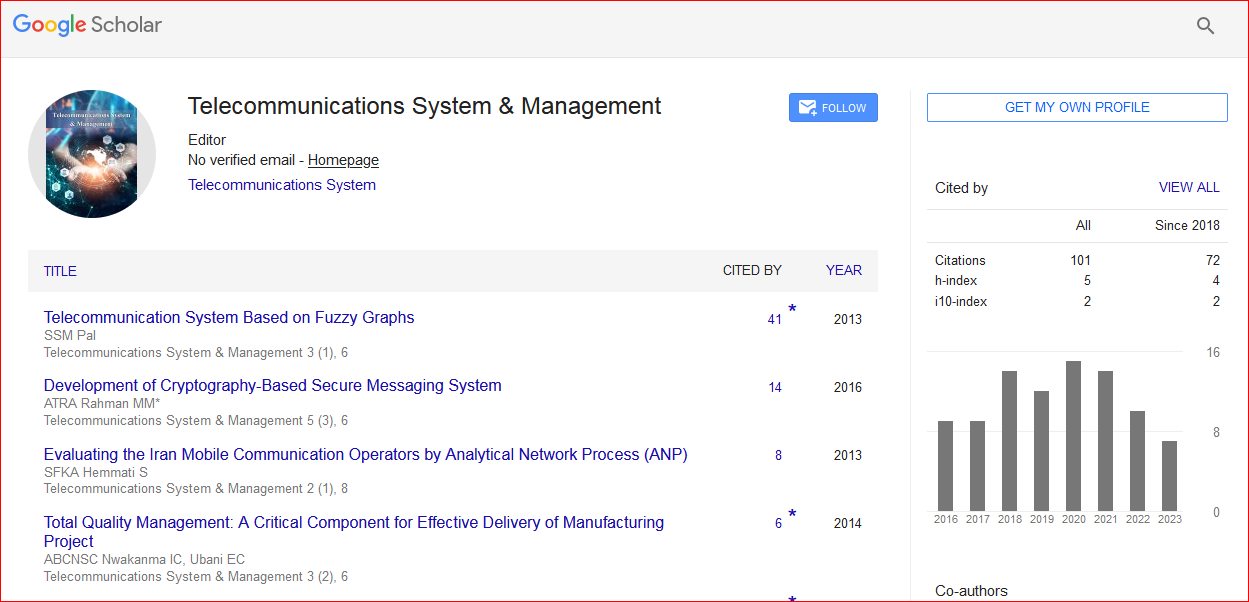
Telecommunications System & Management received 109 citations as per Google Scholar report