Commentary - (2025) Volume 14, Issue 4
Received: 01-Jul-2025, Manuscript No. mcce-26-190182;
Editor assigned: 03-Jul-2025, Pre QC No. P-190182;
Reviewed: 17-Jul-2025, QC No. Q-190182;
Revised: 22-Jul-2025, Manuscript No. R-190182;
Published:
29-Jul-2025
, DOI: 10.37421/2470-6965.2025.14.416
Citation: Pereira, Joao. ”Malaria Vaccines: New Hope For Eradication.” Malar Contr Elimination 14 (2025):416.
Copyright: © 2025 Pereira J. This is an open-access article distributed under the terms of the Creative Commons Attribution License, which permits unrestricted use, distribution and reproduction in any medium, provided the original author and source are credited.
The RTS,S/AS01 (Mosquirix) and R21/Matrix-M malaria vaccines represent significant advancements in malaria control. RTS,S, the first malaria vaccine recommended by the WHO, has been deployed in several African countries, demonstrating a notable reduction in severe malaria cases, particularly in young children. While its efficacy is moderate and wanes over time, requiring multiple doses, it offers a crucial new tool [1].
The widespread implementation of the RTS,S vaccine in pilot programs has provided valuable real-world data on its effectiveness and safety. These programs have highlighted the vaccine's ability to significantly decrease hospitalizations and deaths from severe malaria in children under five, a demographic most vulnerable to the disease. Challenges such as logistical hurdles in vaccine delivery and the need for a complex multi-dose schedule remain. However, the ongoing experience is informing strategies for broader rollout and for the integration of newer vaccines like R21 into national immunization programs [2].
The R21/Matrix-M vaccine has demonstrated promising results in Phase 3 clinical trials, showing high efficacy against clinical malaria in children. Its development builds upon the understanding gained from RTS,S, incorporating an improved adjuvant system that enhances the immune response. The potential for high-volume manufacturing and a favorable cost profile positions R21 as a potentially game-changing intervention, capable of reaching a larger population in malaria-endemic regions more effectively. Its introduction is anticipated to accelerate progress towards malaria elimination goals [3].
The synergistic effect of combining malaria vaccines with established control measures is critical for maximizing impact. While vaccines offer a new layer of protection, they are most effective when integrated into comprehensive malaria control programs. This includes the continued use of long-lasting insecticidal nets, indoor residual spraying, prompt diagnosis and treatment, and effective vector control. The integration strategy needs to be tailored to the specific epidemiological context of each region to achieve sustained reductions in malaria transmission and mortality [4].
The economic impact of malaria in endemic countries is substantial, affecting productivity and healthcare systems. The introduction of effective vaccines like RTS,S and R21 has the potential to significantly reduce the economic burden by decreasing the incidence of malaria, reducing healthcare costs, and improving overall public health. This economic benefit can free up resources for other development priorities, contributing to long-term economic growth and poverty reduction in these regions [5].
Monitoring the long-term effectiveness and impact of malaria vaccines is crucial for adaptive public health strategies. Understanding how vaccine immunity wanes and how it interacts with evolving parasite resistance and vector behavior is essential for optimizing vaccination schedules and ensuring sustained protection. Post-licensure surveillance and research will continue to guide the effective use of RTS,S and R21 in diverse epidemiological settings [6].
The development and deployment of malaria vaccines like RTS,S and R21 are a testament to decades of scientific research and international collaboration. These vaccines represent a significant step forward in the fight against a disease that disproportionately affects the world's poorest populations. Their successful integration into national health systems requires strong political will, sustained funding, and robust programmatic capacity to ensure equitable access and maximum public health benefit [7].
Addressing vaccine hesitancy and building community trust are paramount for the successful uptake of RTS,S and R21. Effective communication strategies that address concerns, provide accurate information, and involve community leaders are essential. Public health campaigns need to be culturally sensitive and tailored to the specific concerns of different populations to ensure high vaccination coverage and maximize the public health gains from these life-saving interventions [8].
The manufacturing and supply chain logistics for malaria vaccines pose significant challenges for large-scale deployment. Ensuring a consistent and equitable supply of RTS,S and R21 to meet the demands of malaria-endemic countries requires coordinated efforts in production, procurement, and distribution. Innovations in manufacturing processes and the development of local production capabilities are key to overcoming these hurdles and ensuring vaccine availability [9].
The potential for R21/Matrix-M to achieve higher efficacy and its scalable manufacturing capacity offer a significant advantage for malaria elimination efforts. With a potential for four-dose schedules and an aim for 75% efficacy, R21 could drastically alter the trajectory of malaria control. The ongoing transition from RTS,S to R21 in many countries signifies a commitment to leveraging the most effective tools available to combat this persistent disease [10].
Malaria vaccines, specifically RTS,S/AS01 (Mosquirix) and R21/Matrix-M, mark substantial progress in controlling this disease. RTS,S, the initial WHO-recommended malaria vaccine, has been implemented across various African nations, leading to a significant decrease in severe malaria instances, particularly among young children. Despite its moderate and time-dependent efficacy, necessitating multiple administrations, it remains a vital new intervention [1].
Pilot programs for the RTS,S vaccine have yielded crucial real-world insights into its effectiveness and safety. These initiatives have demonstrated the vaccine's capacity to substantially reduce hospitalizations and fatalities from severe malaria in children under five, a demographic most susceptible to its effects. Obstacles like logistical complexities in vaccine distribution and the requirement for a multi-dose regimen persist. Nevertheless, the accumulated experience is instrumental in shaping strategies for wider deployment and for incorporating emerging vaccines such as R21 into national immunization frameworks [2].
In Phase 3 clinical trials, the R21/Matrix-M vaccine has exhibited encouraging efficacy against clinical malaria in pediatric populations. Its development leverages the lessons learned from RTS,S, incorporating an enhanced adjuvant system to bolster the immune response. The capacity for large-scale manufacturing and a cost-effective profile position R21 as a transformative tool, capable of reaching a broader segment of the population in malaria-endemic areas more efficiently. Its anticipated introduction is poised to accelerate efforts toward malaria eradication [3].
The combined application of malaria vaccines with existing control methodologies is paramount for maximizing their impact. Vaccines provide an additional layer of protection but achieve their highest effectiveness when integrated within comprehensive malaria control programs. This necessitates the continued utilization of long-lasting insecticidal nets, indoor residual spraying, prompt diagnosis and treatment, and effective vector management. Integration strategies must be adapted to the unique epidemiological conditions of each region to achieve enduring reductions in malaria transmission and mortality [4].
The economic ramifications of malaria in endemic regions are considerable, impacting workforce productivity and healthcare infrastructures. The availability of effective vaccines like RTS,S and R21 offers the potential for a significant reduction in the economic burden by diminishing malaria incidence, lowering healthcare expenditures, and improving overall public health. These economic advantages can redirect resources towards other developmental priorities, fostering sustained economic growth and poverty alleviation in these areas [5].
Continuous assessment of the long-term efficacy and influence of malaria vaccines is indispensable for refining public health strategies. Comprehending the gradual decline of vaccine-induced immunity and its interplay with developing parasite resistance and vector dynamics is vital for optimizing vaccination schedules and ensuring persistent protection. Post-licensure surveillance and ongoing research will continue to inform the effective deployment of RTS,S and R21 in diverse epidemiological contexts [6].
The creation and distribution of malaria vaccines, such as RTS,S and R21, are the culmination of decades of scientific endeavor and international cooperation. These vaccines signify a major advancement in the campaign against a disease that disproportionately affects the world's most impoverished communities. Their successful incorporation into national health systems hinges on strong political commitment, consistent financial support, and robust organizational capacity to guarantee equitable access and maximize public health benefits [7].
Mitigating vaccine hesitancy and cultivating community confidence are critical for the successful acceptance of RTS,S and R21. The implementation of effective communication initiatives that address concerns, disseminate accurate information, and engage community leaders is essential. Public health campaigns must be culturally attuned and responsive to the specific apprehensions of various populations to ensure high vaccination rates and maximize the public health benefits derived from these life-saving interventions [8].
The manufacturing processes and supply chain management for malaria vaccines present considerable challenges for widespread implementation. Guaranteeing a steady and equitable supply of RTS,S and R21 to meet the needs of malaria-endemic countries requires coordinated efforts in production, procurement, and distribution. Advances in manufacturing techniques and the establishment of local production capacities are crucial for surmounting these obstacles and ensuring vaccine availability [9].
The R21/Matrix-M vaccine's potential for superior efficacy and its scalable manufacturing capabilities provide a substantial advantage for malaria elimination initiatives. With a projected four-dose regimen and a target efficacy of 75%, R21 could dramatically alter the course of malaria control. The ongoing shift from RTS,S to R21 in numerous countries underscores a dedication to utilizing the most potent tools available to combat this persistent disease [10].
RTS,S/AS01 (Mosquirix) and R21/Matrix-M represent significant advancements in malaria control. RTS,S, the first WHO-recommended malaria vaccine, has shown a notable reduction in severe malaria cases in young children, though its efficacy is moderate and wanes over time. R21/Matrix-M, a next-generation vaccine, demonstrates higher efficacy in trials and offers potential for easier deployment due to scalable manufacturing and lower cost. Both vaccines hold promise for malaria-endemic countries, especially when integrated with existing control strategies like insecticide-treated nets and indoor residual spraying. Real-world implementation of RTS,S has provided valuable data on its effectiveness and safety, highlighting its ability to decrease hospitalizations and deaths in children under five, while also identifying challenges in delivery and dosing. The R21 vaccine builds on RTS,S with an improved adjuvant system and is anticipated to accelerate malaria elimination goals. The synergistic effect of combining vaccines with other interventions, such as nets and spraying, is crucial for maximizing impact. The economic burden of malaria can be significantly reduced by these vaccines, freeing up resources for development. Continuous monitoring of vaccine effectiveness and addressing vaccine hesitancy through community engagement are essential for successful uptake. Manufacturing and supply chain logistics remain challenges, but innovations in production are vital. The transition to R21 signifies a commitment to leveraging the most effective tools for malaria control.
None
None
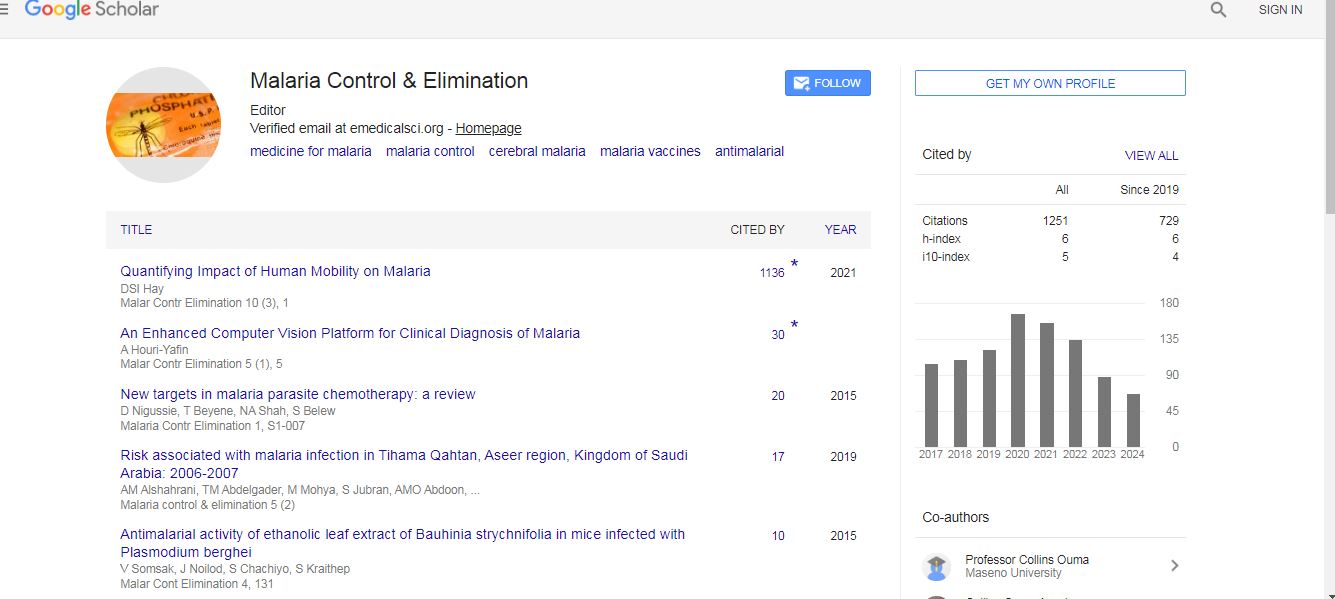
Malaria Control & Elimination received 1187 citations as per Google Scholar report